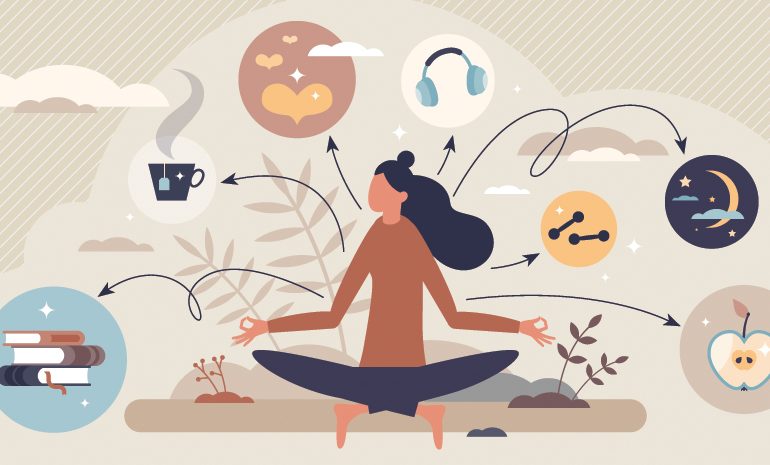
There’s a widespread and intuitive notion that caring for yourself is selfish and, therefore, bad. It’s easy, on the face of it, to see why this view might take hold. After all, isn’t it better that we put the needs of other people before our own, especially if the former outweigh the latter?
This calculation is, however, missing a crucial factor. Our ability to care for other people is predicated on our own well-being. This doesn’t just mean self-care by doing face masks or saying no to plans; sometimes it can be life admin, keeping everything organised and prepared in your own life before helping others. While it is impossible to prepare for every scenario, it can be easy to carry on and just act as if accidents and illnesses don’t happen when, as we all know, they do happen. If you’re feeling burnt out, stressed, and unwell, then you won’t be as effective when you try to help other people.
Looking after and focusing on yourself when you have something affecting you, whether that be physical or mental, is not only recommended but also essential. Taking the time to get the help and even compensation you deserve, you will benefit more than just yourself, and it can help with a sense of closure that you otherwise may not have gotten.
Energy Breeds Positivity
When your body and mind are in good shape, then you’ll not just be able to perform certain tasks well – you’ll be able to perform them with a positive energy that might spread to those around you. If you eat the right breakfast each morning or take breaks between bouts of deep work, then the quality and depth of your energy will improve.
Boundaries Build Respect
As Parkinson’s Law states, work will expand to fill the time allotted to it. If you give yourself all day to write a chapter in your book, then you might waste a good portion of it. If you pledge that the work will be done by midday, then, likely as not, you’ll find yourself with a free afternoon.
This applies to just about any person with a crowded diary. You might start to say no to people. Whether it’s a commitment at work, a personal favour, or a dinner date with a friend, knowing when to say no will help you to safeguard your precious mental energy.
Recovery Helps You Reconnect
When you’ve suffered a major setback, like an injury, a divorce, or a bereavement, it can be useful to reevaluate your priorities and to take the time you need to fully process what’s happened. Taking this time, far from being a symptom of weakness, will equip you to come back stronger. This could simply mean rest and recovery, or taking time to evaluate if you want to take any action if the injury happened in a work or public place. Whatever you need rest from, it is important to take time and plan out your next steps, rather than throwing yourself into being busy.
Everyone Benefits When You Do
Let’s summarise a few basic principles. Self-care isn’t always self-centred. Often, it’s the most altruistic thing you can do. In creating a calmer, more focused and competent version of yourself, you’ll be able to serve other people much more effectively.
This often involves taking a step back and reviewing the way that you spend your time and observing your own state of mind. Make sure that you set aside the hours that you need to do this, and the benefits, in the long run, might be considerable.
You may also read: Weatherstripping for Moving Parts