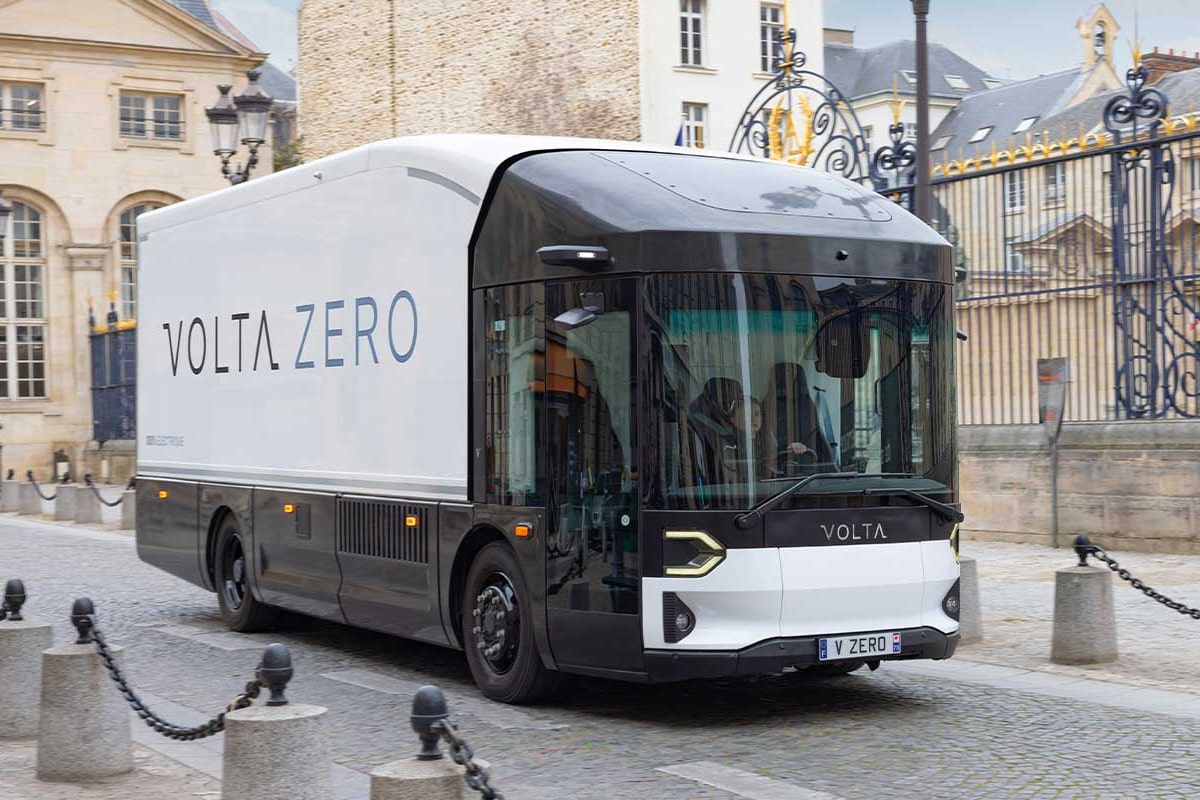
Volta Trucks was once seen as one of Europe’s most promising electric vehicle startups because it aimed to solve two urgent urban transport problems at the same time: harmful emissions and poor road safety. Founded in 2019, the company built its reputation around a new kind of commercial vehicle designed specifically for city deliveries rather than adapted from older diesel platforms. That focus helped Volta Trucks stand out in a fast-changing market where logistics firms, regulators, and investors were all paying closer attention to cleaner transport solutions.
What made the company especially interesting was that its business model was tied to a real commercial need. Cities across Europe were under pressure to reduce pollution, improve safety for pedestrians and cyclists, and modernise freight operations. Volta Trucks presented itself as a practical answer to those challenges, which is why it attracted strong attention early on. For a period, it looked like the company had the right idea, the right timing, and the right type of product to become a serious player in the electric truck market.
What Volta Trucks Was and Why It Attracted So Much Attention
Volta Trucks was established as a specialist electric truck company with registered offices in Stockholm and London, while also building operations across several European markets including France, Spain, the Netherlands, and Austria. This gave the business a broader European profile rather than the image of a small local startup. It also planned manufacturing through Steyr in Austria, which suggested that the company was not only experimenting with design ideas but was preparing for real commercial production. That wider footprint helped strengthen its credibility in front of fleet operators and investors who wanted to see international ambition, not just a concept-stage brand.
The company’s early appeal also came from its strong positioning. Volta Trucks was not simply selling an electric vehicle; it was selling a vision of safer and cleaner city logistics. That message mattered because urban freight is one of the most difficult transport areas to decarbonise without affecting delivery efficiency. By focusing on city-centre freight, the company gave itself a clearer identity than many startups trying to compete across too many segments at once. It was speaking directly to operators looking for lower-emission fleets and to cities increasingly interested in transport models that better matched environmental and public safety goals.
The Volta Zero Was the Core of the Company’s Promise

The Volta Zero was the product that defined the company’s public image. First launched in September 2020, it was introduced as an all-electric 16-tonne commercial vehicle built specifically for city-centre freight deliveries. Its design made it different from traditional trucks because the driver sat in a lower and more central position, improving direct visibility and helping the vehicle feel better suited to dense urban environments. That design approach was important because it allowed Volta Trucks to talk about safety as a core strength rather than treating it as a secondary feature behind electrification.
The Volta Zero also gave the company a stronger business story because it was linked to real customer interest. Volta Trucks attracted orders and partnerships that suggested the market was willing to take the idea seriously. Reuters reported that DB Schenker placed a major order that pushed Volta’s order book sharply higher, while the company later said its total order book had exceeded 5,000 vehicles. These signals made Volta Trucks look like more than a design-led startup. At that stage, it appeared to be moving toward commercial scale, with a product that matched the practical needs of modern delivery fleets.
Why Volta Trucks Entered Financial Trouble
Despite its strong concept and growing visibility, Volta Trucks faced the same harsh reality that many vehicle startups struggle to overcome: manufacturing is extremely expensive, highly complex, and unforgiving when delays appear. Building electric trucks at scale requires consistent access to capital, reliable supply partners, technical execution, and the ability to keep moving even when one part of the chain fails. Volta Trucks was still in a vulnerable growth phase when those pressures intensified. Its model depended not only on demand for the truck, but also on the company’s ability to fund production and manage supplier risk at the same time.
One of the most damaging blows came from supplier disruption. Reuters reported that battery uncertainty linked to the bankruptcy of Proterra created major difficulties for Volta Trucks and made it harder for the company to secure the funding it needed. That is a critical part of the story because it shows the business did not collapse simply because people stopped believing in electric trucks. The deeper problem was that a promising startup with an appealing product can still fail if supply chains break down, capital becomes harder to raise, and production plans lose momentum before the company reaches a financially stable stage.
The First Bankruptcy and the Attempted Rescue
In October 2023, Volta Trucks said it would file for bankruptcy proceedings in Sweden, and insolvency processes were also expected in Britain. Reuters reported that the company had raised around 300 million euros from investors, yet still found itself unable to continue after the supplier crisis and funding pressure. That moment marked a dramatic turning point. Volta Trucks had a recognised brand, a well-known product, and meaningful commercial interest, but none of that was enough to protect the business once its operating model came under severe financial strain.
However, the story did not end with that first collapse. In December 2023, Reuters reported that the UK business and assets of Volta Trucks were sold to a new unit of Luxor Capital called Volta Commercial Vehicles Limited. This was a significant development because it meant the company’s technology, brand assets, and recovery potential still had enough value to attract a rescue effort. Many older articles stop at the first bankruptcy, but that leaves the reader with an incomplete picture. The post-bankruptcy asset sale matters because it shows Volta Trucks was briefly given a second chance rather than disappearing immediately after the 2023 insolvency.
What Happened After the Rescue and Where Volta Trucks Stands Now
The attempted restart did not turn into a long-term recovery. Companies House records show that Volta Commercial Vehicles Limited, the entity created after the Luxor-backed acquisition, entered administration on 30 April 2025 and is listed as being in administration. That updated status is important because it changes how the company should be described today. It is not accurate to present Volta Trucks simply as a startup that suffered one bankruptcy and then moved forward. The later administration shows that even the rescue structure struggled to secure lasting stability for the business.
This final phase explains why Volta Trucks remains such an important case study in the electric vehicle sector. The company proved that there was real interest in electric trucks designed specifically for city logistics, and it showed that better visibility and safer cab design could become a powerful selling point in urban freight. At the same time, its collapse demonstrated that product innovation alone cannot overcome the financial and operational demands of scaling a manufacturing business. Volta Trucks succeeded in shaping the conversation around safer electric delivery vehicles, but it failed to build the durable industrial foundation needed to survive.
FAQs About Volta Trucks
Is Volta Trucks still operating? The most recent official UK company records show that Volta Commercial Vehicles Limited is in administration, with the process starting on 30 April 2025. That means the rescue vehicle created after the 2023 collapse also entered formal insolvency proceedings. In practical terms, Volta Trucks should not be described as a stable, operating truck manufacturer at this stage. A more accurate description is that the brand and business passed through repeated insolvency problems and failed to achieve a lasting recovery after the original bankruptcy.
What was the Volta Zero? The Volta Zero was Volta Trucks’ flagship all-electric commercial truck built for city-centre freight deliveries. It was designed as a purpose-built electric vehicle rather than a converted diesel model, which helped the company position it as a cleaner and more modern solution for urban logistics. Its low central driving position and improved visibility were central to the brand’s identity because Volta Trucks wanted to be seen not only as an electric truck maker, but as a company redesigning freight vehicles around the realities of busy city streets.
Why did Volta Trucks collapse? The short answer is that the company faced a combination of supply-chain disruption, funding pressure, and the high cost of scaling production. Reuters linked the 2023 bankruptcy decision to supplier difficulties and the fallout from Proterra’s bankruptcy, which made it harder for Volta Trucks to continue production planning and raise new funds. The broader lesson is that even when demand exists and a product attracts attention, manufacturing startups can still fail if they do not have enough financial resilience to survive shocks at the wrong time.
Who bought Volta Trucks after the first bankruptcy? After the initial 2023 collapse, Reuters reported that the UK business and assets were sold to Volta Commercial Vehicles Limited, a new Luxor Capital unit. That move kept alive the possibility of a comeback and showed that some stakeholders still believed the company’s product and technology had commercial value. Yet the later administration of that same entity also shows that acquiring assets and restarting the business was not enough to secure a successful long-term turnaround. The rescue created a new chapter, but it did not change the company’s final direction.
You may also read: Types of Karting Experiences Offered by TeamSport