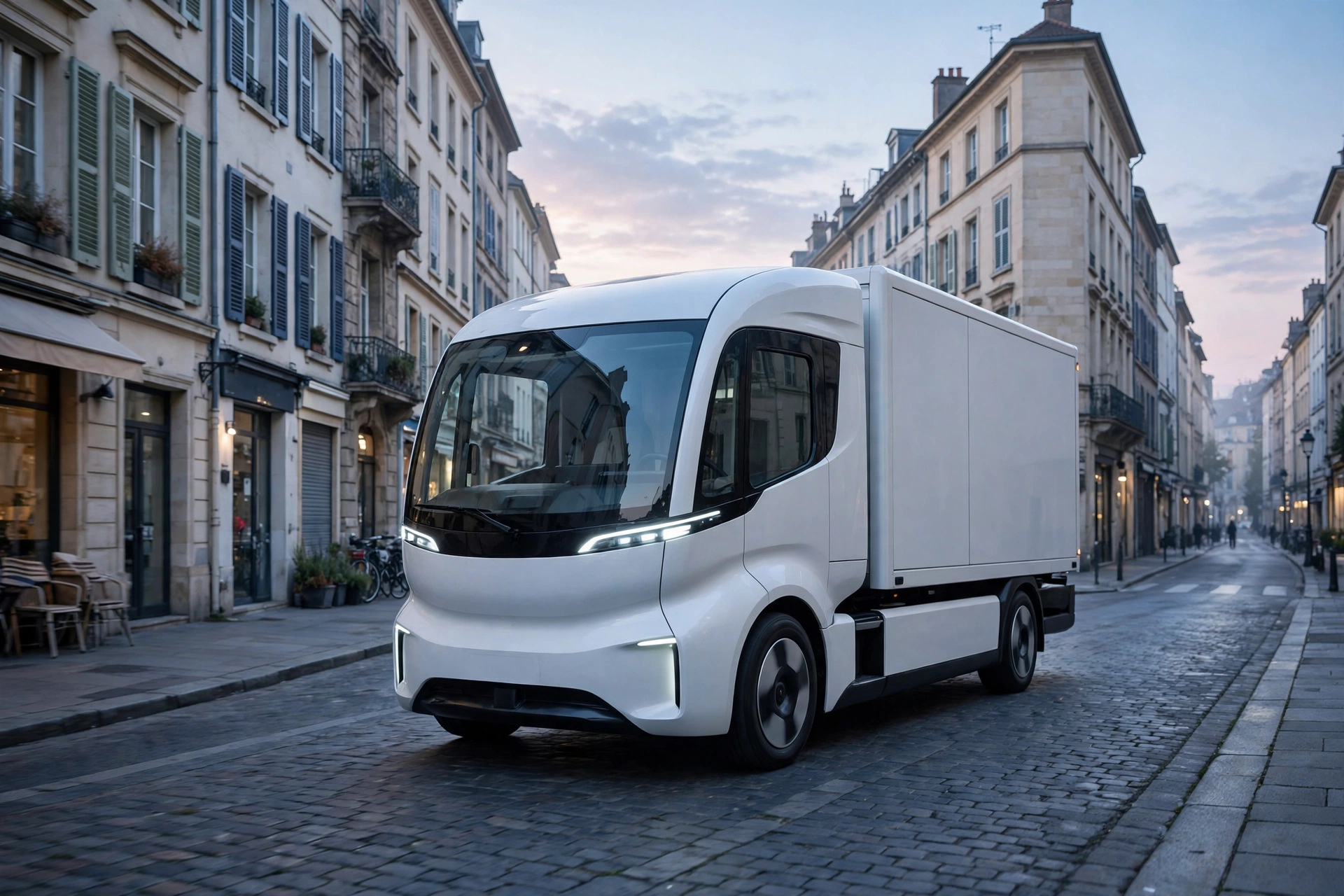
Volta Trucks: The Electric Truck Maker That Refused to Die
Volta Trucks is one of the most talked-about names in the world of electric commercial vehicles, and its story is far from a simple success tale. The company set out to change how goods move through cities by building a purpose-built electric truck designed around the driver, the pedestrian and the planet, and for a time it looked like it would become one of Europe’s great clean-transport success stories. Then, in October 2023, the business collapsed into administration, hundreds of jobs were lost, and the future of its flagship truck looked finished. Yet within weeks a new owner stepped in, the company was recapitalised, and the company began a second life under a new name. This is the full story of Volta Trucks, from its founding in 2019 to its administration and its relaunch, and what its comeback means for electric trucking in Europe.
The rise and fall of Volta Trucks matters because it tells us a great deal about the electric vehicle industry itself. Building a new truck company from scratch is enormously expensive, and even a brilliant product can fail if the funding dries up or a key supplier collapses. The company experienced both of those problems at once, yet the fact that investors were willing to buy the business out of administration shows how much belief there still is in its design and its mission. For fleet operators, city planners and anyone interested in cleaner air in urban centres, the fate of Volta Trucks is worth understanding in detail.
What the Company Is and Why It Mattered
The company was founded in 2019 as an electric commercial vehicle start-up with a clear and ambitious mission: to build a full-electric truck designed from the ground up for city deliveries. Unlike most electric trucks, which are adapted from diesel models, the Volta Zero was designed as an electric vehicle from the very first sketch. That clean-sheet approach allowed the company’s engineers to rethink the whole layout of the cab, placing the driver in a central seating position with a low cab height so they could see pedestrians and cyclists far more easily than in a conventional truck. The design was widely praised for putting safety at the centre of the vehicle, and it won the company attention from fleet operators, city authorities and the wider transport industry across Europe.
The company’s first product, the Volta Zero, was a 16-tonne full-electric truck aimed squarely at urban logistics, the kind of last-mile delivery work that fills city streets with diesel vehicles every day. The company argued that cities needed a truck built for their specific conditions: quiet, zero-emission at the tailpipe, easy for drivers to get in and out of dozens of times a day, and designed to protect the vulnerable road users who share busy streets with heavy goods vehicles. The central driving position, the panoramic visibility and the low-entry cab were all part of that thinking, and they set the Volta Zero apart from almost everything else on the market at the time.
The company grew quickly in its early years, building teams in the UK, Italy and Austria and working with established manufacturing partners to bring the Volta Zero to production. The company attracted significant investment and built up a workforce of hundreds of people, with ambitions that stretched well beyond a single truck model. Plans were discussed for a range of vehicles and for a potential stock market listing, and by early 2023 the company was in advanced discussions with investors to raise further funding. For a while, the company looked like it was on the verge of becoming a major player in European commercial vehicles.
The Volta Zero and Its Design
The Volta Zero was the vehicle that defined the company, and understanding its design is essential to understanding why the company attracted so much attention. The truck was built around a simple idea: a city delivery truck should be designed for the city, not adapted from a long-haul lorry. The most striking feature was the central driving position, which put the driver in the middle of the cab, much like a racing car, giving them a wide and unobstructed view of the road ahead and of the pavements on both sides. This was a deliberate safety choice, aimed at reducing the blind spots that make conventional trucks so dangerous for cyclists and pedestrians in urban areas.
The cab was also set low to the ground, so drivers could step in and out easily rather than climbing up and down, which matters enormously on delivery rounds that involve dozens of stops a day. The low cab and large glass area gave the driver an almost panoramic view, and the interior was designed to feel more like a modern workspace than a traditional truck cab. The company presented all of this as a package: a truck that was safer for everyone on the street, more comfortable for the driver, and cleaner for the city it operated in.
Underneath the cab, the Volta Zero was a battery-electric vehicle with no diesel engine at all, which meant zero tailpipe emissions and far quieter operation than a conventional truck. That matters in cities that are introducing low-emission zones and night-time delivery restrictions, because an electric truck can operate where a diesel truck increasingly cannot. The company planned the Volta Zero in 16-tonne and 18-tonne versions, aiming at the weight classes that dominate urban distribution, and the company worked with the Austrian manufacturer Steyr Automotive on series production of the vehicle. The partnership with Steyr was important because it gave a small start-up access to serious manufacturing capability without having to build its own factory from scratch.
Why the Company Went Into Administration
The company filed for bankruptcy and entered administration on 17 October 2023, in a collapse that shocked the electric vehicle industry. The company said that the failure of its battery supplier, Proterra, had a significant impact on its manufacturing plans, reducing the number of vehicles it expected to produce and hampering its ability to raise further capital. Proterra itself had filed for bankruptcy protection, and the loss of a key supplier at a critical moment left the company unable to deliver vehicles at the volumes it had promised. At the same time, capital markets had tightened considerably, and raising the money needed to keep a loss-making start-up going had become far harder than it had been during the easy-money years that preceded it.
The administrators reported that the trucks were still in the development stage and had yet to generate revenue, which meant the group and the company had been loss-making since incorporation. That is not unusual for a vehicle start-up, but it meant there was no income to cushion the business when funding dried up. The company employed 649 people in the UK, Italy and Austria at the time of the collapse, and 531 of them were made redundant, with 118 kept on to assist the sale process and preserve value in the core areas of the business. The scale of the job losses underlined just how serious the failure was, and for a time it looked as though the Volta Zero would never reach the road in meaningful numbers.
The collapse also raised wider questions about the electric truck industry. Building a new commercial vehicle is a capital-intensive business that takes years before a single vehicle is sold, and the company was not the only start-up to struggle as interest rates rose and investors became more cautious. The company’s fate became a case study in how quickly a promising clean-technology business can unravel when a supplier fails and the funding environment turns against it at the same time.
The Luxor Capital Rescue and the Relaunch
The story of Volta Trucks did not end with administration. Within weeks, a sale of the company was agreed through the administration process, and the buyer was Volta Commercial Vehicles Ltd, an entity owned by Luxor Capital, a long-time financial backer and one of the company’s largest lenders. The administrators said they had agreed to proceed with the offer from Volta Commercial Vehicles Ltd because it provided the greatest certainty of delivery and had the shortest timescale for completion. The sale went ahead on 30 November 2023 for £2.2 million, comprising £1.2 million for intellectual property rights, £800,000 for stock and work in progress, and £200,000 for loose chattels and equipment, as reported by Electrek. The company formally emerged from administration on 1 December 2023, just 48 days after filing for bankruptcy on 17 October.
The new company, Volta Commercial Vehicles Ltd, is registered in the UK, and the relaunch was announced in April 2024 with a team of around 150 employees, a far smaller workforce than the more than 750 people employed across the previous iteration of the business. Luxor Capital said it had recapitalised the company and worked with the team to develop a simplified and more capital-efficient business plan, and the new chief executive, Essa Al-Saleh, set out a focused strategy for bringing vehicles back onto the streets of European cities. The funding plan included an initial round of convertible financing followed by a larger Series-A round for investors, and the company said it was actively seeking further investment to support its plans.
Vehicle development for series production of the 16-tonne and 18-tonne versions of the Volta Zero continued under the new ownership, timed to meet the GSR-2 General Safety Regulation standards that took effect in July 2024, and joint planning with Steyr Automotive in Austria targeted resuming series production later in 2024. The message from the new management was clear: the company was back, leaner and more focused, with the same vehicle and the same mission but a business plan designed to survive in a tougher funding environment. Whether that second life delivers vehicles at scale is UNVERIFIED as of the time of writing, and readers should check the latest company announcements for the current production status.
What the Comeback Means for Electric Trucking
The relaunch of the company matters for reasons that go well beyond one company. City authorities across Europe are tightening emissions rules and expanding low-emission zones, which means fleet operators need zero-emission trucks that can do real delivery work, not just demonstration runs. The Volta Zero was designed precisely for that job, and its return to the market gives operators another serious option alongside the electric trucks offered by established manufacturers. Competition in this segment should push every manufacturer to build better, safer and more practical electric trucks, and that is good news for cities, drivers and everyone who breathes urban air.
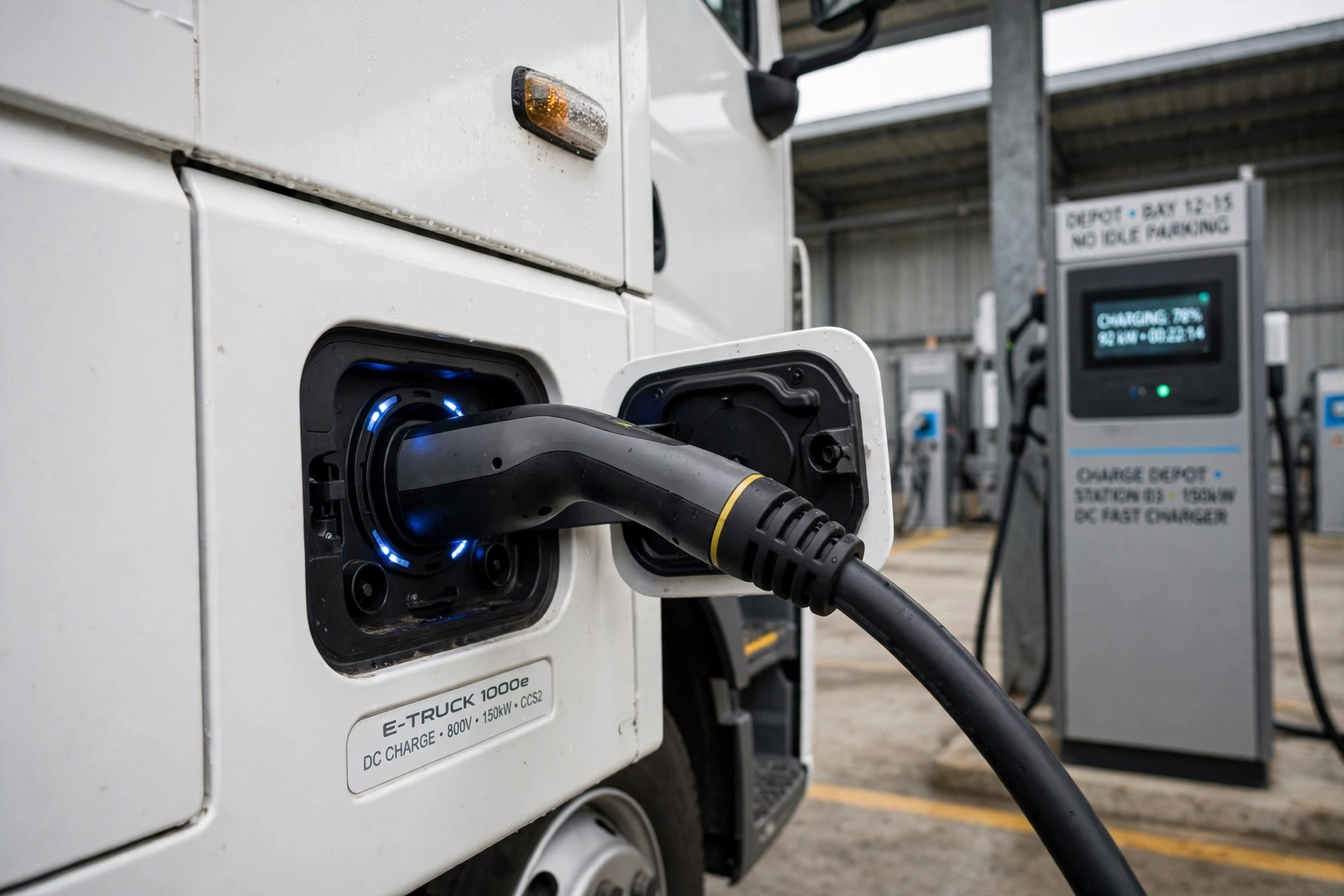
The comeback also carries a lesson for the wider electric vehicle industry. The first version of the company tried to do a great deal at once, with a large workforce and ambitious plans, and it ran out of money before its product could generate revenue. The relaunched company is deliberately smaller and more focused, with a simplified business model, a single product family and a manufacturing partnership rather than its own factory. That leaner approach may prove more durable, and if it works, other electric vehicle start-ups may follow the same path. The history of the motor industry is full of companies that failed on their first attempt and succeeded on their second, and the company is now testing whether that pattern can repeat in the electric age.
There are still real risks. The company needs to secure further funding, restart production with Steyr Automotive, deliver vehicles to paying customers and build a service and support network that fleet operators can rely on. None of that is easy, and the electric truck market is becoming more competitive as established manufacturers bring their own zero-emission models to market. But the fact that Luxor Capital was willing to buy the business out of administration, and that experienced people chose to stay with the project, suggests that those closest to the Volta Zero still believe in it. For now, the company remains one of the most interesting comeback stories in European transport.
The Future of City Deliveries
The future of city deliveries is electric, quiet and increasingly regulated, and The company was built for exactly that future. Urban logistics is one of the hardest parts of the transport system to decarbonise, because delivery vehicles need to carry heavy loads, stop and start constantly, and operate in streets shared with pedestrians and cyclists. A purpose-built electric truck that addresses all three of those challenges at once is a genuinely valuable product, and the Volta Zero’s design remains one of the most thoughtful attempts to solve the problem. If the relaunched company can deliver the truck at scale, it could change how goods move through European cities.
The company’s experience also highlights how much the success of electric trucking depends on factors beyond the vehicle itself. Reliable battery supply, access to capital, charging infrastructure and supportive city policies all matter as much as the design of the truck, and the collapse of the company showed what happens when one of those pillars gives way. The relaunch is a chance to rebuild on stronger foundations, with a more realistic business plan and a clearer focus on the customers who need the truck most. Fleet operators watching the company will want to see vehicles on the road, not just announcements, and the next chapter of the company’s story will be written in deliveries made rather than promises kept.
How the Company Compares With Other Electric Truck Makers
The company occupies a different position from the established truck manufacturers that are now adding electric models to their ranges. The big manufacturers have scale, dealer networks and decades of experience, but their electric trucks are often adapted from diesel platforms, which limits how far they can rethink the cab and the layout. The company started from a blank sheet of paper, which allowed it to put the driver in the centre of the cab and to design the whole vehicle around urban safety. That design freedom is the company’s greatest asset, and it is the reason its truck attracted so much attention despite the company being so much smaller than its rivals.
The trade-off is that a start-up cannot match the manufacturing scale, service network or financial strength of an established manufacturer, and that weakness was exposed brutally in 2023. The relaunch under Luxor Capital is an attempt to keep the design advantage while fixing the business weakness, by staying lean, focusing on a single product family and relying on a manufacturing partner. Whether that balance works will decide whether the company becomes a lasting part of the European truck industry or a footnote in the history of electric vehicles. Either way, its design ideas, particularly the central driving position and the focus on vulnerable road users, have already influenced how the whole industry thinks about city trucks.
What happened to Volta Trucks in 2023?
The company filed for bankruptcy and entered administration on 17 October 2023, after the collapse of its battery supplier Proterra disrupted its manufacturing plans and reduced the number of vehicles it could produce, which in turn hampered its ability to raise further capital. The administrators reported that the company had been loss-making since incorporation because its trucks were still in development and had yet to generate revenue. Of the 649 people employed in the UK, Italy and Austria, 531 were made redundant and 118 were kept on to assist the sale process. The business was then sold to Volta Commercial Vehicles Ltd, an entity owned by Luxor Capital, and it emerged from administration on 1 December 2023, just 48 days after filing.
Who owns the company now?
The company is now owned by Luxor Capital, a long-time financial backer and one of the company’s largest lenders, through the new company Volta Commercial Vehicles Ltd, which is registered in the UK. The sale was completed on 30 November 2023 for £2.2 million, covering intellectual property rights, stock and work in progress, and equipment. Luxor Capital recapitalised the business and backed a simplified, more capital-efficient business plan, and Essa Al-Saleh became chief executive of the new company. The relaunched business operates with a team of around 150 employees, far fewer than the more than 750 people employed by the previous iteration of the company.
What is the Volta Zero?
The Volta Zero is the flagship vehicle of the company, a 16-tonne full-electric truck designed from the ground up for urban deliveries, with an 18-tonne version also in development. Its most distinctive feature is the central driving position, which places the driver in the middle of a low cab with panoramic visibility, improving safety for pedestrians and cyclists in busy city streets. The truck produces zero tailpipe emissions and operates far more quietly than a diesel equivalent, making it suited to low-emission zones and urban delivery work. Series production was planned with the Austrian manufacturer Steyr Automotive, and development of the 16-tonne and 18-tonne versions continued under the new ownership.
Is the company still in business?
Yes, the company continues in business under its new ownership as Volta Commercial Vehicles Ltd, having emerged from administration on 1 December 2023. The relaunched company announced its comeback in April 2024, with a team of around 150 employees, a recapitalised balance sheet and a simplified business plan focused on bringing the Volta Zero back to European cities. Vehicle development for series production of the 16-tonne and 18-tonne versions of the Volta Zero was ongoing, timed to meet GSR-2 safety standards, with joint planning alongside Steyr Automotive in Austria. The exact current production and delivery status is UNVERIFIED, so readers should check the latest announcements from the company for up-to-date information.
Why did the company go bankrupt?
The company went into administration because several problems struck at once. Its battery supplier, Proterra, collapsed, which disrupted manufacturing plans and reduced the volume of vehicles the company expected to produce. At the same time, capital markets had tightened, making it much harder for a loss-making start-up to raise the funding it needed to keep operating. The company’s trucks were still in development and had not yet generated revenue, so there was no income to cushion the business when funding dried up. The combination of a failed key supplier, a difficult fundraising environment and the high cost of developing a new vehicle proved too much for the original company to survive.
What does the future hold for the company?
The future of the company depends on whether the relaunched company can turn its plans into delivered vehicles. The new business has a leaner team of around 150 people, a simplified and more capital-efficient business plan, backing from Luxor Capital, and a manufacturing partnership with Steyr Automotive in Austria. Its focus is on series production of the 16-tonne and 18-tonne Volta Zero and on serving fleet customers in European cities that need zero-emission urban delivery trucks. Further funding rounds were planned to support that growth, and the company has said it is actively seeking additional investment. Whether production and deliveries reach meaningful scale is UNVERIFIED at the time of writing, and the company’s progress will be judged by vehicles on the road rather than by announcements alone.
Conclusion
Volta Trucks is a story of ambition, collapse and second chances. Founded in 2019, the company built one of the most thoughtfully designed electric trucks in the world, won praise for putting safety and clean air at the centre of its design, and then ran out of money when its battery supplier failed and the funding environment turned against it. The administration of October 2023 cost more than 500 people their jobs and looked like the end of the road for the Volta Zero. Yet the business was bought out of administration within weeks, recapitalised by Luxor Capital, and relaunched as Volta Commercial Vehicles Ltd with a leaner team and a sharper plan. That comeback is a reminder that a good idea can survive even a bad collapse, and that the shift to electric city transport is strong enough to bring investors back to a company that had only just failed. Whether Volta Trucks now delivers on its second chance will be decided on the streets of Europe’s cities, one delivery at a time.
For more on how teams and organisations rebuild after a setback, read our guide to rugby positions, which explains how every player on the field has a distinct role to play in a team comeback.