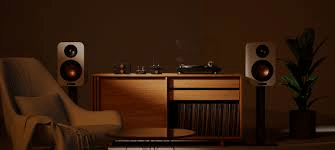
Introduction
Building a home audio system involves several decisions, including choosing the right type of speakers. Two popular options are bookshelf speakers and floorstanding speakers. Both can deliver enjoyable sound, but their designs, sizes, and intended uses are different.
Some people prefer compact equipment that fits comfortably into smaller rooms, while others want larger speakers capable of filling spacious entertainment areas. Understanding how these two speaker types compare can help you select the right option for your home.
What Are Bookshelf Speakers?
Bookshelf speakers are compact loudspeakers designed to deliver sound without occupying significant floor space. Despite their name, they can be positioned on desks, shelves, cabinets, or dedicated stands.
They are commonly used in bedrooms, offices, apartments, and small living rooms. Their flexible design makes them suitable for stereo music systems and home theater arrangements.
Many models use a two-way driver configuration, combining a tweeter with a woofer. This arrangement allows them to reproduce different frequency ranges while maintaining a relatively compact cabinet size.
Active versions include built-in amplification, while passive models require an external amplifier or receiver.
What Are Floorstanding Speakers?
Floorstanding speakers, sometimes called tower speakers, are larger units designed to stand directly on the floor.
Their taller cabinets provide space for multiple drivers and larger internal enclosures. Depending on their design, they may include dedicated woofers, midrange drivers, and tweeters.
These speakers are commonly used as the main left and right channels in stereo systems and home theaters.
Their larger cabinets and driver configurations can support higher output levels and stronger bass performance, although actual results depend on the individual model.
Differences in Size and Space Requirements
The most obvious difference is physical size.
Bookshelf speakers are easier to accommodate in smaller rooms. They can be installed on existing furniture or compact stands, making them useful for people who want an organized entertainment area.
Floorstanding speakers require more dedicated space. Their height and cabinet dimensions can make them difficult to accommodate in small apartments or crowded rooms.
Before purchasing either type, measure your available space and consider the distance between the speakers and nearby furniture.
Sound Quality and Performance
Both speaker types can deliver excellent audio, but their performance characteristics may differ.
Bookshelf Speaker Performance
Quality bookshelf speakers can reproduce clear vocals, detailed instruments, and balanced sound. They are often suitable for near-field listening, making them particularly useful for desktop setups and smaller listening environments.
Some models also provide impressive bass response despite their compact dimensions.
However, smaller cabinets may limit the amount of low-frequency output compared with larger speaker designs.
Floorstanding Speaker Performance
Floorstanding speakers often have an advantage when stronger bass and higher output levels are required.
Their larger cabinets can accommodate additional drivers, allowing manufacturers to design systems that handle a wider range of frequencies.
They can be particularly useful in larger rooms where listeners want powerful sound for music, films, and entertainment.
However, a larger speaker does not automatically guarantee better audio quality. Driver design, crossover engineering, room acoustics, and overall construction remain important.
Installation and Setup Requirements
Bookshelf speakers generally provide more installation flexibility. They can be placed on suitable furniture or dedicated stands, although proper positioning is still important.
Passive models need an external amplifier, while active versions may connect directly to compatible audio sources.
Floorstanding speakers usually require more careful positioning because of their size and interaction with the surrounding room.
Both types can be integrated into stereo and home theater systems, depending on their specifications and available connections.
Comparing Costs and Overall Value
Price is another factor worth considering when selecting speakers.
Bookshelf speakers often provide an affordable entry point into quality home audio. They may also allow users to upgrade gradually by adding a better amplifier or subwoofer later.
Floorstanding speakers can cost more because of their larger cabinets, additional drivers, and construction requirements. However, prices vary significantly between brands and product categories.
When comparing costs, remember to include the complete system rather than looking at speaker prices alone.
For example, a passive bookshelf setup may require a separate amplifier and stands. A floorstanding system may need additional room treatment or careful placement to perform properly.
Which Speakers Are Better for Music Listening?
The answer depends on your listening habits and environment.
Bookshelf speakers can be excellent for people who listen to music at a desk or in a smaller room. Their compact design and stereo performance make them a practical option for everyday use.
Floorstanding speakers may be more suitable for listeners who have larger rooms and prefer higher listening levels or stronger bass.
Both options can reproduce music naturally when properly designed and matched with compatible equipment.
Which Option Works Best for Home Theater?
Bookshelf speakers can serve as front, rear, or surround channels in many home theater configurations. Their smaller size makes them easier to position around a room.
Floorstanding speakers are frequently used as front left and right channels because they can provide a powerful presentation.
A dedicated center speaker and subwoofer can further improve a home theater system, depending on the configuration.
The best arrangement depends on room dimensions, equipment compatibility, and personal preferences.
Can You Combine Both Speaker Types?
Yes. Many home audio systems combine bookshelf and floorstanding speakers.
For example, a home theater may use floorstanding speakers at the front and smaller bookshelf models for surround channels.
This approach can provide flexibility while allowing users to create a system that suits their available space and listening requirements.
The important consideration is choosing compatible speakers with suitable tonal characteristics and matching amplification.
Final Thoughts
Bookshelf speakers and floorstanding speakers each offer different advantages. Compact bookshelf models are suitable for smaller rooms, flexible installations, and everyday listening. Floorstanding designs are often preferred when greater output and stronger bass are important.
Neither option is automatically better for every listener. Consider your room size, budget, audio preferences, and equipment before making a decision. Choosing speakers that match your environment will help create a more enjoyable and balanced listening experience.