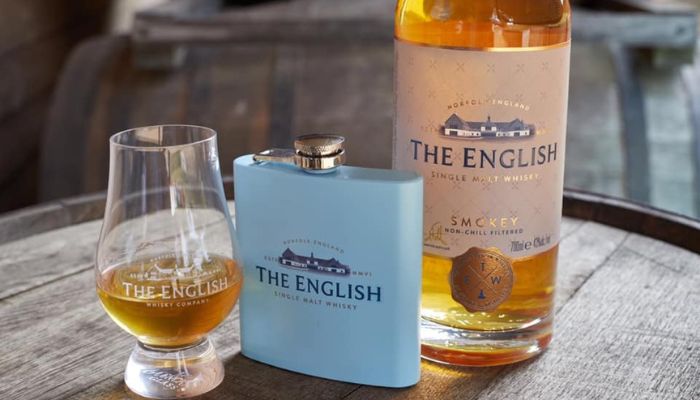
What Is English Whisky and How Is It Defined Today
English whisky is a distilled spirit produced in England using cereal grains, water, and yeast, then matured in wooden casks for a minimum of three years. To meet the general legal definition of whisky, it must be distilled below 94.8% ABV and bottled at no less than 40% ABV. These rules align with broader UK and international whisky standards, ensuring consistency in quality while still allowing producers flexibility in how they develop flavour and character.
What makes English whisky distinct is not a completely different definition, but how producers interpret these rules. Unlike regions with long-established traditions, English distillers are not bound by rigid historical methods. This allows them to experiment with fermentation styles, grain selection, and cask maturation. As a result, English whisky is not defined by a single flavour profile, but by its diversity and evolving identity within the global whisky landscape.
Types of English Whisky: Understanding Malt, Grain, Single, and Blended
English whisky is generally divided into two main categories: malt whisky and grain whisky. Malt whisky is produced entirely from malted barley and typically distilled in pot stills, which helps develop deeper and more complex flavours. Grain whisky, by contrast, may include other cereals such as wheat or corn and is often distilled using continuous stills, resulting in a lighter and smoother spirit that is frequently used in blends.
In addition to these base categories, English whisky is also classified as single or blended. Single malt whisky is made at a single distillery using malted barley, while blended whisky combines different whiskies to create a balanced and consistent product. These classifications follow international whisky conventions, but English producers often approach them with more flexibility, leading to a broader range of styles than many traditional whisky regions.
A Brief History of English Whisky: Decline and Revival
Whisky production in England has historical roots that date back several centuries, with records of distillation appearing as early as the 16th and 17th centuries. During the 19th century, a number of English distilleries were active, producing both grain and malt spirits. However, the rapid growth of Scotch whisky and the increasing popularity of other spirits led to a gradual decline in English whisky production.
By the early 20th century, whisky production in England had effectively stopped, and the country remained absent from the whisky industry for more than 100 years. The modern revival began in the early 2000s with the establishment of new distilleries focused on quality and innovation. Since then, English whisky has developed into a growing category, supported by increasing consumer interest and a new generation of producers.
How English Whisky Is Made: From Grain to Glass
The production process of English whisky begins with selecting grains, most commonly barley, which are milled and combined with water to extract fermentable sugars. Yeast is then added to initiate fermentation, converting sugars into alcohol and producing a liquid known as “wash.” This stage is particularly important, as different yeast strains and fermentation techniques can significantly influence the final flavour of the whisky.
After fermentation, the wash is distilled to concentrate alcohol and refine its character. The resulting spirit is then matured in wooden casks, usually oak, for at least three years. English distillers often use a variety of cask types, including ex-bourbon, sherry, and wine casks, to shape the whisky’s flavour profile. This flexibility in maturation contributes to the wide range of styles found within English whisky.
Regulations and Standards: What Rules English Whisky Production

English whisky currently follows general UK whisky regulations, which define key production requirements such as minimum maturation time, distillation strength, and permitted additives. These rules ensure that English whisky meets internationally recognised standards while allowing producers to explore different production methods within those boundaries.
A formal Geographical Indication (GI) for English whisky is in development, which aims to establish clearer guidelines for production and labelling. Proposed requirements include sourcing grains from the UK, carrying out production stages within England, and maintaining specific maturation conditions. In addition, voluntary standards such as BS 8636 provide guidance on production and packaging, although they are not legally binding. Together, these frameworks are shaping the future identity of English whisky.
The English Whisky Industry Today: Growth and Current Landscape
The English whisky industry has grown rapidly over the past two decades, transitioning from a dormant category into an active and expanding sector. There are now numerous distilleries operating across England, with new producers continuing to enter the market. This growth reflects both rising consumer interest and increased investment in high-quality production.
Industry organisations, including trade groups dedicated to English whisky, support producers by promoting standards and raising awareness of the category. While exact figures vary depending on how distilleries are counted, the overall trend is clear: English whisky is no longer a niche product but an emerging force within the global whisky market. Its continued development suggests strong potential for further expansion in the coming years.
Key English Whisky Distilleries and Notable Producers
Several distilleries have played a significant role in shaping the reputation of English whisky. Established producers such as The English Distillery, Cotswolds Distillery, and The Lakes Distillery are widely recognised for their commitment to quality and their contribution to the category’s growth. These distilleries have helped establish a foundation for English whisky’s identity both domestically and internationally.
Alongside these well-known names, a growing number of smaller distilleries are experimenting with different production techniques and flavour profiles. These producers often release limited batches, allowing them to explore new approaches without the constraints of large-scale production. This combination of established and emerging distilleries contributes to the diversity and ongoing evolution of English whisky.
How English Whisky Compares to Other Whisky Regions
English whisky is often compared to Scotch whisky due to geographical proximity and shared production principles. However, English producers tend to adopt a more flexible approach, exploring a wider range of fermentation methods, grain combinations, and cask finishes. This results in a category that is less defined by tradition and more open to variation in style.
Compared to Irish and Japanese whiskies, English whisky occupies a position that balances experimentation with established whisky-making practices. While it does not yet have the same historical depth as these regions, it offers a broader spectrum of flavour profiles and production techniques. This makes English whisky particularly appealing to those seeking alternatives to more traditional whisky styles.
How to Drink English Whisky and Appreciate Its Flavour
English whisky can be enjoyed in several ways, depending on personal preference and the style of the whisky. Many enthusiasts prefer to drink it neat, using a tulip-shaped glass that concentrates aromas and allows for a more detailed sensory experience. Observing the whisky’s colour, aroma, and taste helps reveal the complexity created during fermentation and maturation.
For those who prefer a lighter approach, adding a small amount of water can open up additional flavours and aromas. English whisky also works well in cocktails, particularly those that benefit from a balanced and approachable spirit. Its versatility makes it suitable for both traditional tasting and modern serving styles, allowing drinkers to explore it in different ways.
The Future of English Whisky: What to Expect Next
The future of English whisky is closely tied to the development of its regulatory framework and continued industry growth. The introduction of a formal GI is expected to provide clearer identity and protection for English whisky, helping it gain stronger recognition in international markets. This will likely support both producers and consumers by ensuring consistent standards.
As more distilleries mature their stock and release aged expressions, the category will continue to evolve in both quality and reputation. English whisky is still in a relatively early stage compared to established whisky regions, but its progress over the past two decades suggests a strong trajectory. With ongoing innovation and increasing global interest, English whisky is set to become a more prominent part of the international whisky landscape.
FAQs About English Whisky
Is English whisky legally different from Scotch whisky?
English whisky follows the same general UK whisky regulations as Scotch, but it does not yet have a fully established GI with additional region-specific rules. This allows for more flexibility in production, although stricter definitions are expected in the future.
How many English whisky distilleries are there?
The number varies depending on classification, as some sources count active distilleries while others include licensed or emerging producers. However, the industry has grown significantly, with dozens of distilleries now operating across England.
What makes English whisky unique?
English whisky is known for its flexibility and diversity rather than a single defining style. Producers often experiment with fermentation, grains, and cask types, resulting in a wide range of flavour profiles.
Can English whisky be used in cocktails?
Yes, English whisky is versatile and works well in cocktails. Its balanced flavour profile makes it suitable for both classic whisky drinks and modern creations.
Why is it spelled “whisky” and not “whiskey”?
In England, the spelling “whisky” is used, following the convention of Scotland and Japan. The spelling “whiskey” is typically associated with Irish and American products.
You may also read: What Is Vabbing? TikTok’s Viral ‘Natural Perfume’ Trend Explained