Table of Contents
1. The Evolution of the Sliding Barn Door
2. Assessing Your Wall Space and Structural Integrity
3. Understanding Different Track Systems and Materials
4. Selecting the Right Roller Style for Your Aesthetic
5. Measuring for Precision and Clearance
6. Essential Accessories for Safety and Functionality
7. Installation Pitfalls to Avoid
8. Maintaining Your Hardware for Longevity
9. Final Considerations for a Seamless Home Upgrade
The Evolution of the Sliding Barn Door
The barn door has transitioned from a functional necessity on rural farms to one of the most sought after interior design elements in modern homes. Originally designed to offer wide openings for livestock and machinery without the clearance issues of a swinging door, the sliding mechanism has been refined for the residential market. Today, these kits are prized for their ability to save space in tight quarters like laundry rooms, pantries, and master ensuites.
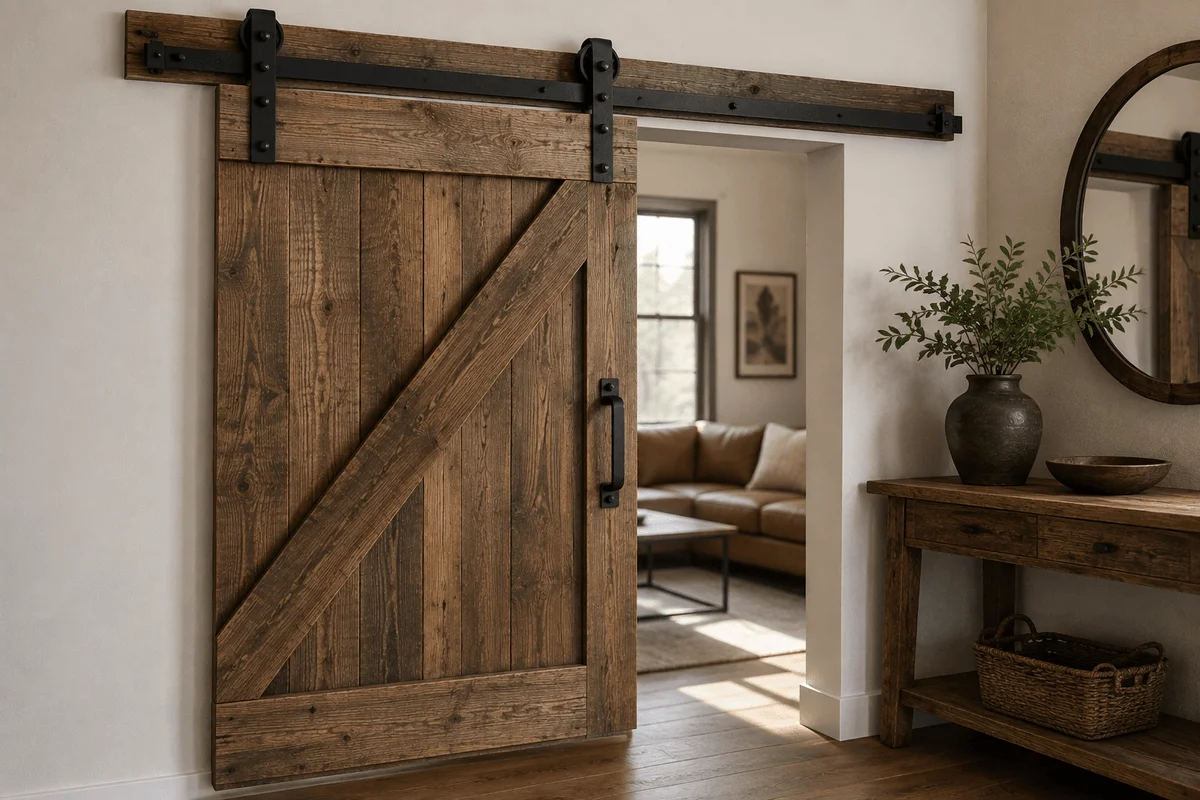
Beyond mere utility, a barn door serves as a statement piece. It acts as functional art that can bridge the gap between rustic charm and industrial modernism. However, the success of this installation relies entirely on the hardware kit chosen to support the weight and movement of the door. Without a high quality kit, even the most beautiful reclaimed wood slab will feel cumbersome and loud. Finding a reputable supplier such as Dusty’s Rustic Rolling Doors ensures that the aesthetic beauty is matched by mechanical precision.
Assessing Your Wall Space and Structural Integrity
Before you click purchase on a barn door hardware kit, you must look at what is behind your drywall. Unlike a standard door that distributes its weight through the floor and side studs, a sliding door hangs almost entirely from the top track. This creates significant downward and outward pressure on the wall.
The Importance of a Header Board
Most homes do not have studs spaced perfectly to match the pre drilled holes in a standard steel track. To solve this, experts recommend installing a header board. This is a solid piece of lumber, usually a one by four or one by six, that is securely fastened to the wall studs. The track is then mounted to the header board. This provides a flat surface and ensures the track is anchored into solid wood across its entire length.
Clearance and Obstructions
You must also scan the wall for any obstructions that could hinder the door as it slides. Common obstacles include light switches, electrical outlets, thermostats, and baseboard molding. If your door needs to clear thick trim around the opening, you may need spacers or a thicker header board to move the track further away from the wall. Ensure there is enough empty wall space to the side of the opening to accommodate the door when it is fully open.
Understanding Different Track Systems and Materials
The track is the backbone of your hardware kit. Most residential kits use a flat bar design made of carbon steel, which offers excellent strength and a classic look. However, there are several variations to consider based on your specific needs.
1. Single Track Systems: The most common setup where one door slides over a single opening.
2. Bypass Systems: These use two tracks or a specially designed bracket to allow two doors to slide past one another. This is ideal for closets where there is not enough wall space on either side of the opening.
3. Stainless Steel Systems: Best for modern aesthetics or high humidity areas like bathrooms, as stainless steel resists rust and provides a sleek, silver finish.
4. Heavy Duty Industrial Kits: Designed for exceptionally heavy doors, such as those made of solid oak or metal frames, which might weigh over three hundred pounds.
When sourcing your equipment, look for manufacturers like Dusty’s Rustic Rolling Doors that offer thick steel tracks. Thinner, cheaper metals found in big box stores can bow or sag over time, leading to a door that sticks or rolls unevenly.
Selecting the Right Roller Style for Your Aesthetic
The rollers, or hangers, are the most visible part of the hardware kit. They define the style of the installation just as much as the door itself. The choice of roller can shift the room from a farmhouse feel to an ultra modern vibe.
Classic J Shape Hangers
The J shape is the quintessential barn door look. The strap of steel curves over the top of the wheel, resembling the letter J. It is timeless and works well with almost any door style, from a traditional X brace to a simple plank design.
Top Mount Rollers
For those who prefer a cleaner, more minimalist look, top mount rollers are the ideal choice. These are fastened to the top edge of the door rather than the front face. This hides most of the hardware and allows the wood of the door to be the focal point. It is a popular choice for contemporary homes where the industrial look of face mounted straps might feel too aggressive.
Spoke Wheels and Large Diameter Rollers
If you want the hardware to be a conversation piece, larger spoke wheels offer a vintage, mechanical aesthetic. These wheels often feature intricate detailing and are larger in diameter, providing an exceptionally smooth roll due to the increased surface area.
Measuring for Precision and Clearance
Accuracy is the difference between a door that glides effortlessly and one that constantly hits the floor or gaps at the edges. You should follow a specific sequence when measuring for your kit.
1. Measure the width of the opening including the trim. Your door should be at least two inches wider than the opening to ensure privacy and eliminate light gaps.
2. Measure the height from the finished floor to the top of the opening. The door should be about a half inch shorter than this distance to allow for floor clearance, but the track must be mounted high enough to accommodate the rollers.
3. Calculate the track length. A standard rule is that the track should be twice the width of the door. If you have a thirty six inch door, you need at least a seventy two inch track.
4. Check for ceiling clearance. Most hardware kits require at least six to eight inches of space between the top of the door and the ceiling or crown molding.
For those looking for a perfect fit, Everything You Need to Know Before Buying a Barn Door Hardware Kit involves understanding that custom lengths are often better than standard off the shelf options. Consulting with professionals like Dusty’s Rustic Rolling Doors can help you determine if a custom cut track is necessary for your specific architectural layout.
Essential Accessories for Safety and Functionality
A complete hardware kit should include more than just a track and rollers. Several small components are vital for the safety and long term use of the system.
Floor Guides
Without a floor guide, the bottom of the door will swing outward away from the wall, which can damage the wall or lead to injury. Most kits include a T guide that requires a groove in the bottom of the door, or a wall mounted roller guide that cradles the door without needing a groove.
Anti Jump Disks
These small plastic or rubber circles are screwed into the top of the door. They fill the tiny gap between the door and the track, preventing the door from being lifted off the rail if it is bumped or moved too quickly.
Soft Close Mechanisms
A premium addition to any kit is a soft close actuator. Similar to high end kitchen drawers, these devices catch the door as it nears the end of the track and gently pull it into the fully open or fully closed position. This prevents slamming, protects the hardware, and keeps fingers safe.
Installation Pitfalls to Avoid
Even with the best hardware from Dusty’s Rustic Rolling Doors, a poor installation can ruin the experience. The most frequent mistake is failing to level the track. If the track is even slightly off level, gravity will take over, causing the door to slide open or shut on its own. Always use a long level, preferably four feet or longer, to ensure the track is perfectly horizontal.
Another common error is ignoring the floor level. In older homes, floors are rarely perfectly flat. If the floor rises at the point where the door slides, the door may scrape. You must measure the floor height at multiple points along the path of the door and plan your track height based on the highest point of the floor.
Maintaining Your Hardware for Longevity
Steel hardware is incredibly durable, but it is not maintenance free. Over time, dust and debris can accumulate in the track or around the wheel bearings. This can cause a grinding noise or make the door harder to push.
1. Clean the track monthly with a dry cloth to remove dust.
2. Inspect the mounting bolts every six months to ensure they remain tight, as the vibration of the door can occasionally loosen them.
3. If the rollers begin to squeak, apply a small amount of silicone based lubricant to the bearings. Avoid oil based lubricants like WD40, as they can attract more dust and create a sticky residue.
4. Check the floor guide for wear and tear, ensuring it hasn’t become loose or misaligned.
Final Considerations for a Seamless Home Upgrade
Investing in a barn door is a significant way to improve both the functionality and the resale value of your home. By choosing a high quality hardware kit, you ensure that this addition remains a joy to use for years to come. Remember that the hardware is the engine of the door; while the wood provides the beauty, the steel provides the performance.
Take the time to research the weight ratings and material finishes available. Whether you are looking for a rustic matte black finish or a polished modern look, the right components will make all the difference. Brands like Dusty’s Rustic Rolling Doors provide the reliability needed for heavy use areas, ensuring that your door operates quietly and safely. With proper measurement, a sturdy header board, and attention to detail during installation, your new sliding door will become one of the most beloved features of your living space.