Introduction
The FIFA World Cup African Qualifiers for the 2026 tournament represent one of the most competitive and closely followed football qualification campaigns in the world. Across Africa, national teams are battling through a long and demanding process to secure a place in the expanded World Cup format hosted by the United States, Canada, and Mexico. With more qualification spots now available for African teams, the competition has become even more intense, giving both traditional football powerhouses and emerging nations a realistic opportunity to reach the global stage.
This qualification cycle has attracted huge attention because of its new structure, unpredictable results, and rising performances from several underdog teams. Fans are closely monitoring every match as standings shift with each game week. The African qualifiers are not only about securing points but also about consistency, squad depth, and tactical discipline over a long campaign. This article provides a complete SEO-optimized guide to the CAF qualification system, standings overview, key teams, schedule, and important players shaping the road to the 2026 FIFA World Cup.
CAF Qualification Format for 2026 FIFA World Cup
The CAF qualification format for the 2026 FIFA World Cup was redesigned to accommodate Africa’s increased allocation of nine direct qualification spots and one inter-confederation playoff slot. This major change has significantly altered the competitive landscape, allowing more African nations to dream of qualifying for the World Cup. Teams are divided into nine groups of six, where each group winner earns automatic qualification for the tournament. This structure ensures a fair and balanced competition across all participating nations.
In addition to the group winners, the four best runners-up from all groups enter an additional playoff stage to compete for a place in the inter-confederation playoffs. This extra pathway increases the importance of finishing as high as possible in each group, even if a team does not secure first place. The format emphasizes long-term performance over single-match results, making consistency and squad strength crucial factors in determining which teams will ultimately qualify for the world’s biggest football event.
Current Standings Overview in African Qualifiers

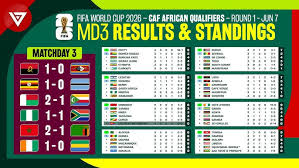
The current standings in the FIFA World Cup African Qualifiers reflect a highly competitive environment where several teams are performing strongly while others continue to struggle for consistency. Traditional powerhouses such as Senegal, Morocco, Egypt, and Nigeria remain at the top of their respective groups, but they are being closely challenged by emerging teams that have improved significantly in recent years. The standings highlight how narrow the gap has become between top-tier and mid-tier African football nations.
Across all groups, the race for qualification remains unpredictable, with several matches still left to play in the group stage. Some teams have built early leads through strong defensive performances and efficient attacking play, while others are relying on late surges to stay in contention. Because the qualification process spans multiple matchdays, the standings continue to shift, making it essential for teams to maintain focus throughout the campaign. This dynamic nature of African qualifiers keeps fans engaged and ensures that every match has significant consequences.
Key Teams and Performance Trends
Several teams have consistently stood out in the African qualifiers due to their squad strength, tactical organization, and international experience. Nations like Senegal, Morocco, and Egypt continue to demonstrate dominance, largely due to their mix of experienced players and emerging young talent. These teams often control possession, maintain defensive stability, and capitalize on key scoring opportunities, which allows them to stay at the top of their groups.
At the same time, the qualifiers have also showcased impressive performances from rising teams such as Cape Verde, Sudan, and Burkina Faso. These nations have surprised opponents with disciplined defensive structures and effective counterattacking strategies. Their performances highlight the increasing competitiveness of African football, where even lower-ranked teams can challenge traditional giants. This trend has made the qualification process more unpredictable and exciting for fans and analysts alike.
Qualification Schedule and Match Progression
The CAF qualification schedule for the 2026 FIFA World Cup is spread across multiple international windows, running from late 2023 through 2025. Each team plays home-and-away matches within their group, ensuring fairness and equal opportunity to earn points both at home and on the road. The long timeline allows teams to recover from early setbacks, but it also demands consistency over an extended period of competitive football.
As the qualification progresses, each matchday becomes increasingly important in shaping the final standings. Early matches help establish momentum, while later fixtures often determine final group positions. The schedule also includes carefully planned international breaks to accommodate club commitments, ensuring that top players remain available for their national teams. This structured timeline ensures a balanced and competitive qualification journey for all participating African nations.
Players to Watch in African Qualifiers
The African qualifiers feature some of the most talented footballers in the world, many of whom play in top European leagues. Players such as Victor Osimhen, Mohamed Salah, and Sadio Mané continue to play crucial roles for their national teams, bringing experience, leadership, and goal-scoring ability. Their performances often determine the outcome of key matches, making them central figures in their teams’ qualification campaigns.
In addition to established stars, several young players are emerging as future leaders of African football. Talents from countries like Nigeria, Morocco, and Senegal are beginning to make their mark with impressive performances in qualifying matches. These rising players add new energy and unpredictability to their teams, helping to reshape the competitive landscape of African football. Their development is one of the most important storylines in the current qualification cycle.
Qualification Rules and Path to the World Cup
The qualification rules for the CAF region are designed to reward consistent performance across all group matches. Each team earns three points for a win, one point for a draw, and no points for a loss. At the end of the group stage, the team with the highest points total in each group automatically qualifies for the FIFA World Cup. Goal difference and head-to-head results are used as tiebreakers when teams finish on equal points.
Beyond the group winners, the four best runners-up enter a playoff system to determine which team advances to the inter-confederation playoffs. This structure adds another layer of competition and ensures that strong teams that narrowly miss first place still have a chance to qualify. The system rewards consistency, goal scoring, and defensive strength, making every match in the qualification campaign extremely important for all participating nations.
Frequently Asked Questions (FAQ)
The FIFA World Cup African Qualifiers often raise questions among fans about how the system works, which teams are likely to qualify, and how standings are calculated. One of the most common questions is how many African teams qualify for the World Cup. For the 2026 edition, CAF has been allocated nine direct qualification spots along with one additional playoff opportunity, making it the largest African representation in World Cup history.
Another frequently asked question concerns how standings are determined in case of tied points. In such cases, goal difference, goals scored, and head-to-head results are used to separate teams. Fans also often ask which teams are favorites to qualify, with traditional powerhouses like Morocco, Senegal, Egypt, and Nigeria usually considered strong contenders. However, the evolving nature of African football means surprises are always possible, and underdog teams continue to challenge expectations in every qualification cycle.
You may also read: Big Motoring World – Your Trusted Destination for Quality Used Cars