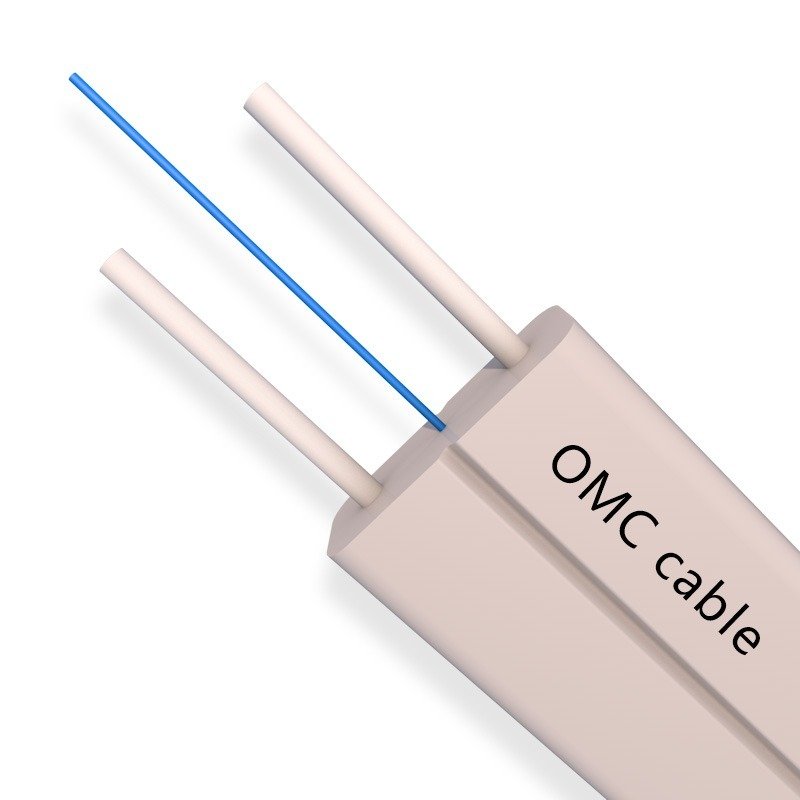
#Fiber-to-the-home (FTTH) technology has become an important part of modern telecommunications. It provides high-speed internet access to homes, offices, apartments, and commercial buildings. One of the essential components of an FTTH network is the FTTH drop cable, which connects the fiber distribution point to the end user’s premises.
As demand for stable broadband connections continues to increase, internet service providers need reliable cabling solutions that support efficient installation and consistent optical performance. Choosing the right drop cable helps network operators build dependable connections while reducing maintenance requirements.
What Is an FTTH Drop Cable?
An FTTH drop cable is an optical fiber cable designed for the final connection between a distribution network and a subscriber’s location. It carries optical signals from a nearby distribution box, terminal, or access point to a home or business.
Unlike larger feeder and distribution cables, drop cables are generally designed for shorter routes and simpler installation. Their compact construction makes them suitable for indoor routing, building entrances, and certain outdoor applications.
The exact design depends on the installation environment, required fiber count, mechanical strength, and cable protection requirements.
Main Features of FTTH Drop Cable
A quality FTTH drop cable combines optical performance with practical installation features.
Bend-insensitive optical fiber: Many modern drop cables use G.657-series single-mode fiber, which is designed to tolerate tighter bends than conventional fiber types. This is useful when routing cables around corners and through confined spaces.
Strength members: Fiber drop cables commonly include fiber-reinforced plastic (FRP) rods or steel strength members. These components help protect the optical fiber from mechanical stress during installation.
Compact construction: Flat and compact cable designs are easier to route along walls, through building entrances, and inside residential properties.
Protective outer jacket: The jacket material must suit the installation environment. Indoor cables may require low-smoke, halogen-free materials, while outdoor cables need appropriate resistance to moisture, sunlight, and temperature changes.
Common Types of FTTH Drop Cable
Different network projects require different cable constructions.
Flat Drop Cable
Flat drop cables are frequently used for indoor installations and short building-entry routes. Their shape allows installers to position them neatly along walls and other surfaces. Many designs include two parallel strength members around the optical fiber.
Self-Supporting Drop Cable
Self-supporting cables are designed for suitable aerial installations between support points. Some designs use a steel messenger, while all-dielectric versions use nonmetallic supporting elements. The correct option depends on span length, loading conditions, and the manufacturer’s specifications.
Round Drop Cable
Round drop cables can be suitable for ducted or protected routes, depending on their construction. Their selection should consider pulling forces, cable diameter, crush resistance, and the available pathway.
Applications in Modern Networks
FTTH drop cables are used in residential broadband connections, apartment buildings, office premises, and commercial internet installations. They connect the access network to subscriber equipment, including optical network terminals.
Internet service providers also use drop cables when expanding coverage into new neighborhoods. A suitable cable design can simplify installation across different property layouts while helping technicians maintain consistent network quality.
How to Choose the Right Cable
Before purchasing an FTTH drop cable, network planners should evaluate the installation route and expected operating conditions.
First, identify whether the cable will run indoors, through a duct, along a building exterior, or between aerial supports. Next, confirm the required fiber count and fiber specification. One or two fibers may be sufficient for many subscriber connections, but the project design should determine the final requirement.
Mechanical specifications are equally important. Check tensile strength, crush resistance, bend radius, operating temperature, and jacket suitability. For outdoor applications, confirm UV resistance and whether the cable is designed for the intended aerial or underground installation method.
Connector requirements should also be considered. Pre-terminated assemblies can simplify deployment when the connector type, cable length, and termination points are known in advance.
Installation and Maintenance
Proper installation helps protect the cable and maintain optical performance. Technicians should follow the manufacturer’s minimum bend radius and pulling-force limits. Excessive tension, sharp bends, crushed sections, and poorly secured cable routes can damage the fiber or increase signal loss.
Connectors should remain clean and protected until they are connected. If a subscriber experiences intermittent service or reduced performance, technicians can inspect the route and test the optical link to identify possible faults.
Conclusion
FTTH drop cable plays an important role in delivering fiber broadband to homes and businesses. Selecting the appropriate cable construction improves installation efficiency and supports reliable last-mile connectivity. By evaluating the route, fiber specifications, mechanical requirements, and environmental conditions, network operators can choose a solution that fits their project and supports long-term performance.