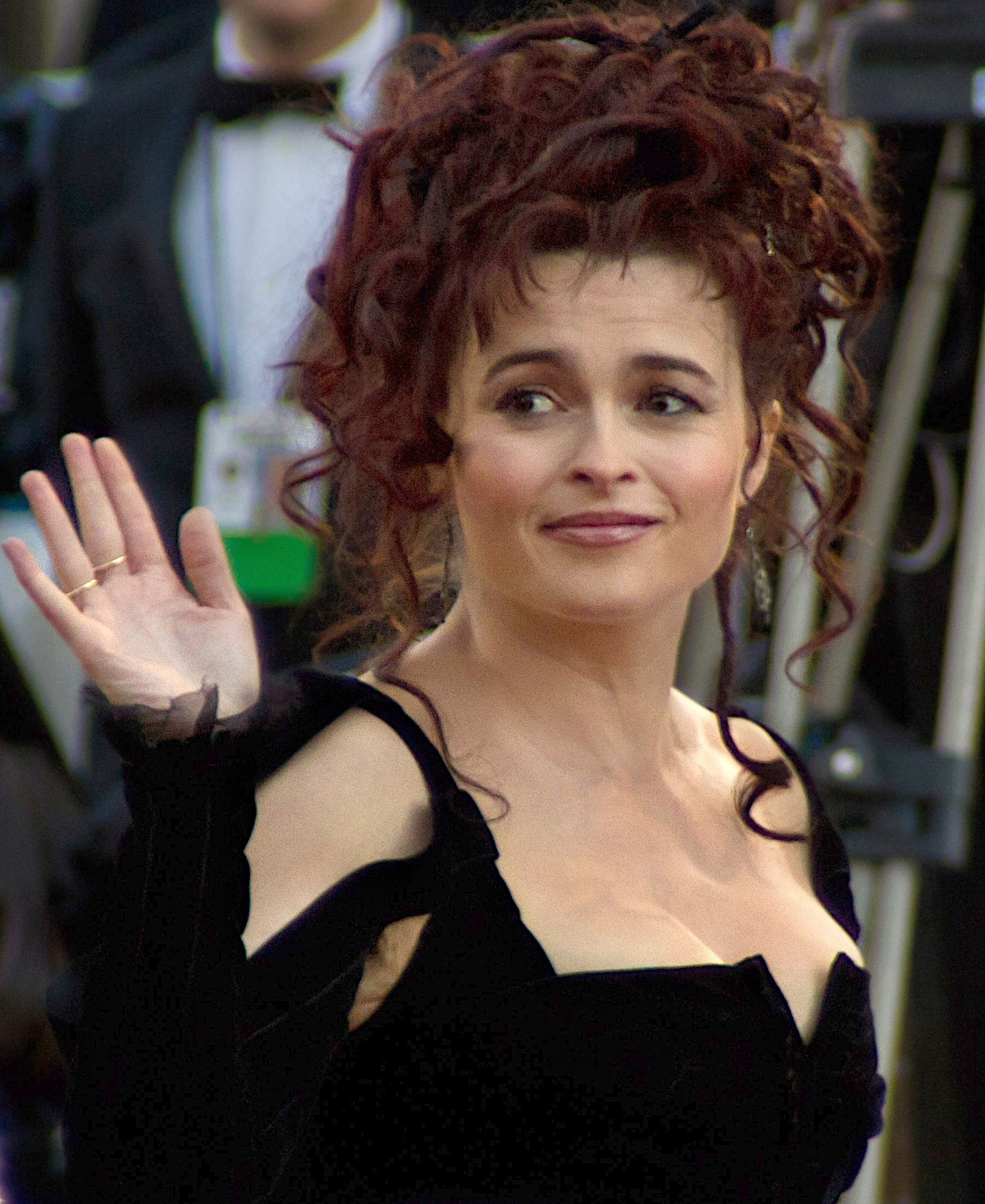
Some love stories are written in wedding vows and white dresses. The story of Helena Bonham Carter and Tim Burton was written in greasepaint, fake blood and stop-motion puppets instead. For thirteen years they were the strangest couple in British cinema: an actress famous for corsets and period drama, and a director famous for spiky-haired outcasts and haunted houses. They never married, they lived in separate houses joined by a shared room, and together they made some of the most recognisable films of recent decades.
The corset queen from London
Helena Bonham Carter was born on 26 May 1966 in London, into a political family. Her father, Raymond, was a merchant banker and the grandson of H. H. Asquith, who had served as prime minister from 1908 to 1916. Her mother, Elena, was a psychotherapist.
She had no formal acting training at all. At thirteen she decided she wanted to act, and at sixteen she won a national writing contest and used the prize money to join the actors’ Spotlight directory. Her first screen appearance came in A Pattern of Roses in 1983, and her first leading film role followed in Lady Jane in 1986. It was the film made just before it that made her name: A Room with a View, released in 1985, cast her as Lucy Honeychurch, and the film was nominated for eight Academy Awards.
More period roles followed: Ophelia in Hamlet in 1990, Helen Schlegel in Howards End in 1992, and Elizabeth in Mary Shelley’s Frankenstein in 1994, where she met Kenneth Branagh, her partner for the next five years. The industry could not see past the corsets until she played Kate Croy in The Wings of the Dove in 1997, earning her first Academy Award nomination, for best actress. Two years later she tore the image apart as Marla Singer in Fight Club, opposite Brad Pitt and Edward Norton.
The boy from Burbank who drew monsters
Timothy Walter Burton was born on 25 August 1958 in Burbank, California, and he grew up drawing the things other children were afraid of. He filled notebooks with skeletons and ghosts, and carried that world with him to the California Institute of the Arts, where he studied animation, before joining Disney as an animator.
His first feature, Pee-wee’s Big Adventure, arrived in 1985, followed by the run that made his name: Beetlejuice in 1988, Batman in 1989, Edward Scissorhands in 1990, Ed Wood in 1994 and Sleepy Hollow in 1999. His worlds were instantly recognisable, all twisted rooftops and black humour, centred on a misunderstood outsider who did not fit in anywhere. Composer Danny Elfman scored almost all of his films. By the end of the nineteen nineties Burton was one of Hollywood’s most distinctive directors, with two Academy Award nominations behind him.
An ape, a director, and a beginning
Planet of the Apes began filming in 2000, with Burton directing and Bonham Carter cast as Ari, a chimpanzee who helps the human hero. She spent hours daily in prosthetic make-up, learning to move and speak as an ape, and it was in that strange world that the two of them met. By the time the film reached cinemas in 2001, they were a couple.
It was never a conventional romance. They did not marry, and they did not move into one house. Instead they bought two adjoining houses in Belsize Park in north London, joined by a shared room, so each could keep their own space. For thirteen years it worked. They became parents and collaborators, and one of the most photographed couples in London, she in mismatched shoes, he in his black suit with wild hair. Bonham Carter has said she did not automatically get parts in his films, and had to audition like anyone else.
Seven films in thirteen years
The collaboration began with a small part in Big Fish in 2003, where Bonham Carter played Jenny, a woman from the hero’s past. Then came Charlie and the Chocolate Factory in 2005, where she played Mrs Bucket, Charlie’s kind, poor mother, opposite Johnny Depp’s Willy Wonka. In the same year she voiced the title character in Corpse Bride, Burton’s stop-motion tale of a shy young man who accidentally marries a dead woman, which was nominated for the Academy Award for best animated feature.
Their best work together came in 2007, with Sweeney Todd: The Demon Barber of Fleet Street, based on Stephen Sondheim’s musical. Bonham Carter played Mrs Lovett, the pie-shop owner who turns her customers into filling, opposite Depp’s vengeful barber. It was a long way from Lucy Honeychurch.
Then came the film that made their partnership famous around the world. In Alice in Wonderland in 2010, Bonham Carter played the Red Queen, a tyrant who shouted for heads to be cut off, and she stole every scene. She returned to the role in Alice Through the Looking Glass in 2016, and between the two Alice films she played Dr Julia Hoffman in Dark Shadows in 2012. In thirteen years they had made seven films together, and her face had become as much a part of Burton’s world as Johnny Depp’s.
Two houses, two children
Meanwhile, a family was growing in those two adjoining houses. Their son, Billy Raymond, was born on 4 October 2003, named after both of their fathers, and their daughter, Nell, arrived on 15 December 2007, named for all the Helens in the family. Both children were kept out of the spotlight, and their parents guarded their privacy fiercely.
But in December 2014, her representative confirmed that the couple had separated amicably earlier that year, after thirteen years together. They had not married, so there was no divorce, but both said they would go on co-parenting and remaining friends. Bonham Carter has spoken since about how painful the split was, but she has also been generous about what the relationship gave her, describing Burton as a friend she still gets on with. There was no public bitterness, no court battle, and no tell-all interview, which is rare in itself.
Bellatrix, a queen, and a princess
The split did not slow either of them down. In 2007, the same year as Sweeney Todd, Bonham Carter began playing Bellatrix Lestrange in the Harry Potter films, the wild-eyed Death Eater devoted to Lord Voldemort, and she played the part in the final four films, from Harry Potter and the Order of the Phoenix in 2007 to Harry Potter and the Deathly Hallows Part 2 in 2011. Bellatrix became one of the most memorable villains in modern cinema.
In 2010 she played Queen Elizabeth, the Queen Mother, in The King’s Speech, opposite Colin Firth as King George VI, winning a BAFTA for best supporting actress and her second Academy Award nomination. The year before, she had won the International Emmy for best actress for playing the children’s author Enid Blyton in the BBC film Enid, and in 2012 she was made a Commander of the Order of the British Empire for services to drama.
Then came television. From 2019 to 2020 she played Princess Margaret in the third and fourth seasons of Netflix’s The Crown, capturing the princess’s wit, rebellion and sadness, and earning two Primetime Emmy Award nominations. She had played Elizabeth Taylor in the BBC film Burton and Taylor in 2013, Miss Havisham in Great Expectations in 2012, and Madame Thenardier in Les Miserables in the same year, and later played Noele Gordon in the series Nolly in 2023. It was a second act as rich as the first.
The gothic romance that outlived the romance
What remains is not a marriage, because there never was one, and not a tragedy, because neither of them has treated it as one. What remains is a body of work: seven films in thirteen years, two children, and a style of cinema neither could have made alone. She gave his dark fairy tales a human heart, and he gave her the strange, wild roles the period dramas never would have offered.
Two outsiders found each other on a film set, built a family in two houses joined by one room, and made films that children and adults still watch together. The romance ended in 2014, but the films did not, and every time the Red Queen shouts or Mrs Lovett sings, a little piece of that partnership is still on screen. For more on two British stars whose partnership defined an era, read our piece on Daniel Radcliffe and Emma Watson.
Nearly a quarter of a century after a chimpanzee in prosthetic make-up met a director on a film set, their gothic romance still feels like one of the most honest love stories in modern cinema. It was strange, creative and unconventional, and it produced work that will outlast them both. The houses in Belsize Park are still there, the children are grown, and the films are still playing, perhaps the best ending a love story like theirs could have.