
Kiln dried logs have become the default choice for UK firewood buyers, and the reason isn’t just marketing. Since May 2021, it has been a legal requirement in England for firewood sold in volumes under 2m³ to carry “Ready to Burn” certification, meaning a verified moisture content of 20% or less. Kiln drying is the fastest, most reliable way for suppliers to hit that mark consistently — which is why kiln dried logs now dominate the market for wood-burning stoves, open fires, fire pits, and outdoor cooking.
This guide covers everything the shorter, surface-level articles skip: the actual law behind “ready to burn” claims, how kiln dried logs compare to seasoned wood in hard numbers, which species to buy for which use, how much to order, and how to avoid the mistakes that waste money or fall foul of local smoke regulations.
Key Takeaway: Kiln dried logs aren’t just “drier firewood” — they’re a legally defined, certifiable product category in the UK. Understanding the certification is the difference between buying with confidence and buying on trust alone.
What Are Kiln Dried Logs?
Kiln dried logs are firewood that has been dried inside a purpose-built kiln under controlled temperature and airflow, rather than left to dry naturally over months or years. The process typically brings moisture content down to below 20%, and often as low as 12–15% in premium products, compared with 25–35% or higher in freshly cut or poorly seasoned wood.
Lower moisture content matters because water inside the wood has to be boiled off before the log can actually burn. Every bit of energy spent evaporating that moisture is energy that isn’t being released as usable heat. A log at 45% moisture can lose over half its potential heat output to this process alone, which is why wet wood is difficult to light, smoulders instead of flaming, and produces thick, acrid smoke.
Because the kiln also holds the wood at temperature for an extended period, it kills off fungal spores, mould, and wood-boring insects that untreated logs can carry. This makes kiln dried logs safe to store indoors — something you should never do with green or unseasoned wood, which can bring pests into a house or shed.
Pro Tip: Not all “kiln dried” labelling is equal. Look specifically for the Woodsure “Ready to Burn” logo and a supplier reference code starting with “WS” — this confirms independent verification rather than a supplier’s own claim.
Is It Actually the Law? UK Regulations on Firewood Moisture
This is the part most firewood guides gloss over, and it’s worth getting right because it directly affects what you’re legally allowed to buy and burn.
Under the Air Quality (Domestic Solid Fuels Standards) (England) Regulations 2020, firewood sold in quantities under 2m³ must be certified as having a moisture content of 20% or less. The scheme is called Ready to Burn, it’s administered by the non-profit body Woodsure on behalf of Defra, and it has been mandatory in England since 1 May 2021. Suppliers who sell in bulk quantities of 2m³ or more are exempt from certification but must instead provide written guidance on how to season or dry the wood correctly before burning. Failure to comply can result in a fixed penalty notice or, in serious cases, a fine on summary conviction.
Separately, many parts of the UK also sit within a Smoke Control Area, established under the Clean Air Act 1993. In these zones, it’s an offence to emit smoke from a chimney unless you’re burning an “authorised” smokeless fuel or using a DEFRA-exempt appliance, such as most modern Ecodesign wood-burning stoves. Kiln dried wood used in an exempt appliance is generally compliant, but the rules apply to the appliance and fuel combination, not to kiln dried logs alone — so it’s worth checking your postcode against your local authority’s smoke control map before buying if you’re unsure.
Expert Note: Even outside a formal Smoke Control Area, producing excessive smoke that drifts into a neighbour’s garden can be treated as a statutory nuisance under the Environmental Protection Act 1990. Kiln dried wood is the simplest way to avoid this, since low moisture content is the single biggest factor in visible smoke output.
Kiln Dried Logs vs. Seasoned (Air-Dried) Logs
“Seasoned” and “kiln dried” are often used interchangeably by sellers, but they’re not the same thing, and the difference affects both performance and price.
| Factor | Kiln Dried Logs | Seasoned (Air-Dried) Logs |
|---|---|---|
| Typical moisture content | 12–20% | 20–30%+ (varies widely) |
| Drying time | 3–10 days in a controlled kiln | 6–18 months, weather-dependent |
| Consistency | Uniform, tested and certified | Variable, depends on storage and species |
| Ready to Burn certifiable | Yes, routinely | Only if independently tested below 20% |
| Pest/mould risk | Very low (heat-treated) | Higher if stored poorly |
| Typical price | Higher per bag | Lower per bag, but less predictable |
| Best for | Immediate use, indoor storage, stoves | Buyers with long-term storage and patience |
Seasoned logs can technically meet the same 20% threshold and carry Ready to Burn certification if a supplier has tested them, but this depends entirely on how well they were stored. Kiln drying removes that uncertainty by controlling the process from start to finish, which is why it has become the preferred option for anyone who wants predictable results without a year of planning ahead.
How Kiln Dried Logs Are Made
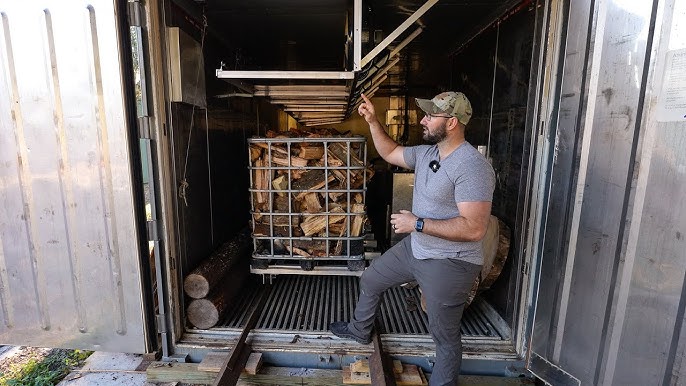
Production starts with selected timber — most commonly UK hardwoods such as oak, ash, birch, beech, and hornbeam — cut and split to a size suited to standard stoves and fireplaces. The split logs are loaded into a drying kiln, where warm air is circulated at controlled temperatures, typically between 60°C and 90°C depending on the system.
The drying cycle usually runs for three to ten days, depending on log size, species density, and starting moisture content. Denser hardwoods like oak take longer to dry evenly than lighter woods like birch. Throughout the cycle, reputable suppliers monitor moisture levels using embedded sensors or spot-check with handheld moisture meters, adjusting temperature and airflow to avoid over-drying, which can make logs burn too fast, or under-drying, which defeats the purpose entirely.
Once the batch reaches the target moisture band, the logs are cooled, bagged, and — for certified suppliers — labelled with the Ready to Burn mark, the supplier’s registration number, and the certifying body’s details. This is a meaningfully faster and more controllable process than natural seasoning, which depends on weather, airflow, and how the wood was stacked, and can vary by several percentage points of moisture even within the same log pile.
Best Wood Species for Kiln Dried Logs
Different hardwoods burn differently even at the same moisture content. Choosing the right species — or the right mix — makes a bigger difference to your experience than most buyers expect.
| Species | Heat Output | Burn Time | Flame Character | Best For |
|---|---|---|---|---|
| Oak | Very high | Longest (dense, slow burn) | Steady, low flame, long coal bed | Overnight stove burns, extended heating |
| Ash | High | Medium-long | Bright, steady flame | All-round use, beginners, fire pits |
| Beech | High | Medium-long | Clean, low ash, pleasant aroma | Stoves, indoor heating |
| Birch | Medium-high | Shorter, fast-catching | Bright, lively flame, papery bark ignites easily | Quick starts, kindling, ambiance fires |
| Hornbeam | Very high | Long | Slow, dense, minimal smoke | Long-duration stove burns |
Key Takeaway: If you only buy one type, ash is the safest all-rounder — it lights easily, burns cleanly, and performs well in both stoves and outdoor fires. If overnight burn time matters most, prioritise oak or hornbeam. Many suppliers offer mixed hardwood loads specifically to combine birch’s easy ignition with oak’s longevity.
How Much Do You Need? A Buying Guide to Bag Sizes
Kiln dried logs are typically sold in several standard formats, and choosing the wrong size is one of the most common (and avoidable) buying mistakes.
| Format | Typical Volume | Best For |
|---|---|---|
| Net bag | 0.02–0.04m³ | Occasional use, top-ups, camping |
| Small crate | 0.1–0.25m³ | Light monthly use, secondary fires |
| Dumpy/builder’s bag | 0.5–0.8m³ | Regular stove users, one season’s supply for light use |
| Mammoth/bulk bag | 1–1.2m³ | Heavy stove use, full winter season |
| XXXL/multi-bulk | 2m³+ | Whole-season or multi-household supply (note: exempt from per-bag Ready to Burn labelling, so check for a supplier’s seasoning guidance) |
As a rough planning figure, a household using a wood-burning stove as a primary heat source through a full UK winter typically burns through 2–3m³ of logs, while occasional weekend or fire-pit use might only need a few net bags or one dumpy bag per season. Denser hardwoods like oak stretch further than lighter, faster-burning species like birch, so factor species choice into your quantity estimate, not just bag count.
How to Store Kiln Dried Logs Correctly
Kiln drying gets logs to below 20% moisture at the point of delivery, but that number can climb back up quickly if they’re stored badly — wood is hygroscopic and will reabsorb moisture from damp air, rain, or contact with the ground.
Store logs off the ground on a pallet or raised rack, in a location with good airflow. A covered log store with open or slatted sides is ideal, since it sheds rain while still allowing air to circulate and prevent condensation build-up. Fully sealed containers or tarps wrapped tightly around the logs can actually trap moisture and encourage mould, so ventilation matters as much as covering.
If you’re storing a large seasonal delivery, use a first-in-first-out approach, burning older stock before newer deliveries, and periodically spot-check a few logs from the middle of the stack with a moisture meter if you’re storing for more than a few months.
Pro Tip: A cheap pin-type moisture meter (from roughly £10–£20) pays for itself quickly. Split a log and test the freshly exposed inner face, not the outer surface, which dries faster and gives a falsely low reading.
How to Test Moisture Content Yourself
If you want to verify a supplier’s claims or check logs you’ve had in storage for a while, testing moisture content is simple. Split a representative log in half, press the meter’s pins into the freshly exposed inner face (never the bark or an outer surface that’s been exposed to air), and take two or three readings from different logs in the batch. A genuine kiln dried batch should read consistently under 20%, usually clustering in the 12–18% range depending on how recently it was dried.
If readings vary wildly between logs in the same delivery — say, some at 15% and others at 30% — that’s a sign of inconsistent drying or a mixed batch, and worth raising with the supplier.
Using Kiln Dried Logs: Home Heating, Fire Pits, and Outdoor Cooking
Indoor heating. In wood-burning and multi-fuel stoves, kiln dried logs light faster, need less kindling, and produce significantly less creosote build-up in the flue than wetter wood — a direct safety benefit, since creosote accumulation is the leading cause of chimney fires. For open fireplaces, the reduced smoke also means less soot deposit on surrounding brickwork and glass.
Fire pits and garden use. Outdoors, dry wood matters even more than indoors, because there’s no flue or secondary combustion system to manage what wet wood leaves behind. Wood above 20% moisture smoulders rather than burning cleanly in an open fire pit, producing the thick smoke that’s the most common cause of neighbour complaints about garden fires. As a rough guide, an 8–15 log fire pit session (roughly 2–3 hours) is typical for an evening, with oak or ash giving the steadiest, longest-lasting coal bed.
Outdoor cooking. For pizza ovens, chimineas, and wood-fired BBQs, kiln dried hardwood is close to essential — clean, low-moisture combustion is what produces a usable ember bed rather than smoke-tainted food. Never use treated, painted, or varnished wood for cooking; the chemicals involved can produce toxic fumes and contaminate food directly.
Cost of Kiln Dried Logs: Is the Investment Worth It?
Kiln dried logs typically cost more per bag than seasoned or unseasoned firewood, sometimes by a noticeable margin. But comparing raw bag price alone is misleading, because moisture content changes how much usable heat you actually get per log.
A log at 45% moisture wastes a substantial share of its energy content simply evaporating water before it produces heat, meaning you burn through more wet wood to hit the same room temperature. Kiln dried logs, closer to 15–20% moisture, convert far more of their stored energy directly into heat, so fewer logs are needed for the same result. Factor in reduced chimney sweeping frequency from lower creosote build-up, and less wasted stock lost to rot or pest damage in storage, and the cost gap narrows considerably over a full heating season — particularly for anyone using a stove as a primary or significant heat source rather than for occasional ambiance.
Sustainability and Sourcing
Look for suppliers who can point to specific certification rather than a general claim of being “eco-friendly.” FSC (Forest Stewardship Council) and Grown in Britain certifications indicate the timber comes from responsibly managed forests with replanting commitments, and are worth checking on a supplier’s product page or asking about directly if it isn’t listed. Locally kiln dried and locally sourced logs also reduce transport emissions compared with wood dried or shipped from further afield — worth factoring in if sustainability is a priority alongside performance.
Efficiency itself is also a sustainability factor that’s easy to overlook: because kiln dried logs burn more completely and produce less particulate pollution than wet wood, using them is one of the most direct ways an individual household can reduce its contribution to local air quality issues from domestic burning.
Safety Considerations
A few rules apply regardless of how you’re using kiln dried logs:
- Never burn treated, painted, or chemically finished wood — this includes reclaimed timber of unknown origin, which can release toxic compounds when burned.
- Check whether your address falls within a Smoke Control Area before regular outdoor burning; your local council can confirm this, and using an authorised fuel or exempt appliance is a legal requirement in these zones.
- Keep a bucket of water or fire extinguisher within reach for any outdoor fire, and never leave a lit fire pit or stove unattended.
- Allow ash to cool fully (this can take several hours) before disposing of it in a metal container, not a bin bag.
- Ensure any indoor stove is swept and serviced according to manufacturer guidance; even with dry wood, regular maintenance prevents creosote-related chimney fires.
Frequently Asked Questions
What is the legal moisture requirement for firewood in the UK? Since May 2021, firewood sold in volumes under 2m³ in England must be certified under the Ready to Burn scheme, with a verified moisture content of 20% or less. This is a legal requirement under the Air Quality (Domestic Solid Fuels Standards) (England) Regulations 2020, administered by Woodsure on behalf of Defra.
What’s the actual difference between kiln dried and seasoned logs? Kiln dried logs are dried in a controlled industrial kiln over days, typically reaching 12–20% moisture consistently. Seasoned logs are air-dried naturally over 6–18 months and can vary widely in final moisture content depending on storage conditions, so they may or may not meet the same threshold.
Is it legal to burn kiln dried logs in a Smoke Control Area? Yes, provided you’re using an authorised or DEFRA-exempt appliance, such as most modern Ecodesign wood-burning stoves. The legal restriction in a Smoke Control Area applies to the fuel-and-appliance combination under the Clean Air Act 1993, so check your specific appliance’s exemption status alongside the fuel.
How do I know if logs are genuinely kiln dried and not just labelled that way? Look for the Woodsure Ready to Burn logo and a supplier reference code beginning with “WS,” which confirms independent verification. You can also test a sample yourself with an inexpensive pin-type moisture meter on a freshly split log face.
How many kiln dried logs do I need for one evening or one season? A typical evening fire pit session (2–3 hours) uses roughly 8–15 logs. A household relying on a wood-burning stove as a significant heat source through a full UK winter typically needs 2–3m³ of logs, though this varies with stove use, home insulation, and wood species.
Can kiln dried logs get wet again after delivery? Yes. Kiln drying doesn’t make wood waterproof — it’s a snapshot moisture reading at the point of drying. Logs left uncovered in rain or stored directly on damp ground can reabsorb moisture and lose the benefits of kiln drying within weeks, so correct storage matters as much as the initial drying process.
Are kiln dried logs safe to use for cooking, pizza ovens, and BBQs? Yes, provided the wood is untreated hardwood with no chemical coatings. Kiln dried hardwood’s low moisture and clean combustion make it well suited to pizza ovens and wood-fired cooking, producing a usable ember bed without smoke-tainted flavour.
Do kiln dried logs burn longer than seasoned logs? Not necessarily longer in absolute terms — burn time depends more on wood density and species than drying method alone. What kiln drying reliably improves is combustion efficiency: more of the log’s stored energy converts to usable heat rather than being lost evaporating residual moisture.
Final Thoughts
Kiln dried logs earn their premium price through consistency, not marketing. A genuine Ready to Burn certified product gives you a legally verified moisture level, predictable burn performance, and lower maintenance costs over a season, whether you’re heating a home, running a wood-fired oven, or hosting an evening around a fire pit.
The details that separate a good purchase from a disappointing one are the ones covered here: checking for real certification rather than a label alone, matching species and quantity to how you’ll actually use the wood, and storing logs correctly so they don’t lose the benefit you paid for. Get those right, and kiln dried logs deliver exactly the clean, efficient, low-hassle firewood experience the UK market has increasingly come to expect.
You may also read: Certainly Wood’s Product Range: What You Can Expect