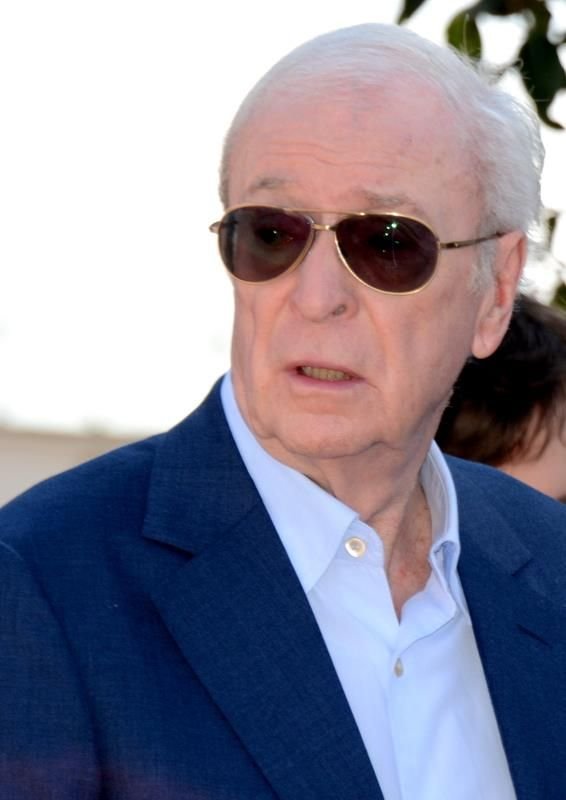
Some screen partnerships are manufactured by studios. Others grow out of a genuine friendship that lasts for decades, and when the cameras finally catch it, the result feels like lightning in a bottle. That is the story of Michael Caine and Sean Connery, two working-class boys from opposite ends of Britain who became the defining faces of British cinema in the 1960s. One became the coolest Cockney in London, the other the most famous secret agent in the world, and when they shared the screen in The Man Who Would Be King in 1975, they gave audiences one of the great adventure films ever made.
Michael Caine was born Maurice Joseph Micklewhite on 14 March 1933 in Rotherhithe, south London, the son of a fish-market porter and a charwoman. Sean Connery was born Thomas Sean Connery on 25 August 1930 in Fountainbridge, Edinburgh, the son of a factory worker and lorry driver. Neither man came from money, neither went to drama school, and neither was supposed to end up a knight of the realm. Yet both were knighted in the same year, 2000, and both won the Academy Award for Best Supporting Actor.
Two Very Different Starts
Caine grew up in a two-room flat in south London, was evacuated to Norfolk during the Second World War, and did his National Service in Korea before drifting into repertory theatre. He spent the best part of a decade in small parts on stage and television before the film world noticed him. The name that made him famous came from a cinema marquee. Spotting The Caine Mutiny on the Odeon in Leicester Square, Maurice Micklewhite took the surname Caine on the spot, and it stuck so firmly that he only made Michael Caine his legal name in 2016.
Connery’s route was even less conventional. He left school at thirteen, worked as a milkman in Edinburgh, joined the Royal Navy at sixteen, and then tried bodybuilding and lifeguarding before a part in the touring production of South Pacific gave him his first taste of the stage. It was during that 1954 tour that he first met a young Michael Caine, and the two men struck up a friendship that would last for the rest of Connery’s life. Casting directors soon noticed the tall, dark, strikingly handsome young Scot, and small film roles followed through the late 1950s, but nothing suggested that this former milkman from Fountainbridge was about to become the most famous film star on the planet.
The 1960s: Two Stars Are Born
Caine’s breakthrough came in 1964, when he was cast against type as the upper-class Lieutenant Gonville Bromhead in Zulu, the epic account of the Battle of Rorke’s Drift. A year later he played Harry Palmer, the bespectacled, working-class spy, in The Ipcress File (1965). Palmer was the anti-Bond, a spy who felt like a real person rather than a fantasy. Then came Alfie (1966), in which Caine played a charming, self-centred London womaniser who talks straight to the camera, and earned his first Academy Award nomination for Best Actor. Within three years he had gone from jobbing actor to the face of swinging London.
Connery’s breakthrough was bigger still. In 1962 he became the first actor to play James Bond on screen in Dr. No. The clipped delivery of “Bond, James Bond” became one of the most imitated lines in cinema, and the sequels that followed turned the Bond series into a worldwide phenomenon. Connery brought a physical menace and a wry humour to the part that no successor has quite matched. By the end of the decade the two men were the biggest British male stars in the world. Caine was the witty Cockney insider, the man who made London feel like the centre of the universe. Connery was the brooding Scot who had conquered Hollywood without ever losing his Edinburgh accent or his pride in where he came from.
The Man Who Would Be King
The two friends had already appeared together once, in the television film Male of the Species in 1969, but their great shared moment came in 1975 with John Huston’s The Man Who Would Be King. Based on Rudyard Kipling’s 1888 novella, it cast Connery as Daniel Dravot and Caine as Peachy Carnehan, two former British soldiers turned rogues who set off for the remote land of Kafiristan determined to make themselves kings. The film is a joy from first frame to last, and almost all of that joy comes from the chemistry between its two leads. Connery’s Dravot is swaggering, reckless and gloriously overconfident, while Caine’s Peachy is the warier, funnier, more human half of the partnership. The film was nominated for four Academy Awards. They shared the screen once more in A Bridge Too Far (1977).
Connery After Bond
Connery walked away from Bond twice, returning for Diamonds Are Forever in 1971 and once more for the unofficial Never Say Never Again in 1983, which took his total as 007 to seven films. He played Henry Jones Sr. in Indiana Jones and the Last Crusade (1989), stealing scenes from Harrison Ford. The crowning achievement of his later career came in 1987, when he played the veteran Irish-American policeman Jimmy Malone in Brian De Palma’s The Untouchables. The performance won him the Academy Award for Best Supporting Actor, making him the first Scottish actor to win a major Oscar. He followed it with The Hunt for Red October (1990) and The Rock (1996). He stepped away from acting after The League of Extraordinary Gentlemen in 2003, and lived quietly in the Bahamas with his wife Micheline, whom he had married in 1975. He died there on 31 October 2020, aged 90.
Caine’s Second Act
Caine’s career took a different shape. Where Connery narrowed his choices as he grew older, Caine kept working at an extraordinary pace, appearing in more than a hundred films. He was nominated for Best Actor four times, but his two Academy Awards both came for supporting roles. The first was for Hannah and Her Sisters (1986), in which he played a husband quietly falling for his sister-in-law. The second was for The Cider House Rules (1999), in which he played Dr. Wilbur Larch, an orphanage doctor in Maine. A new generation discovered him when Christopher Nolan cast him as Alfred Pennyworth, the butler and conscience of Bruce Wayne, in Batman Begins (2005), and Caine reprised the role in The Dark Knight (2008) and The Dark Knight Rises (2012). He went on to appear in five more Nolan films, including Inception (2010) and Interstellar (2014). His line from The Italian Job (1969), “You’re only supposed to blow the bloody doors off!”, had long since entered the language.
Knighted in the Same Year
Perhaps the neatest coincidence in British film history is that both men were knighted in 2000. Caine received his knighthood in the Queen’s Birthday Honours, and Connery received his in the 2000 New Year Honours, after years of speculation that his support for Scottish independence had held the honour back. Both men wore the title with evident pride, and both understood what it meant. They had come from streets where nobody expected them to amount to anything, and now they were Sir Michael and Sir Sean.
Two Farewells
The two friends left the stage in very different ways. Connery retired quietly, turning down roles and interviews and settling into life in Lyford Cay in the Bahamas. When he died on Halloween in 2020, Caine was among those who paid tribute, remembering a friendship that had lasted more than sixty years. Caine kept going until his body told him to stop. His final film was The Great Escaper (2023), in which he played Bernie Jordan, the Second World War veteran who slipped out of his care home to attend the seventieth anniversary of the D-Day landings in Normandy. Caine announced his retirement from acting in October 2023, saying that The Great Escaper would be his last film. He has since turned to writing.
Why They Still Matter
There will not be another pairing quite like them. Caine and Connery arrived at a moment when British cinema was changing fast, and they changed with it, from the black-and-white realism of the early sixties to the colour, noise and glamour of the Bond era and beyond. British audiences have always loved a great double act. From comedy duos to sporting partnerships such as Lewis Hamilton and Jenson Button, the best of them work because the two people involved genuinely like each other. Caine and Connery had that in abundance. They were friends before they were famous, they stayed friends when fame could easily have driven them apart, and when they finally stood side by side on screen as two rogues chasing a crown in Kafiristan, it felt less like acting than like watching two old mates on the adventure of their lives.