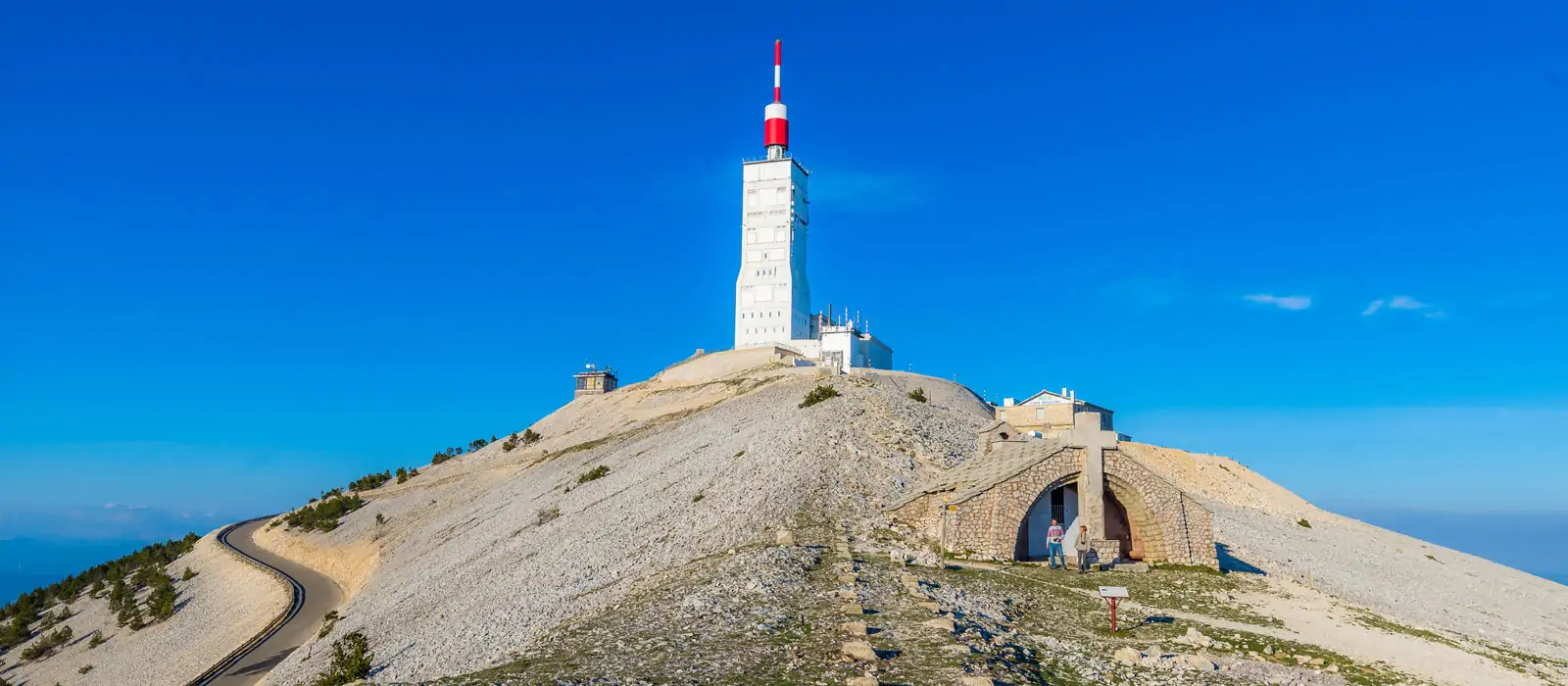
Overview of Mont Ventoux
Mont Ventoux, often called the “Giant of Provence,” is one of the most iconic mountains in southern France and a landmark that dominates the Vaucluse region. Rising to approximately 1,910–1,912 metres depending on measurement standards, it stands isolated from surrounding peaks, making it visually striking from great distances. The mountain is widely recognized for its bare, pale limestone summit, which often appears snow-covered even in warmer months. This dramatic appearance, combined with its physical prominence, has made Mont Ventoux a symbol of endurance, nature, and sporting challenge.
Beyond its natural presence, Mont Ventoux plays an important role in tourism, sports, and cultural identity in Provence. It attracts cyclists from around the world due to its legendary status in the Tour de France, while hikers and nature lovers visit to experience its diverse landscapes and panoramic views. The mountain is not just a geographical feature but a multi-dimensional destination where geography, sport, and natural beauty intersect, making it one of the most visited and studied mountains in France.
Geography, Geology, and Unique Landscape of Mont Ventoux
Mont Ventoux is located in the Provence region, northeast of Carpentras, and forms part of the Vaucluse department. Although geologically linked to the Alps, it is often considered separate due to its isolation and lack of nearby peaks of similar height. Its composition is primarily limestone, which contributes to its bright, almost white summit. This geological structure, combined with erosion over millions of years, has created a unique landscape that transitions from forested lower slopes to a completely barren upper zone.
The mountain’s ecosystem is equally fascinating because it functions as a natural boundary between northern and southern climates. At its base, you will find vineyards, Mediterranean vegetation, and oak forests, while higher elevations transition into alpine-style conditions. This ecological variation has made Mont Ventoux a recognized UNESCO Biosphere Reserve, protecting hundreds of plant species and diverse wildlife. The stark contrast between lush greenery and the barren summit is one of the most visually and scientifically interesting aspects of the mountain.
Climate, Winds, and Weather Conditions on Mont Ventoux
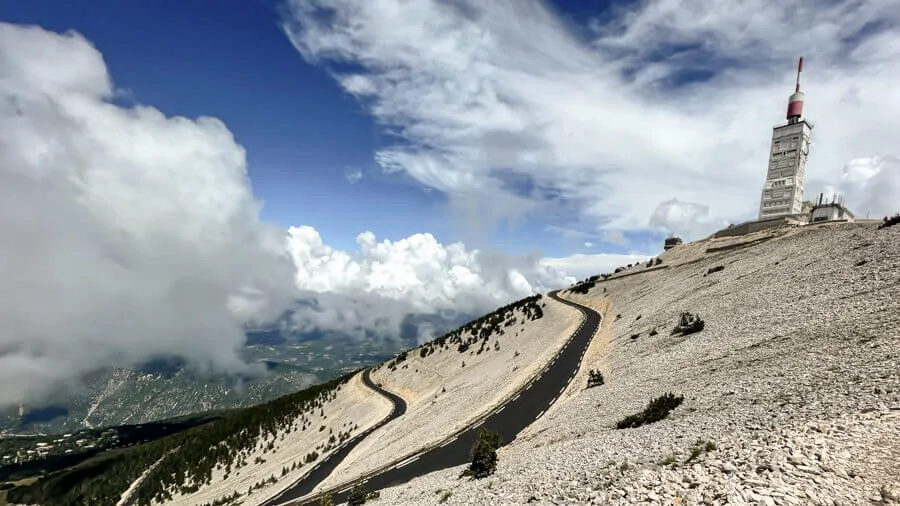
Mont Ventoux is famous not only for its height but also for its extreme and unpredictable weather conditions. One of the most dominant natural forces affecting the mountain is the Mistral wind, a strong northwesterly wind that can reach extremely high speeds at the summit. These winds are known to exceed 100 km/h regularly and have been recorded at even higher intensities. Because of this, the summit often feels significantly colder and harsher than the surrounding lowlands, even during summer.
Weather conditions can change rapidly on Mont Ventoux, making preparation essential for visitors. At the base, temperatures may feel warm and calm, while the summit can be windy, cold, or even snow-covered depending on the season. Roads leading to the peak are frequently closed during winter due to snow and dangerous wind conditions. This unpredictability adds to the mountain’s reputation as a challenging and sometimes unforgiving environment, requiring careful planning for both cyclists and hikers.
Cycling Routes and Tour de France Legacy of Mont Ventoux
Mont Ventoux is one of the most legendary climbs in professional cycling, largely due to its repeated inclusion in the Tour de France. There are three main cycling routes to the summit: Bédoin, Malaucène, and Sault. The Bédoin route is considered the most difficult, stretching approximately 21–22 kilometres with steep gradients that intensify significantly in the final sections. The climb is physically and mentally demanding, making it a benchmark for professional and amateur cyclists alike.
The mountain’s cycling history is deeply tied to iconic moments in the Tour de France, including victories and tragedies that have shaped its reputation. The most famous incident is the death of British cyclist Tom Simpson in 1967, which is commemorated by a memorial near the summit. Champions such as Eddy Merckx, Chris Froome, and Tadej Pogačar have also left their mark on its slopes. These historical moments have elevated Mont Ventoux from a simple climb to a global symbol of endurance and cycling heritage.
Hiking Experience and Natural Exploration on Mont Ventoux
Hiking on Mont Ventoux offers a completely different experience compared to cycling, allowing visitors to immerse themselves in the natural and ecological diversity of the region. Several trails lead through forested areas, rocky slopes, and open alpine terrain, each offering increasingly dramatic views as elevation increases. Hikers are rewarded with panoramic vistas that, on clear days, extend across the Rhône Valley, the Alps, and even the Mediterranean coastline.
The mountain’s biodiversity makes hiking particularly rewarding, as it is home to a wide variety of plant and animal species. The lower slopes are rich in Mediterranean flora, while higher elevations host rare alpine species adapted to harsher conditions. Wildlife such as birds of prey, chamois, and reptiles can often be observed in protected zones. Hiking Mont Ventoux is not just a physical activity but also an opportunity to explore one of France’s most ecologically significant natural environments.
History, Culture, and UNESCO Significance of Mont Ventoux
Mont Ventoux has a long and fascinating history that adds cultural depth to its natural appeal. It has been known since ancient times and was first recorded in written history during the medieval period. The mountain gained literary fame through Petrarch, who described his ascent in the 14th century, often considered one of the earliest accounts of mountain exploration for personal reflection rather than necessity. Over centuries, it has evolved into a symbol of human endurance and curiosity.
In modern times, Mont Ventoux has been recognized for its ecological importance and cultural value. Its designation as a UNESCO Biosphere Reserve highlights its role in preserving biodiversity and balancing human activity with environmental protection. Additionally, its recurring presence in major cycling events and its influence on regional identity make it a cultural landmark for Provence. The mountain represents a blend of natural history, human achievement, and environmental significance.
Things to Do Around Mont Ventoux
The region surrounding Mont Ventoux offers a wide variety of activities beyond the mountain itself. Visitors can explore nearby Provençal villages such as Bédoin, Malaucène, and Sault, each offering traditional markets, local cuisine, and historical architecture. The area is also known for lavender fields, vineyards, and scenic countryside that reflect the charm of southern France. These surrounding attractions make Mont Ventoux a central point for regional exploration.
Adventure activities are also popular in the area, including paragliding, rock climbing, and scenic driving routes through nearby landscapes such as the Gorges de la Nesque and Dentelles de Montmirail. These destinations provide additional opportunities for outdoor exploration while offering different perspectives of the Mont Ventoux region. Whether seeking relaxation or adventure, the surrounding area complements the mountain experience perfectly.
Travel Tips and Best Time to Visit Mont Ventoux
Planning a visit to Mont Ventoux requires attention to weather, season, and physical preparation. The best times to visit are generally spring and early autumn, when temperatures are mild and conditions are more stable. Summer is popular but can be crowded, while winter often brings road closures due to snow and strong winds. Checking weather forecasts before any visit is essential, especially for those planning to reach the summit.
Visitors should also prepare appropriately for changing conditions by bringing layered clothing, water, and suitable footwear. Cyclists must ensure proper fitness levels and equipment due to the demanding gradients, while hikers should be aware of trail difficulty and exposure. Proper preparation enhances safety and enjoyment, allowing visitors to fully appreciate the unique environment and challenges of Mont Ventoux.
Frequently Asked Questions (FAQ)
Mont Ventoux is famous because of its dramatic appearance, extreme weather conditions, and its legendary role in the Tour de France. It is also known for its unique bare summit, which stands out in contrast to the surrounding landscapes. Many visitors are drawn to its reputation as one of the most challenging cycling climbs in Europe and its deep cultural and sporting significance.
Climbing Mont Ventoux is considered very difficult, especially via the Bédoin route, which features steep gradients and long ascents. The climb becomes more challenging due to weather conditions such as strong winds and sudden temperature changes. However, there are easier routes such as Sault, which is more accessible for less experienced cyclists and hikers.
The mountain is also significant for its ecological and geological importance, hosting diverse plant and animal species as part of a UNESCO Biosphere Reserve. Its unique combination of natural beauty, historical events, and sporting legacy makes it one of the most remarkable mountains in Europe and a destination that continues to attract global attention.
You may also read: Things to Do in Avignon: Stroll Through Gardens and Scenic Spots