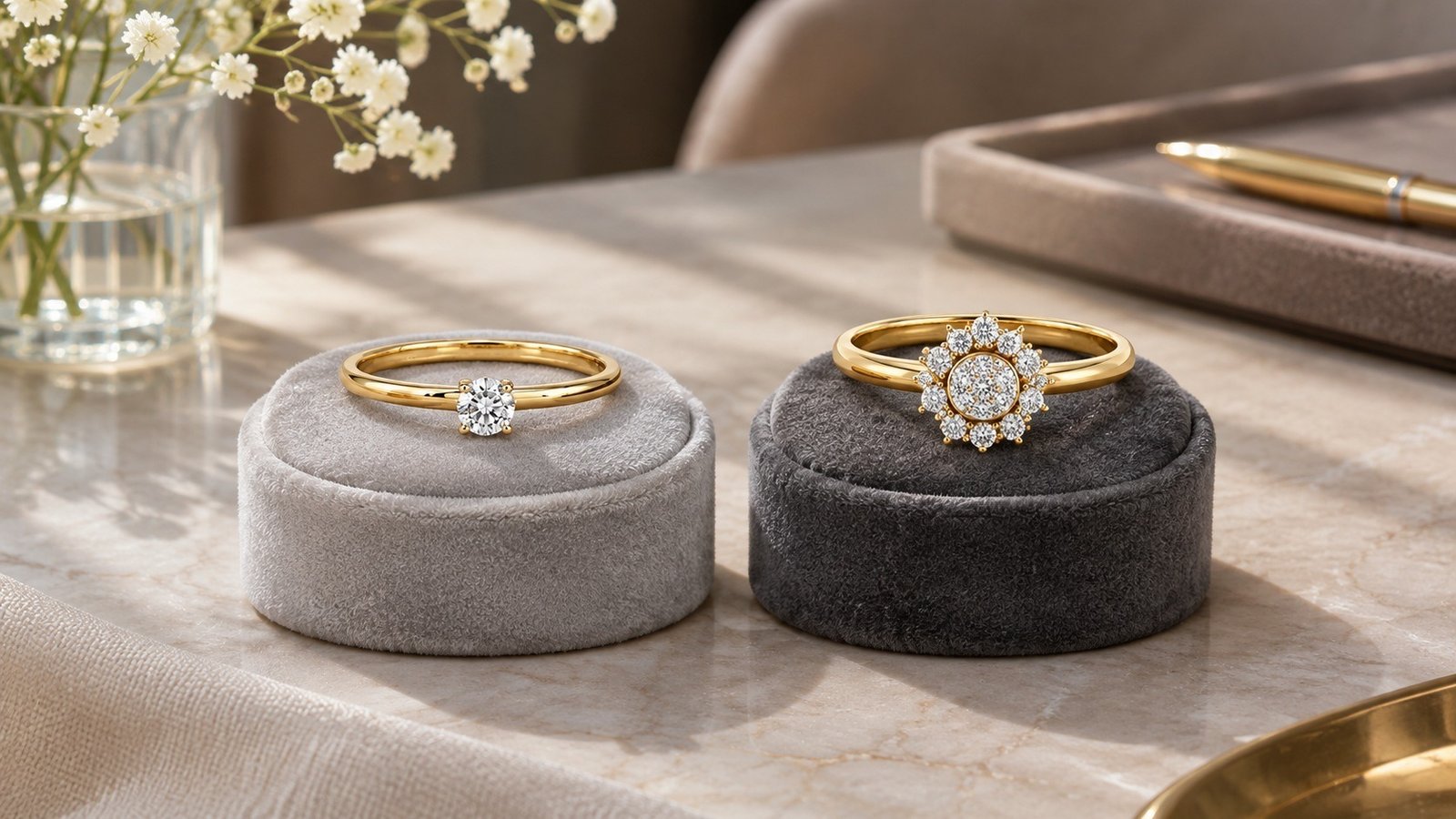
There is much more to buying a diamond than just selecting a pretty rock. Buyers often assess a number of criteria including appearance, quality, cost, and certification before making their final decision. Over the last few years, a new issue has become relevant as well: whether to buy a natural or a lab-made diamond.
Both are now readily available on the jewelry market. While natural diamonds have been a popular item since long ago, lab-made diamonds have offered an innovative approach in terms of manufacturing. The rising popularity of this type of diamond also raises questions. For example, are they indeed diamonds? Who will be able to distinguish between them? Why does one diamond that looks like another cost so much differently?
It is useful to know about the difference between them.
How Are Natural and Lab-Grown Diamonds Formed?
Two origins, personal choices
Natural diamonds are created deep inside the earth. These diamonds form in very hot conditions under enormous pressure, and the whole procedure takes millions or billions of years to complete. The volcanic eruptions bring up these rocks to the surface.
These geological conditions give natural diamonds a history that many buyers find appealing. When exploring natural diamond jewellery, it is worth understanding that each stone has its own characteristics. Even diamonds that appear similar can differ in colour, clarity, cut and carat weight.
Lab-created diamonds are produced in laboratory settings. These diamonds are created using two primary methods: HPHT and CVD.
The HPHT method simulates the conditions under which the diamonds need to be formed. The CVD method is very different in its nature. It involves growing diamond crystals through the use of carbon-based gases in a chamber.
It should be noted that lab-created diamonds are real diamonds. Lab-created diamonds consist of the same components and have the same properties as the natural diamonds do. They are not any type of imitation like cubic zirconia or moissanite.
The only difference between the diamonds is the way how they are created.
Can You Tell the Difference by Looking at Them?
Most buyers will probably answer “no” to this question.
Both natural and synthetic diamonds can exhibit equal levels of brilliance, fire, and sparkles. Appearance will depend primarily on the quality of cut, color, clarity, and finishing.
When cut properly, a lab diamond can appear as beautiful as a natural diamond that is graded equally. It will be challenging even for a professional jewellery buyer to tell the difference without the help of specialized equipment.
The experts at gemological laboratories are capable of identifying the growth patterns and other features that help to determine if a diamond was grown in the lab or not.
Why Is There a Difference in Price?
Price is one of the major factors affecting why people buy lab-created diamonds.
The natural diamonds are formed through geological deposits; the availability of these natural diamonds relies on mining activities and their natural occurrence. The rarity of natural diamonds, market demand, and presence within the jewelry business affects the price.
The lab-created diamonds are manufactured through technology, and with better production techniques and increased production capacity, more diamonds can reach the market, making them relatively cheaper compared to natural diamonds with the same grading features.
When dealing with a fixed amount of budget, the disparity could be very significant. A person can opt to purchase a bigger lab-created diamond instead of purchasing a smaller natural diamond for the same price.
This has made lab-grown diamond jewellery an option worth exploring for people who want the appearance of a diamond while working within a specific budget.
However, price alone does not determine which option is better. The reason behind the purchase matters too.
What About Resale Value?
This may prove useful prior to the final choice.
There are some established markets for selling and buying of natural diamonds. Nevertheless, one should note that not every diamond of this type will hold its original value. The characteristics of the diamond, its certification, as well as demand on the market and terms of exchange/buyback by the seller determine its value when reselling.
The situation with lab-grown diamonds is rather different. There are prospects for increasing their production in future due to technological advances, which means that there may be changes in the prices of these diamonds on the market. This should prevent the buyer from believing that the value of the lab-grown diamond will remain the same as the initial price paid for it.
Both types of diamonds cannot be viewed as investment tools. Usually, people acquire diamond jewelry for personal reasons or celebrations.
Prior to the acquisition of the diamond, it would be reasonable to know the written terms of exchange or buyback offered by the seller. The store credit and cash buyback are two different things.
Understanding Diamond Certification and the 4Cs
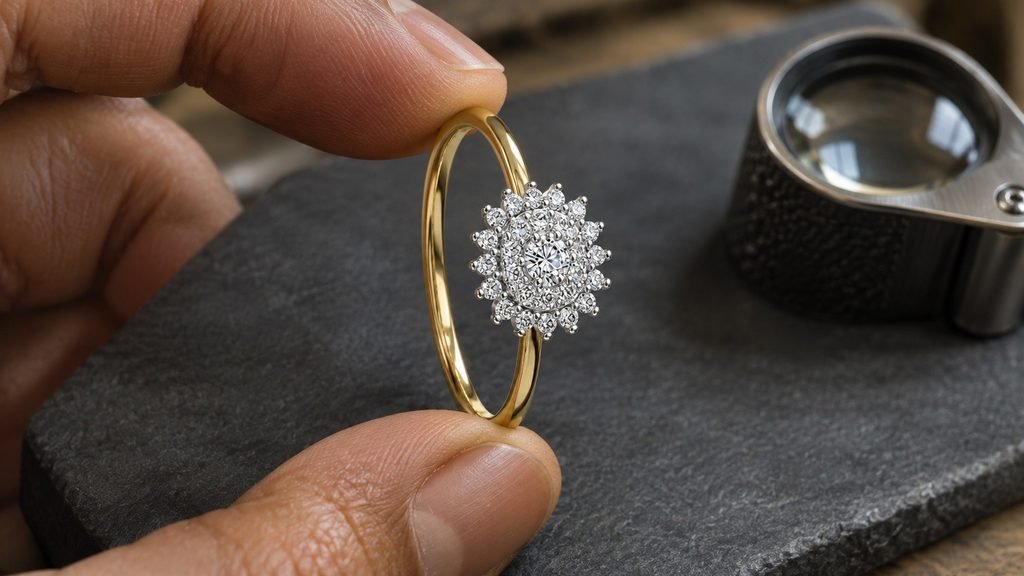
Diamond certification is an integral component of diamond buying. It allows consumers to have all the information necessary about the nature of the stone in question and what exactly they will be purchasing.
Typically, the diamond grading system involves four characteristics, known as the 4Cs.
- Cut – determines how light passes through the stone and affects its shine.
- Colour – evaluates the amount of colour in the stone. Colourless diamonds usually get a better rating on the colour scale.
- Clarity – refers to inclusions and blemishes inside and on the outside of the stone.
- Carat – measures the weight, not size, of a diamond.
Natural and lab-created diamonds may both have the grading report issued by recognized gemological laboratories. Consumers need to ensure that the report explicitly states whether it is natural or lab-created.
Also, in India, buyers should pay attention to BIS Standard IS 19469:2025 regarding terminology and consumer confidence in the diamond industry. The product description, grading report, and purchase invoice should indicate whether a diamond is natural or lab-created.
It makes sense to consider a grading report before buying. It is a source of information that cannot be obtained visually.
Which Type of Diamond Should You Choose?
There is not one-size-fits-all solution.
Natural diamonds could be a perfect match for those who appreciate the gemstone’s geological origin, rare nature, and well-known place in jewellery traditions. Natural diamonds also are familiar when used in engagement rings, anniversary presents, and even family heirlooms.
On the other hand, a lab-grown diamond would be ideal for someone who wants a bigger diamond but cannot afford to pay a lot for a bigger diamond. Lab-grown diamond allows greater freedom of design.
Both options could be worn on various occasions, so there could be a natural diamond engagement ring as well as lab-grown diamond earrings.
Choosing a Diamond That Suits Your Style
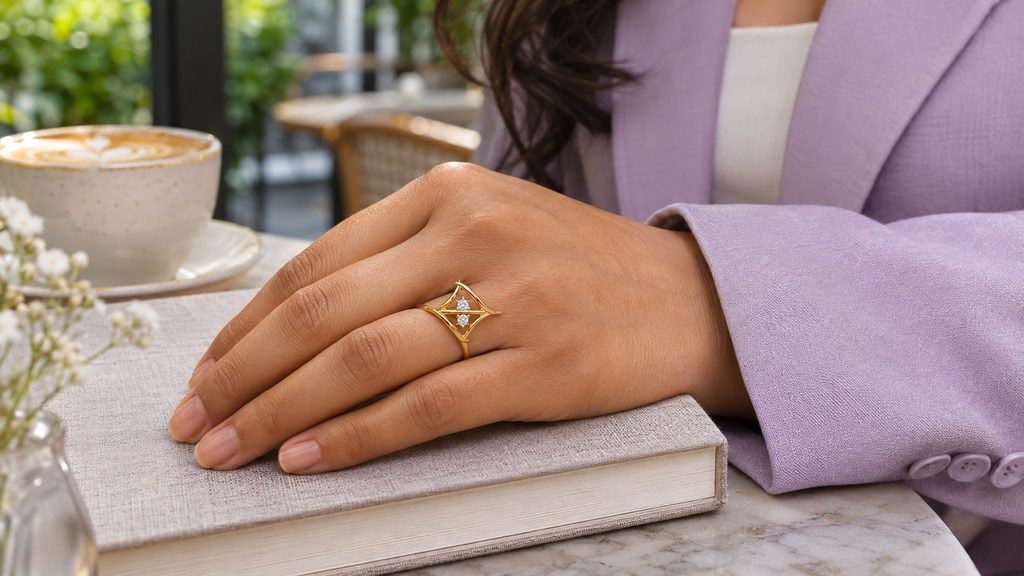
Beside the source of the rock, the jewelry design itself is worth considering. There are various ways in which the setting of a diamond, its cut and proportion can affect the final product. Round cut, oval cut, pear cut and princess cut diamonds all have their own unique look. Some customers opt for the solitaire setting, whereas others opt for diamond encircled jewelry.
Looking at different diamond ring designs can help buyers understand how the same diamond shape can look different depending on its setting and overall arrangement.
It is also important to consider the type of metal used in setting the stone. Different metals like yellow gold, white gold, and rose gold give different visual appearances to the stones, even when the stone remains the same.
It really depends on individual preferences while making the choice between a naturally occurring diamond and lab-made diamonds. It becomes quite easy to choose a diamond when the information regarding origin, quality, pricing, and certification is known.