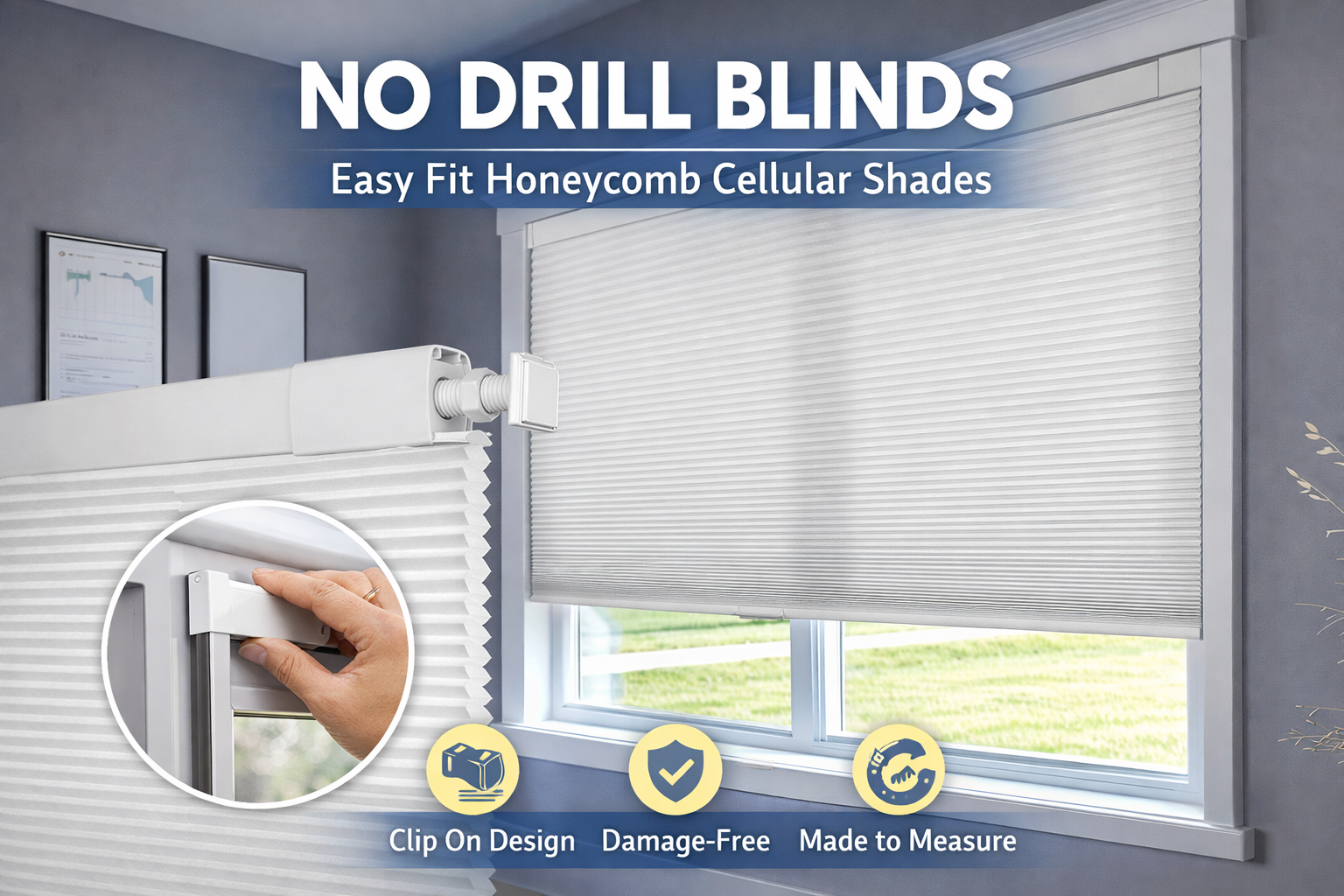
No drill blinds have become one of the most searched window solutions in the UK, especially among renters, first-time homeowners, and anyone who wants a clean, damage-free finish. These blinds are designed to install without drills, screws, or permanent fixings, making them ideal for modern uPVC windows, flats with landlord restrictions, and homes where flexibility matters. Instead of complicated DIY, no drill blinds rely on clever systems that clip, stick, twist, or tension into place.
Unlike traditional blinds, which require tools and leave holes behind, no drill blinds offer a quicker and more forgiving way to upgrade your windows. They are available in a wide range of styles, fabrics, and finishes, from blackout roller blinds to elegant roman and venetian designs. This updated guide explains exactly how no drill blinds work, which types are best for different windows, where they perform best, and how to choose the right option with confidence.
What Are No Drill Blinds and How Do They Work?
The No drill blinds are window coverings that use alternative fixing methods instead of screws and brackets. Depending on the system, they may clip directly into the window frame, adhere using strong heat-resistant adhesive, or secure themselves with pressure or twist-fit mechanisms inside the window recess. The goal is the same across all types: fast installation with no permanent damage.
These blinds are particularly popular in UK homes with uPVC windows because many systems are designed to work with existing window beading or frames. Once installed, they look neat and integrated, often giving the appearance of a built-in blind. Because there are no holes, they can usually be removed later with minimal effort, making them suitable for rented properties or temporary living arrangements.
Why No Drill Blinds Are So Popular in the UK
One of the main reasons no drill blinds continue to grow in popularity is convenience. Many homeowners want to refresh a room without committing to permanent changes, and renters often have strict rules about drilling into walls or frames. No drill blinds solve both problems by offering a reversible solution that still looks professional.
Another key factor is speed. Most no drill blinds can be installed in under 15 minutes, even by someone with no DIY experience. There is no dust, no noise, and no risk of drilling into the wrong place. This ease of installation makes them appealing for busy households, student accommodation, and people who regularly redecorate or move home.
The Main Types of No Drill Blinds Explained

There is no single “one-size-fits-all” no drill blind. Understanding the main systems available is essential to choosing the right one for your windows and avoiding disappointment later.
Perfect fit blinds are one of the most popular options in the UK. These blinds sit within a slim frame that clips neatly into the window beading. Because the blind moves with the window, they are especially useful for doors, tilt-and-turn windows, and conservatories. They offer a tidy, integrated look and are highly secure when fitted correctly.
Stick-on no drill blinds use advanced adhesive systems to attach directly to the glass or frame. They are quick to install and work well where window clearance is limited. Modern adhesives are designed to withstand heat and humidity, but surface preparation is critical for long-term performance.
Click-in or twist-fit blinds rely on tension or friction inside the window recess. These systems are often used for roller blinds and are ideal for tiled areas like bathrooms, where drilling would be difficult. They must be measured accurately to ensure a snug fit and avoid slipping over time.
Choosing the Right No Drill Blinds for Your Windows
Selecting the correct no drill blinds depends on your window type, room conditions, and how you use the space. uPVC windows are generally the easiest to work with, as they are compatible with perfect fit and clip-in systems. Older timber frames may suit adhesive or tension-based options instead.
Room conditions also matter. Bathrooms and kitchens experience higher humidity, so moisture-resistant materials such as PVC, aluminium, or faux wood are recommended. Bedrooms often benefit from blackout no drill blinds or thermal fabrics that help block light and retain warmth. Living rooms and home offices usually prioritise light control and style, making day and night blinds or venetian designs a popular choice.
Measuring Correctly for No Drill Blinds
Accurate measuring is one of the most important steps when fitting no drill blinds. Because these systems rely on precise tension, clipping, or adhesion, even small measurement errors can affect performance and appearance. Always measure your window more than once and follow the supplier’s measuring guide carefully.
For inside-recess fitting, measure the width and drop in several places to account for any uneven surfaces. For perfect fit blinds, it is essential to measure the visible glass size accurately, as the frame is designed to match the window exactly. Taking your time at this stage significantly reduces installation issues later.
Step-by-Step Installation: What to Expect
Installing no drill blinds is generally straightforward, but the exact steps depend on the system you choose. Clip-in perfect fit blinds usually involve attaching brackets to the window beading and then snapping the frame into place. This process is quick and does not require tools.
Adhesive blinds require careful surface preparation. The window must be clean, dry, and free from grease or residue. Once positioned, the adhesive should be pressed firmly and left to set according to the manufacturer’s instructions. Tension or twist-fit blinds are installed by adjusting the mechanism until it sits securely within the recess, ensuring the blind is level before final tightening.
Common Mistakes and How to Avoid Them
One of the most common issues with no drill blinds is choosing the wrong system for the window. Not all windows are suitable for every type, and ignoring clearance, beading depth, or handle placement can cause problems. Checking compatibility before ordering is essential.
Another mistake is rushing installation. Adhesive systems, in particular, need time to bond properly, and skipping preparation steps can lead to blinds falling or shifting. Taking a few extra minutes to clean surfaces and double-check measurements makes a significant difference to long-term results.
Best Rooms for No Drill Blinds
No drill blinds are versatile enough to work in almost every room. In bedrooms, blackout roller blinds or honeycomb designs help create a darker, more restful environment. Thermal options also improve insulation during colder months.
Kitchens and bathrooms benefit from moisture-resistant venetian or roller blinds that are easy to clean. Living rooms and dining areas often suit roman or day and night blinds, which combine style with adjustable light control. For conservatories and doors, perfect fit blinds remain one of the most practical solutions.
Style, Materials, and Design Options
Modern no drill blinds are available in an extensive range of colours, textures, and materials. Neutral shades remain popular for minimalist interiors, while patterned roman blinds add character to traditional spaces. Faux wood venetian blinds offer the look of timber without the maintenance, making them suitable for humid rooms.
Layering is another effective styling technique. Combining no drill roller blinds with curtains creates depth and flexibility, allowing you to adjust light and privacy throughout the day. Choosing lighter colours and slim profiles can also make small rooms feel more open and spacious.
Maintenance, Cleaning, and Longevity
Maintaining no drill blinds is generally simple. Most can be cleaned with a soft cloth or vacuum attachment, while PVC and aluminium blinds can be wiped down with a damp cloth. Regular cleaning helps prevent dust build-up and keeps the blinds operating smoothly.
Longevity depends on correct installation and appropriate use. When fitted properly and matched to the right environment, high-quality no drill blinds can last for years. Avoid excessive force when operating the blinds and follow care instructions to extend their lifespan.
Are No Drill Blinds Right for You?
No drill blinds are an excellent choice for anyone seeking flexibility, ease, and modern design. They are particularly well suited to rented properties, new builds, and homes with uPVC windows. While they may not replace traditional drilled blinds in every situation, they offer a practical alternative for most everyday needs.
By understanding the different systems available and choosing the right option for your windows, you can achieve a clean, professional finish without tools or permanent fixings. For many households, no drill blinds represent the simplest way to update a space with minimal effort.
Conclusion
No drill blinds provide a smart, convenient solution for modern window dressing in the UK. With tool-free installation, a wide choice of styles, and compatibility with many window types, they meet the needs of renters and homeowners alike. From perfect fit designs to adhesive and tension-based systems, there is a no drill blind for almost every room and requirement.
By measuring carefully, choosing the correct system, and following proper installation steps, you can enjoy stylish, damage-free blinds that enhance both comfort and appearance. Whether you want blackout control in a bedroom or sleek shading in a kitchen, no drill blinds make upgrading your home easier than ever.
FAQ
Are no drill blinds secure once installed?
Yes, when installed correctly and matched to the right window type, no drill blinds are secure and stable for everyday use.
Do no drill blinds damage uPVC windows?
No, they are designed to avoid damage. Clip-in and adhesive systems do not require drilling or permanent alterations.
Can no drill blinds be removed later?
Most no drill blinds can be removed with minimal effort. Adhesive systems may require careful removal, but they are still far less invasive than drilled blinds.
Are blackout no drill blinds available?
Yes, many no drill blinds come with blackout or dimout fabrics suitable for bedrooms and media rooms.
Do no drill blinds work on doors and conservatories?
Certain systems, especially perfect fit blinds, are ideal for doors, conservatories, and tilt-and-turn windows because they move with the frame.
You may also read: Velux Blinds – Made-to-Measure Blackout & Roof Window Blinds UK