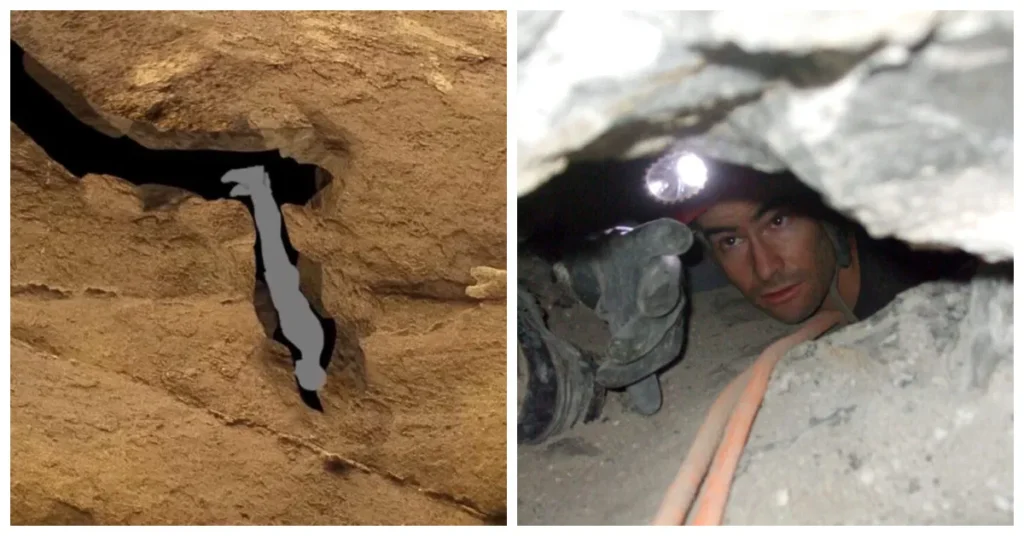
Nutty Putty Cave, tucked into the hills west of Utah Lake in Utah County, was once one of the most visited “wild” caves in the western United States — no ropes, no guided tours, just a maze of narrow, twisting passages that drew in thousands of amateur explorers every year. For decades it had a reputation as a rite of passage for Boy Scout troops and college students looking for an adrenaline rush a few miles from home.
That reputation ended permanently on November 24, 2009, when 26-year-old medical student John Edward Jones became trapped upside down in an unmapped fissure nearly 400 feet inside the cave. What followed was a 27-hour rescue effort involving more than 100 people — and it remains one of the most studied cave rescue failures in American history. Today, more than fifteen years later, the cave is sealed in concrete, the subject of a feature film, and — as of 2025 — has even been recreated in virtual reality. This guide covers the full story: the cave’s history, the accident, the rescue, and what’s happened at the site since.
What Is Nutty Putty Cave?
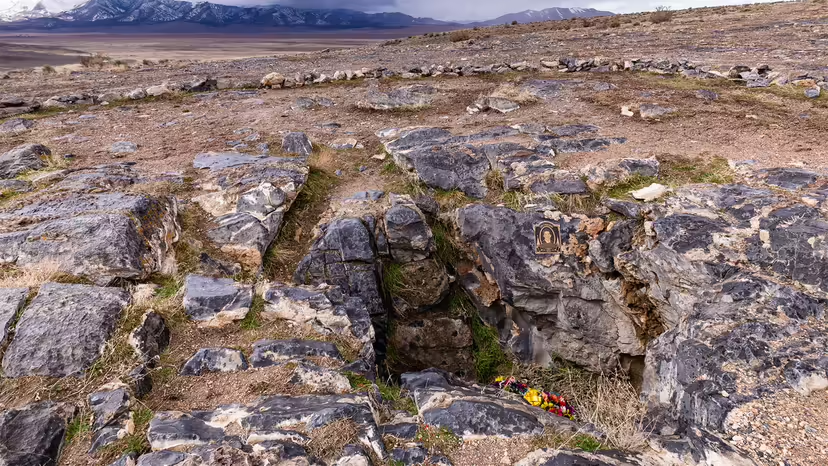
Nutty Putty Cave is a hypogenic (hydrothermal) cave, meaning it wasn’t carved out by surface water dripping down through limestone the way most caves form. Instead, superheated mineral-rich water was forced upward from below, slowly dissolving the rock from the bottom up. This bottom-up formation process is why the cave doesn’t have the large, open chambers typical of drip-formed caves — instead it’s a three-dimensional tangle of tight, twisting shafts that open into small rooms before squeezing shut again.
The cave’s namesake feature is the strange, viscous clay that coats many of its walls — early explorers thought it resembled a putty-like children’s toy, and the name stuck.
Cave Stats at a Glance
| Feature | Detail |
|---|---|
| Location | West of Utah Lake, near Elberta, Utah County |
| Discovered | 1960, by Dale Green and friends |
| Cave type | Hypogenic / hydrothermal limestone cave |
| Mapped length | Roughly 1,355 feet |
| Depth | Roughly 145 feet below the surface |
| Year-round temperature | About 55°F (12.7°C) |
| Annual visitors (pre-2009) | Approximately 5,000 |
| Status | Permanently sealed since 2009 |
Pro Tip: If you’re researching cave safety more broadly, hypogenic caves like Nutty Putty tend to be riskier for inexperienced cavers than typical drip-formed caves precisely because of this “tight, then tighter” 3D structure — a passage that looks passable often narrows unpredictably just a few feet further in.
A History of Danger: Why Nutty Putty Was Considered Risky Long Before 2009
Nutty Putty’s reputation for danger didn’t start with John Jones. Between 1999 and 2004, six separate people got seriously stuck in the cave’s tightest passages — squeezes ominously nicknamed “The Helmet Eater,” “The Scout Eater,” and “The Birth Canal.” Everyone made it out alive, but Utah County’s search-and-rescue teams grew tired of the repeat calls. Matters came to a head over Labor Day weekend 2004, when rescuers had to pull both a BYU student and an Orem teenager out of the cave in two separate incidents.
That was enough for the landowner, the Utah School and Institutional Trust Lands Administration (SITLA), to start looking for someone to formally manage access. SITLA explored leasing the cave to Brigham Young University, Utah Valley State College, and the Boy Scouts of America — but any of them would have had to install a gate, maintain the site, and carry a $1 million liability insurance policy. Those negotiations collapsed entirely in August 2005, after four people drowned in a narrow underwater tunnel in a nearby cave on Y Mountain; every interested party backed out almost overnight. With no lessee in place, SITLA formally closed Nutty Putty in 2006.
The cave’s eventual reopening came down to the Timpanogos Grotto, the local chapter of the National Speleological Society, which had already been informally tracking incidents and lobbying to take on management. SITLA agreed to waive the $1 million insurance requirement in exchange for the Grotto installing a gate, running an online reservation system that allowed only one group into the cave at a time, and padlocking the entrance every night. Under that new management plan, Nutty Putty reopened in May 2009 — just six months before John Jones’ fatal trip that November.
As Gary Bagley, SITLA’s resource specialist at the time, put it, the previous setup “was kind of haphazard because it was unrestricted access to the public,” and the new permit system was designed to keep untrained visitors out while still letting experienced cavers in. Rob Cranney, the NSS’s regional youth-group liaison and a Timpanogos Grotto trip coordinator, framed the permits as a way to confirm groups had the right numbers, gear, and experience before entering. Jon Jasper, the Grotto’s chair at the time, later produced a documentary, Saving the Nutty Putty Cave, walking through the entire closure-and-gating process.
This backstory matters because it reframes the 2009 tragedy: Nutty Putty wasn’t an obscure cave that failed once without warning. It was a cave with a documented, decade-long track record of trapping people — one that had already forced a three-year closure and a formal management overhaul — reopened under a brand-new permit system for barely half a year before it claimed a life.
Who Was John Edward Jones?
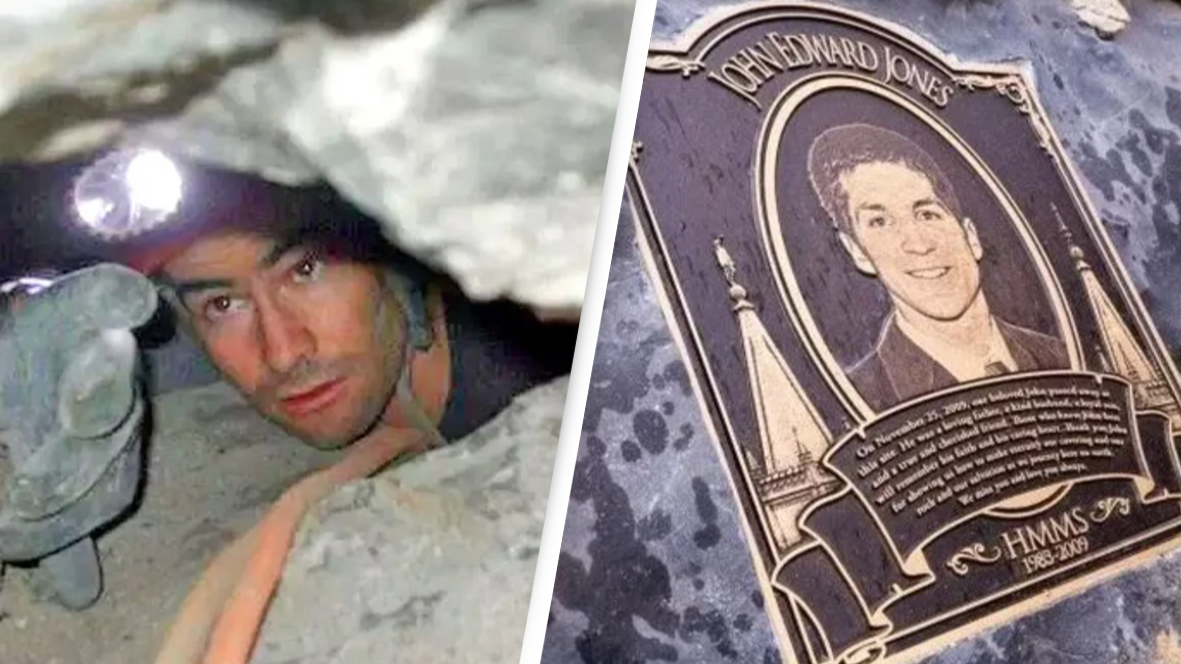
John Edward Jones was a 26-year-old medical student, husband, and father living in Virginia. He was visiting family in Utah for Thanksgiving in 2009 and joined a group of ten friends and family members for what was meant to be a casual evening caving trip — something of a family tradition.
Jones had caved before, but not recently, and by 2009 he was a considerably larger man than he’d been on previous trips — around six feet tall and 200 pounds. That detail turns out to matter enormously to what happened next, because Nutty Putty’s tightest passages were originally surveyed and popularized by, and for, much smaller frames.
The Nutty Putty Cave Accident: What Happened on November 24, 2009
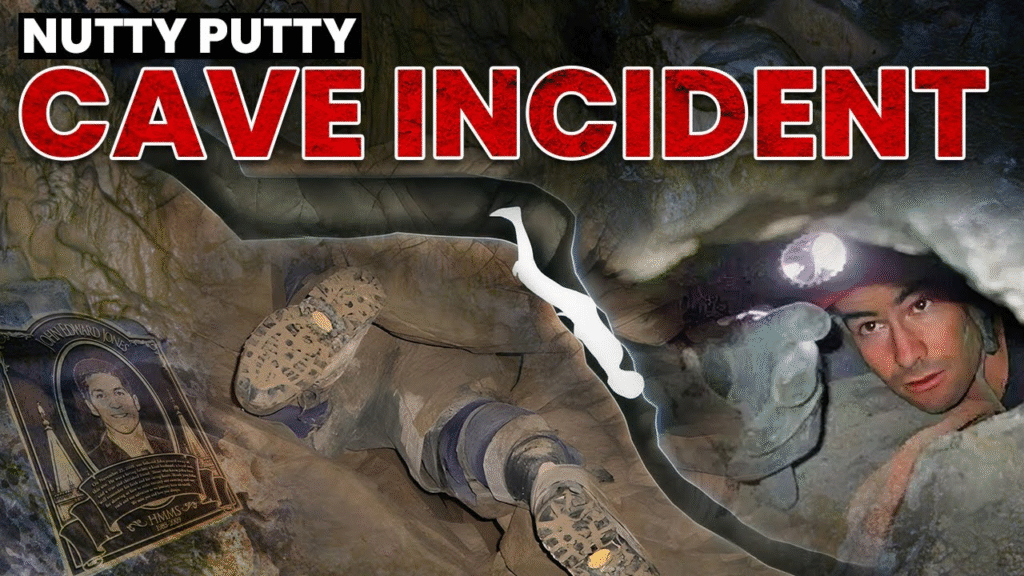
Into the Wrong Passage
Around an hour into the trip, Jones and a few companions set off to find a well-known tight squeeze called the Birth Canal. Searching in the dark and relying on memory rather than a map, Jones instead found and entered a different, unmapped fissure that he mistook for it. He went in head-first, using his hips, stomach, and fingertips to pull himself forward — a technique that works fine for advancing but leaves almost no way to reverse direction.
Within minutes he realized his mistake. The passage wasn’t opening up toward a turnaround point; it was narrowing.
Trapped Upside Down
Jones ended up wedged upside down at roughly a 70-degree angle, folded into a space barely wider than his own chest, about 400 feet into the cave and 100 feet below the surface. His younger brother, who’d followed him in, quickly realized the situation was serious and scrambled out to get help — but even once help arrived, it took rescuers roughly an hour just to reach the area with people and equipment.
Key Takeaway: In tight, hydrothermal caves like Nutty Putty, the danger isn’t depth or darkness — it’s geometry. A passage that’s easy to enter head-first can become physically impossible to reverse out of, especially for anyone larger than the person who first mapped it.
Rescue Efforts: Hour by Hour
The first rescuer to physically reach Jones was Susie Motola, arriving at around 12:30 AM on November 25 — roughly three and a half hours after he’d first become stuck. From there, more than 100 rescue personnel cycled through the cave over the following day, working in a space so cramped that only one or two people at a time could actually assist him directly.
Rescuers eventually rigged a haul system using a series of ropes and pulleys, intended to slowly winch Jones back out. It initially made progress — but the cave’s constant twists and turns between the haul team and Jones’ position created so much friction on the line that the system lost most of its pulling force by the time it reached him. When the setup ultimately failed, Jones slipped back into the fissure, and his condition deteriorated rapidly from there.
The first rescuer to physically reach Jones was Susie Motola, arriving at around 12:30 AM on November 25 — roughly three and a half hours after he’d first become stuck. From there, more than 100 rescue personnel cycled through the cave over the following day, working in a space so cramped that only one or two people at a time could actually assist him directly. Rescuers eventually rigged a haul system using a series of ropes and pulleys, intended to slowly winch Jones back out. It initially made progress — but the cave’s constant twists and turns between the haul team and Jones’ position created so much friction on the line that the system lost most of its pulling force by the time it reached him. When the setup ultimately failed, Jones slipped back into the fissure, and his condition deteriorated rapidly from there.
Tedji Sisson, a veteran Utah cave rescuer, explained the technical failure of the pulley system: “The clay walls of Nutty Putty are incredibly slick, but the limestone rock itself is extremely soft and crumbly. When we loaded weight onto the anchors drilled into the cave walls, the rock simply couldn’t hold the sheer tension of the angle. The anchor failure, combined with the extreme friction of the rope bending around sharp, tight 90-degree clay turns, made a mechanical advantage system nearly impossible to operate safely.”
After approximately 27 hours trapped, John Jones died inside Nutty Putty Cave. (Some reports round this to 28 hours depending on whether the count starts from his entry into the cave or the moment he became fully stuck — but every credible account places it at just over a full day.)
After approximately 27 hours trapped, John Jones died inside Nutty Putty Cave. (Some reports round this to 28 hours depending on whether the count starts from his entry into the cave or the moment he became fully stuck — but every credible account places it at just over a full day.)
Why Being Trapped Upside Down Is So Dangerous
Being inverted for an extended period puts the human body under a specific kind of stress that most people never consider. Gravity pulls blood toward the head and upper body instead of the legs, which increases pressure on the heart and lungs. In an open space, a person could reposition to relieve that pressure — but in a passage narrow enough to restrict chest expansion, even shallow breathing becomes exhausting work.
Over hours, the combination of restricted circulation, compressed breathing, and physical exhaustion becomes fatal on its own — independent of temperature, hydration, or panic. This is the core reason cave rescue specialists treat “inverted entrapment” as one of the most time-critical scenarios in the field, more urgent in some respects than a straightforward cave-in.
Being inverted for an extended period puts the human body under a specific kind of stress that most people never consider. Gravity pulls blood toward the head and upper body instead of the legs, which increases pressure on the heart and lungs. In an open space, a person could reposition to relieve that pressure — but in a passage narrow enough to restrict chest expansion, even shallow breathing becomes exhausting work. Over hours, the combination of restricted circulation, compressed breathing, and physical exhaustion becomes fatal on its own — independent of temperature, hydration, or panic. This is the core reason cave rescue specialists treat “inverted entrapment” as one of the most time-critical scenarios in the field, more urgent in some respects than a straightforward cave-in.
Dr. Douglas Beck, an emergency medicine specialist, explains the physiological toll of being trapped upside down: “Inverted entrapment is a race against time because the human cardiovascular system is designed to pump blood against gravity from the lower limbs. When upside down, blood pools heavily in the head and lungs, causing severe pulmonary edema and extreme pressure on the heart. Without relief, the heart simply cannot pump against that backpressure, leading to heart failure and asphyxiation far quicker than dehydration or hypothermia.”
(This section discusses a real fatality in a factual context. If you’re processing grief or distress related to this story or a similar loss, it’s worth talking to someone you trust or a mental health professional.)
What Happened After the Accident
Once rescue leaders concluded that any further attempt to free — or later recover — Jones’ body would put rescuers at serious risk, and with his family’s agreement, the decision was made to leave him in place. Nutty Putty’s entrances were permanently sealed with concrete shortly afterward, and the site was closed to the public for good.
The closure wasn’t universally welcomed. Parts of the local caving community pushed back, and Facebook groups formed to petition for the cave to reopen. Some cavers reportedly cut through a gated entrance in an attempt to access the property before it was fully secured, and were caught and charged with trespassing. The debate underscored a real tension in the caving world: balancing genuine love for a unique natural space against the reality that it had already proven fatal.
Is Nutty Putty Cave Open Today?
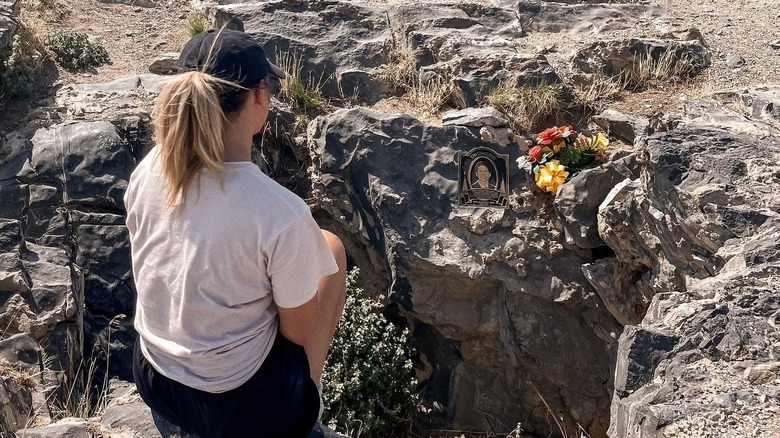
No — Nutty Putty Cave remains permanently sealed and cannot legally be visited. The entrance is capped with concrete, a memorial plaque marks the site, and any attempt at access is both unsafe and unlawful, given that the cave is effectively Jones’ resting place.
The 2025 Virtual Reality Recreation
What has changed recently is how people can experience the cave without setting foot inside it. In 2025, a detailed recreation of Nutty Putty Cave was added to the virtual reality game Cave Crave, letting users explore its passages digitally. Notably, the recreation includes narration from Brandon Kowallis, a caver who was directly involved in the original 2009 rescue attempt — meaning the VR experience is guided by someone with genuine first-hand knowledge of the cave’s layout and the accident itself, not just a generic simulation.
Pro Tip: If you want to understand the cave’s geometry — including exactly how a passage that looks passable can trap someone — the VR recreation is currently the closest thing to a legitimate, safe substitute for actually going inside.
Lessons Learned From the Nutty Putty Cave Tragedy
- Forward is not the same as reversible. In tight, three-dimensional caves, a passage that’s easy to enter can be impossible to back out of — always confirm you can reverse before continuing deeper.
- A cave’s history is a safety data point. Nutty Putty had already produced two serious near-fatal entrapments in 2004. A cave’s past incidents are a legitimate reason to reconsider a route, not just trivia.
- Body size relative to a passage matters more than experience. Jones was an occasional caver, not a reckless one — but his frame no longer matched the passages he remembered from years earlier.
- Rescue is not guaranteed, even with 100+ responders. Confined-space physics can defeat manpower, equipment, and time. Conservative decision-making before entering is the only fully reliable safeguard.
Nutty Putty Cave in Media and Public Awareness
The story reached a wide audience through The Last Descent, a 2016 dramatization focused on the rescue attempt and its impact on Jones’ family. Along with continued documentary and news coverage, the film helped cement Nutty Putty as a reference point in broader conversations about caving safety — and, more recently, the 2025 VR recreation has introduced the story to an entirely new, younger audience through gaming rather than film or article coverage.
Frequently Asked Questions
What caused the Nutty Putty Cave accident? John Jones entered an unmapped passage he mistook for the Birth Canal and became wedged upside down at roughly a 70-degree angle in a space that narrowed the further he went, leaving him unable to turn around or reverse out.
How long was John Jones trapped? Approximately 27 hours, from the evening of November 24 until his death on November 25, 2009.
Was Nutty Putty Cave considered dangerous before 2009? Yes. In 2004, two Boy Scouts became seriously trapped in the same general area within the same week, leading to a temporary closure of the cave years before Jones’ accident.
Why couldn’t rescuers save him? The cave’s tight, twisting geometry caused so much friction on the rescue haul system that it lost effectiveness before reaching Jones, and the passage was too narrow to allow a faster, more direct extraction.
Is John Jones still inside the cave? Yes. His body was never recovered, and the cave was permanently sealed with his family’s agreement shortly afterward.
Can anyone visit Nutty Putty Cave today? No. It’s permanently closed and sealed. However, a 2025 virtual reality recreation in the game Cave Crave allows people to explore the cave’s layout digitally.
Where exactly is Nutty Putty Cave located? It’s on the west side of Utah Lake near Elberta, in Utah County, Utah.
Conclusion
Nutty Putty Cave’s story isn’t just about one tragic night in 2009 — it’s about a cave that had already shown its danger years earlier, and a series of small, human decisions (a wrong turn in the dark, a larger frame than the passage anticipated, a haul system undone by friction) that combined into something no amount of rescue manpower could reverse. The cave itself is gone to the public forever, but between the ongoing documentary coverage, The Last Descent, and now a 2025 VR recreation guided by an actual rescuer, its lessons about respecting confined spaces are more accessible today than ever.
You may also read: Where to Buy Red Diesel Near You Safely and Legally