What Are Off Peak Train Times in the UK
Off peak train times are the parts of the day when fewer people travel by rail, which allows train companies to offer cheaper and more flexible ticket options. These times are designed to reduce congestion during busy commuter hours while encouraging passengers to travel when services are quieter. For many travellers, choosing off peak hours means a more comfortable journey with better seat availability and lower ticket prices.
In the UK, off peak travel usually applies outside the busiest morning and evening rush hours, but it is important to understand that there is no single fixed timetable for every route. Each train operator sets its own rules depending on demand, location, and service patterns. This means travellers should always treat off peak times as a guideline rather than an exact universal schedule.
Typical Off Peak Train Times on Weekdays and Weekends
Most UK rail journeys follow a common pattern where off peak travel begins after the morning rush hour. In many cities and large commuter areas, this usually starts around mid-morning, while in smaller towns it may begin slightly earlier. During weekends and public holidays, trains are generally considered off peak for the entire day, making these periods ideal for leisure travel.
However, travellers should be aware that some routes include evening restrictions, particularly on services leaving major cities. Even if a train runs outside the morning peak window, it may still not qualify as off peak during late afternoon hours. Because of this variation, it is always best to check the exact validity of your ticket rather than relying solely on general time ranges.
How Off Peak Train Tickets Work
Off peak tickets are designed to offer flexibility while still being more affordable than fully flexible Anytime tickets. They allow passengers to travel on a range of trains within permitted hours rather than being tied to one specific service. This makes them a popular choice for day trips, casual travel, and journeys where timing can be adjusted slightly.
There are different types of off peak tickets available, including single journeys, return tickets, and day returns. Some return tickets allow passengers to travel back within a set period, often extending beyond the same day. Understanding these options helps travellers choose the best ticket for their plans while avoiding unnecessary costs or restrictions.
Off Peak vs Super Off Peak: Key Differences
Off peak and super off peak tickets both provide savings, but they are not the same. Off peak tickets offer a balance between price and flexibility, allowing travel across a wider range of times during quieter periods. They are suitable for people who want to save money but still need some freedom when choosing their departure time.
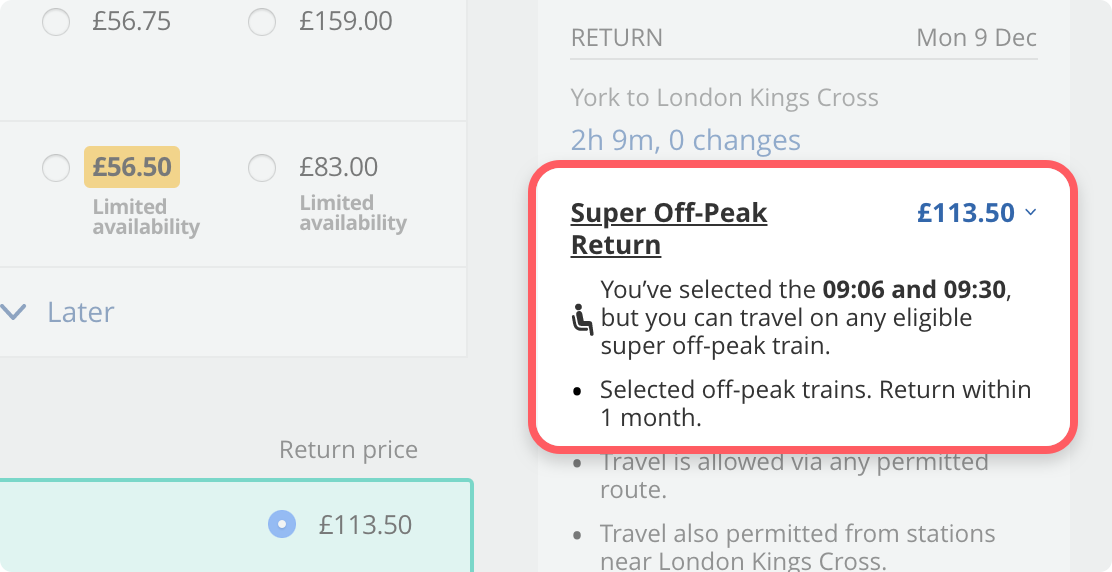
Super off peak tickets, on the other hand, are usually the cheapest option but come with stricter time limits. These tickets are typically valid only during the least busy parts of the day, such as late morning or late evening. They are ideal for travellers who can plan their journey around these quieter periods and are willing to sacrifice flexibility for lower fares.
London and Major City Off Peak Rules
Travel in London and other major cities can follow slightly different patterns compared to the rest of the UK. In busy urban areas, peak travel times are more strictly defined due to high demand, especially for commuter services. As a result, off peak travel often begins later in the morning and may include additional restrictions in the evening.
For travellers using city transport networks, including rail services within London, off peak pricing can also depend on the specific system being used. This means that national rail tickets and urban transport fares may not always follow exactly the same timing rules. Understanding this distinction is important for avoiding confusion when planning journeys in large metropolitan areas.
How to Check Off Peak Train Times for Your Journey
The most reliable way to confirm off peak train times is to check your journey before booking or travelling. Online journey planners and mobile apps are designed to show which trains qualify for off peak or super off peak tickets, making it easier to select the correct option. These tools also display any restrictions linked to your ticket, helping you avoid mistakes.

Instead of guessing whether a specific departure is off peak, travellers should always rely on the fare information provided at the time of booking. This ensures that the chosen train matches the ticket conditions and avoids issues such as invalid travel or additional charges. Checking in advance is especially important on routes with complex restrictions or varying schedules.
Ways to Save More with Off Peak Travel
Travelling during off peak hours is already one of the best ways to reduce train costs, but additional savings are often available. Booking tickets in advance can lower prices further, especially on popular routes where demand increases closer to the travel date. Combining off peak travel with advance booking is one of the most effective strategies for finding cheaper fares.
Discount schemes such as railcards can also make a significant difference, offering reduced prices for eligible passengers including students, families, and frequent travellers. When used together with off peak tickets, these discounts can make rail travel much more affordable. Taking a few minutes to compare options before booking can lead to noticeable savings.
Common Restrictions and Mistakes to Avoid
While off peak travel offers flexibility, it is not completely unrestricted. Each ticket comes with specific conditions that must be followed, including the times when travel is allowed and, in some cases, the routes or services that can be used. Ignoring these details can result in additional charges or the need to buy a new ticket.
A common mistake is assuming that off peak means any time outside the morning rush hour. In reality, evening restrictions and route-specific rules can still apply. To avoid problems, travellers should always review their ticket conditions carefully and double-check departure times before boarding the train.
FAQ About Off Peak Train Times UK
Many travellers ask what time off peak travel actually starts in the UK. In general, it begins after the morning commuter period and applies for most of the day, although exact times vary depending on location and operator. Weekends and bank holidays are usually off peak all day, making them a convenient option for relaxed travel.
Another common question is whether off peak tickets allow complete flexibility. While they are more flexible than peak tickets, they still have time restrictions that must be followed. Travellers should always check their specific ticket details to ensure their journey falls within the permitted times and conditions.
Conclusion
Off peak train times provide a practical way to travel across the UK while avoiding busy periods and reducing costs. By understanding when these times apply and how ticket rules work, travellers can plan journeys more efficiently and enjoy a smoother experience. Whether travelling for leisure or flexibility, off peak options remain one of the best ways to make rail travel more comfortable and affordable.
The key to getting the most value is simple: check your journey in advance, understand your ticket conditions, and choose the timing that suits your schedule. With the right approach, off peak travel can turn a routine journey into a more relaxed and cost-effective experience.
You may also read: Lothian Bus Tracker – Live Edinburgh Bus Times & Routes