
Original Vintage Posters UK: The Complete Buyer’s Guide
There is something special about an original vintage poster that no modern reproduction can match. The colours have softened in a way that only decades can produce, the paper carries the texture of its era, and the design tells you exactly what people found exciting when it was first printed. Whether it is a 1930s railway poster promising a golden age of travel, a classic film poster from the golden age of cinema, or a bold Art Deco advertisement, original vintage posters are pieces of history you can hang on your wall. This guide to original vintage posters in the UK explains what “original” really means, where to buy genuine posters, how to spot a reproduction, what to pay, and how to look after your collection so it lasts for decades to come.
The Meaning of Original in Vintage Posters
The most important thing to understand when buying original vintage posters in the UK is what the word “original” actually means. An original vintage poster is one that was printed at the time it was made, for its original purpose — to advertise a film at the cinema, to promote a railway journey, to sell a product, or to decorate a public space. A reproduction, by contrast, is a modern reprint of an old design, often produced digitally on new paper and sold cheaply in high street shops and online. Reproductions can look attractive, but they are not collectable in the same way, they do not hold their value, and they lack the historical significance of a genuine period piece. The distinction matters because the price difference is enormous: a genuine original might cost hundreds or thousands of pounds, while a reproduction of the same design might cost twenty pounds. Reputable UK dealers in original vintage posters are explicit about this, and the best of them sell only genuine originals, with no reproductions at all. When you are buying, always ask the seller to confirm in writing that the poster is an original period printing, and be suspicious of any deal that seems too good to be true, because it almost certainly is. That is why, when you are buying original vintage posters UK dealers with long track records are the safest choice, since their reputation depends on every poster they sell being genuine.
The Main Categories of Original Vintage Posters
Original vintage posters UK collectors focus on fall into several distinct categories, each with its own collectors, price levels and specialist dealers. Film posters are the largest category, covering everything from 1940s classics to modern cinema, with British quad posters, American one-sheets and international designs all collected in their own right. British railway and travel posters are another major category, with designs from the golden age of rail travel in the 1920s and 1930s, including the famous London Transport posters and the scenic posters produced for the railway companies, which are now among the most sought-after of all British poster art. Ocean liner and shipping posters, including designs for Cunard and other great lines, appeal to collectors of maritime history as well as design lovers. Advertising posters cover a huge range, from Art Deco product advertisements to wartime propaganda and public information posters. Sports posters, including the celebrated vintage ski posters of the Alps, form another specialist area, with auction houses holding dedicated annual sales. Understanding which category interests you most will help you focus your collecting, learn the market, and avoid buying posters at random simply because they look attractive.
Where to Buy Original Vintage Posters in the UK
The market for original vintage posters UK collectors use most is built around a mix of long-established specialist dealers, online shops and auction houses. OriginalPoster.co.uk is a father-and-son business with more than sixteen years of experience, holding over 11,000 posters and lobby cards, and supplying museums including the Victoria and Albert Museum and the London Science Museum, selling only genuine originals with no reproductions. Limelight Movie Art holds one of the largest selections of original film posters in the UK, having traded on London’s King’s Road in Chelsea for more than twenty years, and now operating online while it seeks new premises. Orson & Welles deals exclusively in original film posters from the 1940s to the present day, with no reproductions, and offers free UK postage except on framed items and deliveries to the Highlands. Reel Movie Poster Sales, at filmposters.uk.com, has been dealing for nearly two decades, holds more than 2,000 posters, and operates a private London gallery by appointment. PosterTeam specialises in original British vintage posters, including railways, ocean liners, Cunard and London Transport designs, with no reproductions. Buying from an established specialist dealer like these gives you the benefit of their expertise, their reputation, and usually a guarantee of authenticity, which is worth a great deal when you are spending serious money on a poster.
Buying Original Vintage Posters at Auction
Auctions are another excellent way to buy original vintage posters in the UK, and they can offer access to rare pieces that never appear in dealers’ shops. Lyon & Turnbull is one of the leading names in this field, running specialist vintage poster auctions in partnership with Tomkinson Churcher, a firm founded by Nicolette Tomkinson and Sophie Churcher, who each bring more than thirty years of experience in vintage posters. The partnership offers a series of specialist sales and exhibitions in Edinburgh and London throughout the year, including an annual vintage ski poster auction timed to coincide with the European ski season and a bi-annual travel and vintage posters sale at the Mall Galleries in April and October. Recent highlights from Lyon & Turnbull’s poster sales include a St Anton ski poster by Berta Czegka that sold for £11,970 and a Zermatt poster by Emil Cardinaux that sold for £11,250, which gives you a sense of the prices that top pieces can achieve. You can browse the department and its current sales on the Lyon & Turnbull vintage posters department page. When you buy at auction, remember that the price you pay is the hammer price plus the buyer’s premium, which is an additional percentage charged by the auction house, so always check the premium before you bid and factor it into your maximum. Most auction houses allow you to bid online, by telephone, in person or by leaving a commission bid, and they provide condition reports and catalogues to help you assess each lot before the sale.
How to Spot a Reproduction
Learning to spot a reproduction is the most valuable skill a collector of original vintage posters UK-wide can develop, and it will save you from expensive mistakes. Start with the paper: original vintage posters were printed on the paper of their era, which has a different weight, texture and ageing pattern from modern paper, and they often show gentle toning, small edge wear and the patina of age that is very hard to fake convincingly. Look at the printing method: older posters were usually lithographed, with a distinctive dot pattern and ink texture under magnification, while modern reproductions are typically printed digitally and have a flatter, more uniform appearance. Check the size: original posters were produced in standard formats for their time and purpose, such as the British quad for cinema posters, and a poster in an unusual size should raise questions. Look for printer’s marks, distributor information and the small text at the bottom of the poster, which on an original will correspond to the film, product or railway company of the period. Provenance also matters: a reputable dealer or auction house will tell you where a poster came from, and a poster with a documented history is much safer than one with no background at all. If you are unsure, ask a specialist dealer or an auction house for an opinion before you buy, because most are happy to help, and the cost of a mistake is far greater than the embarrassment of asking.
Condition, Grading and What Affects Value
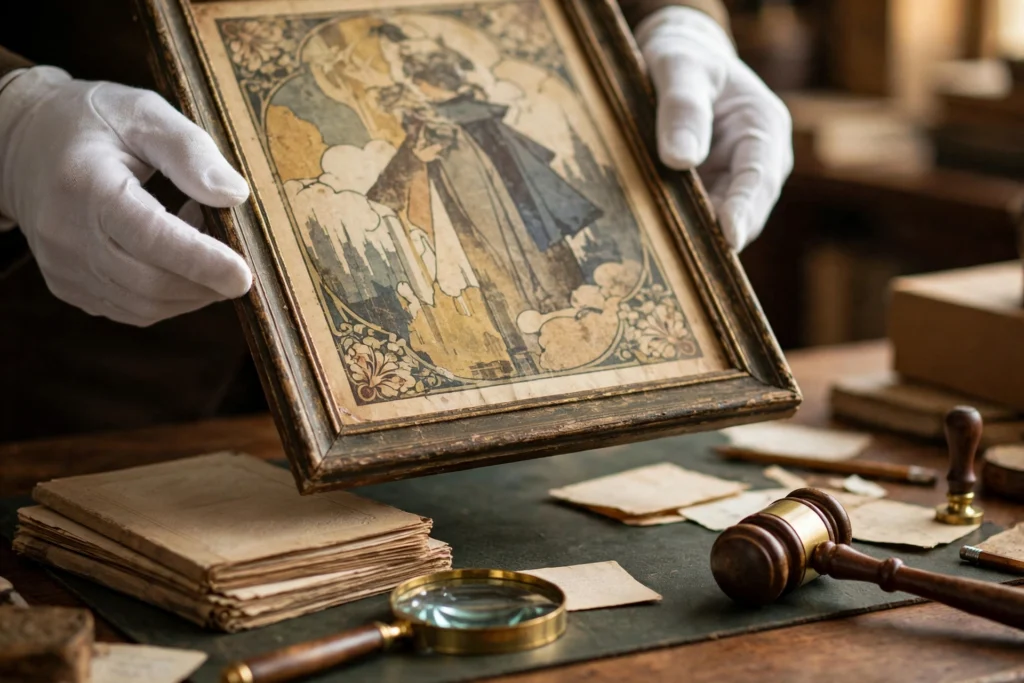
Condition is one of the biggest factors in the value of original vintage posters, and understanding it will help you buy wisely. Posters are graded on a scale that runs from mint, meaning essentially as new, down through very fine, fine, good and poor, with each step reflecting the amount of wear, fading, tears, folds, stains and restoration the poster has. A poster that has spent decades folded will show fold lines, and one that was displayed in a sunny window may have faded, and both of these reduce value, though some collectors accept minor wear on a rare poster that would be impossible to find in perfect condition. Restoration is common in the poster world, and professional linen backing, where a poster is mounted on linen to stabilise it, is widely accepted and can actually improve both appearance and value. What matters is that any restoration is disclosed by the seller, because an undisclosed repair can significantly affect what a poster is worth. Rarity, the fame of the film or the artist, and the visual appeal of the design also affect value, and a poster for a famous film or a beloved travel destination will usually command more than an obscure design of similar age. When you are starting out, it is often better to buy a poster in very good condition from a less famous category than to stretch your budget for a rare poster in poor condition, because condition is what you will live with on your wall every day.
Original Vintage Poster Prices and What Affects Them
Prices for original vintage posters in the UK vary enormously, and there is no single price list, so it helps to understand the range before you start buying. At the lower end, original posters in modest condition, or for less famous films and destinations, can often be found for tens or a few hundred pounds, which makes them an accessible starting point for a new collector. Mid-range posters, including good examples of popular railway and travel designs and well-known film posters, typically sell for several hundred to a few thousand pounds. At the top end, rare and iconic posters can sell for five-figure sums, as the Lyon & Turnbull results show, with a St Anton ski poster achieving £11,970 and a Zermatt poster achieving £11,250 in recent sales. These price ranges are typical rather than guaranteed, and the market moves, so treat any price claim as a guide rather than a promise (UNVERIFIED as a general market statement — check current auction results and dealer prices for the specific poster you want). When you set a budget, remember to include the buyer’s premium if you buy at auction, the cost of framing, and the cost of delivery, particularly for framed or large posters. It is also worth deciding in advance whether you are buying for love or for investment: posters bought because you love them are almost always a better purchase than posters bought purely as an investment, because the market is unpredictable and the joy of living with a poster you adore is guaranteed.
Framing, Conservation and Looking After Your Posters
Once you have bought an original vintage poster, looking after it properly is essential, because poor framing and display can damage it permanently. The golden rule is to use conservation-grade materials: acid-free mounts and backing, UV-filtering glass or acrylic, and a frame that holds the poster without stressing the paper. Never use ordinary masking tape, sticky tape or glue on a vintage poster, and never dry-mount it, because these cause irreversible damage. If a poster needs cleaning or repair, use a professional paper conservator rather than attempting it yourself, because a well-meaning amateur repair can reduce a poster’s value far more than the original damage did. Where you hang a poster matters too: avoid direct sunlight, damp walls, kitchens and bathrooms, and rooms with large temperature swings, because heat, light and moisture are the enemies of old paper. Many collectors keep their most valuable posters in flat archival storage and rotate the ones on display, which is a good approach if your collection grows. Finally, keep the documentation that came with your poster, including the dealer’s invoice, the auction catalogue entry and any condition report, because provenance adds value and will matter if you ever decide to sell.
Starting and Growing Your Collection
Starting a collection of original vintage posters in the UK is one of the most enjoyable hobbies you can take up, and a little planning will make it far more rewarding. Begin by choosing a focus, whether that is a particular film genre, a railway company, a destination, an artist or a decade, because a focused collection is more satisfying and more valuable than a random assortment. Set a budget and stick to it, remembering that a collection built slowly over years is more enjoyable than one bought in a rush. Visit dealers, galleries and auction viewings in person whenever you can, because handling posters and talking to specialists teaches you more than any amount of online browsing. Join collector communities and follow auction results, so you learn what things actually sell for rather than what sellers ask for them. Buy the best condition you can afford, keep records of everything you buy, and insure your collection once it has real value. Above all, buy posters you love, because a collection that reflects your taste and your interests will bring you pleasure every day, whether or not it ever makes you money. The UK market for original vintage posters is deep, friendly and full of expertise, and there has never been a better time to start.
What is an original vintage poster?
An original vintage poster is a poster that was printed at the time it was made, for its original purpose, such as advertising a film at the cinema, promoting a railway journey or selling a product. A reproduction is a modern reprint of an old design, usually produced digitally on new paper. The distinction matters because originals are collectable and hold their value, while reproductions do not, and the price difference can be enormous.
Where can I buy original vintage posters in the UK?
You can buy original vintage posters in the UK from specialist dealers such as OriginalPoster.co.uk, Limelight Movie Art, Orson & Welles, Reel Movie Poster Sales and PosterTeam, all of which sell only genuine originals with no reproductions. You can also buy at auction from houses such as Lyon & Turnbull, which runs specialist vintage poster sales in partnership with Tomkinson Churcher, with sales in Edinburgh and London throughout the year, including an annual ski poster auction and a bi-annual travel and vintage posters sale.
How can I tell if a vintage poster is original or a reproduction?
You can tell an original vintage poster from a reproduction by examining the paper, the printing method, the size and the small printed details. Originals were printed on period paper with lithographic printing, they show gentle ageing and wear, they come in standard formats for their time, such as the British quad for cinema posters, and their printer’s marks and distributor information match the period. If you are unsure, ask a specialist dealer or an auction house for an opinion before you buy.
How much does an original vintage poster cost in the UK?
Original vintage posters in the UK range from tens or a few hundred pounds for modest examples to several thousand pounds for good railway, travel and film posters, and five-figure sums for rare and iconic pieces. Recent auction highlights include a St Anton ski poster selling for £11,970 and a Zermatt poster by Emil Cardinaux selling for £11,250 at Lyon & Turnbull. These are typical ranges rather than guarantees, and you should also budget for the buyer’s premium at auction, framing and delivery.
What is the buyer’s premium at a poster auction?
The buyer’s premium is an additional percentage charged by the auction house on top of the hammer price, and it applies to every lot you buy at auction. The exact percentage varies by auction house and by sale, so always check the premium before you bid and include it in your maximum price. Lyon & Turnbull notes that all sale results shown on its website are inclusive of the buyer’s premium, which makes it easier to compare results, but the premium you pay as a buyer is still an extra cost on top of the hammer price.
How should I frame and look after a vintage poster?
You should frame a vintage poster using conservation-grade materials, including acid-free mounts and backing and UV-filtering glass or acrylic, and you should never use ordinary tape, glue or dry mounting, because these cause irreversible damage. Hang the poster away from direct sunlight, damp and large temperature changes, and use a professional paper conservator for any cleaning or repair. Keep the dealer’s invoice, the auction catalogue entry and any condition report, because this documentation supports the poster’s provenance and value.
Conclusion
The market for original vintage posters UK-wide offers a rare combination of beauty, history and the pleasure of the hunt, and the market is deep enough to reward collectors at every level. Whether you are drawn to classic film posters, the golden age of railway travel, ocean liner designs or Art Deco advertising, the key is to buy genuine originals from reputable dealers and auction houses, to learn how to judge condition and authenticity, and to look after your posters properly once you own them. Start with a focus you love, set a budget, buy the best condition you can afford, and enjoy the process. Your first original vintage poster will not be your last, and the collection you build will be a personal gallery of design history that no reproduction can ever match.
If you enjoyed this guide, you may also like our breakdown of rugby positions and what each player does on the pitch.