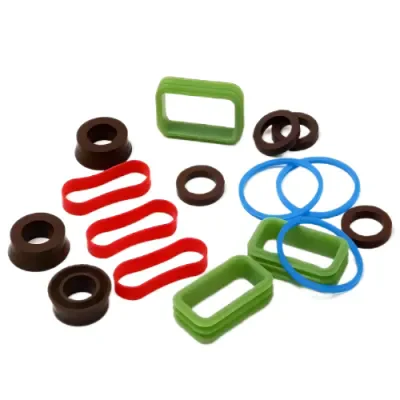
In industries where product quality, flexibility, and precise dimensions matter, silicone components play an important role in creating reliable end products. From automotive systems and medical equipment to household appliances and industrial machinery, silicone parts are used in applications that require specific material properties and accurate designs. Choosing an experienced silicone parts manufacturer helps businesses turn their product concepts into functional components that meet their technical and commercial requirements.
As product designs become more specialized, many companies are moving beyond standard components and investing in custom silicone parts. These components can be developed with particular shapes, sizes, colors, hardness levels, and performance characteristics to suit different applications. Working with the right manufacturing partner can simplify product development, improve production consistency, and support long-term business growth.
Why Silicone Is a Preferred Material for Industrial Components
Silicone rubber is widely used because of its flexibility, temperature resistance, electrical insulation properties, and ability to maintain its characteristics under various operating conditions. Its versatility makes it suitable for products used in demanding environments.
Flexibility for Different Applications
Silicone can be molded into intricate shapes and complex geometries, allowing manufacturers to create components that fit specific product designs. Flexible seals, gaskets, protective covers, buttons, and connectors are common examples.
This flexibility also allows engineers to develop components that require compression, repeated movement, or a particular tactile feel.
Resistance to Temperature Changes
Depending on the selected silicone formulation, components can perform across a broad range of temperatures. This characteristic makes silicone useful in automotive assemblies, electronic devices, industrial equipment, and household appliances.
Selecting the appropriate material grade is essential because temperature limits and performance characteristics vary between formulations.
What Does a Silicone Parts Manufacturer Do?
A professional silicone parts manufacturer manages the processes involved in converting product specifications into finished silicone components. Depending on its capabilities, the manufacturer may provide design support, material selection, tooling, molding, finishing, inspection, and packaging.
The manufacturing process generally begins with a review of the customer’s drawings, samples, or product requirements. Engineers assess the component’s dimensions, expected operating conditions, material requirements, and production volume before recommending a suitable manufacturing method.
Product Design and Engineering Support
Design decisions influence how a silicone component performs and how efficiently it can be manufactured. Wall thickness, parting lines, draft angles, tolerances, and other design features can affect molding quality and production costs.
An experienced manufacturing team can identify potential design challenges before tooling begins. Early collaboration helps reduce unnecessary revisions and makes it easier to achieve the required component specifications.
Material Selection
Different applications require different silicone properties. Liquid silicone rubber (LSR), high-consistency rubber (HCR), and other silicone formulations each offer characteristics suited to particular production requirements.
The appropriate choice depends on factors such as:
- Operating temperature and environmental exposure.
- Required hardness, flexibility, and compression behavior.
- Contact with oils, moisture, or cleaning agents.
- Electrical or mechanical performance requirements.
- Applicable industry standards and regulatory needs.
Choosing the right formulation helps ensure that the finished component meets the intended application requirements.
Custom Silicone Parts for Specialized Product Designs
Standard components may not fit every product. When a design requires specific dimensions, unusual geometries, or application-focused material properties, custom silicone parts offer a more suitable solution.
Custom manufacturing allows businesses to develop components around their product architecture rather than redesigning an assembly to accommodate an off-the-shelf part.
Custom Silicone Gaskets and Seals
Gaskets and seals are used to limit the passage of liquids, gases, dust, and other contaminants between connected surfaces. Their effectiveness depends on factors such as compression, surface contact, material hardness, and operating conditions.
A manufacturer can produce custom seals in different profiles and dimensions to accommodate specific equipment designs. These components are used in fluid systems, industrial machinery, appliances, and electronic enclosures.
Custom Silicone Molds and Flexible Components
Silicone molding supports the production of parts with detailed features, curved surfaces, and specialized shapes. Depending on the application, manufacturers can create protective sleeves, flexible connectors, molded covers, grips, and vibration-absorbing components.
Custom tooling allows these products to match particular dimensional and functional requirements.
Silicone Buttons and Keypads
Silicone keypads are commonly found in control panels, remote controls, medical equipment, and industrial interfaces. Their design can incorporate different button shapes, tactile responses, colors, and printed symbols.
A manufacturer can adjust the component’s geometry and material hardness to achieve the intended user experience while maintaining compatibility with the electronic assembly.
Silicone Manufacturing Processes and Their Applications
The manufacturing method influences part complexity, production speed, tooling investment, and overall unit cost. Selecting the right process is an important part of developing custom silicone components.
Liquid Silicone Rubber Injection Molding
Liquid silicone rubber injection molding is often selected for high-volume production and components with intricate details. The process injects liquid silicone material into a closed mold, where it cures into the required shape.
LSR molding is used for applications that require consistent dimensions and repeatable production. It can be suitable for medical components, automotive parts, seals, connectors, and consumer products, depending on material selection and manufacturing controls.
Compression Molding
Compression molding involves placing a measured quantity of silicone material into a heated mold and applying pressure to form the component.
This process can be appropriate for larger parts, particular geometries, and production volumes where compression molding offers a practical balance between tooling cost and output requirements.
Transfer Molding
Transfer molding moves silicone material into a closed mold cavity through a transfer mechanism. Depending on the component design and production requirements, this method can support parts with detailed features or specific molding needs.
A capable manufacturer evaluates these processes according to the component’s design, expected quantities, tolerances, and budget.
How Quality Control Supports Consistent Production
Quality control is a central part of silicone component manufacturing. Even small dimensional differences can affect how a part fits, seals, or functions within a larger assembly.
A structured inspection process may include incoming material checks, mold inspections, dimensional measurements, visual examinations, and performance testing where required.
Dimensional and Visual Inspection
Manufacturers can inspect components for flash, surface defects, incomplete filling, deformation, and dimensional variation. Measurement methods are selected according to the part’s geometry and required tolerances.
For critical components, documented inspection procedures can help maintain consistency across production batches.
Material and Performance Testing
Testing requirements depend on the product’s intended use. They may include hardness measurements, tensile properties, compression behavior, temperature exposure, or chemical compatibility.
For medical or food-contact applications, additional material documentation and regulatory considerations may apply. Buyers should confirm the relevant requirements rather than assuming that every silicone formulation meets the same standards.
Choosing the Right Silicone Parts Manufacturer
Selecting a manufacturing partner involves more than comparing quotations. Businesses should evaluate technical expertise, production capabilities, communication, quality systems, and experience with similar components.
Review Manufacturing Capabilities
Ask whether the manufacturer supports the required molding process, part dimensions, material grades, and expected production volume. Experience with comparable designs can help identify potential manufacturing issues early.
Evaluate Tooling and Production Support
Tooling quality can affect component consistency, cycle time, and long-term production costs. Discuss mold maintenance, tooling ownership, revision procedures, and production capacity before placing a large order.
Request Samples and Documentation
Prototype samples allow buyers to assess dimensions, material characteristics, assembly fit, and functional performance before mass production. Where necessary, request material specifications, inspection reports, and relevant compliance documentation.
Clear communication throughout development helps prevent misunderstandings and reduces the risk of costly changes after production begins.
Industries That Use Custom Silicone Components
The versatility of silicone makes it suitable for a wide range of commercial and industrial applications.
- Automotive: Seals, grommets, protective boots, and connectors.
- Medical equipment: Selected tubing components, seals, valve components, and device parts, subject to applicable material and regulatory requirements.
- Electronics: Insulating covers, keypads, protective components, and sealing parts.
- Home appliances: Gaskets, flexible connectors, grips, and molded accessories.
- Industrial equipment: Vibration-control components, seals, protective covers, and specialized molded parts.
Each industry has different performance expectations, so material selection and production controls should reflect the product’s actual operating conditions.
Reduce Production Costs Through Better Planning
Cost-effective manufacturing begins during the design stage. Choosing suitable materials, simplifying unnecessary features, selecting an appropriate molding process, and establishing realistic tolerances can help control overall expenses.
Tooling investment should be evaluated alongside projected production volume. A process with higher initial tooling costs may offer better unit economics for large orders, while another process may be more practical for smaller quantities.
Businesses should also consider inspection requirements, packaging, lead times, and potential material waste when comparing manufacturing quotations.
Conclusion: Build Better Products With Custom Silicone Solutions
Working with an experienced silicone parts manufacturer gives businesses access to material expertise, molding capabilities, engineering support, and production quality controls. These resources are valuable when developing components that must fit precise specifications and perform consistently within a finished product.
From gaskets and seals to electronic keypads and specialized industrial components, custom silicone parts can be tailored to a wide range of designs and operating requirements. By evaluating manufacturing processes, selecting suitable materials, and defining clear quality standards, businesses can establish a more efficient path from initial concept to finished component.
The right manufacturing partnership can also support future product improvements, changing order volumes, and new design requirements. For companies seeking dependable silicone components, investing time in manufacturer selection and early engineering collaboration is an important step toward successful product development.