A conversation does not always need a list of carefully prepared questions. Sometimes one ordinary word is enough.
Consider the word “window.” It could lead to weather, architecture, travel, childhood homes, photography, privacy, or the view someone sees every morning. “Bread” might open a discussion about breakfast, family recipes, local markets, or the first meal someone learned to prepare.
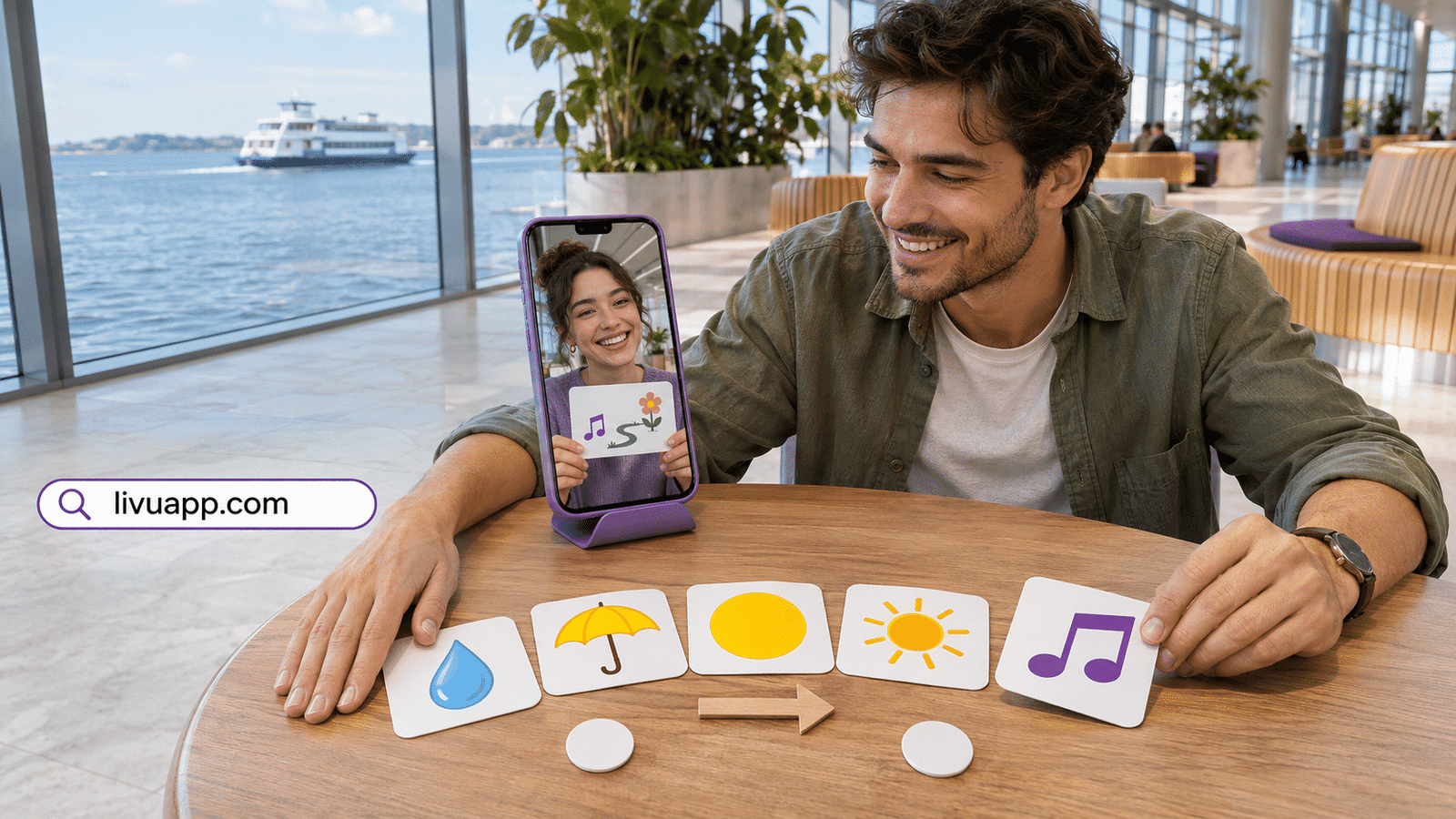
The “word trail” is a simple conversation activity in which two people begin with one everyday word and follow the ideas connected to it. During a chat videollamada, participants can use objects, gestures, and facial expressions to support the discussion, making the activity accessible even when they do not share the same first language.
There is no correct destination. The value comes from noticing where the same word takes two different people.
Choose a Word With Many Possible Paths
The best starting word is familiar, concrete, and open to interpretation.
Useful options include:
- Door
- Rain
- Cup
- Road
- Light
- Garden
- Shoes
- Music
- Morning
- Train
- Paper
- Home
Highly technical words can make the activity feel like a vocabulary test. Very broad words such as “life” or “success” may create pressure before the conversation has developed naturally.
An ordinary object or daily experience works better because both participants can contribute without specialist knowledge.
The first person can choose the word, while the second person selects the starting word for the next round.
Build a Five-Step Association Trail
After hearing the starting word, each participant creates a trail of five connected ideas.
For example:
Rain → umbrella → yellow → summer → festival
Another person might follow a completely different path:
Rain → window → train → journey → mountains
Both trails begin in the same place but quickly move into different experiences.
Participants can explain each connection in one or two sentences. Why did rain suggest a yellow umbrella? Which journey involved a rainy train window? Has the person actually visited the mountains, or is it somewhere they hope to go?
The associations provide natural follow-up questions without making the conversation feel like an interview.
Say the First Connection Before Editing It
People often search for an impressive answer and reject the first idea that comes to mind. The word trail works best when the initial connection is spontaneous.
If “cup” immediately suggests “grandmother,” that connection may contain a meaningful story. Perhaps there was a particular cup in her kitchen. If “train” suggests “sandwich,” the explanation could be funny, practical, or connected to a travel habit.
Unexpected links are usually more interesting than carefully polished ones.
Participants do not need to explain an association if it feels too private. They can replace it with another word or simply say, “I would rather take the trail in a different direction.”
Spontaneity should create curiosity, not remove boundaries.
Compare the Trails at the Third Word
After both participants create a five-step trail, they can pause at the third word and compare where they are.
Suppose one trail reaches “music,” while the other reaches “garden.” The participants can ask whether a new word connects both ideas. “Festival,” “summer,” or “relaxation” might bring the paths together.
This creates a collaborative challenge: find one bridge word that makes sense for both trails.
The bridge does not need to be perfect. Explaining the connection is part of the game.
For example, someone might connect music and gardening through “rhythm,” because both involve patterns and timing. Another person might choose “weekend,” because that is when they enjoy both activities.
Use an Object as the Starting Word
Instead of saying a word, one participant can safely show a simple object near the camera.
A spoon, notebook, plant, scarf, or pair of headphones can become the first step. The other participant names the object and begins an association trail.
Physical objects make the activity more visual during a meet live video call. They can also help when participants are still developing confidence in a shared language.
Before showing an object, the person should check for names, addresses, labels, work information, or other private details. A close view of the object is usually safer than showing the entire room.
No one needs to display valuable or personally significant possessions.
Let Multilingual Words Add New Directions
When participants speak different languages, the starting word can be translated. The translation may carry different sounds, associations, or cultural meanings.
A word for “home,” for example, may suggest a physical building in one language but feel more connected to family or belonging in another. A word for a particular food may have no exact translation and require a description.
Participants can discuss:
- Whether the word has several meanings
- Whether it sounds formal or casual
- Which phrase commonly includes it
- Whether it appears in a proverb or expression
- What image first comes to mind for native speakers
The purpose is not to correct every pronunciation or grammar mistake. It is to explore how language organizes experience.
If someone wants help with a word, they can ask. Otherwise, the conversation should remain focused on meaning and connection.
Try the “Opposite Trail”
In this variation, participants begin with the same word but intentionally move in opposite emotional or practical directions.
From “morning,” one person might create:
Morning → sunlight → energy → running → achievement
The other could create:
Morning → alarm → sleep → blanket → comfort
Neither trail is more accurate. Together, they show that the same part of the day can feel completely different depending on personality, schedule, or circumstances.
The opposite trail can introduce discussions about preferences without requiring people to label themselves. Instead of asking, “Are you a morning person?” the trail reveals how someone experiences mornings through specific associations.
Create a Shared Story From Both Trails
After completing two trails, participants can combine selected words into a short fictional story.
If the available words include rain, notebook, train, garden, music, and yellow, the story might begin:
“On a rainy train ride, someone found a yellow notebook containing directions to a garden where music played every evening.”
Each person adds one sentence at a time. The story can be realistic, mysterious, or humorous.
This variation shifts the conversation from personal experience to shared imagination. It can be useful when participants want a lighter topic or prefer not to disclose much about themselves.
The story does not need a polished ending. A few sentences are enough.
Keep the Trail Moving Naturally
The five-step structure is a guide, not a strict rule. If one association leads to an engaging discussion, participants can pause the game and explore it.
Perhaps “paper” leads to handwritten letters, which begins a conversation about communication habits. Maybe “garden” introduces food, seasons, or environmental differences.
A successful word trail often disappears into the conversation it helped create.
If the discussion slows down, participants can return to the last word and continue the trail or choose a new starting point.
One Word Can Reveal Different Worlds
The word trail works because language is both shared and personal. Two people may understand the same word but connect it to completely different places, memories, routines, and possibilities.
The activity gives each participant equal space to contribute. It encourages spontaneous thinking, follow-up questions, and creative collaboration without requiring complicated preparation.
Most importantly, it proves that an interesting conversation does not always begin with a major topic. Sometimes it begins with rain, a cup, a train, or a window—and continues because another person sees that ordinary word from an entirely different direction.