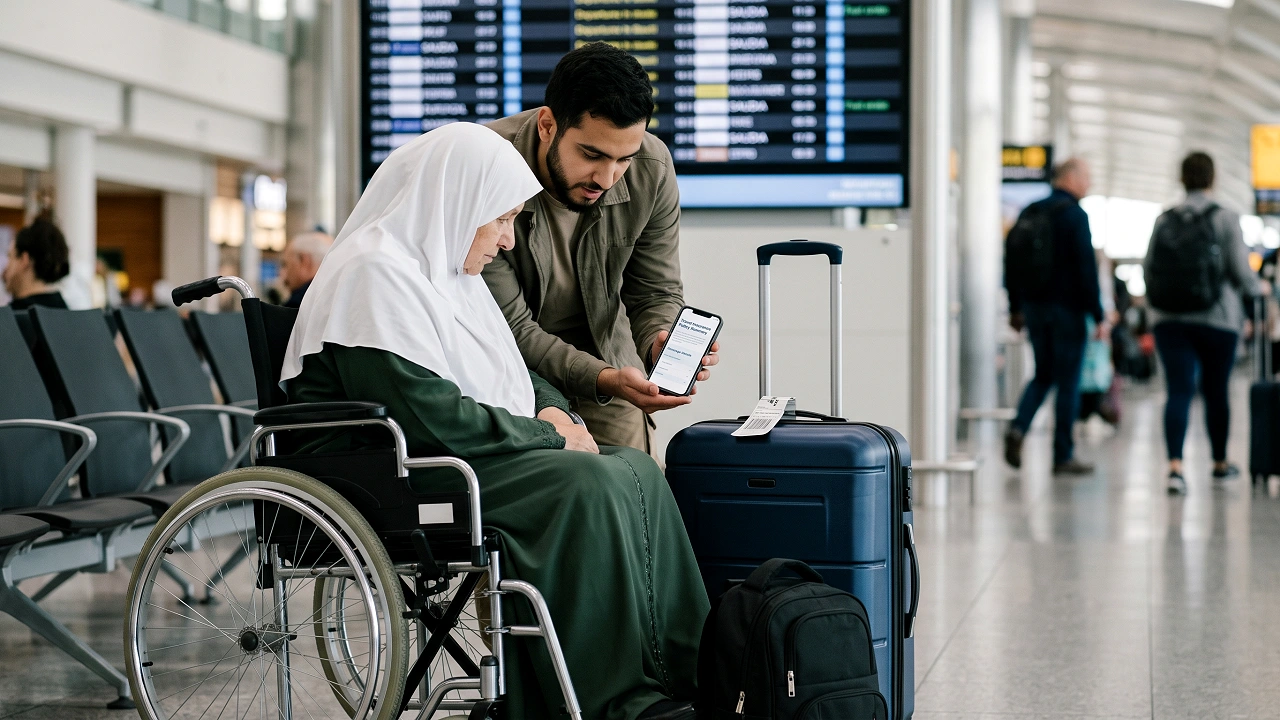
Travel insurance is one of those things most people buy in a hurry. It’s usually the night before the flight, on a comparison site, picking whichever policy is cheapest. For a week in Spain, you might get away with that. For Umrah, it’s a much bigger gamble. You’re going a long way from home, often with older relatives, into strong heat and some of the largest crowds anywhere in the world. If something goes wrong, the bill can be enormous.
Many families book Umrah packages all-inclusive of flights, visa, hotels and transfers, and assume that covers everything. It doesn’t. A package protects you if the travel company fails, but it won’t pay a hospital bill in Makkah or refund you if you have to cancel because your mother falls ill a week before you leave. That’s the job of insurance, and getting the right policy matters far more than most people think.
Your GHIC won’t help you
Let’s clear up a common mistake first. The UK Global Health Insurance Card, which replaced the old EHIC, gives you access to state healthcare in the EU and a few other countries. Saudi Arabia isn’t one of them. If you need a doctor or a hospital in Makkah or Madinah, you’ll either pay yourself or rely on your insurer.
Some Saudi visas include basic medical cover. The tourist eVisa, for example, comes with health insurance for emergencies. But this cover is limited. It won’t usually pay to fly you home, cover a cancelled trip, or replace stolen money and belongings. Treat it as a small extra, not a replacement for a proper policy.
What a good policy should cover
When you’re comparing policies, look past the price and check these parts:
- Emergency medical costs. Look for cover of at least a few million pounds. Hospital treatment abroad is very expensive, and serious cases can run into tens of thousands quickly.
- Repatriation. This is the cost of flying you home if you’re too ill to travel normally. It can mean an air ambulance or a seat with a medical escort, and without cover it can cost a fortune.
- Cancellation and cutting short. If you have to cancel because of illness, a death in the family or other serious reasons, this pays back what you’ve lost. Check that the limit is at least as much as the whole trip costs.
- Missed departure and delays. Useful if a train or car breakdown means you miss your flight from Heathrow or Manchester.
- Baggage and money. Handy, but read the single-item limits. They’re often low.
Buy it when you book, not when you fly
This is the single most useful tip in this article. Cancellation cover only protects you from the day the policy starts. If you book your Umrah in March for a trip in December, and only buy insurance in late November, you’ve had no cancellation cover for eight months. If anything happened in that time, you’d lose the lot.
An annual policy that starts straight away, or a single-trip policy bought the same week you pay your deposit, closes that gap.
Why Ramadan trips need extra care
The timing of your trip changes how much you stand to lose. Ramadan Umrah Packages from UK airports are the most expensive trips of the year. Prices are especially high for the last ten nights, and they’re usually booked many months in advance. Hotels near the Haram often ask for full payment early and may not give refunds at all if you cancel close to the date.
That means a Ramadan trip carries more risk than most. If a family of five has paid several thousand pounds each, a policy with a cancellation limit of £1,000 per person isn’t going to go far. When you’re booking for Ramadan, check that the cancellation limit covers the full cost for each traveller, and buy the policy the same day you pay.
Telling the truth about health
This is where most claims fall apart. Insurers ask about existing medical conditions, and they mean all of them. High blood pressure, diabetes, asthma, a heart problem, a recent operation, or any condition you’re waiting to see a specialist about. If you leave something out and then need to claim, even for something unrelated, the insurer may refuse to pay.
Declaring conditions will make the policy cost more, sometimes a lot more for older travellers. But a policy that won’t pay out is worth nothing. Specialist insurers that cover older people and existing conditions are usually the best place to look, and many will screen you over the phone in a few minutes.
If your health changes after you’ve bought the policy but before you travel, tell the insurer. Most policies require it.
Check the small print on crowds and advice
A few policies have exclusions that matter for pilgrims. Some don’t cover injuries in very large gatherings, or limit cover in certain countries. Read the list of exclusions, or ask the insurer directly whether the policy covers Umrah.
Also keep an eye on the Foreign, Commonwealth and Development Office travel advice for Saudi Arabia. If the FCDO advises against travel to an area and you go anyway, most policies won’t cover you there. Check the advice when you book and again just before you leave.
Annual or single trip?
If this is your only trip abroad this year, a single-trip policy is usually fine. But if you also have a summer holiday or a family wedding overseas planned, an annual policy can work out cheaper, and it starts the day you buy it. Check the maximum length of each trip on an annual policy, though. Some only cover trips of up to 31 days, which is plenty for most Umrah visits but not for a long stay.
Age limits
Many standard policies have upper age limits, often around 70 or 80 for single trips, and lower still for some annual policies. If you’re travelling with a grandparent, check the age limit before you buy. Specialist insurers will cover people well into their 80s and 90s, though the price goes up.
A quick checklist
- Buy the policy the day you book, not the week you fly.
- Make sure medical cover is high and includes repatriation.
- Check the cancellation limit covers the full trip cost per person.
- Declare every medical condition for every traveller.
- Ask whether the policy covers Umrah and large gatherings.
- Check age limits if anyone is over 70.
- Keep the policy number and the 24-hour emergency line on your phone and on paper.
If you need to claim
If you fall ill out there, call the insurer’s emergency line before you go into hospital if you can. Many insurers need to agree treatment in advance. Keep every receipt, medical note and report. If anything is stolen, report it to the police and get a written record, as insurers will usually ask for one.
None of this is exciting, and nobody goes on Umrah to think about insurance. But spending half an hour on the right policy means that, if something does go wrong, you can deal with it calmly and keep your mind on the reason you went.