
It is 2 a.m., every swallow feels like gravel, and you are searching what kills a sore throat fast overnight because sleep has become impossible. The honest answer first: no home remedy literally kills a sore throat overnight. Most sore throats are caused by viruses, which antibiotics cannot touch and which resolve on their own within about a week. What you can do — and it makes a real difference — is reduce the pain, swelling and dryness enough to sleep properly and wake up noticeably more comfortable.
This guide separates the remedies with genuine evidence and NHS backing from the folklore, covers safe pain relief, flags the symptoms that mean you should skip home treatment and get checked, and gives a simple bedtime routine that stacks the best measures together.
What Actually Helps — and What the NHS Says
The NHS page on sore throat is clear about the core toolkit: gargle with warm salty water, drink plenty of fluids, eat cool or soft foods, avoid smoking and smoky places, suck ice cubes, ice lollies or hard sweets, and rest. For pain, paracetamol or ibuprofen are the recommended medicines, and medicated lozenges and anaesthetic sprays from a pharmacy can take the edge off swallowing, even if the NHS notes the evidence for lozenges is modest.
Just as important is what the NHS says about causes and expectations. Most sore throats are viral and get better within a week without antibiotics, which do not help viruses and are reserved for confirmed bacterial infections such as some cases of strep throat. That framing matters for overnight searches: the realistic goal tonight is comfort and sleep, not a cure, and any product promising to “kill” a sore throat by morning is overselling.
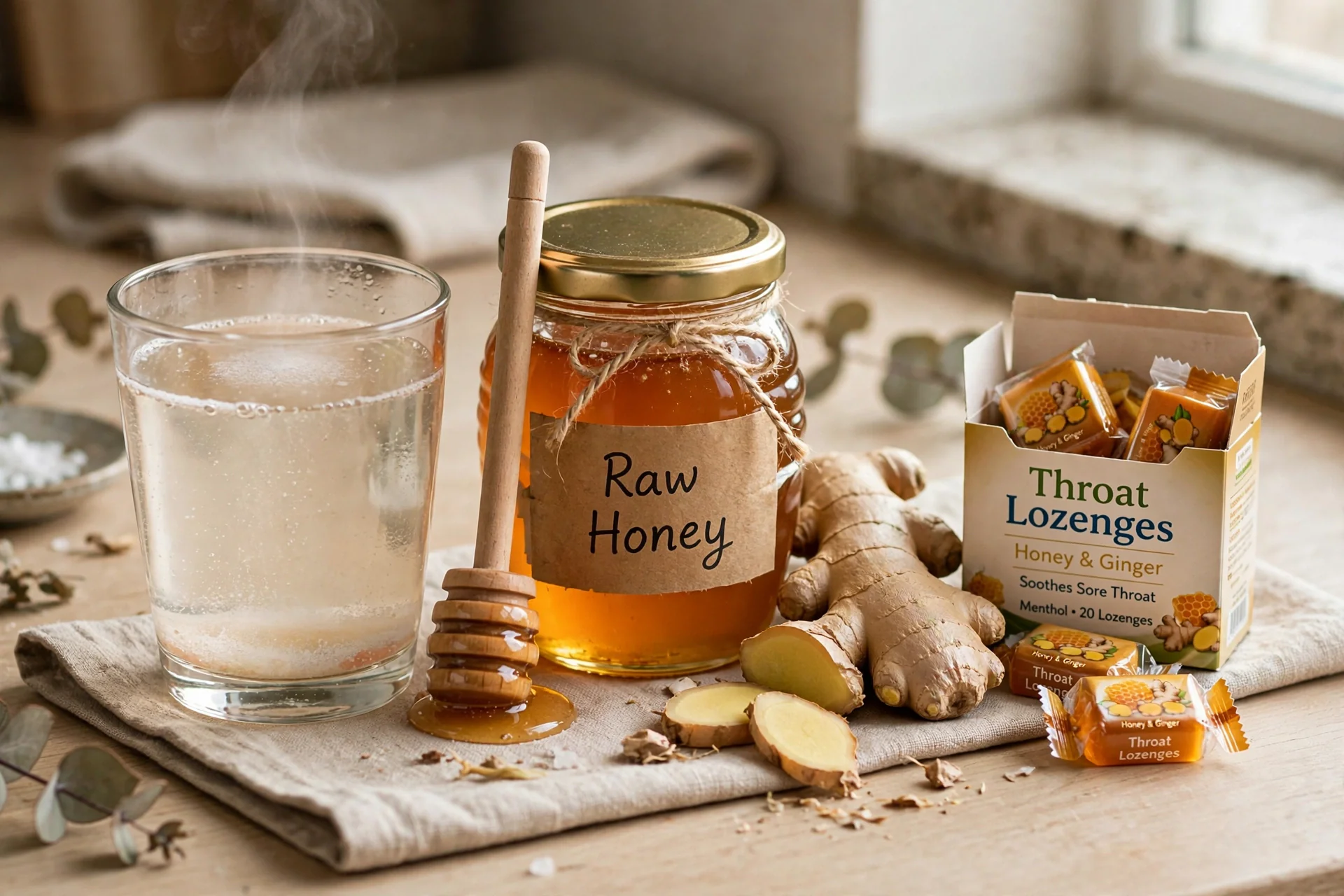
Home Remedies That Ease a Sore Throat Overnight
The warm salt water gargle is the remedy with the longest track record: half a teaspoon of salt dissolved in a glass of warm water, gargled and spat out, repeated through the evening. It draws fluid from swollen tissues, loosens mucus and makes the throat measurably less raw for a while. It is not suitable for young children who cannot gargle safely, but for adults it is the cheapest effective step there is.
Honey in a warm drink is the other standby with real support behind it — honey coats the throat, eases coughing and has mild antibacterial properties, and a hot honey-and-lemon drink before bed is genuinely soothing. Two safety rules are absolute, though: never give honey to a baby under twelve months, and treat it as comfort, not medicine. Steam and moisture round out the home approach: a humidifier, a steamy shower or simply avoiding dry, overheated bedroom air stops the overnight drying that makes mornings the worst moment of the whole illness.
Pain Relief and Pharmacy Options for the Night
Over-the-counter pain relief is what most often turns an impossible night into a manageable one. Paracetamol or ibuprofen, taken at the correct dose before bed, reduces both pain and the inflammation driving it; ibuprofen is often favoured for throat pain because of its anti-inflammatory effect, but follow the packet, respect maximum daily doses, and check suitability if you are pregnant, asthmatic or taking other medication. A pharmacist can advise in minutes and will also steer you away from doubling up ingredients across combination products.
Medicated lozenges containing a local anaesthetic or antiseptic, and throat sprays with anaesthetic, numb the area for short periods — long enough to fall asleep comfortably. Ice lollies and cold drinks help some people more than heat does, numbing the throat from the inside. None of these shorten the infection; all of them are legitimate tools for getting the rest that actually does help you recover.
The Bedtime Routine That Stacks Everything
Put together, the strongest overnight plan looks like this. Early evening: gargle with salt water and take a dose of paracetamol or ibuprofen with food or drink as directed. Before bed: a warm honey-and-lemon drink (adults and children over one only), a medicated lozenge to numb the throat, and another gargle. In the bedroom: raise the head of the bed or add a pillow so mucus drains rather than pooling, run a humidifier or place water near a radiator if the air is dry, and keep water within reach for the night.
Then protect the result. Rest your voice, avoid alcohol — it dehydrates and irritates — and keep away from smoke and strong fragrances. You will probably still have a sore throat in the morning, but the difference between a throat managed this way and one left alone is usually the difference between a decent night’s sleep and none at all.
When a Sore Throat Needs Medical Help
Most sore throats need nothing but time and the measures above, but some need a professional. The NHS advises seeing a GP if a sore throat does not improve after a week, if you have a high temperature, or if you keep getting sore throats. Seek more urgent help if you have difficulty breathing or swallowing, cannot swallow fluids, are drooling, develop a muffled voice or a stiff neck, or if your immune system is weakened — for example by chemotherapy — because complications, while uncommon, are serious.
Children need a lower threshold: a child who is not drinking, has a persistent fever, seems unusually drowsy, or whose symptoms worry you should be checked promptly, and NHS 111 can advise when you are unsure. Trust the pattern, not just the pain: a sore throat that is getting steadily worse after several days, or that comes with a scarlet rash, severe one-sided swelling or an inability to open the mouth properly, is not one to treat at home another night.
Conclusion
Searching for what kills a sore throat fast overnight leads to a slightly disappointing truth and a genuinely useful one. The truth is that viruses take their course and no remedy erases them by morning. The useful part is that pain, swelling and dryness — the things actually ruining your night — respond well to a simple stack: salt water, honey, lozenges, proper pain relief, moist air and an elevated pillow.
Run that routine tonight and you will very likely sleep and wake more comfortable. And keep the red flags in mind: duration over a week, high fever, or any trouble breathing or swallowing turns a home remedy problem into a medical one, every time.
Frequently Asked Questions
What kills a sore throat fast overnight?
Nothing literally kills it overnight — most sore throats are viral and clear within a week. The fastest realistic relief comes from combining salt water gargles, a warm honey drink, medicated lozenges and paracetamol or ibuprofen before bed.
Does gargling salt water really help a sore throat?
Yes. It is recommended by the NHS, reduces swelling and loosens mucus, and can be repeated several times a day. Use half a teaspoon of salt in a glass of warm water, gargle and spit — do not swallow it.
Is honey good for a sore throat?
Honey coats and soothes the throat and can calm coughing, especially in a warm drink. It is for comfort rather than cure, and it must never be given to babies under twelve months old.
Should I take antibiotics for a sore throat?
Usually not. Most sore throats are caused by viruses, which antibiotics do not treat. A GP may prescribe antibiotics if a bacterial infection such as strep throat is suspected or confirmed.
When should I see a doctor about a sore throat?
If it lasts more than a week, keeps coming back, comes with a high temperature, or you have trouble breathing, swallowing fluids or opening your mouth. Use NHS 111 if you are unsure how urgent it is.
Can children use the same remedies?
Mostly, with changes: no honey under twelve months, no gargling for children too young to spit safely, and children’s doses of pain relief only, following the packet. When in doubt, ask a pharmacist or GP.
Looking after your health the rest of the year helps too — our breakdown of the Tim Spector 30 plants a week list shows how everyday eating supports your gut and immune system.
And for more evidence-based everyday health guides like the Tim Spector 30 plants a week list, keep browsing our health section.