The phrase “whats a score in money” is a question many people ask when they encounter British slang for the first time. Language evolves in fascinating ways, and everyday terms often carry meanings that go beyond their literal definitions. In this case, the word “score” has both a historical and practical meaning that continues to appear in casual conversations, especially in the United Kingdom.
Understanding slang like this is important not just for language learners, but also for anyone interested in culture, communication, and real-world English usage. This article explores the meaning, origin, and usage of the term in depth, helping you fully understand what people mean when they refer to a “score” in money.
What Does “Score” Mean in Money?
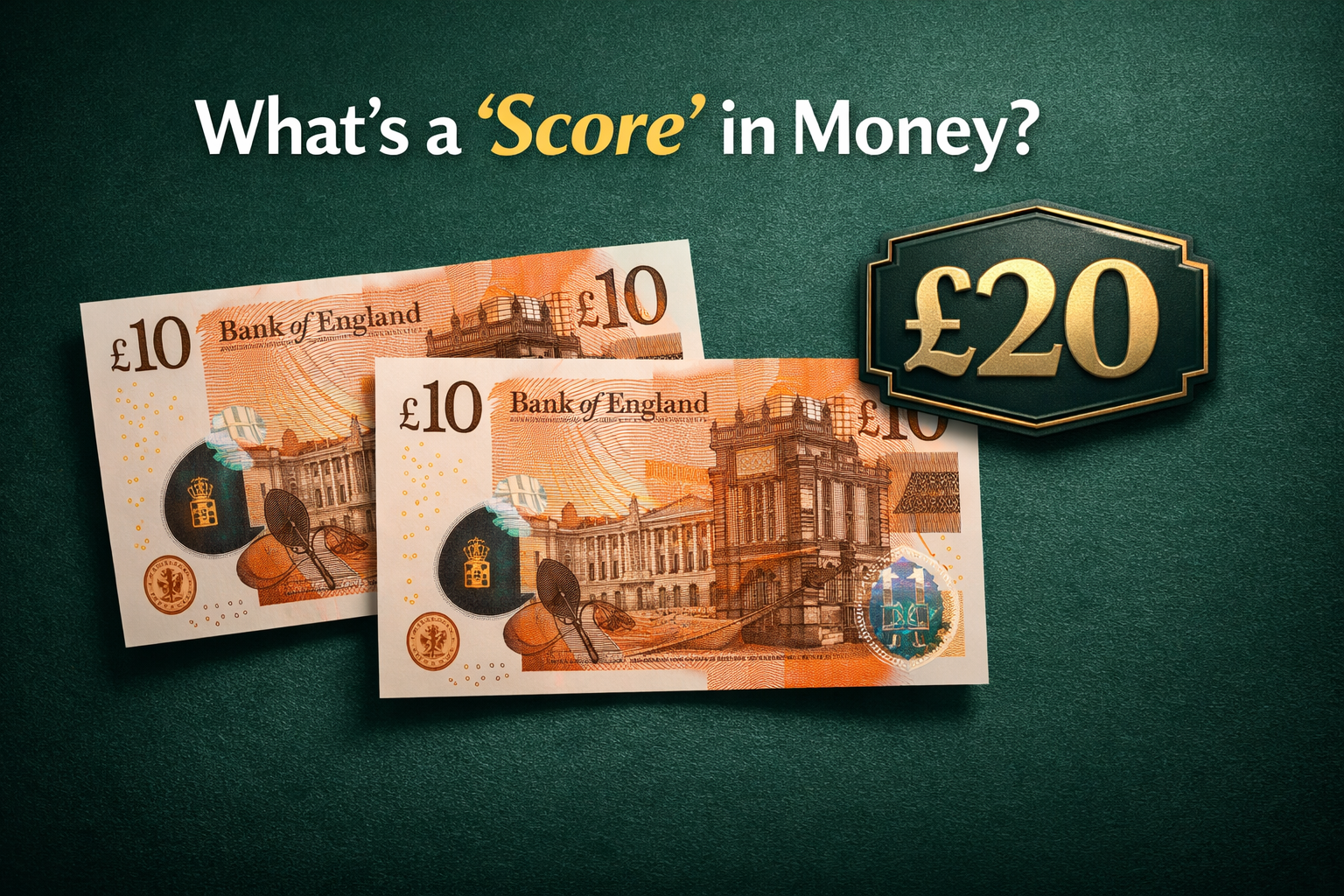
When people ask “whats a score in money,” they are usually referring to the slang meaning of the word “score,” which represents the number twenty. In financial terms, particularly in British slang, a “score” typically refers to twenty pounds. This usage is common in informal conversations and is widely understood among native speakers.
The word itself is not originally slang. It is a standard English term meaning twenty, which has been used for centuries. Over time, this numerical meaning became associated with money, especially in everyday speech. As a result, phrases like “that costs a score” or “lend me a score” are commonly heard in casual contexts.
Why Is £20 Called a “Score” in the UK?
To fully understand whats a score in money, it helps to explore the historical roots of the word. The term “score” dates back to old counting systems, where people would make marks or notches—called scores—on sticks or bones to keep track of numbers. Each score represented twenty units, making it a practical counting method.
This historical usage eventually carried over into language and, later, into financial slang. In the UK, where informal expressions for money are widely used, “score” naturally became associated with £20. The transition from a general number to a monetary term reflects how language adapts to everyday needs and cultural habits.
How “Score” Is Used in Everyday Conversations
In casual British conversations, the word “score” appears in a variety of contexts. For example, someone might say, “I’ve only got a score on me,” meaning they have twenty pounds available. This kind of usage is straightforward and typically understood without confusion among native speakers.
Despite its simplicity, the term is rarely used in formal settings. You are unlikely to hear it in professional environments, business meetings, or academic discussions. Instead, it thrives in informal speech, social interactions, and certain types of media where authenticity and realism are important.
Other Popular UK Money Slang Terms
While exploring whats a score in money, it is helpful to understand that it is just one of many slang terms used in the UK for different amounts of money. British slang for currency is rich and varied, often reflecting cultural references, rhyming patterns, and historical influences.
For instance, a “fiver” refers to five pounds, while a “tenner” means ten pounds. A “pony” is used for twenty-five pounds, and a “bullseye” can refer to fifty pounds. Larger amounts include a “ton” for one hundred pounds and a “grand” for one thousand pounds. These terms add color and personality to everyday language.
Is “Score” Used Outside the UK?
The question “whats a score in money” may arise in different parts of the world, but the answer can vary depending on location. While the term “score” universally means twenty, its association with money is most prominent in British English. In other English-speaking countries, the term is less commonly used in financial contexts.
In the United States, for example, “score” is more likely to be associated with historical references or counting rather than money. However, due to global media and cultural exchange, some people outside the UK may still recognize the term and understand its meaning in context.
Examples of “Score” in Pop Culture and Media
Popular culture plays a significant role in keeping slang terms alive, and “score” is no exception. British films, television shows, and music often feature characters using authentic language, including money slang. This exposure helps reinforce the meaning and usage of terms like “score.”
Crime dramas, in particular, frequently use such expressions to create realistic dialogue. When a character mentions “a score,” viewers familiar with the slang immediately understand the reference to twenty pounds. This consistent usage in media contributes to the term’s ongoing relevance.
Common Misunderstandings About “Score” in Money
One of the most common misunderstandings when asking “whats a score in money” is confusing it with other uses of the word “score.” For example, in academic settings, a score might refer to a test result, while in music, it could mean a written composition. These meanings are entirely unrelated to money.
Another misconception is that “score” is purely slang. In reality, it is a standard English word with a long history. Its use in money is simply an extension of its numerical meaning. Understanding this distinction helps clarify its proper usage and prevents confusion.
When Should You Use or Avoid the Term “Score”?
Knowing when to use the term “score” is just as important as understanding its meaning. In informal settings, such as conversations with friends or casual interactions, using the term can make your speech sound more natural and authentic. It is a great way to connect with native speakers.
However, in formal situations, it is best to avoid slang terms altogether. Using “score” in a professional context may come across as inappropriate or unclear. Instead, it is advisable to use standard numerical expressions to ensure clarity and maintain a professional tone.
The Cultural Significance of Money Slang
Exploring whats a score in money also reveals the broader cultural significance of slang. Language is deeply connected to identity, and the way people talk about money often reflects their social environment, history, and shared experiences.
In the UK, money slang is a vibrant part of everyday language, adding humor and creativity to conversations. Terms like “score” are not just functional; they also carry cultural meaning, making them an important aspect of linguistic heritage.
Why Learning Slang Improves Language Skills
Understanding slang terms like “score” can greatly enhance your language skills. It allows you to engage more effectively in real-world conversations and helps you better understand native speakers. This is especially important for learners who want to achieve fluency.
Moreover, learning slang provides insight into cultural nuances that are not always covered in traditional language education. By exploring expressions like “whats a score in money,” you gain a deeper appreciation for the richness and diversity of English.
Conclusion
The question “whats a score in money” opens the door to a fascinating exploration of language, history, and culture. At its core, the term “score” simply means twenty, but its use in British slang gives it a specific financial meaning of twenty pounds.
Understanding this term not only helps you navigate casual conversations but also provides valuable insight into how language evolves over time. Whether you are a language learner or simply curious, knowing the meaning of “score” enriches your understanding of English.
FAQs
What is a score in money?
A score in money refers to the amount of twenty, and in British slang, it usually means twenty pounds. It is commonly used in informal conversations and is widely understood in the UK.
Why does “score” mean £20?
The term “score” historically means twenty and comes from old counting systems. Over time, this numerical meaning became associated with money, leading to its use as slang for £20.
Is “score” still used today?
Yes, the term is still used, although it may not be as common as other slang terms. It is often heard in casual speech and certain types of media.
Can “score” mean something else?
Yes, “score” has multiple meanings depending on the context. It can refer to a number, a musical composition, or a result, but in money slang, it specifically means twenty.
Is “score” used outside the UK?
While the word “score” is understood globally as twenty, its use as money slang is mainly associated with British English.
Should I use “score” in formal writing?
No, it is best to avoid slang terms like “score” in formal writing. Use standard numerical expressions instead to maintain clarity and professionalism.
You may also read: Determining the taxi insurance price with Towergate insurance taxi experts