Your solar module is rated at 450W, but the monitoring app shows less. Does that mean something is wrong? Not necessarily. Rated power comes from defined test conditions, while outdoor output changes with sunlight, temperature, shading, and system operation.
Before judging a mono solar module, establish what the displayed data represents. Then examine environmental changes and look for signs that warrant professional testing. One low reading is not enough to justify replacing a module.
1. Mono solar module Output: Is Your Comparison Valid?
Separate Power from Energy
Watts and kilowatts describe power at a particular moment. Kilowatt-hours describe energy generated over time. A low morning reading does not establish poor daily performance, while reduced daily generation may reflect fewer hours of useful sunlight.
| Measurement | Meaning | Comparison consideration |
|---|---|---|
| Module DC power | Instantaneous photovoltaic output | Not identical to AC output |
| Inverter AC power | Output after conversion | Affected by conversion and operating limits |
| Daily energy | Accumulated generation | Depends on weather and daylight |
| Module-level data | Information from individual monitoring equipment | Requires suitable monitoring capability |
Standard string monitoring may not show each module’s performance. Avoid attributing an entire string’s output change to one panel.
Understand the Nameplate Rating
Common standard test conditions, or STC, include:
- 1,000W/m² irradiance
- 25°C cell temperature
- AM1.5 reference solar spectrum
The temperature refers to the cells—not outdoor air. A mono solar module operating below its rated power is therefore not automatically defective. Under certain conditions, instantaneous output may also approach or exceed the rating.
Compare Similar Conditions
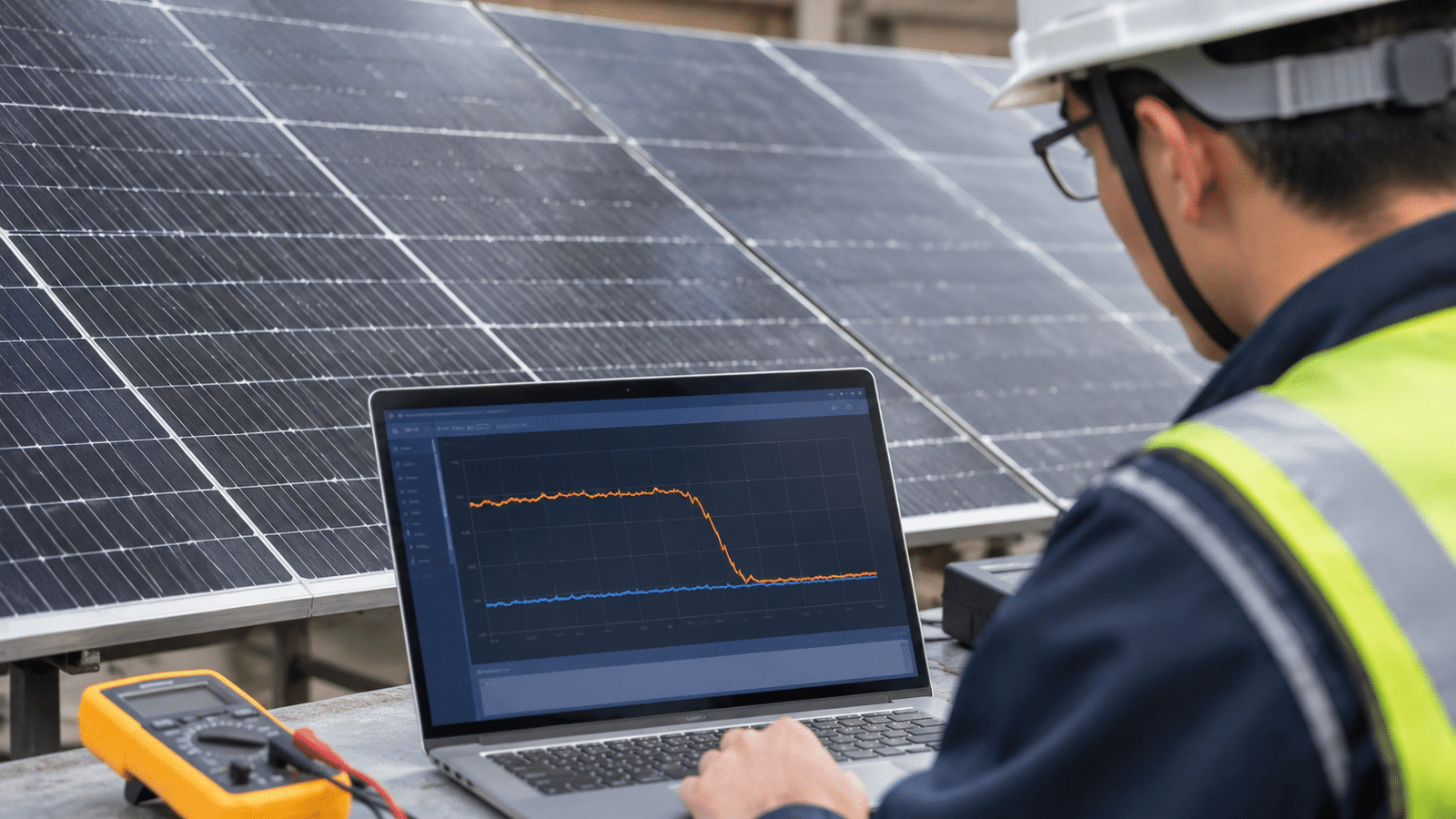
Use comparable seasons, times, weather, and measurement points. Comparing a cloudy winter day with a clear summer day cannot establish degradation. Check timestamps, missing records, and communication status. Display delays can resemble generation problems. Inverter clipping, export limits, or other controls may also restrict AC output. A flattened power curve is a useful clue, but equipment status and settings must confirm the explanation.
2. Environmental Reasons for Lower Mono Solar Module Output
Clouds, Seasons, and Sun Angle
Modules can generate electricity from diffuse light, but lower irradiance generally reduces output. Thin cloud, haze, and the angle of incoming sunlight can affect performance even when the sky looks reasonably bright. Seasonal changes also alter sun position and shading. Visible sunshine does not mean conditions match the module’s laboratory rating.
Higher Cell Temperatures Reduce Peak Power
Sunlight heats the cells, which may become considerably warmer than the surrounding air. The maximum-power temperature coefficient describes the corresponding temperature-related change. Suppose a 450W module has a coefficient of −0.30%/°C. Increasing cell temperature from 25°C to 55°C gives a 30°C rise. Considering temperature alone, the estimated reduction is 9%, giving approximately 409.5W. This simplified example assumes other conditions remain unchanged. It is not a field-output prediction or evidence that daily energy will fall by 9%. Use the specific model’s coefficient.
Partial Shade Does Not Cause Proportional Losses
Branches, chimneys, antennas, and nearby buildings can shade a mono solar module. Seasonal sun movement or new construction may introduce shadows where none previously existed. Losses depend on cell connections, bypass diodes, string arrangements, and power electronics. Shading 10% of the surface does not necessarily reduce output by only 10%. Optimizers and microinverters may manage some mismatch effects, but they cannot recover sunlight that never reaches the cells.
Dust, Droppings, and Other Deposits
Soiling effects depend on coverage, location, rainfall, and installation conditions. Concentrated bird droppings or leaves may behave differently from a uniform dust layer. Follow the manufacturer’s cleaning instructions rather than adopting a universal weekly or monthly schedule. Observe from a safe location and arrange suitable assistance where needed. Avoid stepping on modules or using unsuitable cleaning tools.
3. Which mono solar module Problems Need Professional Testing?
Persistent Changes Deserve Investigation
Further checks are appropriate when weather and operating settings cannot explain the decline, particularly if one monitored section remains consistently below comparable sections.
Warning signs include:
- A sudden drop accompanied by inverter alerts.
- Broken glass, scorching, damaged cables, or unusual discoloration.
- Persistent mismatch under comparable conditions.
- An unexplained trend supported by complete monitoring records.
These observations do not identify a specific fault. The cause may involve the module, connections, wiring, inverter, or configuration.
Different Tests Answer Different Questions
| Inspection method | Main purpose |
|---|---|
| Status and alarm review | Identify faults and operating restrictions |
| Thermal imaging | Examine unusual temperature patterns under suitable conditions |
| I–V curve testing | Assess electrical output characteristics |
| Wiring and insulation checks | Investigate relevant electrical problems |
Qualified personnel should select methods appropriate to the installation. A thermal image or single voltage reading cannot establish a diagnosis without context.
Separate Ageing, Faults, and Warranty Claims
Performance can change over time, but degradation varies with technology, product, and operating conditions. A performance-warranty curve is not a guarantee of annual energy generation. Provide the installer with the model, installation date, incident timeline, alarms, screenshots, and historical data. Do not disconnect DC connectors, short-circuit modules for current measurements, or open junction boxes yourself. Switching off the AC supply does not make illuminated modules and all DC wiring electrically inactive.
Conclusion: Check mono solar module Conditions Before Assuming Failure
Reduced output can result from sunlight, temperature, shade, soiling, monitoring issues, system limits, or electrical faults. First distinguish power from energy and DC from AC. Then compare similar conditions and investigate persistent abnormalities. Output below the nameplate rating alone is not a replacement criterion; identifying the actual cause is what matters.