Introduction
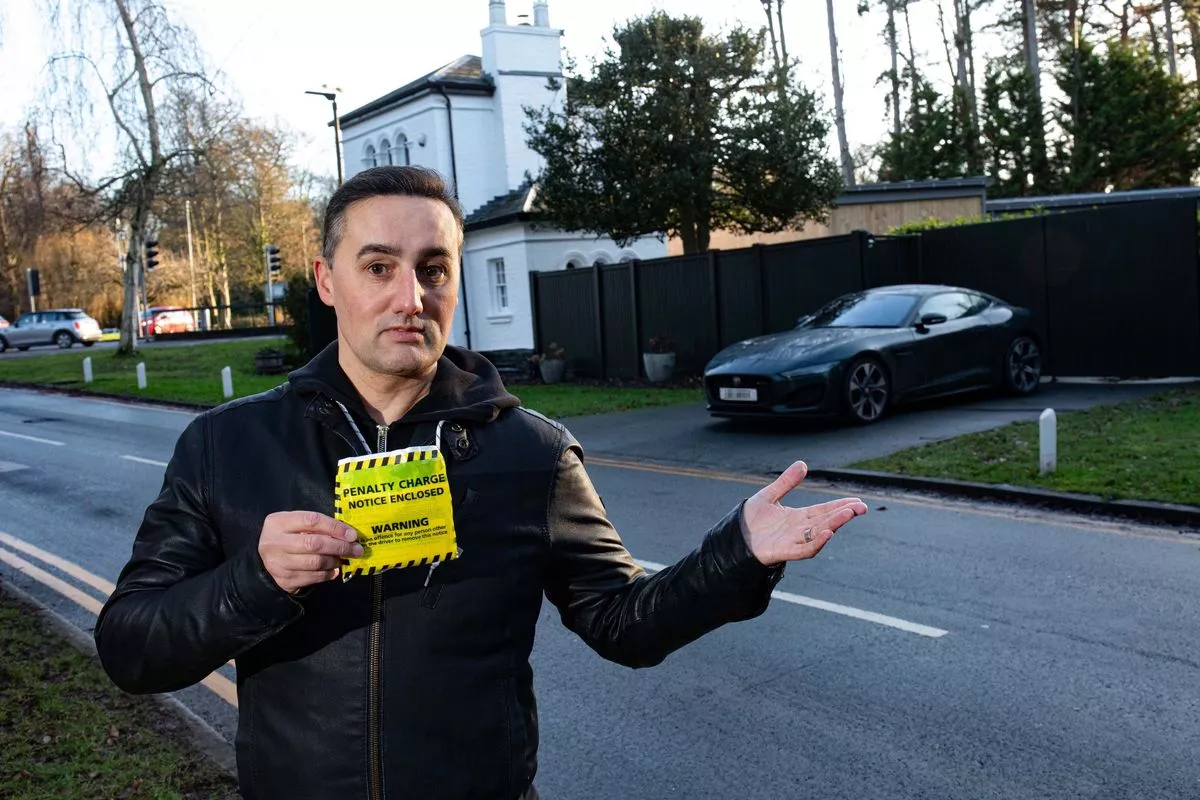
The story behind the David Miller Parking Fine became a talking point because it touched a nerve that many UK drivers instantly understand. A homeowner in Chester discovered a £35 parking ticket on his Jaguar after leaving it on a strip of tarmac outside his own house gate, a place he reportedly believed was effectively part of his residential space. Reporting around the case said he had used that spot for years, only to find that the council viewed it very differently.
What gave the case such strong public appeal was the clash between common-sense expectation and formal parking law. Many people assume that the area outside their house is theirs in a practical sense, even when the legal boundary says otherwise. That gap between everyday belief and traffic regulation is what turned a modest £35 penalty into a national conversation about fairness, property boundaries, and local enforcement.
What happened in Chester
According to January 2026 coverage, David Miller, a 49-year-old business consultant from Chester, parked his Jaguar F-Type on a six-metre stretch of tarmac outside the gate of his detached home. Reports said he had done so for around a decade without issue. On the following morning, he found a £35 parking ticket and was left stunned that a place he saw as connected to his home was being treated as a restricted area.
Media accounts said the dispute centred on the fact that the tarmac sat outside his gate rather than inside the legal confines of his driveway. In his telling, the vehicle was not obstructing a pavement on the far side of the road and was not blocking access in the way many people imagine when they hear of a parking offence. Yet the council’s reported position was that the location remained part of the public highway and therefore subject to the same restrictions as other road-adjacent spaces.
Why the fine became controversial
The emotional force of the story came from a very simple phrase: outside his own house. That wording immediately makes the penalty sound unreasonable, because it suggests private domestic space rather than controlled public highway. In practice, however, the line between private property and enforceable road space is often less obvious than homeowners expect, especially where gates, dropped kerbs, strips of tarmac, and road markings create a misleading sense of ownership.
That is why the case drew such strong reactions in comment sections and social posts. Some readers sympathised with Miller and saw the fine as bureaucratic overreach, while others focused on the reported presence of yellow-line restrictions and argued that rules must apply consistently no matter whose house is involved. The controversy was not really about the amount alone; it was about whether the enforcement felt legally correct yet socially unfair.
Why parking outside a home does not automatically mean private parking
A house frontage may feel personal, but that does not make every inch of adjacent land part of the homeowner’s private legal domain. In the UK, councils can enforce restrictions on adopted highway land and on places marked with enforceable road signs or lines. Cheshire West and Chester Council’s own civil parking enforcement page says it enforces areas where there are signs and lines, including double yellow lines, which is important because it shows the principle applied in the Miller dispute is not unusual.
This is where many drivers get caught out. The practical appearance of a parking space can be deceptive. A strip of tarmac near a gate may look like an extension of a driveway, yet still fall within highway limits or a traffic regulation order. The law tends to care less about what feels attached to a home and more about where the enforceable boundary sits, how the space is designated, and what markings are already in place.
Understanding the double yellow line issue
The Highway Code is very clear that double yellow lines indicate a prohibition of waiting at any time, even if there are no upright signs beside them. Government guidance on road markings repeats the same point and adds that the restriction can apply to the carriageway, pavement, and verge. That matters because many drivers wrongly treat yellow lines as if they apply only to the portion of road where their tyres physically rest.
In a case like this, the debate is rarely about whether double yellow lines normally matter. They do. The dispute instead becomes whether those lines legally covered the precise place where the vehicle was left and whether the area formed part of the public highway. That is why some reports said Miller believed the car was effectively behind the yellow lines or outside their proper reach, while the council reportedly maintained the restriction still applied.
David Miller’s side of the argument
Reporting from January 2026 said Miller felt blindsided because he had used the same area for roughly ten years without previous trouble. He reportedly argued that the car was not impeding pedestrians and that the patch of tarmac functioned like an extension of his driveway rather than a true public parking or road space. From his perspective, the ticket looked less like sensible traffic control and more like sudden, selective enforcement.
Some reports also said he believed the council’s approach was inconsistent because neighbours had allegedly faced similar tickets that were later rescinded. That kind of comparison tends to strengthen public sympathy, because inconsistency often feels more offensive than strictness. Even when authorities may have a lawful basis to enforce, drivers become frustrated when they think the rules are being interpreted differently from house to house or day to day.

The council’s reported position
The council’s side, as reflected in media reporting, was more formal and more familiar to anyone who has dealt with local parking enforcement. The central point was that the land in question was treated as public highway and therefore remained subject to road restrictions. Once a council reaches that conclusion, personal use, custom, or long habit usually carries less weight than the underlying traffic rules or land status.
That approach may sound cold, but it fits the broader structure of civil parking enforcement in England. Councils are expected to apply restrictions based on lines, signs, traffic orders, and legal definitions of road space rather than on a resident’s personal understanding of the area. Cheshire West and Chester’s public guidance specifically highlights its role in enforcing areas with signs and lines, which helps explain why the authority appears to have stood by the ticket after the initial challenge.
Why the David Miller Parking Fine drew national attention
The David Miller Parking Fine spread because it had all the ingredients of a modern high-interest local news story. It involved a homeowner, a recognisable car, a small but irritating penalty, and a phrase that instantly triggers debate: fined for parking outside his own house. That kind of framing works across regional papers, tabloids, and social platforms because it invites readers to imagine themselves in exactly the same situation.
It also had a useful tension for editors and search users alike. On one side was the sympathy angle: how can a person be punished outside their own gate? On the other side was the legal angle: if the yellow lines and public highway status are valid, why should one resident be exempt? Stories with a built-in fairness dispute tend to perform well because they operate as both news and public service guidance.
Can a parking fine like this be challenged
A ticket like this can be challenged, but success usually depends on evidence rather than outrage. In general, grounds for appeal may include unclear markings, defective signage, inaccurate observations, procedural errors, or disputes about whether the location truly falls within enforceable restrictions. The challenge is that drivers often focus on how unfair a fine feels, while decision-makers focus on whether the legal basis for enforcement was complete and properly documented.
Reports about Miller said he had already appealed and that the council rejected the initial challenge. Some coverage also said he sought legal support, which suggests the dispute was moving beyond simple complaint into a more structured argument about boundaries, markings, and the reach of the yellow-line restriction. That is often the turning point in parking cases: the issue stops being emotional and starts becoming technical.
What evidence matters most in a dispute
When drivers contest a fine involving a house frontage, photographs are usually crucial. Clear images of the vehicle position, the yellow lines, the kerb, the gate, nearby signage, and the wider road layout can all shape the outcome. If the dispute turns on whether a strip of land is public highway or a private extension of the property, boundary documents and council maps may become just as important as pictures taken on the day.
Correspondence also matters more than many people realise. Appeal letters, rejection notices, timestamps, and any reference to a traffic regulation order can all help reveal whether the authority has identified the correct contravention and whether its reasoning is consistent. In a case like Miller’s, the strongest challenge would not simply say that the space looked private; it would need to show why the law or the markings did not validly cover that exact patch of tarmac.
What the Highway Code means for everyday drivers
The practical lesson from this story is broader than one ticket in Chester. The Highway Code makes plain that double yellow lines mean no waiting at any time, and government road-marking guidance explains that such restrictions can extend beyond the carriageway itself. Drivers who treat the painted line as a narrow visual boundary, rather than as a legal control over the adjacent restricted area, can easily misjudge where it is safe to leave a vehicle.
That does not mean every disputed fine is automatically correct, but it does mean assumptions are risky. A dropped kerb, a private gate, or a space used informally for years does not by itself override highway restrictions. The safest approach is always to read the road markings, understand what the council can enforce, and check the local rules before relying on custom or neighbourly practice as proof that parking is allowed.
What homeowners should check before parking near their property
Homeowners often think about their driveway in terms of everyday convenience rather than legal geometry. The Miller case shows why that can be dangerous. Before parking near a gate, frontage, verge, or strip of tarmac, it is worth checking whether the land is actually part of the title plan or whether it sits inside the highway boundary. What looks like your space may simply be a familiar space, and the difference matters.
It is also wise to look beyond the obvious road surface. Yellow lines, dropped kerbs, controlled zones, loading restrictions, and prior council notices all provide clues about whether a location is enforceable. In some situations, residents only discover the truth after a penalty notice arrives. A few minutes spent checking markings, local authority guidance, and property documents can be far cheaper than a fine and far less stressful than a prolonged appeal.
Why fairness and legality do not always feel the same
One reason this case resonated so strongly is that legality and fairness often part company in public opinion. A rule may be valid and still feel unreasonable in a specific domestic setting. A resident may see no obstruction, no danger, and no public harm, while the council sees only a restricted area marked by enforceable lines. Both views can be understandable at the same time, which is why parking disputes so often become emotional.
That gap matters because local enforcement depends not only on rules but also on trust. When people believe councils are enforcing logically and consistently, even unpopular tickets can be accepted. When people suspect selective action, unclear boundaries, or revenue-driven behaviour, small penalties become symbols of a much larger grievance. The Miller story gained traction precisely because many readers could see themselves asking the same question: how can that possibly count as public parking?
What drivers can learn from this case
The David Miller Parking Fine is a reminder that confidence is not the same as certainty. Years of parking in the same place without receiving a ticket can create a false sense of security. Drivers begin to treat habit as permission, when in reality it may simply mean the restriction was not previously enforced or no complaint was made. Enforcement can tighten quickly, and when it does, old assumptions offer little protection.
The smarter lesson is to treat unclear frontage parking as a legal question, not a visual one. If the space is important to your daily routine, confirm the boundary, study the lines, and keep records. If you are ticketed, respond calmly, gather evidence, and frame the appeal around markings, orders, and land status rather than emotion alone. That approach will not guarantee success, but it gives you a far better chance than relying on outrage or instinct.
Conclusion
At first glance, this looked like a simple story about a man punished for parking outside his own home. On closer inspection, it became a revealing case about the tension between private expectation and public regulation. Reports said David Miller received a £35 ticket in Chester after parking on a tarmac strip outside his gate, while the council’s position was that the location formed part of the public highway and fell within enforceable restrictions.
That is why the case travelled far beyond local news. It raised a question many motorists had never seriously considered until they saw the headline. The David Miller Parking Fine mattered not because the amount was huge, but because it exposed how easy it is to mistake familiarity for legal entitlement. For UK drivers, the lasting takeaway is simple: always trust the markings and the legal status of the space more than the feeling that it is “basically yours.”
FAQs
What was the David Miller parking fine about?
The David Miller Parking Fine referred to a January 2026 dispute in Chester in which David Miller reportedly received a £35 ticket after leaving his Jaguar on a strip of tarmac outside his house gate. He argued that the space functioned like part of his home frontage, while the council’s reported position was that the area remained public highway subject to parking restrictions.
Why was he fined if the car was outside his own house?
Being outside a person’s home does not automatically make a parking space private. The key issue is whether the land is part of the adopted highway or otherwise covered by enforceable restrictions. Official guidance says councils enforce areas with signs and lines, and the Highway Code states that double yellow lines mean no waiting at any time, even without nearby upright signs.
Can double yellow lines apply to areas beside the road?
Yes, government guidance on road markings indicates that waiting restrictions shown by yellow lines can apply to the carriageway, pavement, and verge. This is one reason drivers sometimes misjudge a location when a strip of tarmac or frontage seems visually separate from the road but still falls within the restricted area controlled by the markings.
Can a homeowner challenge a fine like this?
Yes, but a successful challenge normally depends on technical evidence. Useful material can include photos, title plans, council maps, traffic regulation order details, signage issues, and procedural correspondence. The most persuasive appeals focus on whether the restriction was lawfully applied to the exact location rather than relying only on the argument that the fine felt unreasonable.
What should drivers do before parking outside their house?
Drivers should check whether the land is genuinely part of their property, whether yellow lines or other restrictions apply, and whether the local council treats the area as enforceable highway space. A dropped kerb, gate, or long history of informal use should never be assumed to override official markings. When in doubt, checking the rules first is safer than fighting a penalty later.
Why did this story get so much attention?
The case combined a strong emotional hook with a practical legal lesson. Readers immediately understood the frustration of being fined near one’s own home, yet the official parking rules also made the story more complicated than it first appeared. That tension between sympathy and regulation is exactly why the story travelled from local reporting into wider UK discussion.
You may also read: full list of apprentice candidates for 2026