Introduction
Big studio adventure films usually arrive with an easy promise. They offer mystery, movement, beautiful locations, familiar stars, and the kind of treasure-hunt energy that invites viewers to sit back and enjoy the ride. That is exactly why Fountain of Youth drew so much early attention. Directed by Guy Ritchie, written by James Vanderbilt, released on Apple TV+ on May 23, 2025, and led by John Krasinski and Natalie Portman, the film seemed built to attract broad streaming interest from the very beginning.
Yet interest alone does not guarantee admiration. The reason Fountain of Youth Reviews became such a strong search phrase is simple: people wanted clarity before spending two hours with a film that looked expensive, polished, and crowd-friendly on paper. The movie currently holds a 35% Tomatometer score with 117 critic reviews, a 38% Popcornmeter from 1,000+ audience ratings on Rotten Tomatoes, and a 5.7/10 IMDb rating based on roughly 52,000 user ratings, which signals a noticeably mixed reception across both critic and viewer communities.
What Fountain of Youth Is About
At its core, Fountain of Youth follows two estranged siblings who reunite for a globe-spanning search for the mythological source of eternal life. Apple describes the story as a global heist built around history, clues, adventure, and the possibility of immortality, while Rotten Tomatoes frames it as the mission of a treasure-hunting mastermind who needs the help of his smarter estranged sister to survive the threats around them. That combination places the film directly inside the modern adventure puzzle genre.
The premise is easy to understand, which is one of the film’s biggest strengths as a piece of commercial entertainment. Audiences do not need a long explanation to understand the hook. Secret clues, old myths, famous art, international locations, and family tension all create a familiar but marketable formula. The movie runs 2 hours and 5 minutes, is rated PG-13, and was distributed by Apple TV+, making it accessible to a wide streaming audience looking for a high-budget weekend adventure rather than an intense arthouse experience.
Why The Movie Drew So Much Attention
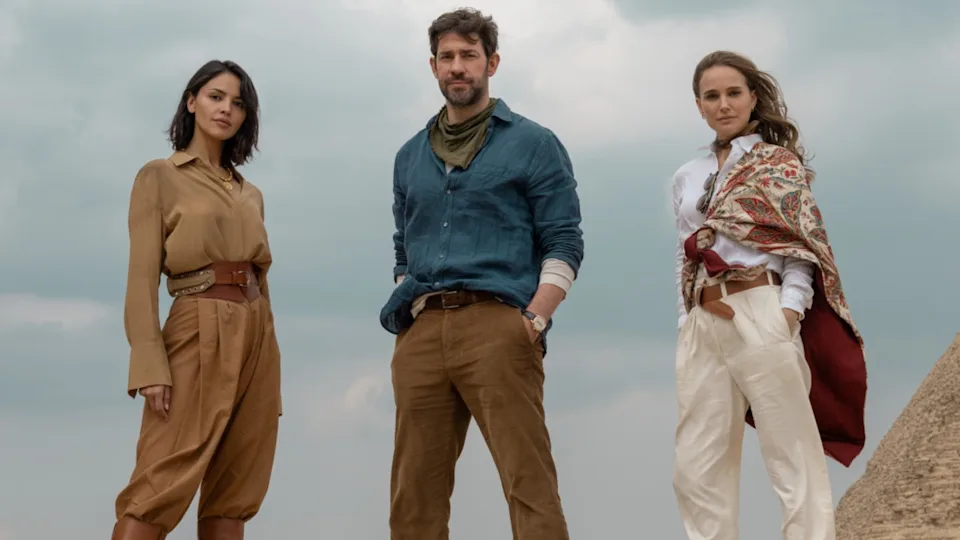
One reason interest built quickly is that the package looked unusually strong for a streaming original. Guy Ritchie brought name recognition as director, James Vanderbilt handled the screenplay, and the cast included John Krasinski, Natalie Portman, Eiza González, and Domhnall Gleeson, with additional support from Arian Moayed, Laz Alonso, Carmen Ejogo, and Stanley Tucci. For many viewers, that lineup alone was enough to create the expectation of a fun, polished, internationally scaled adventure film.
Another reason the title spread online is that critics and entertainment outlets immediately compared it to famous treasure-hunt franchises. Associated Press described the film as drawing on Indiana Jones-style energy with heist elements, while multiple reviews emphasized its globe-trotting structure and family-friendly streaming appeal. When a movie is sold with that kind of comparison, curiosity rises fast because viewers want to know whether the film is a fresh adventure, a loving homage, or simply an imitation of better-known classics.
That is also why Fountain of Youth Reviews matter beyond simple score-checking. Searchers are not only asking, “What number did critics give it?” They are also asking whether the film captures the spirit of old-fashioned adventure cinema. In other words, people want to know if the movie delivers charm, pace, chemistry, and escapism, or whether it only borrows the look of that tradition without earning the same excitement. The split between its flashy setup and mixed reception explains why discussion remained active.

Rotten Tomatoes Score And What It Tells Us
Rotten Tomatoes gives the clearest snapshot of critical disappointment. As of now, Fountain of Youth stands at 35% on the Tomatometer from 117 critic reviews and 38% on the Popcornmeter from 1,000+ audience ratings. Rotten Tomatoes also summarizes the critical reaction by arguing that despite the film’s glossy production and impressive set pieces, it cannot overcome a derivative and uninspired story. That combination of low critic and low audience scores is notable because it shows that the film failed to win over either group in a major way.
The meaning of a low Rotten Tomatoes score should be handled carefully, especially in movie writing. A poor Tomatometer does not always mean a film is unwatchable, and a strong Popcornmeter can sometimes reveal hidden audience affection even when critics are cold. In this case, though, the low audience number reinforces the critical skepticism instead of balancing it. That suggests the film’s weaknesses are not limited to elite review circles but were visible to everyday viewers as well.
For SEO readers, this is often the first deciding factor. When they search for Fountain of Youth Reviews, many want to know whether the movie is being unfairly dismissed or genuinely underperforming. The current Rotten Tomatoes picture leans toward the second explanation. The movie clearly offers scale, recognizable talent, and a marketable premise, but the review aggregation indicates that those assets were not enough to create broad enthusiasm. That gap between promise and outcome is central to the film’s reputation.
IMDb Rating And Audience Opinion
IMDb offers a different kind of measurement because its ratings come from users rather than professional reviewers. Fountain of Youth currently holds a 5.7/10 rating on IMDb based on about 52,000 user ratings, which points to an audience response that is not disastrous but clearly underwhelming. A score in this range often suggests a film that is watchable to some people, forgettable to others, and rarely defended as a must-see favorite.
That distinction matters because IMDb users often reward entertainment value even when critics are harsh. Many visually busy streaming films can land in a safer middle zone if audiences find them enjoyable enough for casual viewing. The fact that this movie still sits at 5.7/10 implies that the spectacle, cast, and adventure tone were not fully enough to overcome concerns about pacing, originality, or emotional investment. In practical terms, the IMDb score supports the idea that the movie has curiosity value more than genuine word-of-mouth momentum.
For a potential viewer, IMDb may actually be the more useful guide. A middle-tier user rating usually means expectations should be lowered rather than erased. It suggests that some people found the movie pleasant enough for a single stream, while others came away frustrated by how much potential was left unused. That is a very different situation from a movie that is passionately loved by fans despite critical dismissal. Here, the audience seems lukewarm more than protective.
What Critics Praised And What They Rejected
Professional reviews were not completely without praise. Rotten Tomatoes notes the film’s glossy production and some impressive set pieces, and RogerEbert.com acknowledged that the camera sometimes moves in surprising ways during fight scenes. Even the less enthusiastic conversations around the movie often admit that it looks expensive, travels through appealing environments, and occasionally delivers a burst of momentum that reminds viewers why the project sounded exciting in the first place.
The larger complaint, however, was consistency. Rotten Tomatoes summarizes the story as derivative and uninspired, The Guardian called it a soulless misadventure, and Polygon argued that the film slips from energetic promise into thin characterization and familiar borrowing. RogerEbert.com also criticized the action for becoming repetitive rather than evolving meaningfully. When very different outlets converge on the same concerns, the pattern becomes difficult to ignore: the movie may move, but it does not steadily build wonder.
This is the heart of the film’s critical problem. Great adventure cinema is not only about clues, maps, chases, and ancient myths. It also needs texture, suspense, personality, and a sense that each new turn deepens the journey. Critics largely felt that Fountain of Youth assembled the ingredients without producing the magic. That does not make the movie worthless, but it does explain why its reviews so often sound disappointed rather than angry. Reviewers expected more because the material looked capable of more.
Cast Performances And Screen Presence
The cast remains one of the easiest reasons to try the film. Apple’s official materials and Rotten Tomatoes highlight John Krasinski, Natalie Portman, Eiza González, and Domhnall Gleeson as the main attraction, and that ensemble gives the project immediate commercial weight. These are performers who can bring intelligence, humor, glamour, or tension to mainstream material, and their presence helps the movie feel larger than an average streaming release.
Natalie Portman and John Krasinski, in particular, carry the burden of making the sibling relationship believable enough to anchor the treasure hunt. Associated Press noted that their chemistry adds some depth to the dynamic, which helps the movie maintain a human center even when the plot leans into myth and spectacle. That is important because adventure films often rise or fall on whether viewers enjoy spending time with the central duo as much as they enjoy the actual quest.
Still, performance can only do so much when the writing leaves characters thin. Several critics argued that the cast is underused or underserved, which is why so many responses describe the film as a missed opportunity rather than a total collapse. The actors bring professionalism and moments of charm, but the screenplay does not always give them enough emotional texture to turn the characters into memorable companions. In that sense, the cast helps the film stay watchable, even when it struggles to become special.
Story, Script And Pacing
The screenplay is where the strongest criticisms gather. James Vanderbilt’s script gives the movie a commercially attractive blueprint: estranged siblings, historical clues, stolen art, hidden meaning, secret routes, and the possibility of immortality. On paper, that framework promises a pacey, brain-teasing adventure. But critics repeatedly argued that the plot relies too heavily on recycled ideas rather than transforming them into something distinct or emotionally satisfying.
Pacing creates a second challenge. RogerEbert.com argued that the action grows repetitive, while IMDb’s visible user commentary on the title page also points to a beginning that moves quickly before the second half starts to drag. That mixed rhythm can be especially damaging in an adventure story because viewers expect escalation. They want the mystery to tighten, the stakes to rise, and the set pieces to become more inventive as the film moves forward. When the momentum flattens, the spectacle feels heavier than exciting.
This helps explain why the movie feels better as an idea than as a fully satisfying experience. The structure contains enough familiar hooks to pull audiences in, but not enough narrative freshness to keep the energy rising all the way to the end. That makes the film easier to describe than to defend. People can quickly explain what it is about, but they struggle more to explain what makes it emotionally necessary or uniquely memorable compared with stronger adventure films.
Direction, Visual Style And Action
Guy Ritchie’s name naturally raises expectations about rhythm, flair, and stylish motion. Fountain of Youth does show some of that visual discipline. Rotten Tomatoes and several reviews acknowledge polished production, while Associated Press emphasized the movie’s globe-trotting settings and cinematic scale. The film also benefits from a streaming budget that allows it to present itself as a premium release rather than a disposable, low-risk original made only to fill a content slot.
There are also intriguing production details behind the spectacle. Associated Press reported that the movie includes locations such as Vienna, Cairo, and Bangkok, and noted that it became the first major production to shoot action sequences at the Pyramids of Giza. Those details matter because they reinforce the film’s ambition. Even viewers who remain unconvinced by the story may still appreciate that the movie tries to look expansive, international, and physically adventurous rather than trapped inside anonymous digital space.
But style alone cannot sustain excitement forever. RogerEbert.com argued that some fight scenes have interesting camera movement but also criticized the overall imagery as too flat and the action as overly repetitive. That is a revealing contradiction. The movie appears to know what adventure cinema should look like from a distance, yet it does not always turn that understanding into escalating visual pleasure. As a result, the action can register as competent and expensive without feeling truly transportive.
How It Compares With Other Adventure Films
Comparisons with Indiana Jones were almost unavoidable from the moment the film was marketed. Associated Press referenced that atmosphere directly, The Guardian described it as an Indiana Jones knock-off, and Polygon argued that it borrows too openly from The Last Crusade. Those comparisons are helpful because they reveal what viewers expected: not just treasure hunting, but wit, mythic fun, memorable character interplay, and a sense of discovery that feels larger than the mechanics of the plot.
This is where the movie faces its toughest test. Adventure audiences are often generous with formula, but only when the formula is energized by distinctive character work or surprising imagination. A film does not need to reinvent the genre to succeed, but it does need to justify why this new journey deserves time beside older favorites. Many critics felt Fountain of Youth never quite makes that case. It evokes familiar pleasures more often than it creates new ones.
Even so, the comparison is not entirely damaging. It also tells potential viewers what kind of mood the film is chasing. If someone wants a light, polished, clue-driven streaming adventure with famous faces and exotic locations, they may still find enough value here for a casual night in. The problem is not that the film belongs to a familiar lineage. The problem is that it never fully rises high enough within that lineage to feel essential.
The Film’s Strongest Qualities
The best case for the movie begins with accessibility. Fountain of Youth is easy to understand, easy to start, and easy to recommend to someone who wants uncomplicated mainstream entertainment. The setup is clean, the stars are recognizable, the quest is clear, and the production has a polished scale that many streaming films fail to reach. For audiences that value comfort viewing over artistic surprise, those qualities can be more important than critical applause.
Another strength is tone. While some critics disliked its derivative nature, the film still aims for a broad, accessible spirit rather than a grim or self-serious one. Associated Press described it as family-friendly adventure programming designed with streaming in mind, and that identity gives it a functional audience niche. Not every film needs to be deep, radical, or award-facing. Sometimes a movie succeeds simply by being a reasonably pleasant option for viewers who want motion, mystery, and familiar faces.
The cast also keeps the experience from collapsing into total blandness. Even critical write-ups that dislike the script often acknowledge the appeal of seeing this ensemble in a treasure-hunt framework. That means the film still has real utility as a curiosity stream. People may watch it not because they expect a masterpiece, but because they enjoy adventure formulas and want to see talented actors move through a glossy puzzle-box narrative. For some households, that is enough.
The Weaknesses Most Viewers Notice
The film’s biggest weakness is originality. Rotten Tomatoes’ consensus centers on the story feeling derivative and uninspired, while The Guardian and Polygon both argue that the movie borrows too much from older adventure and action templates. This recurring complaint matters because audiences are often willing to forgive familiar plotting when execution is lively. What critics repeatedly suggest here is that the imitation is visible, but the spark that would make imitation feel joyful is often missing.
Character depth is another problem. Reviewers frequently note that the movie does not use its cast as well as it should, and the story mechanics sometimes feel more developed than the emotional relationships driving them. That imbalance creates a strange viewing experience: the movie is always giving the audience something to follow, but not always someone to deeply care about. When adventure cinema loses emotional connection, even expensive sequences can feel strangely hollow.
That is why Fountain of Youth Reviews often sound disappointed instead of furious. The film is not being described as chaotic nonsense or total incompetence. It is being described as slick, watchable, and frustratingly underimagined. That distinction matters for readers. It means the movie may still function as disposable entertainment, but it likely will not satisfy viewers hoping for a new modern classic in the treasure-hunt tradition. Expectations, more than anything, shape the final reaction.
Is The 2025 Movie Worth Watching?
The honest answer is yes for some viewers, but only with the right expectations. If you enjoy star-led streaming adventures, do not mind familiar storytelling, and want something glossy and easy to follow on a relaxed evening, the film may be worth one watch. The cast, budget, locations, and myth-based setup provide enough surface appeal to justify curiosity. In that sense, the movie still has value as a casual entertainment choice.
The answer becomes less positive if you want originality, emotional depth, or the thrill of discovering an instant favorite. The current review landscape does not support that expectation. With a 35% Tomatometer, a 38% Popcornmeter, and a 5.7 IMDb rating, the film looks more like a middling stream than an urgent recommendation. It is not positioned by either critics or general audiences as essential viewing within the genre.
So the best viewing strategy is selective enthusiasm. Watch it if the premise genuinely appeals to you, if you like the cast, or if you want an adventure film that feels easy to consume on a streaming platform. Skip it, or save it for later, if you are looking for something inventive, beloved, or rewatchable in the way classic treasure-hunt films are. In practical terms, this is a maybe-watch rather than a must-watch.
Who Will Enjoy It Most
The audience most likely to enjoy the movie includes viewers who prefer comfort over surprise. If someone likes globe-trotting fiction, ancient legends, art-based clues, and polished chases, the film offers enough of those pleasures to stay engaging. It also works better for households who treat a movie night as a shared leisure activity rather than a hunt for the year’s most acclaimed title. Within that context, the film can feel satisfying enough.
Fans of the lead actors may also find more to enjoy than the average critic did. Charisma carries weight in streaming entertainment, and the film’s stars provide a reason to remain invested even when the script turns predictable. That does not erase the movie’s flaws, but it can soften them. For some viewers, recognizable screen presence and an attractive visual package are enough to make a flawed adventure feel pleasantly serviceable.
On the other hand, demanding genre fans may feel the movie is too second-hand. If your standard is shaped by the best adventure films, the current critical conversation suggests you will likely notice the weaker writing, thin emotional payoff, and familiar design choices very quickly. The movie is most successful with flexible viewers who want a clean stream, not with viewers who expect the genre’s next landmark title.
Final Verdict
In the end, Fountain of Youth is a useful example of how a strong commercial package can still produce a muted response. It has famous actors, a proven genre model, large-scale locations, a mythic concept, and a director associated with stylish movement. Yet those ingredients did not translate into strong approval from either critics or audiences. The current numbers and review summaries make that clear enough without exaggeration.
The film’s reputation rests on a simple contradiction. It looks like the kind of movie that should be fun in a big, effortless way, but much of the response suggests it never quite becomes as lively, inventive, or emotionally rewarding as viewers hoped. That does not mean it has no entertainment value. It means its value is limited, conditional, and highly dependent on what you are seeking from a streaming adventure.
If you are searching because you have seen the trailer, noticed the cast, and want a quick answer, here it is: the movie is watchable, polished, and occasionally enjoyable, but the wider critical and audience reaction suggests it falls well short of being memorable. That is the fairest conclusion supported by the available evidence. For most viewers, it is a curiosity stream, not a modern classic.
Conclusion
The most accurate way to understand the film is to treat it as a respectable-looking streaming adventure that never fully escapes the shadow of better influences. It has enough budget, cast appeal, and visual momentum to hold attention, but not enough originality or dramatic force to become a standout. That middle-ground identity explains why so many people searched for opinions before committing their time.
For readers trying to decide whether to press play, the answer depends less on the mythological premise than on your tolerance for familiar formulas. If you can enjoy glossy, imperfect adventure content on its own terms, there is a decent chance the film will entertain you for one evening. If you want a truly inspired treasure-hunt experience, the scores and review pattern suggest you may leave underwhelmed.
FAQs
What is Fountain of Youth about?
Fountain of Youth follows two estranged siblings who team up on a globe-spanning heist-style adventure to find the mythological Fountain of Youth by decoding historical clues. Apple and Rotten Tomatoes both describe the film as a story built around history, danger, adventure, and the possibility of immortality, which places it squarely in the modern treasure-hunt genre.
What is the Rotten Tomatoes score for Fountain of Youth?
The movie currently has a 35% Tomatometer score from 117 critic reviews and a 38% Popcornmeter from 1,000+ audience ratings on Rotten Tomatoes. Those figures suggest that both critics and general viewers responded in a largely mixed-to-negative way rather than embracing the film as a crowd-pleasing hit.
What is the IMDb rating of Fountain of Youth?
Fountain of Youth currently holds a 5.7/10 rating on IMDb based on roughly 52,000 user ratings. That score usually points to a movie that some viewers find decent enough for casual streaming, but not strong enough to inspire broad enthusiasm or lasting word of mouth.
Who stars in Fountain of Youth?
The principal cast includes John Krasinski, Natalie Portman, Eiza González, and Domhnall Gleeson. Apple’s cast page also lists Arian Moayed, Laz Alonso, Carmen Ejogo, and Stanley Tucci among the supporting cast, giving the film a notably strong ensemble for a streaming action-adventure title.
Where can I watch Fountain of Youth?
Fountain of Youth was released on Apple TV+ on May 23, 2025. Rotten Tomatoes also lists Apple TV as the place to watch it, so viewers looking for the 2025 film should expect to find it through Apple’s streaming platform rather than a traditional cinema-first route.
Is Fountain of Youth worth watching?
It can be worth watching if you enjoy glossy streaming adventures, recognizable stars, and clue-driven treasure-hunt stories. However, the mixed critical reaction, low Rotten Tomatoes scores, and middling IMDb rating suggest that most viewers should approach it as a casual watch rather than a must-see film.
Is Fountain of Youth suitable for family viewing?
The film is rated PG-13 for violence, action, and some language. That generally makes it more suitable for teens and adults than for very young children, though families familiar with mainstream PG-13 adventure films may still find it appropriate depending on their comfort with mild action intensity and language.
You may also read: David Miller Parking Fine: Why a Homeowner Was Fined £35 for Parking Outside His Own House