Introduction
Stan Wawrinka has reached the stage of a great sporting career where every tournament appearance feels both competitive and reflective. He is no longer judged only by weekly results, but by the full arc of a journey that took him from gifted Swiss prospect to three-time major champion, Olympic gold medallist, Davis Cup winner and one of the most feared shot-makers of his era. As of April 23, 2026, the ATP Tour lists him at 41 years old, born on 28 March 1985, with a current singles ranking of No. 106 after an active start to his farewell season.
What keeps the story compelling is that his final chapter has not been treated like a ceremonial lap. He announced in December 2025 that 2026 would be his last year as a professional, yet the season has still included real wins, a return to the Top 100 in February, and emotional farewells at major stops on the calendar. That blend of legacy, current relevance and visible competitive pride explains why interest around him remains strong, especially for readers searching for ranking context, Grand Slam history and the latest retirement update.
The making of a late-blooming champion
Many elite careers begin with instant hype, but his path was more gradual and, in many ways, more impressive for that reason. Born in Lausanne and turning professional in 2002, he built his reputation through steady improvement rather than early superstardom. That slower ascent mattered because it shaped the identity he would later carry into the sport’s biggest matches: resilient, independent and unafraid of long development. By the time he reached the summit of the game, he already had years of tour experience, tactical maturity and emotional toughness behind him.
That background also explains why he became such an admired figure among tennis fans who value craft as much as fame. He was never packaged as a flawless machine. Instead, he grew into greatness by refining weapons, learning how to endure physically, and discovering how to peak under the brightest pressure. Reuters described him as a late bloomer who transformed from underdog to giant-killer, and that description fits neatly with the broader truth of his career: he became elite not because he arrived early, but because he kept building until his best tennis could no longer be ignored.
The ranking story that defines his career
The ranking journey tells the most honest version of his professional life. He rose high enough to become world No. 3 on 27 January 2014, which remains one of the strongest achievements of the generation that competed in the shadow of Federer, Nadal, Djokovic and Murray. The significance of that peak goes beyond a number. It proved he could climb past consistency questions, translate major breakthroughs into sustained excellence and earn a place among the sport’s most dangerous names rather than remain a talented outsider.
The later decline in the rankings, meanwhile, says less about talent and more about the brutal mathematics of age, injury and limited schedules. Reuters reported that he was down at No. 157 when he confirmed his final season, but ATP coverage then showed him returning to No. 98 in the live rankings in February 2026 before the official ATP overview listed him at No. 106 later in April. That movement captures the current reality perfectly: still capable of lifting his level, still credible on tour, but operating inside a fragile physical and competitive margin that is far different from his prime.
The breakthrough that changed everything in Melbourne
For many champions, one event alters the emotional logic of a whole career. In his case, that event was the 2014 Australian Open. Before then, he was respected, dangerous and entertaining, but not yet fully believed in as a player who could win the biggest prizes. In Melbourne he crossed that invisible line. He beat Novak Djokovic in a landmark quarter-final and then defeated Rafael Nadal in the final, claiming the first of his three major titles and reaching the ranking peak that had once seemed out of range.
The importance of that title still echoes through his public image today. It did not feel like a lucky week or a soft draw. It felt like a player discovering that he could stand on the biggest court, absorb the pressure, and hit through it with conviction. AP noted during his 2026 Australian Open farewell that Melbourne remained especially meaningful because it was where he won his first Slam in 2014. That emotional link between breakthrough and goodbye helped make his farewell there so powerful, because the place where he became a champion also became one of the places where fans thanked him for a complete career.
Roland Garros and New York confirmed his greatness
If Melbourne announced him, Paris and New York confirmed that his rise was no fluke. The 2015 French Open title stands out because of both opponent and context. Defeating Novak Djokovic in the final on clay required extraordinary nerve, sustained power and tactical courage. It also showed that he was not merely a hard-court danger with a hot backhand for a fortnight. He could win ugly points, survive momentum swings and then produce fearless ball-striking against the world No. 1 on one of the most demanding stages in tennis.
His 2016 US Open triumph completed one of the more unusual and impressive major collections in modern men’s tennis. Across his three Slam victories, he beat the reigning world No. 1 in every final: Nadal in Australia, Djokovic in Paris, and Djokovic again in New York. Reuters highlighted that sequence when reporting his retirement decision, and it remains one of the best shorthand summaries of what made him special. He did not collect majors in transitional seasons or against diminished fields. He won them by overcoming the central powers of his era on the biggest days possible.
More than Grand Slams
A career this rich cannot be reduced to major titles alone. ATP’s official bio credits him with 16 singles titles, including 11 straight final victories from 2014 to 2016, plus his lone ATP Masters 1000 crown at Monte-Carlo in 2014, where he defeated Roger Federer in an all-Swiss final. Those facts matter because they show that his prime was not built on three isolated peaks. There was a broader body of elite winning behind them, supported by weeks when he imposed himself on top-level fields outside the Slams as well.
The same is true when his career is viewed through team and Olympic success. ATP and Olympics records show that he won men’s doubles gold with Federer at the Beijing 2008 Games and helped Switzerland win its first Davis Cup title in 2014. ATP also notes Switzerland’s run to the 2026 United Cup final, another reminder that his value to Swiss tennis has extended beyond individual milestones. Taken together, these achievements reveal a player whose legacy belongs not only to highlight reels and solo trophies, but also to shared national moments.
Why his game has always been unforgettable
The first thing many fans remember is the one-handed backhand, but reducing his game to a single stroke undersells its total force. ATP’s media guide describes him as a right-handed player with a one-handed backhand, yet that technical label barely captures the effect. At his best, he struck the ball with a heaviness that seemed to push opponents backward even when they anticipated the direction. He could flatten rallies, redirect pace, and create winners from neutral positions in a way that made him look more explosive than many players with quicker feet or lighter bodies.
What made the style especially memorable was the combination of violence and calm. He was not a frantic player, nor one who relied on theatrical speed. Instead, he built points with a kind of contained aggression, then opened the court with immense power off both wings, especially on big points. His best tennis often arrived against elite opposition because the slower tempo between points seemed to help him settle and strike freely. That is why he earned a reputation as a “big-match player”: not just because he won famous finals, but because the architecture of his game became more dangerous as the stakes rose.
Injuries, surgeries and the long road back
No honest reading of his later career can ignore the physical cost. Reuters linked his ranking fall directly to injuries and knee surgeries, and that context changes how recent results should be judged. The question in his late thirties and early forties was never simply whether he could still strike the ball. It was whether his body could tolerate the rhythms of professional tennis often enough for that shot-making to matter across a full season. That challenge is what turned every comeback into a test of patience rather than a simple matter of confidence.
The comeback period, however, added something meaningful to his legacy. It showed a player who continued because he still cared deeply about competing, not because he needed to protect an image. ATP stories from 2026 underline that spirit clearly, noting that he kept pushing, kept seeking wins and even made a Top 100 return in February. That return did not rewrite the clock, but it did prove that his standards had not dissolved into nostalgia. He was still trying to earn victories, still willing to train for them, and still capable of giving crowds moments that felt far larger than his ranking.
The shape of the 2026 season
The 2026 season has been defined by a tension between farewell emotion and real competitiveness. ATP’s official overview lists him at No. 106 with a 6–10 win-loss record and no titles so far this year, which places him outside the weekly elite but still firmly inside the conversation whenever draws produce a dangerous early-round match. Earlier in February, ATP reported that he had climbed back to No. 98 in the live rankings, returning to the Top 100 for the first time since July 2024. That achievement alone made the opening months of his final season more than ceremonial.
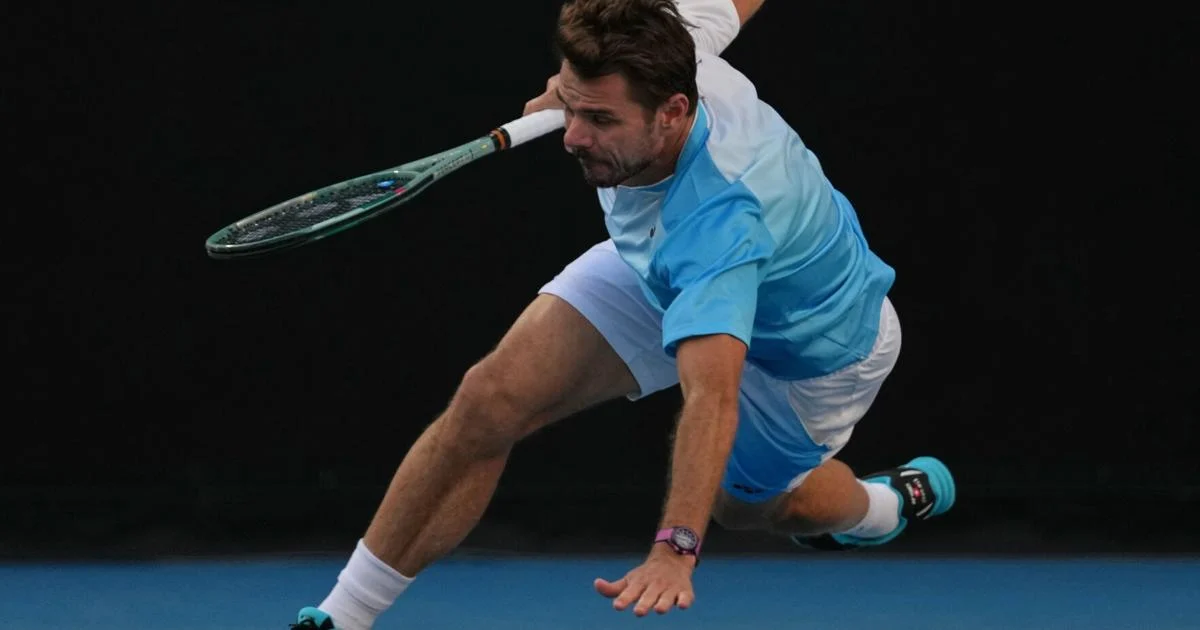
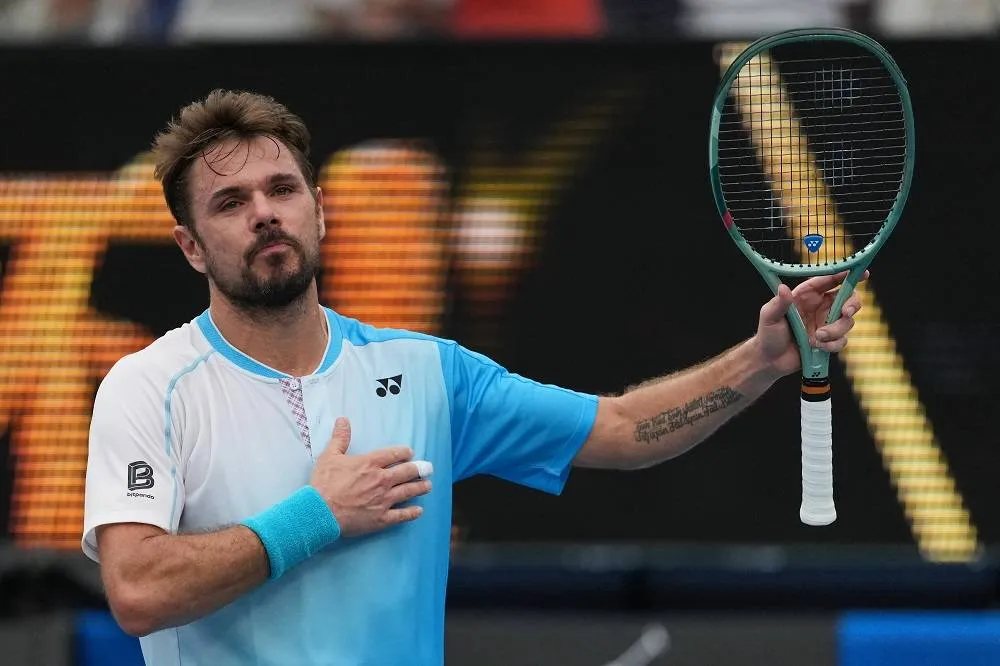
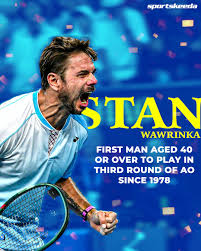
The moments of 2026 have also carried unusual symbolic weight. In Melbourne he reached the third round of the Australian Open and then received an emotional on-court goodbye after losing to Taylor Fritz, with AP noting that his second-round win made him the first man aged 40 or older to reach the third round of a Grand Slam since 1978. Later, ATP coverage of Barcelona showed him losing a dramatic three-setter to Cameron Norrie in what was described as his seventh and final appearance at that event. These are not just results; they are chapter endings happening in public.
What the retirement update really means
Stan Wawrinka said in late 2025 that 2026 would be his final season, and everything since then has reinforced that this is a planned ending rather than an impulsive farewell. Reuters reported that he would retire at the end of the 2026 season after a 24-year professional career, while ATP and AP have consistently described current tournaments as part of the closing chapter of his journey. That continuity matters because it removes ambiguity. Fans are not watching a maybe. They are watching a deliberate goodbye from a champion who chose his finishing line.
At the same time, the retirement update is not only about stopping. It is about how he wants to be remembered while still active. AP reported that he made clear this was not merely a farewell tour, and recent ATP stories support that by focusing on actual performances, not only tributes. The emotional ceremonies in Dubai, Melbourne and Barcelona have been meaningful, but they have been accompanied by genuine effort, full-blooded rallies and the refusal to behave like a retired man in advance. In that sense, the final season has become a statement about competitive dignity as much as a countdown to departure.
Farewell moments are already being written into history
One reason this final season feels larger than a standard retirement run is that tournaments have begun treating his appearances as historic occasions. ATP documented a farewell ceremony in Dubai after his “one last chance” meeting with Daniil Medvedev, while AP described the uniquely warm sendoff in Melbourne where he celebrated with beers courtside after his final Australian Open match. These tributes are not random gestures. They reflect a shared recognition across the sport that his career carries emotional weight for fans, peers and tournament directors alike.
That sense of tribute will continue at Roland-Garros as well. Reuters reported on 16 April 2026 that French Open organisers plan to honour him after what is expected to be his final appearance there. That detail is especially fitting because Paris was the site of one of his most complete major victories, the 2015 title run that gave him a second Slam and cemented his place in the sport’s upper tier. When a tournament as tradition-rich as Roland-Garros prepares a special farewell, it signals more than respect. It signals that the player has become part of the event’s history.
How tennis history will remember him
When the sport looks back, he will occupy a rare category: a multiple-major champion who built his legacy during one of the harshest competitive eras ever. That context elevates almost everything on his résumé. Winning three majors, peaking at No. 3, taking Olympic gold, securing a Davis Cup title and collecting 16 tour-level singles trophies would be notable in any era. Doing it while competing through the long dominance of the game’s most celebrated modern giants makes those accomplishments heavier, not lighter.
He will also be remembered for the character of his victories. Some champions are defined by accumulation, others by aura. His greatness came from the ability to hit through fear on the biggest stages and to make elite opponents feel vulnerable when it mattered most. That is why fans continue to replay the peak years with such affection. They are not only recalling trophies. They are recalling a player who could walk onto court against the best in the world and, for four or five sets, make tennis feel startlingly open again. That is a legacy of drama, artistry and defiance all at once.
Why fans still care so deeply
The continuing fascination is not difficult to explain. In an era of relentless athletic precision, he represented something slightly different: a player whose game felt handcrafted, whose rise felt earned, and whose best days seemed powered by belief as much as by systems. Even now, long after his ranking peak, there is a magnetic quality to his matches because people know that a single set of clean ball-striking can still summon the old danger. ATP’s 2026 coverage repeatedly frames him as a veteran still capable of special moments, which is exactly how the public experiences him.
There is also something universally appealing about a champion who leaves slowly enough for gratitude to catch up with memory. The farewells in Australia, Dubai and Barcelona have allowed fans to appreciate not just his titles, but his presence: the walk to the baseline, the heavy backhand, the refusal to give soft games away. Readers looking up Stan Wawrinka today are not only asking where he ranks or when he retires. They are asking how to place him in the emotional history of the sport. The answer is simple: as one of the era’s most distinctive champions, and one of its most human ones as well.
Conclusion
Stan Wawrinka leaves behind a career that resists small summaries. Yes, there are the obvious headline markers: world No. 3, 16 ATP titles, three Grand Slam crowns, Olympic gold and a Davis Cup triumph. But the richer story is the way those achievements were earned. He matured late, hit with rare conviction, survived difficult injuries, returned for one more meaningful season and turned his farewell year into something more than memory work. The current ranking and 2026 retirement update matter because they place his final chapter in context, but they do not define him on their own.
In the end, his legacy rests on the moments when the stage was biggest and his tennis looked freest. He won majors by beating the world No. 1, returned to the Top 100 at 40, and has spent his final season still trying to compete rather than merely wave goodbye. That is why his story continues to resonate. It carries achievement, struggle, personality and timing in equal measure. Few players of his era were more dangerous when fully locked in, and even fewer leave the court with this much respect still attached to every swing.
FAQs
What is his current ATP ranking?
As of the ATP Tour overview available on April 23, 2026, he is ranked No. 106 in singles, with a 6–10 record for the season and no titles so far in 2026. That number is useful, but it also needs context: ATP reported in February that he had briefly moved back inside the Top 100 at No. 98 in the live rankings, showing that his final season has still included meaningful competitive progress.
How many Grand Slams has he won?
He has won three Grand Slam singles titles: the Australian Open in 2014, the French Open in 2015 and the US Open in 2016. What makes that trio especially memorable is that each title came with a win over the reigning world No. 1 in the final, a feat Reuters highlighted when covering his retirement announcement. It is one of the strongest arguments for his place among the great big-match players of the modern era.
Is 2026 really his final season?
Yes. Reuters reported in December 2025 that he would retire at the end of the 2026 season, and that position has been echoed by ATP and AP coverage throughout the year. Multiple tournament stories now describe him as competing in the final season of his ATP Tour career, which means the retirement update is no longer speculative. The tour itself is treating 2026 as the closing chapter of his professional journey.
What was his career-high ranking?
His career-high singles ranking was world No. 3, achieved on 27 January 2014. That peak came at a time when the men’s tour was extraordinarily difficult to break through, which adds weight to the achievement. It also matched the timing of his first Slam triumph in Australia, making 2014 the year that transformed him from dangerous contender into fully established elite champion.
What are the biggest titles of his career outside the majors?
Beyond the Slams, the standout achievements include the 2014 Monte-Carlo Masters title, the 2008 Beijing Olympic men’s doubles gold medal with Roger Federer, and Switzerland’s 2014 Davis Cup triumph. ATP’s official bio ties all of those together, and they matter because they show the breadth of his career. He succeeded not only in the individual spotlight of major finals, but also in team competition and prestigious tour events outside the Slams.
Why does his playing style remain so admired?
His style combined clean technique with punishing power, especially off the one-handed backhand. ATP’s player materials identify the technical profile, but the admiration comes from the effect rather than the label: he could take time away from elite defenders, flatten the ball from neutral positions and raise his intensity on the biggest points. Fans still revisit his best matches because the stroke production looked classical while the ball impact felt brutally modern.
What has happened in his 2026 farewell season so far?
The season has mixed emotion with genuine results. He returned to the Top 100 in February according to ATP, reached the third round of the 2026 Australian Open, received a farewell ceremony in Melbourne, and later played emotional final appearances in Dubai and Barcelona. He has not been simply touring for applause. The year has also included historic milestones, including becoming the first man aged 40 or older to reach the third round of a Grand Slam since 1978.
How should his legacy be judged?
His legacy should be judged by both difficulty and drama. He won three majors during one of the strongest eras in men’s tennis, finished as high as No. 3, claimed 16 ATP singles titles, won Olympic gold and helped secure a Davis Cup for Switzerland. Just as important, he beat the very best when it mattered most. That is why he is remembered not as a footnote to bigger names, but as a champion who could interrupt their dominance on the sport’s biggest stages.
You may also read: Who Is Kate Garraway Dating Amid Persistent Media Rumours