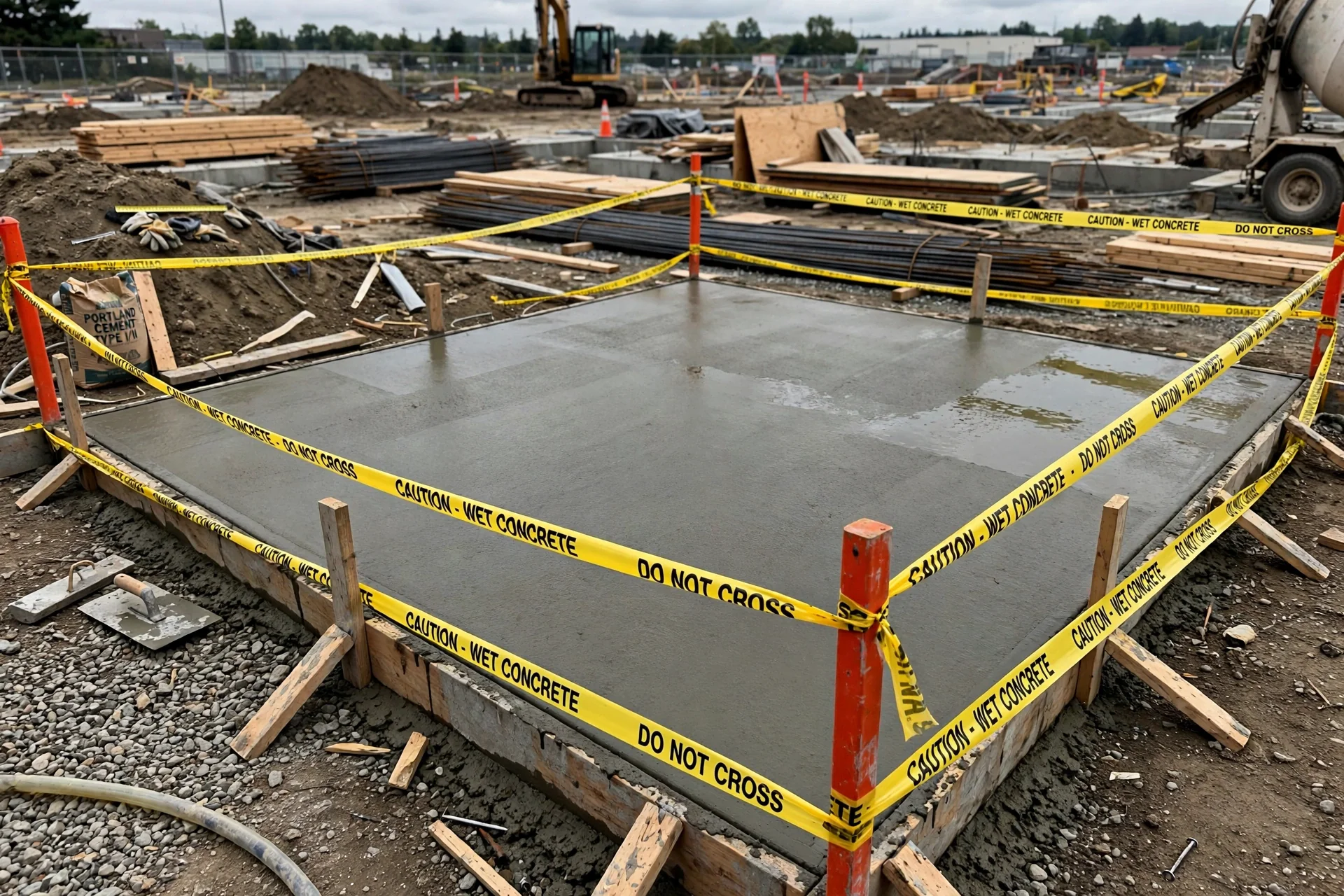
Fresh concrete is deceptive. Within hours of pouring, the surface can look dry, feel firm and seem ready for normal life — yet underneath, a slow chemical transformation is still building the strength the slab will depend on for decades. Step onto it too soon and you can leave permanent footprints, weaken the surface or even compromise the slab’s long-term durability. Knowing how long before you can walk on concrete is therefore one of the most practical pieces of knowledge any homeowner, DIY enthusiast or builder can have.
The short answer is reassuringly simple: light foot traffic is usually safe after 24 to 48 hours. But the full answer depends on the weather, the mix design, the slab thickness and what you mean by “walking”. A careful step in clean shoes after a day is very different from dragging furniture across the surface or letting the dog sprint over it. This guide walks you through the curing timeline, the factors that shift it, the risks of impatience and the simple precautions that protect your investment.
Understanding the Concrete Curing Process
Concrete does not “dry” — it cures, and the distinction matters enormously. Curing is a chemical reaction called hydration, in which cement particles combine with water to form strong crystalline bonds that lock the aggregate together into artificial stone. This reaction begins within hours of pouring but continues for weeks, and it needs moisture to proceed: if the surface dries out too quickly, hydration stalls and the concrete never reaches its designed strength. That is why the surface can mislead you. The top of a slab may feel hard and look pale within a day, while the interior is still soft and saturated. Strength develops from the inside out as hydration progresses, which is why professionals talk about curing in stages rather than a single moment of readiness. The widely used benchmark is 28 days: under normal conditions, concrete reaches its specified design strength roughly four weeks after pouring, gaining about 70% of that strength in the first seven days.
Moisture and temperature control during curing directly shape the final quality of the slab. Covering fresh concrete with plastic sheeting, applying curing compounds or misting the surface in hot weather all keep hydration going strong. Understanding this process is the key to understanding how long before you can walk on concrete — every timing decision flows from respecting the chemistry. Skimp on curing and even the best mix will underperform; invest in proper curing and even a modest mix can exceed expectations.
Standard Timeline for Walking on Concrete
For most standard residential pours in normal weather, the timeline is well established. Light, careful foot traffic — a person walking gently in clean, flat shoes — is generally safe after 24 hours. Waiting a full 48 hours gives a much safer margin, especially near edges, on decorative finishes or when conditions have been cool or damp. Industry guidance is consistent on this point: wait at least 24 hours before walking on freshly placed concrete, because the surface is still vulnerable to scuffing and permanent marks before then.
After three to seven days, the slab becomes substantially stronger and can handle moderate use: children playing, pets, bicycles, and light equipment. By seven days the concrete has typically reached around 70% of its design strength, which is why contractors allow heavier activity — and even careful vehicle traffic on driveways — after about a week to ten days. Full design strength arrives at roughly 28 days, at which point the slab can take anything it was designed for, including heavy vehicles and permanent loads.
Use this timeline as your planning backbone. Schedule deliveries, landscaping, furniture placement and parties around it, and communicate the dates clearly to everyone with access to the area. A concrete pour is a significant investment; respecting the curing schedule is how you protect it. Write the key dates — first walk, moderate use, vehicle traffic, full strength — on the calendar the day of the pour, and share them with everyone who needs to know. That single habit of writing down and sharing the dates prevents the vast majority of accidental damage on residential sites.
Factors That Influence Walkability

Weather is the biggest variable in how long before you can walk on concrete. Warm, dry conditions accelerate hydration and setting, while cold or damp weather slows everything down — in temperatures near freezing, curing can take several times longer, and the concrete may need insulated blankets to cure properly at all. Hot, windy weather brings the opposite risk: the surface can set quickly while remaining weak underneath, and rapid moisture loss can cause cracking. The concrete mix itself matters just as much. Standard residential mixes follow the familiar 24-to-48-hour guidance, but high early-strength mixes with accelerators can be walkable sooner, while mixes with retarders or supplementary materials may need longer. Slab thickness plays a role too: thicker pours retain moisture and cure more slowly through their full depth. Decorative finishes such as stamped or exposed-aggregate concrete are more vulnerable to early damage and deserve extra patience — a footprint in a stamped pattern is far more visible than one on plain broom-finished concrete.
Site conditions add further nuance. A slab shaded all day cures differently from one in full sun; poor subgrade drainage keeps the bottom of the slab wet longer; and heavy finishing work can seal the surface and slow moisture movement. Because no two pours are identical, treat published timelines as guidance and use the simple physical tests — the surface should be firm underfoot pressure with no cement transferring to your shoe — before allowing traffic. When conditions are unusual in any way, the safest approach is simply to add a day to each milestone and verify firmness with a gentle boot test.
Risks of Walking Too Early
The most visible risk of early foot traffic is surface damage, and it is usually permanent. Footprints, scuff marks, pitted textures and small cracks pressed into a still-tender surface cannot be polished out of a standard slab — they become part of the concrete forever. Decorative finishes suffer worst: a single careless walk across stamped concrete can ruin a pattern that cost a premium to install. Even on plain concrete, early scuffing leaves an uneven, patchy appearance that no amount of later cleaning fully hides.
Less visible but more serious is the damage done beneath the surface. Pressure applied before the internal bonds have developed can disrupt the microstructure of the young concrete, creating weak zones that reduce long-term strength and durability. This hidden damage may not show for months or years, surfacing eventually as premature cracking, spalling or surface dusting that shortens the slab’s service life dramatically. There is also a financial dimension. Repairing damaged fresh concrete ranges from expensive resurfacing to complete removal and replacement — costs that dwarf the inconvenience of waiting an extra day. Insurance and contractor warranties may not cover damage caused by premature traffic, leaving the homeowner to foot the bill. Patience during the first 48 hours is quite literally the cheapest insurance your concrete will ever have.
How to Protect Fresh Concrete
Physical barriers are your first line of defence. Surround the fresh slab with caution tape, temporary fencing or simple sawhorse barriers, and post clear signs explaining when the area opens. On residential sites, tell every household member — and every neighbour, delivery driver and pet — exactly how long the surface is off-limits. Most accidental damage happens not through recklessness but through ignorance: someone simply did not know the concrete was fresh. Moisture retention is the second pillar of protection. Covering the slab with plastic sheeting, damp burlap or a sprayed curing compound keeps hydration going and develops maximum strength. In hot weather, light misting prevents the surface from drying faster than the interior can cure; in cold weather, insulated blankets protect against freezing, which can destroy young concrete entirely. Keep pets, children, wheelbarrows and heavy objects off the surface for the full recommended period.
If you absolutely must cross fresh concrete early — to apply a curing compound, for instance — distribute your weight with wide boards or plywood sheets laid on the surface, step gently, and never twist your feet. Plan the pour so that essential access routes are poured last or bridged, and schedule follow-on trades with the curing timeline in mind. A few minutes of planning before the pour prevents most protection problems after it. Better still, plan the work sequence so that nobody needs to cross at all: pour access paths last, and stage materials where they will not require crossing fresh work.
Common Myths and Misconceptions
The most persistent myth is that concrete is safe to walk on as soon as it looks dry. Appearance is a terrible guide: the surface can look pale and feel firm while the interior remains soft and saturated, and foot traffic at this stage leaves permanent marks even though nothing “feels” wrong underfoot. Professionals judge readiness by time, conditions and physical tests — never by looks alone. A second misconception is that warm weather eliminates the waiting period. Heat does accelerate setting, but it does not shortcut the chemistry of strength development, and hot-weather pours carry their own risks of surface cracking and weak top layers. If anything, hot conditions demand more careful curing — not less — through shading, misting or curing compounds.
A third myth holds that “a quick step won’t hurt”. One footprint is permanent, and edges are especially vulnerable: stepping near the edge of a fresh slab within the first day or two can break off chunks that are difficult to repair invisibly. Finally, many DIYers assume bagged ready-mix behaves identically to contractor-poured concrete. Small bagged pours do set faster because of their size, but the same principles apply — respect the timeline, protect the surface, and when in doubt, wait longer.
Practical Tips for Homeowners and Builders
For homeowners, the practical playbook is simple: get the timeline in writing from your contractor or ready-mix supplier, mark it on the calendar, and communicate it to everyone. Block the area physically, arrange alternative routes for people and pets, and schedule anything that touches the slab — landscaping, fence posts, furniture delivery, parties — after the safe dates. Photograph the fresh slab once finished; the photos help you spot any damage early and document the original condition. Builders and contractors should treat curing protection as part of the job, not an afterthought. Include barricading and signage in the work plan, brief every trade on site about restricted areas and dates, and monitor weather forecasts around the pour — a sudden cold snap or heatwave changes the plan. Keep a simple log of pour date, mix details and weather; if questions arise later about strength or timing, that log is invaluable.
For DIY pours, preparation matters even more because you are the crew and the quality control in one. Pour early in the day so finishing happens in good light, have your curing materials ready before the truck arrives, and recruit a helper whose job is purely protection — barriers, signs and keeping curious feet away. The pour itself takes hours; the curing takes weeks, and your attention during the first 48 of those hours determines much of the final result.
Frequently Asked Questions
How long before you can walk on concrete safely?
Light, careful foot traffic is usually safe after 24 to 48 hours in normal conditions. Wait the full 48 hours near edges, on decorative finishes, or in cool or damp weather for the safest margin. Walk gently in clean, flat shoes, avoid twisting your feet, and stay away from edges, which are the most vulnerable part of a fresh slab during the first two days.
How long until you can walk on concrete after pouring?
Most standard slabs accept cautious walking within 24 to 48 hours. Moderate use such as pets, bicycles and light equipment is fine after 3 to 7 days, while full design strength takes about 28 days. Full design strength develops over about 28 days, with roughly 70% reached in the first week. Plan any heavy use — vehicles, machinery and concentrated loads — around these later milestones.
Can you walk on concrete after 24 hours?
Yes, with light and careful steps in clean, flat shoes — avoid twisting, dragging, or carrying heavy loads. If the surface still feels soft or cement transfers to your shoe, wait longer. If the surface still feels soft underfoot, or if cement transfers to your shoe sole, it is not ready yet. When in doubt, waiting another day costs nothing and protects your investment.
What happens if you walk on concrete too soon?
You risk permanent footprints, scuffing and surface pitting, plus hidden internal damage that weakens the slab and shortens its life. Repairs range from costly resurfacing to full replacement. Beyond the visible marks, early pressure can disrupt the internal bond structure, reducing long-term strength in ways that may not surface for months. Repairs range from expensive resurfacing to complete replacement.
How long before you can walk on a new concrete driveway?
The same 24-to-48-hour rule applies for foot traffic. Wait 7 to 10 days before driving standard vehicles on it, and a full 28 days before heavy trucks or concentrated loads. Decorative finishes such as stamped concrete deserve extra patience, as damage to the pattern is far more visible and costly to fix than marks on a plain slab.
How long does concrete take to fully cure?
Concrete reaches its specified design strength at about 28 days under normal conditions, having gained roughly 70% of that strength in the first week. Hydration continues at a slowing rate beyond that. Hydration — the chemical reaction that builds strength — needs moisture to continue, which is why proper curing practices like covering or misting the slab make such a difference to final quality.
Conclusion
How long before you can walk on concrete comes down to a simple, well-tested rule: 24 hours minimum for careful foot traffic, 48 hours for a comfortable margin, a week for moderate use, and 28 days for full strength. Weather, mix design, slab thickness and finish all nudge those numbers, but patience is the universal ingredient. The chemistry of curing cannot be rushed, and every hour of waiting in those first two days pays back in decades of durable service.
Protect the fresh slab with barriers and clear communication, keep it moist while it cures, and resist the temptation to judge readiness by appearance. Whether you poured a garden path yourself or hired a crew for a new driveway, respecting the timeline is the difference between concrete that lasts a lifetime and concrete that disappoints within years. This modest effort during the first 48 hours protects an investment that should serve you faithfully for forty years or more. Make curing protection a non-negotiable step in every pour, not an afterthought left to chance.
For more home project guidance, see our real-world answer for how many lights you can put on a 15 amp circuit.
And if you are planning electrical work next, our 15 amp circuit lighting guide covers safe wattage limits in detail.