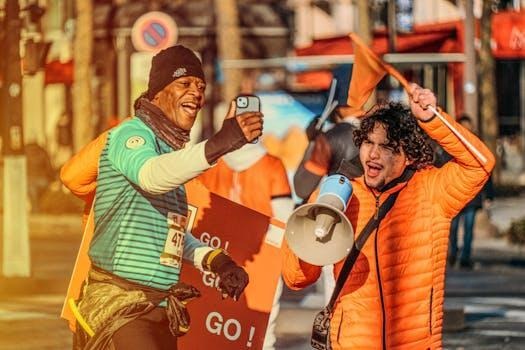
Support crews don’t wait for drama. They can’t. In mass participation events, the first hint of trouble rarely looks heroic. It looks like a runner who stops talking. A cyclist who forgets to drink. Serious incidents often begin as slips, and sharp crews treat those slips as data. The job sits between customer service, safeguarding, and field science. Spot the pattern early, act lightly, and keep the machine moving without making a spectacle of anyone’s bad moment.
The Early Tells That Beat the Siren
Good support crews train their eyes long before race day, and smart organisers avail themselves of event staffing solutions that value observation as much as enthusiasm. Distress shows up in small breaches of normal behaviour. A participant who drifts across a path instead of holding a line. Someone who answers a simple question with a slow, flat stare. Hands that fumble with zips, gels, and phone screens. Speech changes matter. The patient exhibits slurred speech, repeated phrases, and difficulty naming a location. Skin tells stories. Symptoms may include grey lips, blotchy redness, sweating that doesn’t match the weather, or no sweating at all when the heat climbs. None of this needs a stethoscope. It needs attention and the nerve to treat “probably fine” as a prompt to check.
Conversation as a Diagnostic Tool
Support crews talk for a reason. A short chat tests orientation, mood, and effort without turning the interaction into an interview. Crews use plain prompts. Where are we heading next? What was the last thing eaten or drunk? The answers reveal gaps quickly. Confusion often shows up as irritation, jokes that don’t land, or a participant who keeps changing the subject. Fatigue sounds like half-sentences. ‘Pain’ sounds like minimising. One odd reply means little. A chain of odd replies means action. Calm, brisk, respectful. Slow them down, get fluids, find shade, and call for a check if the pattern keeps worsening.
Body Language and the Physics of Trouble
Bodies betray distress through movement before collapse. Gait changes rank near the top of useful signs. Shortened stride, foot slapping, a limp that switches legs, or a zigzag that looks like poor navigation. Posture follows. Shoulders hunch, head drops, and hands brace on thighs too often. Eyes lose focus. People start misjudging distance, stumbling at small kerbs, and clipping cones. Crews watch the economy of effort. Someone who can’t lift a bottle to drink. Someone who sits and struggles to stand. Physics doesn’t lie. When coordination fades, risk rises, and the crew must step in before pride turns a wobble into an emergency.
Escalation Without Chaos
The finest crews keep escalation tidy. They don’t argue with a participant who insists everything feels fine while swaying. They offer a choice that isn’t really a choice. Stop here for two minutes in the shade, or walk with a marshal to the next point for a proper check. They manage the scene. One person talks. Another fetches water. Another radio’s location, along with landmarks and participant details, is provided. Crews note time, symptoms, and what was given, because memory turns unreliable. They protect dignity, because embarrassment makes people refuse help. A quiet handover to clinical staff beats a collapse.
Conclusion
Support crews succeed when nothing exciting happens. That sounds dull. That’s the point. The craft rests on noticing change, not judging character. A participant doesn’t become “difficult” when dehydrated, overheated, low on fuel, panicked, or worn down. The participant becomes a signal that needs sorting. Crews read those signals through eyes, conversation, and movement, then choose the smallest intervention that reverses the slide. Some cases need a pause, water, and a reminder to eat. Other cases need a swift call and a clean handover. Events that treat this as a serious discipline keep people safer and free medical teams.