
A builder named Ian North from Birchington spotted a 63 plate Ford Transit high top on eBay in January 2017, drove the ten miles to a yard in Sandwich to look at it, paid £7350 for what the odometer said was a 59500 mile van, and drove it for two years before the engine blew at Cobham services on the M25. He sat there for eight hours waiting for the AA. The rebuild cost him £7500 when you add in parts, labour, and the hire van he needed to keep his building contracts going while it was off the road for seven weeks. He thought that would be the end of it, but fifteen months later the engine failed a second time. Somewhere between the first engine failure and the second, Kent Trading Standards got in touch and told him the van had actually done 171000 miles when he bought it. The group’s own handwritten sales records, seized later by officers, showed the van had been bought at British Car Auctions ten days before North collected it, clocked in between, and listed on eBay within 48 hours. North told investigators he felt like an absolute idiot, said it was gut wrenching, and spent another £2300 getting it fixed a second time before selling it to a retired golfer who wanted something to carry his clubs around in.
Operation Blackboard and Two Million Missing Miles
North was one of 22 buyers caught up in Operation Blackboard, Kent Trading Standards’ investigation into three men from Broadstairs and Chartham who clocked 23 vehicles between February 2016 and November 2018 and stripped more than two million miles between them, roughly 90000 per vehicle. They pleaded guilty to conspiracy to commit fraud at Canterbury Crown Court in January 2025, and Judge Edmund Fowler described the operation as deliberate, sophisticated, with much planning over a considerable amount of time and precious little empathy. What Whiteley’s team eventually pieced together from phone records, emails, bank accounts, and auction paperwork was a web of over 20 company names, none of them lasting very long because the complaints would pile up and they would dissolve the business and register a fresh one, sometimes within days. Officers eventually traced over 200 vehicles back to the group, but the CPS would only take 23 forward. Cradduck was 59, the oldest of the three, and had his own sideline going that had nothing to do with resale. People on PCP deals who were about to go over their contracted mileage would pay him £50, and he would plug in and wind the odometer back before they returned the car to the finance company. CCTV seized from a premises in Sandwich showed him plugging a laptop into dashboards and doing the work himself. Sara Whiteley, the investigating officer, said the worst part was ringing people all over the country to tell them their vehicle had sometimes done 100000 more miles than the odometer showed. One buyer had been a foster carer, somebody who had done their homework before purchasing and was devastated to learn the car was not what they thought. Another was driving for Amazon and faced losing the job entirely because the contract stipulated a maximum mileage on the vehicle and the real figure blew straight past it. Fowler gave Regan two years, Hamilton two years, Cradduck 21 months. All suspended, with 200 hours of unpaid work on each of them and a combined £32500 in compensation awarded to the victims so far, with the rest to follow.
The Abingdon Forecourt That Only Bought Pre-MOT Vans
That was Kent. Oxfordshire’s case was built around fewer vehicles, but the method was essentially identical. Grzegorz Seczkowski, 41, ran a forecourt in Abingdon called GNA Car Sales and was convicted at Oxford Crown Court on 3 February 2026 after trading standards proved he had been buying vans at auction, clocking them, and selling them on with what appeared to be clean histories, while also keeping the clocking equipment on the premises. Six vans in total. What made his operation slightly cleverer than the Kent one was his choice of vehicles, because he only bought vans under three years old, and a van that age has never been to an MOT station, which means its mileage does not appear anywhere in the DVSA database. Nobody could check his numbers against anything. He would roll it back to just above the last service stamp, sometimes knocking 22000 miles off, and advertise the van as low mileage with full history. His customers were all tradespeople, plumbers, joiners and electricians who bought the vans because they needed them for work the following Monday, and Jenny Hannaby at the council made a point after the sentencing that has stayed with me. She said a breakdown for someone whose livelihood depends on a van is not just an expense, it is lost contracts, lost days, a hire van at £80 or £90 while the mechanic tries to work out why a component failed 20000 miles before it should have. The council put his extra profit at about £20000 across all six. Oxford Crown Court gave him 18 months custody, suspended for two years, ordered £2529 in compensation to be divided among his victims, and £5000 toward what the investigation had cost the council. Seczkowski’s clocking gear only reprogrammed the instrument cluster. A vin checker reading the transmission and ABS modules as well would have spotted the mismatch immediately. But a two year old van with 20000 miles showing and every service stamp where it should be does not make a buyer reach for a diagnostics scan before handing over the money.
A £2000 Fine on a £20000 Fraud
Davina Walkin, who manages trading standards at the council, went through the standard advice after the hearing. Check your MOT mileage at GOV.UK, it is free. If something has been doing 20000 miles a year and then the next MOT records 3000, ask why. Paid history checks go further and will turn up accident damage, insurance claims, theft, and mileage discrepancies. But the whole point of what Seczkowski was doing is that a licence plate check on GOV.UK for a van that has never been through an MOT returns nothing, and a blank screen on a two year old vehicle is not a red flag, it is just a van that has not hit three years yet. GNA Car Sales Ltd got fined £2000 for its part in this. I have been thinking about that figure since I first read the sentencing report. Seczkowski made twenty thousand pounds from those six vans and the company got fined two thousand.
160000 Clocked Vehicles a Year and Nobody Joining the Dots
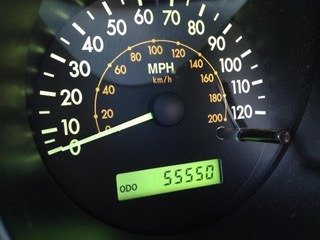
I started looking at the national figures after the Abingdon sentencing and the scale of what is happening makes individual prosecutions feel almost pointless. Mileage fraud affects about 2.1% of used cars sold each quarter in the UK, or around 160000 vehicles a year if you annualise it. A diagnostics firm that scanned 2.5 million vehicles for over 550000 UK users between January and September 2025 found that 16.25% came back flagged for rollback or VIN irregularities, and while that number is probably high because the people who bother paying for a scan are the ones who already have a bad feeling about the car they bought, even at half that rate you are talking about a serious volume of compromised vehicles on the road. The OFT tried to put a number on consumer losses from clocking back in 2010 and arrived at up to £580 million a year, and that was when the used car market was considerably smaller than it is now, and as far as I can tell no one in government has gone back to redo the calculation. If you look at vehicle history data from 2024-2025, you can see exactly which models the clockers target, and it is basically a depreciation chart. The crossover that outsells everything else in Britain had 9.7% of checked examples showing mileage problems, and a well known British off roader that holds its value stubbornly was averaging 59201 miles wiped per clocked vehicle, which, at the prices those trade for, is worth several thousand pounds per sale to whoever is doing the clocking.
Winding Back an Odometer Is Not Actually Illegal
Something that still catches people off guard when I mention it is that winding back an odometer on your own vehicle is not actually illegal in England and Wales. The criminal liability kicks in only at the point of sale, under the Fraud Act 2006 and the Consumer Protection from Unfair Trading Regulations 2008, and only if you fail to tell the buyer what has been done. You have to prove the person selling the vehicle knew the mileage was false and set out to deceive the buyer, and pulling that together from auction records, ECU forensics and service histories is the kind of work that eats months, sometimes years, even when the case looks open and shut from the outside. Whiteley told me her team had been doing trading standards work for 19 years before Blackboard landed on them, mostly rogue traders and counterfeit goods, and suddenly they were expected to pull CAN bus logs off seized vans and make sense of five or six separate mileage figures stored across different electronic modules that did not agree with each other, none of which they had any training for. The investigation that became Operation Blackboard started with one complaint, a father in Birchington buying a van for his son in law who was leaving the army and going into carpentry, and it took from 2018 to January 2025 before anyone was sentenced. Oxfordshire runs its investigations, Kent runs its investigations, and there is nobody above either of them pulling clocking intelligence together at a national level. About 7.8 million used vehicles changed hands in the UK in 2025, and the best that Oxfordshire’s months of investigation could extract from the courts was a £2000 fine on the company and a suspended sentence for Seczkowski.