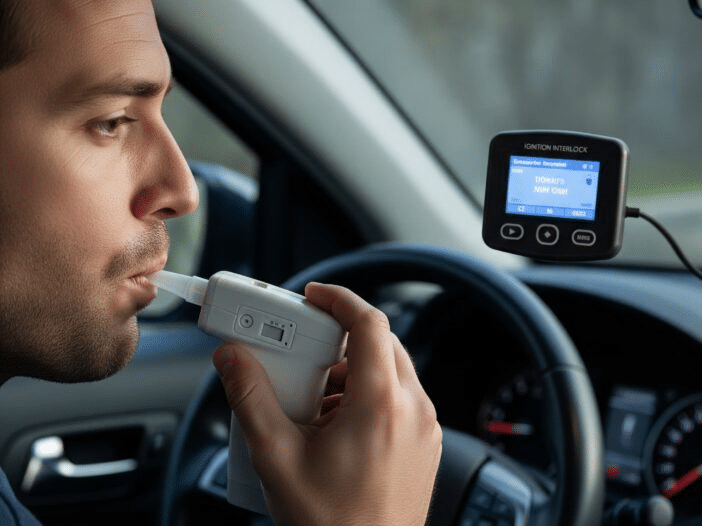
The programs can appear similar on paper (lists of devices certified by state, how often to monitor, how to report), but great variation can exist in several areas, how frequently to schedule a client for calibration, how many interlock service centers exist in a given geographical area, how a vendor will bill a client for services, and how quickly a vendor will identify and correct a reporting error that could threaten the compliance of a client.
When choosing an interlock provider to help your clients serve their time and obtain reinstatement of their driving privileges as soon as possible, the key factors to consider will be operational, not technical. The following will serve as a guide to help compare different interlock service providers.
Start with certification status and device model
First verify the Interlock Device model that the provider will be installing is currently approved by the monitoring authority for the jurisdiction in which the license was issued (approval lists change often and a model certified three years ago may no longer be approved).
Questions worth asking before booking
- Which specific device model will be installed, and is it on the current approved list?
- Does the unit include a camera, GPS, or real-time reporting, and does the program require those features?
- How are firmware updates handled, and do they require a shop visit?
- If the driver relocates mid-program, does the provider have service coverage in the destination state?
Many people are surprised to learn that even though the driver moves within the 12 months of the license restriction, the installation of a new interlock with a different service provider could require the complete removal and reinstallation of the interlock, plus the reporting delay for transfer of reporting to the new monitoring authority.
Compare the full cost structure, not the install price
One thing to note is that most of the cost of an interlock program is spent on the monthly monitoring and calibration. The cost of the installation will vary between providers but the best way to find out the total cost is to have them provide you with a written schedule for the entire term of the program.
| Cost element | Typical billing pattern | What to verify |
| Installation | One-time, at first appointment | Whether vehicle-specific wiring adds a surcharge |
| Monthly monitoring and lease | Recurring, often bundled | Whether calibration is included or billed separately |
| Calibration visits | Every 30 to 60 days per program rules | Cost of early or extra visits after a lockout |
| Violation reset or lockout service | Per incident | Whether phone-based reset codes are offered |
| Removal | One-time, at program end | Whether removal and final report filing are included |
However, some interlock providers are sanctioned by the state or province to offer these programs at a reduced rate to those that qualify under a financial hardship provision. These programs are typically funded by the state or locally, and drivers in San Bernardino County are usually best served by first pricing out a hardship-friendly shop such as Low Cost Interlock Rancho Cucamonga before committing to a full-rate term.
Assess service access against the calibration calendar
Missed calibrations result in the largest number of extensions. This is treated similarly to other violations and can result in a device going into a permanent lockout and requiring a tow. Accessibility to service therefore becomes a compliance issue vs. A feature.
Practical measures of access
- Distance from the driver’s home or workplace to the nearest authorized service center.
- Number of alternate locations within a reasonable drive.
- Weekend and evening availability for drivers on fixed shift schedules.
- Average lead time to book a standard calibration appointment.
- Availability of same-day or walk-in service after a lockout event.
- Mobile installation and service, where the jurisdiction permits it.
Even compare installation fees. Make a call to 3 different companies and ask when the next available appointment for a calibration is. This can indicate to you how well a company can handle a last minute appointment.
Evaluate the installation appointment itself
Typically a proper installation takes 2 to 4 hours depending on the type of vehicle. We connect a handheld device to your vehicle’s ignition system, test the start inhibit function and test the rolling retest (RT) function. The technician records the odometer reading of your vehicle at the time of service. The driver is shown how to provide an acceptable breath sample and given a copy of the install schedule, installation certificate and other relevant documents.
What a weak installation looks like
Expedited installations that fail to provide proper demonstrations for start inhibit and rolling retest events can cause failure for no reason other than misunderstanding how to properly provide a sample for analysis in traffic. Late filing of the installation certificate for the monitoring authority can also result in continued suspension of a driver’s license despite installation of a functioning interlock device.
Weigh reporting accuracy and dispute handling
The provider must submit all event records (pos and neg) to the monitoring authority on a fixed cycle (weekly/monthly/etc). Any mouth alcohol reading (positive test) can be caused by food in the mouth, oral medications (such as mouthwash), or even old fumes in the mouth from previous use. It must be addressed and if the provider determines it to be a false positive, a written correction must be submitted to the monitoring authority to clear up the matter. How does the provider address a contested event? Who generates the written documentation to support the driver’s position? How long does it typically take for a provider’s correction to be processed by the monitoring authority?
This single practice alone is responsible for preventing more program extensions than any other service practice in existence. Is the interlock service provider tracking all of your required interlock program scheduled calibrations? Are they contacting you prior to the scheduled appointment to verify your scheduled appointment time?