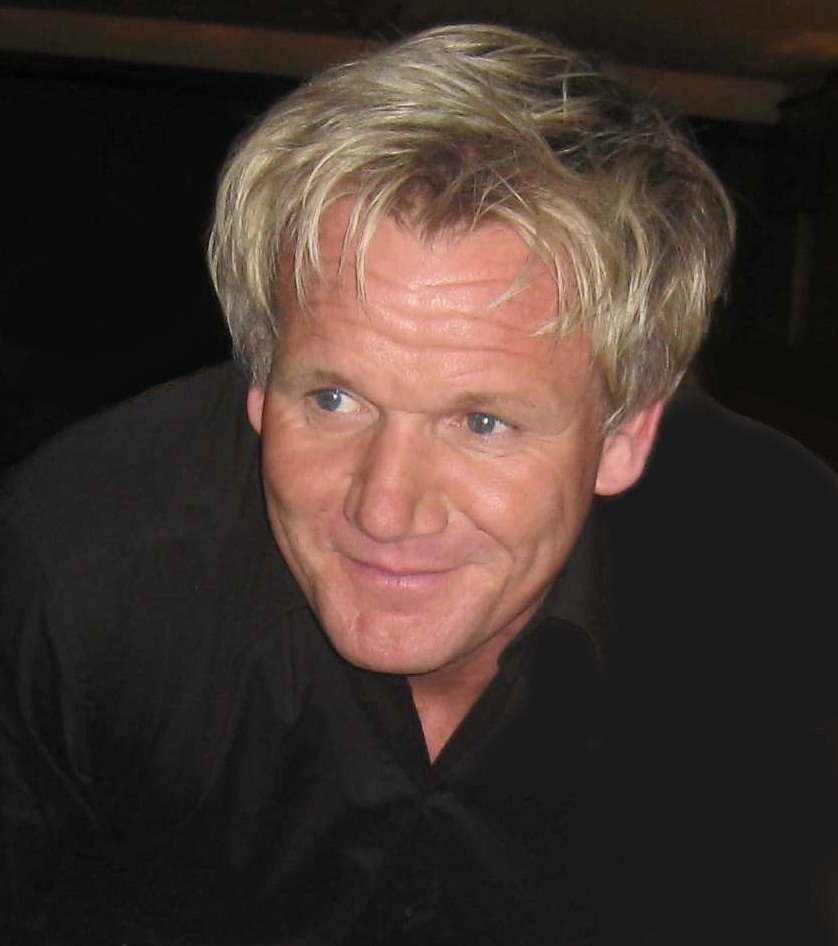
Britain has produced many fine chefs, but only two names became household words in almost every home in the country. Gordon Ramsay and Jamie Oliver took British food television in completely different directions, and between them they changed what the nation cooks, eats and expects from a restaurant. Ramsay is the fine-dining perfectionist, famous for a three-Michelin-star flagship restaurant and a television temper that became legend. Oliver is the people’s cook, the cheerful Essex lad who taught a generation to cook from scratch and then took on the government over school dinners. They never hosted a show together, and for years they were painted as rivals.
Two very different starts in life
Gordon James Ramsay was born on 8 November 1966 in Johnstone, Scotland, and grew up in Stratford-upon-Avon after his family moved south when he was nine. As a boy he dreamed of football, not food. He played for the Oxford United youth team and was courted by Rangers, but a knee injury ended any hope of a professional career. At nineteen he turned seriously to cooking, enrolling at North Oxfordshire Technical College to study hotel management and earning his diploma in 1987.
Jamie Trevor Oliver was born on 27 May 1975 in Clavering, a small village in Essex. His parents, Trevor and Sally Oliver, ran the Cricketers, the village pub and restaurant, and Jamie grew up practising his cooking in its kitchen. He left school at sixteen with just two GCSEs, in art and geology, and went on to Westminster Catering College in London, where he earned a City and Guilds qualification in home economics. He simply loved food and feeding people, and had spent his whole childhood watching his parents do exactly that.
Gordon Ramsay: the pursuit of perfection
Ramsay learned his craft in some of the toughest kitchens in Europe. After moving to London he worked under Marco Pierre White at Harveys and then under Albert Roux at Le Gavroche. In the early 1990s he travelled to France, cooking classic French cuisine in the kitchens of master chefs Joël Robuchon and Guy Savoy. In 1993 he returned to London as head chef of Aubergine, which had won two Michelin stars by 1996.
In 1998 Ramsay opened his own restaurant, Restaurant Gordon Ramsay, on Royal Hospital Road in Chelsea. Within three years it had won its third Michelin star, making him the first Scot to achieve that feat, and it has held all three stars ever since. That single fact is the foundation of his authority: whatever people think of his television persona, the cooking at his flagship restaurant has been judged among the best in the world for more than two decades. In 2006 he was appointed an OBE for services to the hospitality industry. Television made him famous far beyond the dining room. After the fly-on-the-wall series Boiling Point in 1999, he launched the British versions of Ramsay’s Kitchen Nightmares and Hell’s Kitchen in 2004, followed by American versions of both shows and, in 2010, the American version of MasterChef. Yet behind the temper is a serious point: he believes great cooking demands discipline, fresh ingredients and absolute standards.
Jamie Oliver: the cook next door
Oliver’s path to fame was quieter. His first job was as a pastry chef at Antonio Carluccio’s Neal Street restaurant in London, where he learned Italian cooking under Gennaro Contaldo, who became a mentor and lifelong collaborator. He then moved to the River Cafe in Fulham as a sous-chef. In 1997 the BBC filmed a documentary, Christmas at the River Cafe, and Oliver’s unscripted appearance caught the eye of television producers. He was young, enthusiastic and completely natural on camera, talking about food the way a friend might talk about it over a pint.
The result was The Naked Chef, which first aired on BBC Two in 1999. The title referred to stripping recipes back to their essential ingredients, and the show did the same to television cooking. There were no white jackets, no hushed tones and no talk of fine dining. Oliver cooked in his own kitchen, rode around London on a scooter, and made food that ordinary people could actually imagine cooking at home. It was a huge success, and his first cookbook became a bestseller in the United Kingdom. What followed was a career built on accessibility: dozens of series and cookbooks that became some of the best-selling in British publishing history. He has sold more than 50 million books, with over thirty titles published worldwide. In 2003 he was appointed an MBE for services to the hospitality industry.
The school dinners campaign that changed policy
Oliver’s most important work, however, had little to do with recipes. In 2005 he launched the Feed Me Better campaign, fronted by the television series Jamie’s School Dinners, in which he ran the kitchens at Kidbrooke School in Greenwich for a year. What he found there appalled him: cheap processed food, turkey twizzlers and chips served to children day after day, with fresh vegetables and proper cooking almost entirely absent. The programme showed him fighting a system that fed children as cheaply as possible, and it struck a nerve with parents across the country.
The campaign worked. Public pressure grew so strong that the government was persuaded to act, pledging an extra £280 million for school meals and setting new standards for the food served in schools. It was a remarkable moment: a television chef had changed national policy. Nobody disputes that Oliver put the quality of what children eat at the centre of public conversation. Ramsay has never been a campaigner in the same sense; his contribution has been about standards in professional kitchens. Yet both used television to reach people who would never read a food magazine, and both believed that food should be better than it was.
Two styles of television
Put Ramsay and Oliver on screen side by side and the difference is obvious within seconds. Ramsay’s shows are built on pressure: ticking clocks, furious service, contestants under stress and a chef who will not accept second best. Hell’s Kitchen turned cooking into a competition with real stakes, and Kitchen Nightmares turned it into a rescue mission, with Ramsay arriving at a failing restaurant to confront dirty kitchens and tired menus. When Ramsay tells a chef that a dish is raw in the middle, he is usually right.
Oliver’s shows work in the opposite way. There is no shouting, no elimination and no humiliation. The pleasure is in watching someone cook with confidence and joy, and in feeling that you could do the same. His recipes are built around the idea that good food does not need to be complicated or expensive. Where Ramsay’s television asks whether you are good enough, Oliver’s asks whether you are having fun. Ramsay’s model is the chef as master craftsman; Oliver’s is the chef as a friend and guide. British food television needed both.
Rivals, then friends
For many years the press loved to present Ramsay and Oliver as enemies. They were the two most famous chefs in Britain, they worked in different worlds, and they occasionally took public swipes at each other. Ramsay mocked Oliver’s cooking and his weight; Oliver called Ramsay a psychopath and criticised his style. The feud became a running story, and every new interview seemed to add another jibe.
In truth, the rivalry was always more complicated. The two men appeared together in the 2010 series The Big Fish Fight, campaigning against the wasteful discarding of fish. When Oliver’s British restaurant group went into administration in May 2019, closing his Jamie’s Italian chain, Ramsay was publicly supportive rather than triumphant, calling the collapse devastating and describing Oliver as a hugely talented chef. In a 2025 interview Oliver said the two of them were now absolutely friends and that their decade of trading insults was behind them.
What they changed about British food
Before Ramsay and Oliver, cooking shows were polite, studio-bound affairs. The two men broke that mould in opposite directions and, between them, made food into popular entertainment. Ramsay proved that the discipline of a three-star kitchen could hold a prime-time audience. Oliver proved that a home cook with a handful of good ingredients could do the same.
Their influence also reached beyond television. Ramsay’s restaurants helped to establish London as one of the great dining cities of the world, and his exacting standards influenced a generation of young chefs. Oliver’s campaigns changed what children eat at school, and his cookbooks changed what millions of families cook at home. But it is hard to imagine modern British food culture without either of them. They are the twin poles of the celebrity chef era: one demanding perfection, the other offering encouragement. Readers who enjoy stories about famous British partnerships can also read our look at Gary Lineker and Alan Shearer. Ramsay and Oliver may cook very differently, but together they gave Britain a new appetite, and that appetite has never gone away.