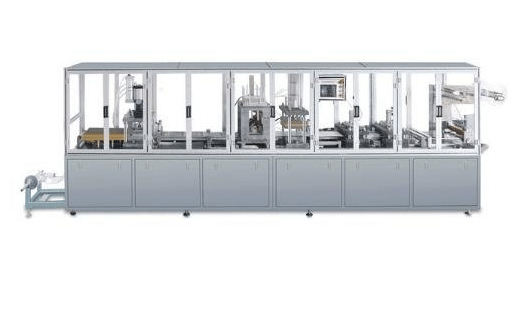
A blister card packaging machine helps manufacturers package small products in a clear plastic blister attached to a printed or plain backing card. This packaging format is widely used for hardware accessories, electronic components, batteries, stationery, toys, household items, and various consumer products. It allows customers to view the packaged item while keeping it organized and protected during storage, transportation, and retail display.
For businesses producing large quantities of packaged goods, automated blister card packaging can improve consistency, reduce repetitive manual work, and support a more efficient production process.
What Is a Blister Card Packaging Machine?
A blister card packaging machine is equipment designed to secure products inside a formed plastic blister that is attached to a backing card. Depending on the packaging design, the blister may be sealed to the card using heat, pressure, adhesive, or another compatible bonding method.
The machine typically performs several operations, including positioning the product, placing the blister and card, sealing the package, and discharging the finished item. More advanced systems may integrate automatic feeding, product counting, inspection, and conveyor handling.
The exact configuration depends on the product dimensions, packaging materials, required output, and sealing method. Businesses should select a machine that matches their packaging specifications rather than assuming every blister card system works with the same materials.
How Does the Packaging Process Work?
The process starts with preparing the blister and backing card. The blister is usually formed from a suitable plastic sheet, although some applications use preformed components supplied separately. The backing card may contain product information, branding, instructions, barcodes, and retail details.
The product is placed inside the blister, either manually or through an automatic feeding mechanism. The blister and card are then positioned in the sealing station.
If heat sealing is used, the equipment applies controlled temperature and pressure for a specified period. These settings help create a secure bond between compatible packaging materials. Adhesive-based systems follow a different process and require suitable adhesive application and curing conditions.
After sealing, the package may pass through an inspection stage before being collected or transferred to another production line. Proper setup is important because insufficient sealing can cause separation, while excessive heat or pressure may damage the card or blister.
Common Types of Blister Card Packaging Machines
Different machine designs support different production requirements.
Manual blister card machines: These systems require operators to position products and packaging materials. They can suit smaller businesses, short production runs, and applications involving frequent product changes.
Semi-automatic machines: These machines automate selected operations while requiring employees to handle other steps. They offer a practical option for businesses that need improved consistency without investing in a fully automated line.
Automatic blister card packaging machines: These systems can automate feeding, positioning, sealing, and discharge. Depending on their configuration, they are suitable for higher-volume production and standardized packaging tasks.
Specialized sealing machines: Some equipment focuses primarily on sealing prepared blister-and-card assemblies. These machines may be appropriate when blister formation and product loading are handled separately.
Before selecting a machine, manufacturers should confirm its supported package dimensions, sealing technology, material compatibility, and production capacity.
Materials Used in Blister Card Packaging
Packaging material selection directly affects appearance, product protection, and sealing performance.
Plastic blisters may be manufactured from PET, PVC, or other materials selected according to product requirements. Each material has different forming, clarity, stiffness, and environmental characteristics. The appropriate choice depends on the packaging design, required durability, and applicable regulations.
Backing cards may use coated paperboard, printed cardboard, or specialized laminated materials. Their thickness, coating, and surface properties influence how well they bond to the blister.
The blister and card must be compatible with the selected sealing process. A material combination that works with one machine may not produce a reliable seal under another machine’s operating conditions.
Businesses should test the complete packaging combination before starting mass production.
Benefits for Manufacturers and Retailers
One important benefit of blister card packaging is product visibility. Transparent packaging allows customers to inspect an item without opening the package, making it useful for products displayed on retail shelves or hanging racks.
The backing card provides space for product descriptions, instructions, branding, and identification details. This can help retailers organize inventory and present products consistently.
Automation also supports repeatable packaging. Once the machine has been configured correctly, it can apply consistent sealing conditions to compatible packages. This reduces variation associated with manual handling and can improve production efficiency.
Blister card packaging may also help protect products against dust, handling, and minor external contact. However, the actual level of protection depends on the blister design, seal quality, and materials used. It should not automatically be considered tamper-proof or moisture-proof.
How to Choose the Right Machine
Choosing the right blister card packaging machine begins with defining the product and packaging requirements. Measure the product and determine the blister dimensions, card size, package thickness, and desired presentation.
Next, estimate daily or hourly production requirements. A small operation may benefit from a manual or semi-automatic system, while a high-volume manufacturer may need automatic feeding and conveyor integration.
Sealing technology is another important consideration. Confirm that the machine can achieve a reliable bond with the selected blister and backing card. Ask the supplier about temperature controls, pressure adjustment, cycle timing, and available tooling for different package formats.
Businesses should also evaluate machine footprint, power requirements, operator training, maintenance access, spare-parts availability, and after-sales support. A demonstration using actual packaging materials can help verify performance before purchasing the equipment.
Quality Control and Maintenance
Quality control should include checks for incomplete seals, damaged blisters, misaligned cards, contamination, and inconsistent package appearance. Depending on the application, manufacturers may also inspect barcode readability, printed information, and package dimensions.
A defined inspection procedure helps identify defects before products reach retailers or customers. For products subject to special safety or regulatory requirements, additional testing and documentation may be necessary.
Routine maintenance is equally important. Operators should inspect sealing surfaces, sensors, feeding mechanisms, and moving components according to the manufacturer’s instructions. Packaging residues should be removed using approved cleaning methods.
Before maintenance, the machine must be shut down and isolated according to the required safety procedures. Employees should never bypass guards or operate equipment with damaged safety devices.
Conclusion
A blister card packaging machine provides an effective way to package and display small consumer products while supporting consistent production. The best machine depends on product dimensions, packaging materials, sealing requirements, output targets, and available workspace.
By evaluating these factors, testing material compatibility, and maintaining proper quality controls, manufacturers can develop a packaging process that meets retail requirements and supports efficient day-to-day operations.