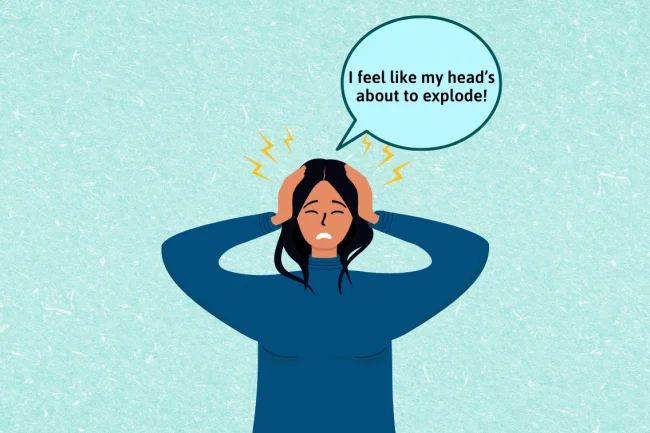
Overthinking can feel like being stuck in a loop you can’t turn off. You replay conversations, analyze decisions from every angle, and imagine worst-case scenarios that may never happen. Even when you know it’s not helpful, your mind keeps going. Over time, this pattern can lead to anxiety, indecision, and emotional exhaustion.
It’s no surprise that many people begin to wonder whether therapy can actually help with overthinking — or if it’s something they simply have to manage on their own. The good news is that therapy can be very effective. The more nuanced truth is that it doesn’t work in the way most people initially expect.
Why Overthinking Happens in the First Place
Overthinking isn’t just a bad habit or a lack of discipline. In many cases, it’s a coping mechanism. Your mind is trying to protect you — from making mistakes, from rejection, from uncertainty. By analyzing every possible outcome, it creates an illusion of control.
The problem is that this strategy often backfires. Instead of feeling more prepared, you feel more stuck. The more you think, the harder it becomes to make decisions or trust yourself. Over time, overthinking can disconnect you from your instincts and keep you in a constant state of tension.
Therapy helps by addressing what’s happening underneath the surface. Rather than trying to “stop thinking,” it explores why your mind feels the need to overanalyze in the first place. This shift is important because it moves you away from fighting your thoughts and toward understanding them.
How Therapy Actually Helps with Overthinking
One of the first things therapy does is help you become aware of your thought patterns without getting lost in them. Many people who overthink are so used to being in their heads that they don’t notice when the cycle starts. Building awareness allows you to pause, rather than automatically spiraling.
From there, therapy introduces practical ways to relate to your thoughts differently. This might include learning how to challenge unhelpful thinking patterns, tolerate uncertainty, or shift your focus back to the present moment. The goal isn’t to eliminate thinking altogether — it’s to create distance between you and the thoughts that keep you stuck.
Another key part of the process is emotional regulation. Overthinking is often driven by underlying anxiety or fear. When those emotions feel overwhelming, the mind tries to solve them through analysis. Therapy helps you build the capacity to sit with discomfort without immediately trying to “figure it out,” which reduces the urge to overthink.
For many people, having consistent support makes a significant difference. Whether it’s through local services like Phinity therapy in Birmingham, working with a trained professional provides structure, accountability, and a space to explore patterns you might not notice on your own.
What to Expect from the Process
One important thing to understand is that therapy doesn’t switch off overthinking overnight. In fact, in the beginning, you may become even more aware of how often it happens. While this can feel frustrating, it’s actually a sign of progress.
As you continue, small shifts begin to appear. You might notice that you catch yourself earlier in the cycle, or that you don’t go as deep into the spiral as before. Decisions may start to feel slightly easier. You may find yourself tolerating uncertainty in ways that weren’t possible before.
Another thing to expect is that progress won’t be perfectly consistent. Some days will feel easier, while others may feel like a step back. This is a normal part of the process. Change happens gradually, through repetition and practice, rather than through one big breakthrough.
It’s also worth noting that therapy often goes beyond just managing overthinking. As you explore your patterns, you may uncover deeper beliefs about control, self-worth, or fear of failure. Working through these layers is what creates lasting change, even if it takes time.
A Different Relationship with Your Thoughts
Ultimately, therapy doesn’t aim to give you a completely silent mind. Instead, it helps you build a different relationship with your thoughts. You learn that not every thought needs your attention, and not every scenario needs to be solved.
Over time, this creates a sense of mental space. You’re still able to think, plan, and reflect — but without getting trapped in endless loops. Decisions become clearer, emotions feel more manageable, and you begin to trust yourself again.
If overthinking has been part of your daily life for a long time, it can be hard to imagine something different. But change is possible. With the right tools, support, and patience, it becomes easier to step out of the cycle and move forward with more clarity and ease.