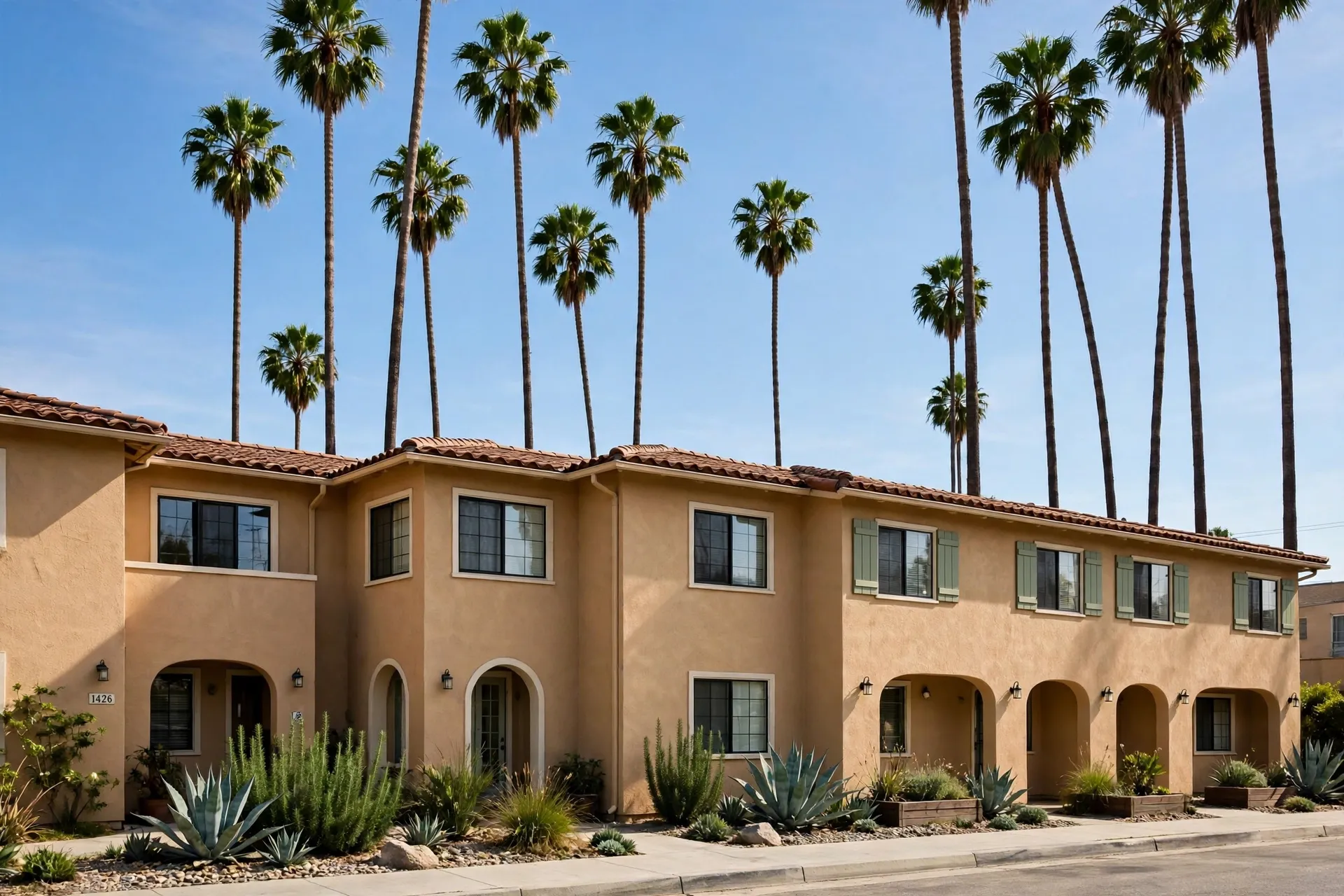
Casa Palmera is a name that causes confusion, because it sounds like a single brand but is in fact used by more than one unrelated business. If you search for it, you may find a treatment centre in California, holiday rentals and properties in Spain, and other listings elsewhere, all sharing the same attractive Spanish name. Treating them as one organisation would be a mistake, and it is exactly the error the old version of this article made when it presented Spanish villas and a Ghana property as if they belonged to one verified brand. This guide corrects that picture: it starts with what the name means, anchors on the one facility that can be verified with an address and regulatory listing, and then explains how to check any other Casa Palmera listing on its own merits.
The distinction matters for practical reasons, not just for accuracy. Someone looking for treatment information needs the right facility, the right location and the right way to verify it, while someone looking for a holiday rental needs to know that a similarly named property in Spain is a separate business with its own owner, terms and reviews. By separating those uses clearly, this guide helps you avoid contacting the wrong place, travelling to the wrong address, or assuming that a property listing carries the credentials of a healthcare facility. It is an information guide only: it does not give medical advice, it does not recommend this centre or any other, and it makes no claims about success rates.
What Casa Palmera Means
In Spanish, “casa” means house and “palmera” means palm tree, so Casa Palmera can be understood as “house of palm trees” or “palm-tree house”. That meaning explains why the name is so widely reused: it evokes warmth, shade, calm and a Mediterranean or Californian setting, whether the business is a home, a rental villa, a residential community or a care facility. A name that describes a pleasant house shaded by palms is naturally attractive to property owners and service providers alike, and because ordinary Spanish words cannot be owned in the same way as a distinctive invented brand, unrelated businesses in different countries can quite legitimately use the same phrase without being connected to each other.
Understanding the literal meaning also helps you read listings more critically. When you see “Casa Palmera” attached to a villa, apartment or rental, the name alone tells you very little about ownership, quality or services beyond the suggestion of a house associated with palm trees. The useful details are always the specific address, the owner or operator, the listing platform, recent reviews, and any licence or registration that applies to that type of business in that country. A shared name is a starting point for a search, not evidence of a shared business, and this guide returns to that principle for every type of listing discussed below.
The Verified Facility: Casa Palmera in Del Mar, California
The one Casa Palmera facility that is verified in the research for this guide is the Casa Palmera treatment centre at 14750 El Camino Real, Del Mar, in the San Diego area of California, USA, postcode CA 92014. It was founded in 2005 and is described in directories as a residential behavioural health facility treating substance use disorders and co-occurring mental health conditions, including alcohol and drug problems, dual diagnosis, and trauma and mood disorders. It is Joint Commission accredited and is licensed in California as a chemical dependency recovery hospital, with a California HCAI listing showing 93 licensed beds and a facility status of Open. Those regulatory details are the reason this facility can be anchored with confidence, whereas other uses of the name cannot be linked to it on the evidence available.

Levels of care described across directories for the Del Mar centre include residential care, partial hospitalisation, also called PHP or day treatment, intensive outpatient care, known as IOP, outpatient care, and aftercare or alumni support. A typical programme length is often cited as around 30 days, although length will vary with individual needs, clinical assessment and programme type, and should not be treated as a fixed promise for any person. One directory cites a typical price range of $36,000 to $42,000, but that figure is presented here only as a directory-reported range that varies with programme length and insurance, and readers should confirm any cost directly with the facility and with their insurer before making decisions. Phone numbers differ across directories, so no phone number is printed in this guide, and readers should use the official listing or directory entry they trust to obtain current contact details.
What the Del Mar Centre Is — and Is Not
It is important to be precise about what kind of facility the Del Mar centre is described as, without turning this guide into a clinical recommendation. As a residential behavioural health facility and licensed chemical dependency recovery hospital, it is presented in directories as offering structured residential support alongside step-down levels of care, rather than as a hotel, a holiday retreat or a general wellness resort. Residential care typically means staying at the facility for a period of treatment, while PHP, IOP and outpatient levels generally involve less intensive, non-residential or part-time support, allowing a person to move between levels as clinical needs change. Aftercare and alumni support are described as ongoing contact after a main programme, although the exact form will vary and should be confirmed directly.
What this guide does not do is equally important. It does not assess whether this centre is suitable for any individual, it does not compare its outcomes with other facilities, and it does not repeat any success-rate claim, because no verified success-rate figure was supplied for this rewrite and such figures, when published, depend heavily on how they are measured and over what period. Anyone considering treatment should discuss options with a qualified healthcare professional, consider local services as well as distant ones, check accreditation and licensing through official sources, and ask direct questions about programmes, staffing, costs, insurance acceptance and aftercare. Directories indicate the centre accepts private insurance and self-pay, but coverage depends on the individual policy and programme, so confirmation is essential before assuming any cost will be covered.
If You Need Help Now
If you or someone near you needs urgent help, use your local emergency services straight away, particularly if there is immediate risk to safety. For non-emergency support, consider contacting your GP, local health service, or a national helpline in your own country, which can advise on local treatment options, crisis support and next steps without requiring travel to a specific facility. This short note is deliberately general, because readers of this guide may be in the UK, the USA, Spain or elsewhere, and the right helpline depends on where you are. Do not delay seeking help while researching a single named centre, and do not treat any article, including this one, as a substitute for professional advice about substance use, mental health or any medical condition.
Family members and friends often search for a named centre on behalf of someone else, and it can help to focus first on immediate safety and local professional advice, then on longer-term options. If you are supporting someone else, encourage them to speak to a healthcare professional, keep notes of what services have been contacted, and be cautious about any listing that promises a guaranteed outcome, pressures you to pay quickly, or cannot provide a verifiable address and licence. A reputable facility should be willing to explain its programmes, costs and limitations clearly, and official regulatory listings, such as the California HCAI facility listing for Casa Palmera Care Center, provide an independent check that a facility exists and is licensed in the form described.
Why Other Casa Palmera Listings Are Separate
The same Spanish name is used by unrelated holiday rentals and properties in Spain and elsewhere, and these are not shown to be part of the Del Mar centre. A villa called Casa Palmera in Spain, a rental apartment using the same words, or a property listing in another country should therefore be treated as a separate business, with its own owner, location, price, availability and terms. The old article’s error was to blur that line, presenting properties as if they shared the centre’s identity, when no address, operator link or source connected them. This rewrite avoids that mistake by stating the position plainly: unless a listing itself provides a verifiable link to the Del Mar facility, assume it is separate and check its own details.
That caution applies equally to any listing you find under this name in the future. Before booking a property, confirm the full address, the host or agency, cancellation terms, and recent independent reviews, and be wary of listings that borrow healthcare language or credentials that do not belong to a rental. Before contacting a facility, confirm its full address and licence through an official listing, and do not assume that a property website and a treatment website using the same words are operated by the same organisation. Shared names are common in property and hospitality, where descriptive Spanish phrases are reused freely, and careful checking is the only reliable way to tell one Casa Palmera from another.
How to Verify Any Casa Palmera Listing
Verifying a listing takes only a few steps, but those steps prevent most confusion. First, note the exact name, full address and country, and check whether the listing provides a website, operator name or registration that matches that address. Second, for a healthcare facility, look for an official regulatory listing, such as a state licensing record, and for a property, look for a reputable booking platform, host details and verifiable reviews. Third, compare contact details across sources: if phone numbers, addresses or operator names differ sharply, treat that as a reason to pause and verify further rather than assuming one source is simply out of date, although minor differences can occur when listings are not updated.
Finally, be cautious about price and programme claims that appear without a source. A directory price range for a treatment programme, a nightly rate for a villa, or a claim about facilities and services should all be traceable to the operator or to a current listing, not merely repeated from an old article. If a claim cannot be traced, treat it as unverified and ask the operator directly. That habit protects both kinds of searcher: the person seeking treatment, who needs accurate clinical and financial information, and the person seeking a holiday home, who needs accurate property details. In both cases, the name Casa Palmera is only the beginning of the check, never the conclusion.
Conclusion
Casa Palmera means “house of palm trees”, and that pleasant, descriptive name is shared by unrelated businesses. The verified anchor in this guide is the Del Mar, California treatment centre at 14750 El Camino Real, founded in 2005, Joint Commission accredited and licensed in California as a chemical dependency recovery hospital, offering residential, PHP, IOP, outpatient and aftercare levels of care as described in directories. Every other Casa Palmera property or rental should be treated as a separate business unless it provides its own verifiable link to that facility, and no medical advice or success-rate claim is made here. Check addresses, licences and current costs directly, seek local professional help promptly if help is needed now, and let the specific listing, not the shared name, guide your next step.
Because shared names cause so much confusion, you may also find our Palmera Apartments guide useful for comparison. It covers a different Palmera-named property, and reading the two together shows why checking each listing separately matters.
Frequently Asked Questions
What does Casa Palmera mean?
Casa Palmera combines the Spanish words “casa”, meaning house, and “palmera”, meaning palm tree, so it can be understood as “house of palm trees”. The descriptive nature of the name is one reason it is used by unrelated businesses.
Where is the Casa Palmera treatment centre?
The verified treatment centre is Casa Palmera at 14750 El Camino Real, Del Mar, in the San Diego area of California, USA, CA 92014. It was founded in 2005, is Joint Commission accredited, and is licensed in California as a chemical dependency recovery hospital.
Are Casa Palmera villas in Spain part of the Del Mar centre?
No evidence was found linking Spanish holiday rentals or other properties using the name Casa Palmera to the Del Mar centre. Treat any such property as a separate business and check its own address, owner, terms and reviews independently.
How much does treatment at Casa Palmera cost?
One directory cites a typical range of $36,000 to $42,000, but this is only a directory-reported range that varies with programme length and insurance. Confirm any cost directly with the facility and your insurer, and do not rely on a directory figure as a quote.
Does this guide recommend Casa Palmera for treatment?
No. This guide is for information only and does not give medical advice or recommend any centre. Anyone considering treatment should speak to a qualified healthcare professional and check accreditation, licensing, programmes and costs through official sources.