Maintaining a healthy weight is one of the most important yet overlooked aspects of cat care. A cat’s weight is not just a number on a scale — it is a direct indicator of overall health, mobility, and long-term wellbeing. Whether your cat is a growing kitten, an active adult, or a relaxed senior, understanding how much they should weigh can help prevent serious health problems before they start.
A cat weight chart provides a practical reference point that allows owners to compare their cat’s weight against healthy ranges based on age, breed, and body structure. However, weight alone never tells the full story. Two cats can weigh the same but have completely different body compositions. That’s why modern veterinary guidance combines weight charts with visual and hands-on assessments to determine what is truly healthy.
In this guide, you’ll find an updated, easy-to-understand cat weight chart in kilograms, along with expert-informed explanations on how to interpret it correctly. You’ll also learn how age, breed, lifestyle, and medical factors affect weight — and what steps to take if your cat is underweight or overweight.
Why a Cat Weight Chart Matters More Than Ever
Cat obesity has become increasingly common, especially among indoor cats. Reduced activity levels, free feeding, and over-treating have led many cats to carry excess weight without their owners realising it. On the other hand, unexplained weight loss can signal serious underlying health conditions that require immediate attention.
A cat weight chart helps owners spot trends early. Rather than waiting until a vet visit, you can monitor changes at home and take action before small problems become major health risks. Used correctly, a chart becomes a preventive health tool, not just a reference.
Importantly, modern charts are not designed to label cats as “normal” or “abnormal.” Instead, they provide healthy ranges, which must always be interpreted alongside body shape, muscle tone, and behaviour.
Average Cat Weight: Understanding the Basics (in Kg)
Most healthy adult domestic cats fall within a general range of 3.5 kg to 5.5 kg, but this varies significantly depending on breed, sex, and build. Smaller, slender breeds naturally weigh less, while larger, muscular breeds can exceed this range without being overweight.
Male cats are typically heavier than females of the same breed, often by 0.5–1 kg. Neutering, age, and activity level also influence where a cat falls within the healthy spectrum.
Because of these variables, relying on a single “average” number can be misleading. A proper cat weight chart always accounts for age and breed differences, not just overall averages.
Cat Weight Chart by Age (Kg)
Cats go through several life stages, and their ideal weight changes as they grow and mature. Monitoring weight by age helps ensure proper development and early detection of health issues.
Kittens (0–6 Months)
Kittens grow rapidly and gain weight quickly during their first months. Healthy kittens may gain 80–120 grams per week. By six months, most kittens weigh between 2 kg and 3.5 kg, depending on breed and genetics.
During this stage, steady growth is more important than hitting a precise number. Sudden stalls in weight gain should always be checked by a vet.
Young Cats (6–12 Months)
Growth slows but continues as kittens approach adulthood. By one year, most cats reach close to their adult size. Typical weights range from 3 kg to 4.5 kg, though large breeds may already exceed this.
This is also when neutering often occurs, which can affect metabolism and appetite.
Adult Cats (1–7 Years)
Adult cats usually maintain a stable weight. For most breeds, a healthy adult weight falls between 3.5 kg and 5.5 kg. Significant changes during this phase often indicate lifestyle or dietary issues.
Senior Cats (7+ Years)
Senior cats may lose or gain weight due to reduced activity or medical conditions. Weight monitoring becomes especially important, as changes are often subtle but meaningful.
Cat Weight Chart by Breed (Kg)
Breed plays a major role in determining healthy weight. Comparing a Maine Coon to a Siamese using the same chart would be inaccurate. Below are typical healthy ranges, not strict rules.
Small to Medium Breeds
- Siamese: 2.7–4.5 kg
- Burmese: 3–4.5 kg
- Devon Rex: 2.5–4 kg
Medium to Large Breeds
- British Shorthair: 4–7.5 kg
- Bengal: 4–6.8 kg
- Siberian: 4.5–7.5 kg
Large Breeds
- Maine Coon: 5.5–9 kg
- Ragdoll: 4.5–9 kg
- Norwegian Forest Cat: 5–8 kg
These ranges assume healthy body composition. Muscle mass and frame size always matter more than the number alone.
Body Condition Score (BCS): The Missing Piece
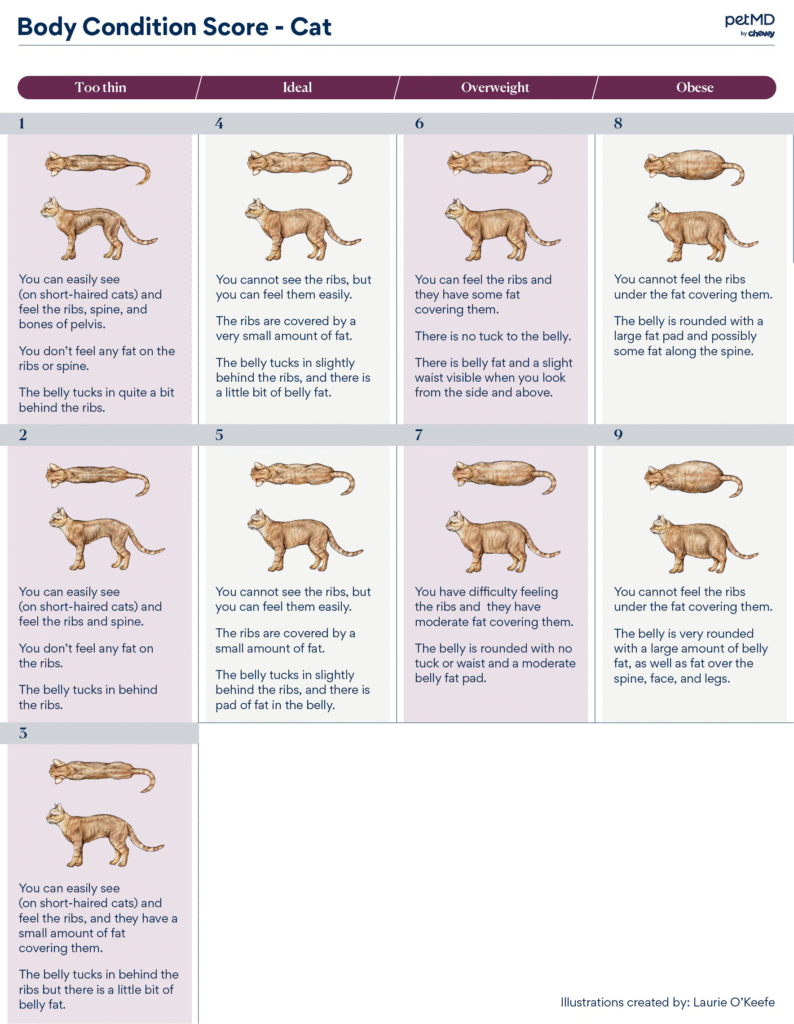
A cat weight chart is most effective when paired with a Body Condition Score (BCS). This is the method veterinarians use to visually and physically assess body fat and muscle.
A healthy cat should:
- Have ribs that are easy to feel but not visible
- Show a visible waist when viewed from above
- Have a slight tummy tuck from the side
Cats that lack a waist or have thick fat over the ribs may be overweight, even if their weight seems normal on paper. Conversely, visible ribs and hips indicate underweight status.
Factors That Influence Cat Weight
Several factors influence where your cat falls on the chart:
Age and Activity
Older cats tend to move less, which can lead to weight gain. Younger cats burn more calories and require higher energy intake.
Neutering and Hormones
Neutered cats often need fewer calories due to metabolic changes. Feeding routines should be adjusted accordingly.
Indoor vs Outdoor Lifestyle
Indoor cats are at higher risk of weight gain without structured play and exercise.
Medical Conditions
Conditions such as thyroid disorders, kidney disease, diabetes, or dental issues can cause rapid weight changes.
How to Manage an Overweight Cat Safely
If your cat is above their ideal weight range, weight loss must be gradual. Rapid dieting can be dangerous for cats.
Effective strategies include:
- Measuring meals precisely
- Reducing treats to under 10% of daily calories
- Switching to vet-recommended weight-management food
- Increasing playtime with interactive toys
- Using puzzle feeders to encourage movement
Consistency matters more than speed when helping a cat lose weight.
How to Help an Underweight Cat Gain Weight
Underweight cats may need nutritional support rather than simply more food.
Helpful steps include:
- Feeding calorie-dense, high-protein meals
- Offering smaller meals more frequently
- Warming food to increase aroma
- Ensuring a stress-free feeding environment
- Consulting a vet if appetite remains low
Sudden or unexplained weight loss should always be medically evaluated.
How Often Should You Weigh Your Cat?
Regular monitoring is key:
- Adult cats: once per month
- Weight-management plans: every 2–4 weeks
- Senior cats: monthly or as advised by a vet
Tracking weight over time helps identify trends rather than isolated changes.
FAQ
What is a normal cat weight in kg?
Most adult cats weigh between 3.5 and 5.5 kg, depending on breed and build.
Is 6 kg overweight for a cat?
It depends on the breed. For some cats it may be overweight; for large breeds it can be normal.
Can cats lose weight as they age?
Yes. Weight loss in older cats is common but should never be ignored.
Is a cat weight chart enough on its own?
No. It should always be used alongside body condition assessment and veterinary advice.
Final Thoughts: Using a Cat Weight Chart the Right Way
A cat weight chart is not about perfection — it’s about awareness. When used correctly, it empowers owners to make informed decisions that protect their cat’s long-term health. By combining weight tracking with visual checks, balanced nutrition, and regular vet care, you give your cat the best chance at a longer, healthier life.
Weight management isn’t about restriction; it’s about balance. And with the right information, balance becomes achievable.
You may also read: Kg to Stone and Pounds NHS Chart – Official NHS Weight Conversion Guide