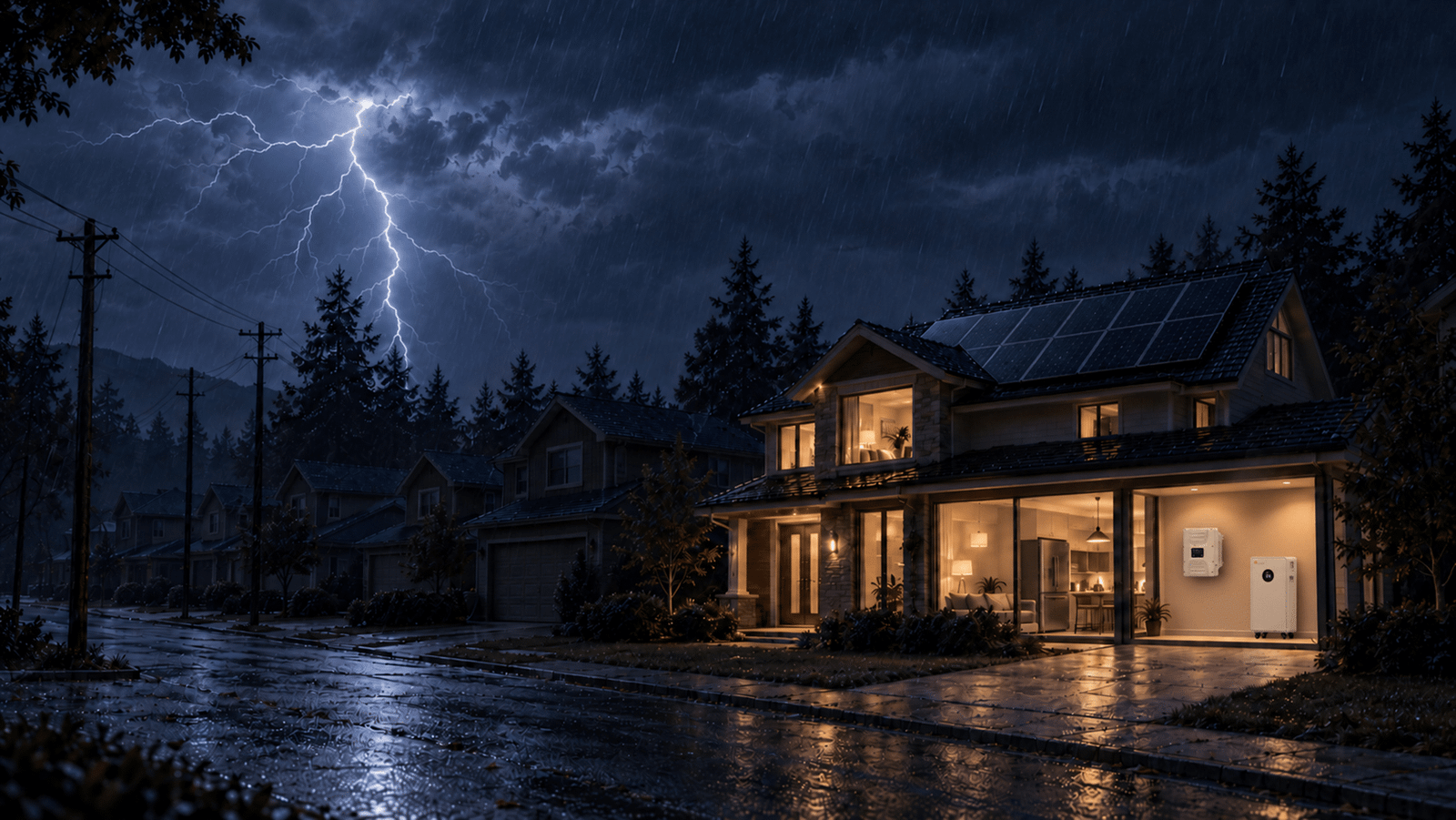
Solar energy production depends heavily on sunlight availability, making cloudy weather a challenge for off-grid power systems. When solar irradiance decreases, photovoltaic (PV) panels generate less electricity, potentially affecting the energy supply to connected appliances. An Off-Grid Solar Inverter helps manage these fluctuations by coordinating solar generation, battery storage, and available backup power sources. Through intelligent energy conversion and battery management, it can maintain a relatively stable electricity supply even when sunlight is limited. Understanding these operating processes helps system owners improve energy utilization and prepare for periods of reduced solar production.
1. How Cloudy Weather Affects Off-Grid Solar Inverter Performance
Cloud cover changes the amount of solar radiation reaching photovoltaic modules. Although panels can still generate electricity under overcast conditions, their output is generally lower than during clear weather.
Reduced Solar Irradiance Lowering PV Power Generation
Solar panel electricity generation varies with the intensity of sunlight, commonly quantified as solar irradiance in W/m². Under standard test conditions, solar modules are rated at an irradiance of 1,000 W/m². On heavily overcast days, irradiance may fall to approximately 100–300 W/m², depending on cloud thickness and weather conditions. Consequently, a 500W solar panel may produce substantially less than its rated output. This reduction affects how much electricity an Off-Grid Solar Inverter receives from the PV array. If solar generation cannot meet household demand, the system must obtain additional energy from its battery bank.
Fluctuating Solar Output Affecting Energy Supply Stability
Clouds do not always block sunlight consistently. Moving cloud formations can cause PV output to fluctuate throughout the day. These changes may create temporary differences between electricity generation and consumption. For example, solar production may decrease when thick clouds pass over the panels, then recover when sunlight returns. An Off-Grid Solar Inverter manages these variations by regulating available power and coordinating battery charging and discharging. This helps reduce interruptions caused by short-term changes in solar generation.
2. How an Off-Grid Solar Inverter Uses Battery Storage During Cloudy Days
Battery storage is essential for maintaining electricity availability when solar production decreases. Instead of relying entirely on real-time photovoltaic generation, an off-grid system stores surplus energy for later consumption.
Storing Excess Solar Energy for Later Use
During periods of strong sunlight, solar panels may generate more electricity than connected appliances immediately require. Instead of allowing this surplus energy to go unused, the system directs it toward battery storage through an integrated charge controller or a separate charging device. This allows the stored electricity to remain available when solar production decreases. An Off-Grid Solar Inverter works with the battery management system (BMS) and charging controller to regulate the energy transfer process. Charging current and voltage are adjusted according to battery requirements, helping prevent overcharging and excessive heat generation. For lithium batteries, BMS communication can also provide information about battery voltage, temperature, and state of charge (SOC).
Switching to Battery Power When Solar Generation Decreases
When cloud cover reduces photovoltaic output below the electricity demand, the battery supplies the energy difference. For example, suppose household appliances consume 2kW while solar panels generate only 800W. The battery must provide approximately 1.2kW, excluding system losses. An Off-Grid Solar Inverter converts the battery's DC electricity into AC power for household equipment. This allows appliances to continue operating even when solar production temporarily decreases. The transition between available energy sources depends on the inverter's control logic and system configuration.
Managing Battery Discharge to Prevent Low-Voltage Shutdown
Continuous battery discharge during extended cloudy periods can eventually trigger low-voltage protection. To prevent excessive discharge, battery management settings help regulate the available energy. Important parameters include:
Depth of Discharge (DoD): Determines the percentage of nominal battery capacity that can be used.
Low-voltage cutoff: Defines the voltage at which battery discharge is stopped.
Battery recovery voltage: Determines when normal operation can resume.
Maximum discharge current: Limits the electrical current drawn from the battery.
For example, a 5kWh battery operated at an 80% DoD provides approximately 4kWh of usable nominal energy before accounting for conversion losses.
3. How MPPT Technology Optimizes Solar Energy Collection
Maximum Power Point Tracking (MPPT) is an important technology in modern solar inverters. It helps photovoltaic systems extract available energy more efficiently when sunlight conditions change.
Adjusting Operating Voltage to Maximize PV Power Output
Solar panels have a nonlinear relationship between voltage and current. Their maximum power point changes according to irradiance and temperature. An MPPT controller continuously adjusts the PV operating voltage to find a suitable combination of voltage and current.
The available PV power can be calculated using:
P = V × I
If a solar array produces 150V and 10A, its instantaneous output:
150V × 10A = 1,500W By tracking the maximum power point, an Off-Grid Solar Inverter with MPPT technology can make better use of the electricity available under changing weather conditions.
Responding to Changing Sunlight Conditions
When clouds move across solar panels, irradiance and the maximum power point can change. MPPT technology adjusts operating conditions to follow these variations. However, MPPT cannot compensate for energy that the panels do not generate. If heavy cloud cover significantly reduces solar radiation, the total available PV power will remain limited. Therefore, battery storage and appropriate load management are still necessary for maintaining a reliable electricity supply during prolonged cloudy weather.
4. What Happens When Solar Power and Battery Energy Are Insufficient?
Extended periods of poor weather may reduce solar generation for several consecutive days. If battery reserves also become insufficient, the system needs additional measures to manage electricity consumption and maintain essential operations.
Prioritizing Essential Loads to Reduce Energy Consumption
When available energy becomes limited, reducing unnecessary electricity consumption can extend battery operating time. System owners can prioritize appliances according to their importance:
| Load Category | Typical Equipment | Management Strategy |
|---|---|---|
| Essential loads | Lighting, communication devices | Maintain operation |
| Medium-priority loads | Refrigerators, computers | Optimize operating schedules |
| High-power loads | Air conditioners, water heaters | Reduce usage when possible |
An Off-Grid Solar Inverter with programmable output controls or load management functions may support different power priorities, depending on its design.
Using Grid or Generator Backup When Available
Some off-grid systems include generator inputs or other auxiliary charging options. When solar production and battery reserves cannot meet demand, a compatible generator can provide additional electricity. For example, a generator may supply AC power to compatible inverter chargers, allowing the battery bank to recharge while supporting connected loads. Before connecting a generator, users should verify its rated output, voltage, frequency, and compatibility with the inverter's AC input specifications. It is also important to understand that a standalone off-grid system cannot automatically access public grid electricity unless it has been specifically designed with a compatible grid input.
5. Conclusion
Cloudy weather reduces photovoltaic generation, but an appropriately configured Off-Grid Solar Inverter can manage available energy through battery storage, MPPT tracking, and load control. Adequate battery capacity, suitable system configuration, and efficient electricity consumption are essential for maintaining power availability during periods of limited sunlight. By monitoring solar production and battery conditions, users can improve energy management and reduce the risk of unexpected power interruptions.