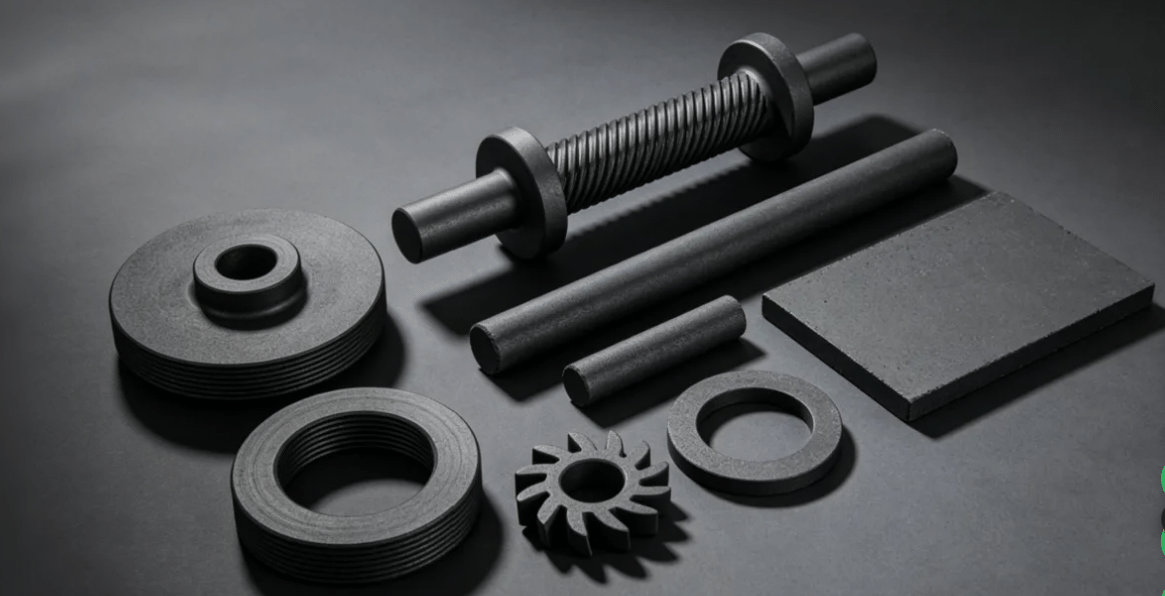
Graphite is widely used in metallurgy, semiconductor production, solar energy, chemical processing, and mechanical engineering. Its electrical conductivity, thermal stability, and chemical resistance make it suitable for demanding industrial environments. However, different applications require different material properties. A graphite mold, for example, has different requirements from a graphite electrode used in steelmaking. Choosing the right graphite manufacturer involves more than comparing prices. Material specifications, production equipment, machining capabilities, and quality control all affect the final product. Businesses should evaluate these factors carefully before entering into a long-term supply agreement.
1. Identify Your Requirements Before Choosing a Graphite Manufacturer
Before contacting suppliers, define the product type and technical specifications required for your application.
1.1 Understand Different Graphite Types
Common graphite materials serve different industrial purposes:
| Graphite Type | Main Characteristics | Typical Applications |
|---|---|---|
| Isostatic Graphite | Uniform structure and isotropic properties | Semiconductors, precision molds |
| Molded Graphite | Suitable for larger and complex shapes | Industrial molds, metallurgy |
| Extruded Graphite | Directional structure | Electrodes, heating elements |
| High-Purity Graphite | Low impurity content | Semiconductors, high-temperature processes |
| Graphite Electrodes | Good electrical conductivity and thermal resistance | Electric arc furnaces |
The right material depends on operating temperature, mechanical loads, and the surrounding environment. Comparing products without considering their intended use can lead to unsuitable purchasing decisions.
1.2 Define Technical Specifications
Several parameters should be established before requesting quotations:
- Carbon purity: Determines the carbon content and impurity limits.
- Bulk density: Influences mechanical strength and material structure.
- Ash content: Particularly important for high-purity applications.
- Flexural strength: Indicates resistance to bending loads.
- Dimensional tolerance: Determines whether machined components fit the required assembly.
For example, semiconductor equipment may require strict control of metallic impurities, while graphite molds often demand accurate dimensions and adequate mechanical strength.
2. Evaluate the Manufacturing Capabilities of a Graphite Manufacturer
Production capabilities affect product consistency, customization efficiency, and delivery schedules. Buyers should check whether a supplier has the equipment and technical experience required for their orders.
2.1 Check Equipment and Manufacturing Processes
Graphite production may involve raw material preparation, mixing, forming, baking, graphitization, and machining. Not every product requires the same process sequence. Graphitization commonly takes place at approximately 2,500–3,000°C. This high-temperature treatment changes the carbon structure and improves certain material properties.
When evaluating a factory, check whether it has:
- Suitable forming and heat-treatment equipment.
- CNC machining centers, milling machines, and cutting equipment.
- Raw material inspection and process monitoring procedures.
- Technical records covering relevant manufacturing operations.
2.2 Examine Customization Services
Standard products may not meet every industrial requirement. A capable graphite manufacturer should be able to assess drawings and produce components according to specified dimensions.
Check whether the supplier offers:
- Custom production based on CAD drawings.
- CNC milling, drilling, and cutting.
- Non-standard shapes and dimensions.
- Sample development and small-batch production before mass orders.
These services are particularly useful for machinery manufacturers and businesses using specialized graphite components.
3. Check the Quality Control System of a Graphite Manufacturer
Graphite quality depends on raw materials as well as forming, heat treatment, and machining. A structured inspection system helps reduce defects and differences between production batches.
3.1 Inspect Raw Materials and Production
Ask how the supplier checks raw material particle size, purity, ash content, and incoming material consistency.
Quality inspections should also cover different production stages:
- Forming: Check density and structural uniformity.
- Heat treatment: Monitor temperature and processing time.
- Machining: Verify dimensions, tolerances, and surface finish.
- Final inspection: Conduct performance tests according to product requirements.
3.2 Review Certifications and Test Reports
Request relevant documents, such as ISO 9001 certification, material data sheets, and product inspection reports. For high-purity graphite, pay particular attention to carbon content, ash levels, and metallic impurities. Keep in mind that ISO 9001 certifies a quality management system; it does not independently guarantee the performance of every product.
4. Compare Pricing, Capacity, and Delivery of a Graphite Manufacturer
Price is only one part of the purchasing decision. Production capacity and supply reliability can have a greater impact on long-term operating costs.
4.1 Understand the Factors Affecting Price
Graphite product prices are influenced by several factors:
- Raw material grade and purity requirements.
- Product dimensions and structural complexity.
- CNC machining time and surface treatment.
- Order quantity and customization requirements.
- Packaging, transportation, and export costs.
A lower quotation may not represent better value if the material fails to meet technical requirements. Compare suppliers using the same specifications and inspection standards.
4.2 Evaluate Production and Delivery Capacity
Before placing an order, confirm the factory’s monthly output, standard lead times, and production schedule for customized products. For ongoing projects, also examine raw material availability, batch-to-batch consistency, and the supplier’s procedures for handling quality issues. These factors help determine whether a graphite manufacturer can support repeated orders rather than just a single purchase.
5. Verify the Graphite Manufacturer Through Samples and Trial Orders
A supplier’s product catalog cannot fully demonstrate actual manufacturing performance. Sample testing provides a more practical way to assess product quality.
5.1 Test Product Samples
Check sample dimensions, surface finish, density, and machining accuracy. Depending on the application, additional tests may cover electrical conductivity, mechanical strength, and thermal performance. Compare the test results with the supplier’s technical data instead of relying solely on product descriptions.
5.2 Start with a Trial Order
For a new supplier, a small initial order can reveal potential production and communication problems. Pay attention to:
- Whether delivered products match approved samples.
- Whether the agreed delivery schedule is maintained.
- Whether packaging protects graphite components during transportation.
- Whether technical questions receive timely responses.
A successful trial order provides more useful evidence of manufacturing reliability than a sales presentation alone.
Conclusion
Choosing the right graphite manufacturer requires a clear understanding of material specifications, production processes, machining capabilities, quality control, and delivery performance. No single supplier is suitable for every application. By reviewing technical documents, testing samples, and evaluating trial orders, businesses can identify manufacturers that match their production requirements and support stable, long-term supply.