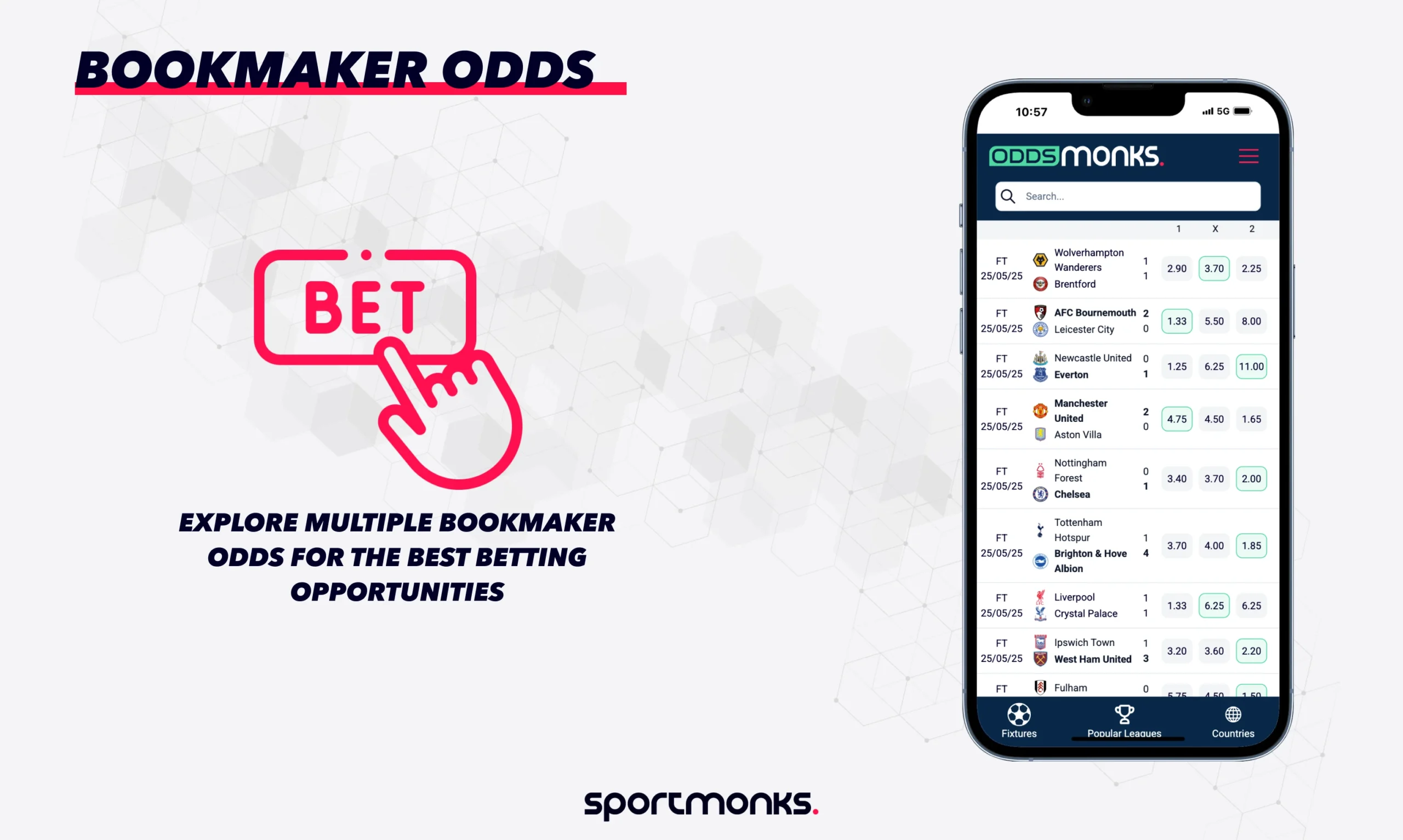
Sports betting is ultimately a game of numbers, where even the smallest advantage can dramatically impact your long-term profitability. While most sports fans spend hours analyzing player statistics, team form, injury reports, and weather conditions, many overlook the single most actionable strategy available: finding the best price for their wager. Learning how to **compare betting odds** across multiple sportsbooks—a practice commonly known as “line shopping”—is a fundamental skill that separates casual hobbyists from methodical, disciplined bettors.
When you purchase a flight or a retail product online, you naturally look across several platforms to find the lowest price. Betting on sports requires the exact same mindset, except in reverse: you are looking for the highest possible payout for the exact same risk. In this comprehensive guide, we will break down why odds vary between bookmakers, how to convert and evaluate different odds formats, and step-by-step methods to build an efficient odds comparison routine.
—
## Why Comparing Odds Matters for Your Bottom Line
At first glance, the difference between two bookmakers’ prices might seem insignificant. If Bookmaker A offers odds of 1.90 on a team to win while Bookmaker B offers 1.98 on the same outcome, a casual bettor might think an 8-cent difference is negligible. However, when multiplied across dozens or hundreds of bets over a season, that minor difference compounds into substantial financial gains or avoidable losses.
Bookmakers do not set prices based purely on objective probability; they set them based on risk management, market demand, and their own internal margin, often called the “vig” or “overround.” Because different bookmakers cater to different customer bases and possess varying risk tolerances, their prices frequently diverge.
Consider a simple scenario where you place a $100 wager on ten winning selections throughout a month:
* **Scenario A (Single Bookmaker):** Average winning odds of 1.90 yield $90 profit per winning wager, totaling $900 in total profit.
* **Scenario B (Line Shopping):** Average winning odds of 1.98 yield $98 profit per winning wager, totaling $980 in total profit.
Without increasing your initial stake or altering your underlying selections, you earn an extra $80—an immediate 8.8% boost to your net return. Over the course of a full year, this margin often represents the difference between a net loss and a profitable season. To explore how different bookmakers structure their sportsbooks and regional coverage, sports bettors frequently consult dedicated industry directory hubs like [AZBookmakers](https://azbookmakers.com) to review operator features and licensing credentials before opening secondary accounts.
Furthermore, line shopping protects your bankroll against unnecessary drawdown during losing streaks. When you consistently secure the highest available payout, you lower the required win percentage needed to break even.
—
## Deciphering Odds Formats and Calculating Implied Probability
To effectively shop for value, you must feel comfortable reading and comparing odds across three main global formats: Decimal, Fractional, and American. While sportsbooks allow users to toggle between these displays, understanding the mathematical mechanics behind each format helps you spot price discrepancies instantaneously.
### 1. Decimal Odds (European Format)
Decimal odds are the most straightforward format for comparison because the number represents the total payout (stake plus profit) returned for every $1 wagered.
* **Formula:** $\text{Total Return} = \text{Stake} \times \text{Decimal Odds}$
* **Example:** A $50 bet at 2.50 returns $125 ($75 profit + $50 original stake).
* **Comparison Advantage:** Higher decimal numbers always equal better value. Comparing 2.15 against 2.05 requires no complex mental math.
### 2. Fractional Odds (UK Traditional Format)
Fractional odds display profit relative to the stake ($Profit / Stake$).
* **Formula:** $\text{Total Return} = \text{Stake} \times (\text{Numerator} / \text{Denominator}) + \text{Stake}$
* **Example:** A $50 bet at 6/4 returns $75 in profit plus your $50 stake ($125 total).
* **Comparison Advantage:** Useful for quickly identifying traditional horse racing or football value, though slightly harder to compare when dealing with non-standard denominators (e.g., comparing 10/11 vs 4/5).
### 3. American Odds (Moneyline Format)
American odds center around a $100 baseline, using positive ($+$) and negative ($-$) signs.
* **Negative Odds (Favorites):** Indicates the amount you must risk to win $100 profit. For instance, -150 means risking $150 to profit $100.
* **Positive Odds (Underdogs):** Indicates the profit earned on a $100 risk. For instance, +160 means risking $100 to profit $160.
* **Comparison Rule:** For favorites, the number closest to zero is better (e.g., -135 is a better price than -150). For underdogs, the higher positive number is better (e.g., +180 is better than +165).
### The Implied Probability Formula
To know if a price truly offers value, you should convert decimal odds into **implied probability**—the likelihood of an outcome occurring as estimated by the bookmaker.
$$\text{Implied Probability (\%)} = \left( \frac{1}{\text{Decimal Odds}} \right) \times 100$$
For example, decimal odds of 2.50 translate to an implied probability of 40% ($1 / 2.50 = 0.40$). If your personal statistical model or research suggests the event has a 48% chance of happening, you have identified a positive expected value (+EV) wager. Dedicated market comparison resources like [bestodds.com](https://bestodds.com) enable bettors to track dynamic pricing swings across multiple operators simultaneously, ensuring that identified probability edges are captured at peak market value.
—
## Step-by-Step Guide on How to Compare Betting Odds
Establishing a systematic comparison routine ensures that you never leave money on the table. Following a structured procedure saves time and eliminates hasty decision-making right before event kickoff.
“`
+——————————————————-+
| Step 1: Maintain Accounts Across Multiple Sportsbooks |
+——————————————————-+
|
v
+——————————————————-+
| Step 2: Identify Your Precise Wager Selection |
+——————————————————-+
|
v
+——————————————————-+
| Step 3: Consult Comparison Grids or Live Boards |
+——————————————————-+
|
v
+——————————————————-+
| Step 4: Factor in Vigorish, Fees, and Promotions |
+——————————————————-+
|
v
+——————————————————-+
| Step 5: Lock In the Highest Price at Execution |
+——————————————————-+
“`
### Step 1: Maintain Accounts Across Multiple Sportsbooks
You cannot take advantage of superior lines if you only hold an account with a single operator. Aim to maintain active, funded accounts with at least 3 to 5 licensed sportsbooks. Having capital readily available allows you to place bets instantly without waiting for deposit confirmations while odds move.
### Step 2: Define Your Specific Market Target
Before browsing prices, specify exactly what outcome you intend to back. Whether you are targeting a straight match winner (moneyline), Asian handicap, total points (Over/Under), or player props, narrow down the market scope first.
### Step 3: Utilize Live Comparison Matrices
Instead of manually navigating through ten separate betting apps on your phone, open a reliable odds comparison grid. These platforms aggregate real-time pricing across major bookmakers into a single side-by-side table. Established European operators like [bet-at-home](https://www.google.com/search?q=https://bet-at-home.com) frequently serve as stable benchmarks for major international soccer, tennis, and basketball lines, giving you a clear point of reference against market consensus.
### Step 4: Evaluate Net Returns and Promotional Boosts
Always look beyond raw numbers to verify additional terms. A bookmaker offering 2.00 on a match might seem superior to one offering 1.95, but if the second bookmaker offers an opt-in odds boost that raises the price to 2.10, or provides full stake refund insurance, the second option presents greater overall value.
### Step 5: Execute Promptly
Odds are dynamic numbers that fluctuate based on trading volumes, news breaks, and market sentiment. Once you spot an outlier price that offers maximum payout, place the bet immediately before the bookmaker adjusts their line downward.
—
## Advanced Strategies: Line Movements, Bet Baskets, and Regional Nuances
Once you master basic line shopping for single bets, you can apply more sophisticated tactics to gain an edge over the market.
### Tracking Steamers and Drifters
Odds movement provides valuable insight into where smart money (“sharp” money) is flowing.
* **Steamer:** A selection whose odds are shortening (dropping) rapidly due to heavy betting volume or critical team news.
* **Drifter:** A selection whose odds are lengthening (increasing) as the market moves away from it.
If you notice a line dropping across three major sportsbooks, but a fourth bookmaker has failed to update its line yet, you have a short window to grab “stale” odds at a premium price before that operator catches up to the rest of the market.
### Comparing Multiple Selection Bets (“Bet Baskets”)
If you enjoy constructing accumulators or parlays, comparing odds becomes exponentially more critical. Because accumulator odds are calculated by multiplying the decimal odds of each individual leg together, small variances on single matches result in massive differences in total potential returns.
Many modern comparison sites feature a “Bet Basket” or “Acca Builder” feature. You add your 4 or 5 chosen legs into the basket, and the tool calculates which specific bookmaker yields the highest combined return for the entire ticket.
| Bookmaker | Leg 1 | Leg 2 | Leg 3 | Combined Decimal Odds | Return on $10 Bet |
| — | — | — | — | — | — |
| **Bookmaker A** | 1.80 | 2.10 | 1.50 | 5.67 | $56.70 |
| **Bookmaker B** | 1.85 | 2.15 | 1.52 | 6.04 | $60.40 |
| **Bookmaker C** | 1.90 | 2.20 | 1.55 | **6.47** | **$64.70** |
As demonstrated above, choosing Bookmaker C over Bookmaker A for the exact same three-team accumulator generates an extra $8.00 in profit on a modest $10 stake—a massive 14% variance in payout.
### Navigating Regional Market Specializations
Different bookmakers focus their trading resources on specific geographic regions or sports disciplines. A bookmaker deeply rooted in European football will often price domestic league matches far more aggressively than an operator specializing primarily in North American sports. For instance, licensed regional platforms such as [Bet777](https://bet777.be) often offer highly competitive pricing and tailored promotional markets on European football leagues compared to generalized global sportsbooks.
By aligning your specific betting focus with operators known for specialization in that area, you naturally encounter better base lines and lower bookmaker margins.
—
## Common Pitfalls to Avoid When Shopping for Odds
While learning to compare betting odds is straightforward, several operational traps can undermine your results if you aren’t careful.
“`
+————————————————-+
| COMMON ODDS COMPARISON TRAPS |
+————————————————-+
|
+———————–+———————–+
| |
v v
+———————–+ +———————–+
| Financial Oversight | | Operational Missteps |
| | | |
| • Deposit/Payout Fees | | • Slow Execution |
| • Currency Conversion | | • Exchange Commission |
| • Hidden Rollovers | | • Chasing Weak Boosts |
+———————–+ +———————–+
“`
### 1. Ignoring Exchange Commissions
Betting exchanges operate differently from traditional fixed-odds bookmakers. Instead of betting against the house, you bet against other users, and the exchange charges a commission percentage on net winnings (typically between 2% and 5%).
When comparing a traditional sportsbook price against a betting exchange price, always adjust the exchange odds downward to account for commission. An exchange price of 2.00 with a 5% commission yields an effective price of 1.95, which might actually be inferior to a traditional bookmaker’s zero-commission offer of 1.96.
### 2. Overlooking Payment and Withdrawal Friction
Securing a slightly higher price on an outcome is meaningless if your payout is eroded by deposit fees, withdrawal processing charges, or unfavorable currency conversion rates. Always review an operator’s banking terms and processing speeds before depositing funds strictly to chase a price.
### 3. Misunderstanding Local Regulatory Differences
Regulatory frameworks vary widely across international jurisdictions. In certain territories, tax rules or licensing obligations cause odds structures to differ subtly between regulated domestic books and international operators. For instance, in fast-growing regulated jurisdictions across Asia, compliant local platforms like [Bet88](https://bet88.ph) adapt their sports odds menus and payment channels to adhere closely to domestic regulatory guidelines while remaining competitive against offshore options.
### 4. Spreading Your Capital Too Thin
While having accounts at six different sportsbooks is ideal for line shopping, splitting a modest bankroll into six tiny fragments can leave you underfunded when a prime opportunity arises. Ensure that each account maintains sufficient capital to execute your standard unit stake cleanly without requiring last-minute card top-ups.
—
## Building a Consistent Odds Comparison Habit
The discipline required to compare betting odds before every single wager is what transforms sports betting from reckless gambling into a structured analytical exercise. The process does not require complicated mathematical models or hours of manual calculation; it simply demands habit consistency.
To make line shopping a seamless part of your regular sports betting routine:
1. **Bookmark key odds aggregation portals** on your desktop web browser and organize your sportsbook apps in a single folder on your mobile device.
2. **Keep track of your wagers in a spreadsheet**, logging both the price you secured and the consensus market price available elsewhere at the time of your bet.
3. **Standardize your odds format preference** across all platforms to Decimal odds to make instant visual comparisons second nature.
4. **Audit your performance quarterly** to measure how much additional profit line shopping contributed to your overall bankroll growth.
In any market driven by probabilities, taking control of your entry price is the single most effective action you can take. By opening accounts across multiple reputable platforms, utilizing live comparison grids, and remaining patient for optimal lines, you give yourself the best possible statistical foundation to succeed over the long haul.
—