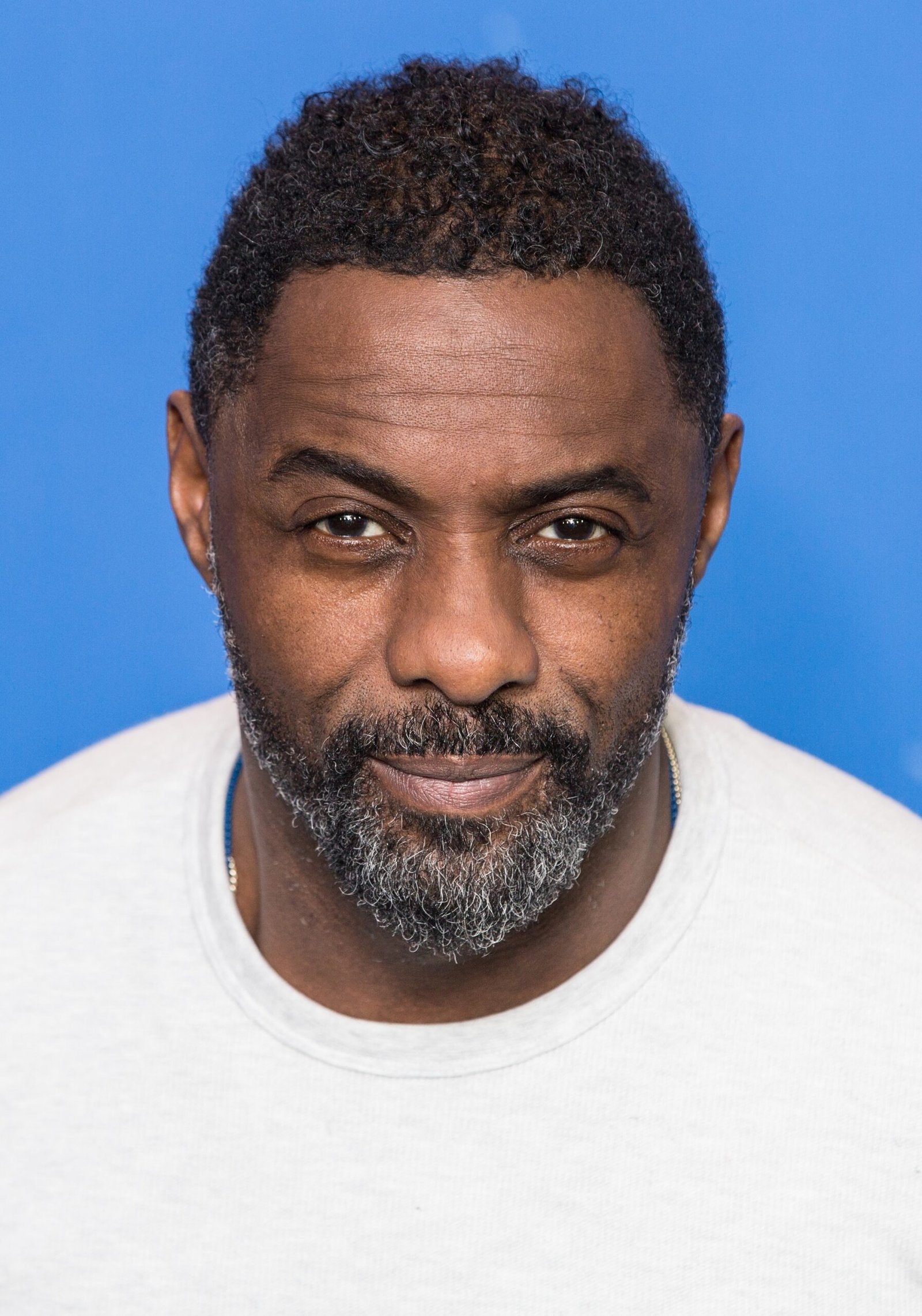
Idris Elba and Riz Ahmed have never shared a screen. They have never co-starred in a film or a television series. Yet put their careers side by side and the pairing makes sense. Both are Londoners who became leading men in American prestige television. Both turned one television role into a passport to Hollywood, and both changed what a British leading man could look and sound like.
Elba is the older of the two by a decade, a Hackney boy who became Stringer Bell and then John Luther. Ahmed is the Wembley-born son of Pakistani immigrants who became Nasir Khan and then Ruben Stone. Idris Elba is now one of the most recognisable British actors in the world, and Ahmed is one of the most decorated of his generation.
Hackney and Wembley: Two London Childhoods
Idrissa Akuna Elba was born on 6 September 1972 in Hackney, in east London, the only child of Winston Elba, a Sierra Leonean who worked at the Ford plant in Dagenham, and Eve, who was born in Ghana. At eighteen he won a Prince’s Trust grant to join the National Youth Music Theatre in 1990. From his late teens he also worked as a DJ under the name DJ Big Driis.
Rizwan Ahmed was born on 1 December 1982 in Wembley, in north-west London, into a British Pakistani family whose parents had emigrated from Karachi in the 1970s. His father worked as a shipping broker. Ahmed studied philosophy, politics and economics at Oxford University before training as an actor at the Royal Central School of Speech and Drama. He had already been rapping as Riz MC.
The Wire: Stringer Bell Changes Everything
Elba spent most of the 1990s working steadily in British television, with a recurring role in Family Affairs from 1997. A guest appearance on Law and Order in 2001 led to the audition that changed his life. The Wire, the HBO crime drama created by David Simon, cast him as Russell Stringer Bell, the business-minded second-in-command of a Baltimore drug organisation.
Elba played Stringer Bell for three seasons, from 2002 to 2004, and the performance is still talked about more than twenty years later. Stringer was a drug dealer who took economics classes at community college and wanted to run his operation like a legitimate corporation. American audiences had no idea he was British: he kept the Baltimore accent so convincingly that many viewers were startled to hear his London voice in interviews. The Wire was not a ratings hit while it aired, but its reputation grew, and Elba left it with a calling card in Hollywood.
Luther: The Detective Who Became a National Fixture
Elba returned to Britain in triumph with Luther, the BBC crime series that began in 2010 and ran until 2019. As Detective Chief Inspector John Luther, he played a brilliant, self-destructive detective. The role won him the Golden Globe for Best Actor in a Miniseries or Television Film at the ceremony on 15 January 2012, and it brought him four Primetime Emmy nominations. He reprised the role in the film Luther: The Fallen Sun in 2023.
Between the two television landmarks, Elba built a film career of unusual range. He played Nelson Mandela in Mandela: Long Walk to Freedom in 2013, earning a Golden Globe nomination for Best Actor in a Motion Picture Drama. He played Heimdall in six Marvel films, from Thor in 2011 to Thor: Love and Thunder in 2022. He won the Screen Actors Guild Award for Outstanding Actor in a Supporting Role for Beasts of No Nation in 2015. He played the villain Krall in Star Trek Beyond in 2016, and voiced Chief Bogo in Zootopia, Shere Khan in The Jungle Book and Fluke in Finding Dory. In 2023 he led the Apple TV thriller Hijack, earning another Emmy nomination. His films have grossed more than 9.8 billion dollars worldwide.
The Road to Guantanamo and Four Lions: Ahmed’s Apprenticeship
Ahmed’s screen career began in 2006 with The Road to Guantanamo, Michael Winterbottom’s docudrama about the Tipton Three, the British men detained at Guantanamo Bay. Ahmed played Shafiq Rasul. He then played the title role in the independent film Shifty in 2008, a charismatic young drug dealer over a single day in London, earning a British Independent Film Award nomination for Best Actor.
His breakthrough with British audiences came in 2010, in Chris Morris’s Four Lions, a satire about a group of incompetent would-be suicide bombers. Ahmed played Omar, the group’s earnest, exasperated leader, in a performance that made a would-be bomber recognisable and human. He received his second British Independent Film Award nomination for the role. He followed it with Trishna in 2011 and The Reluctant Fundamentalist in 2012, then broke through internationally in Nightcrawler in 2014.
The Night Of: An Emmy and a Breakthrough
In 2016, Ahmed had three releases that together announced him as a major actor. He played a tech billionaire in Jason Bourne and Bodhi Rook in Rogue One: A Star Wars Story. But the performance that mattered most was on television, in the HBO limited series The Night Of, where he played Nasir Khan, a Pakistani-American college student accused of murder after a night out in New York. Across eight episodes, an ordinary student is remade by the American justice system.
At the Emmy Awards in September 2017, Ahmed won Outstanding Lead Actor in a Limited Series or Movie for the role, becoming the first Asian man and the first Muslim man to win an acting Emmy. He was named one of the hundred most influential people in the world by Time magazine in 2017. The Night Of did for Ahmed what The Wire had done for Elba fourteen years earlier: it proved that a British actor with a Pakistani name could carry a prestige American drama as its lead.
Sound of Metal: The Nomination That Was Not a Win
Ahmed’s finest film performance came in Sound of Metal, which premiered at the Toronto International Film Festival in 2019 and was released widely in 2020. He played Ruben Stone, a heavy metal drummer and recovering heroin addict who begins to lose his hearing. Ahmed learned drumming and American Sign Language for the role.
At the 93rd Academy Awards, held on 25 April 2021, Ahmed was nominated for Best Actor, becoming the first Muslim actor ever nominated in the category. He did not win. The award went to Anthony Hopkins for The Father. It is worth stating this plainly, because the nomination is so often misreported as a win. Ahmed has won an Academy Award, but not for this performance.
The film itself won two Oscars that night, Best Sound and Best Film Editing, from six nominations in total. Then, at the 94th Academy Awards in 2022, he did win an Oscar, for Best Live Action Short Film, for The Long Goodbye, the short film he co-wrote and starred in with director Aneil Karia. The distinction matters: a nomination for acting, and a win for a short film he helped to create.
Mogul Mowgli and Making Their Own Work
Ahmed has never been content to wait for the right role to arrive. In 2020 he co-wrote, produced and starred in Mogul Mowgli, playing Zed, a British Pakistani rapper struck down by illness on the eve of his big break. It was nominated for Outstanding British Film at the BAFTA Awards, and Ahmed won Best Actor at the Gotham Awards. He had already released two albums as Riz MC and recorded with the duo Swet Shop Boys.
Elba took a similar path on the other side of the camera. He made his directing debut with Yardie in 2018, about a Jamaican courier in London seeking revenge, and he created and starred in the comedy series In the Long Run the same year, a show drawn from his own childhood. He was made an Officer of the Order of the British Empire in 2016, and in the 2026 New Year Honours List he was knighted for services to young people, becoming Sir Idris Elba. King Charles knighted him at Windsor Castle in June 2026.
Where They Stand Now
Elba, born in 1972, and Ahmed, born in 1982, now occupy similar ground in British culture: the elder statesman and the standard-bearer of the generation after him. Elba is a knight, a global film star and a producer. Ahmed is an Emmy winner and an Oscar winner who can get a film about a British Pakistani rapper made.
They have never acted together, and perhaps they never will. Elba proved that a Black British actor could become an American television icon and then a global film star. Ahmed proved that a British Pakistani actor could win an Emmy, be nominated for an acting Oscar and then win one as a film-maker. Like the great British screen partnerships, from David Tennant and Matt Smith theirs is a story of two careers that changed what British television and film could be.