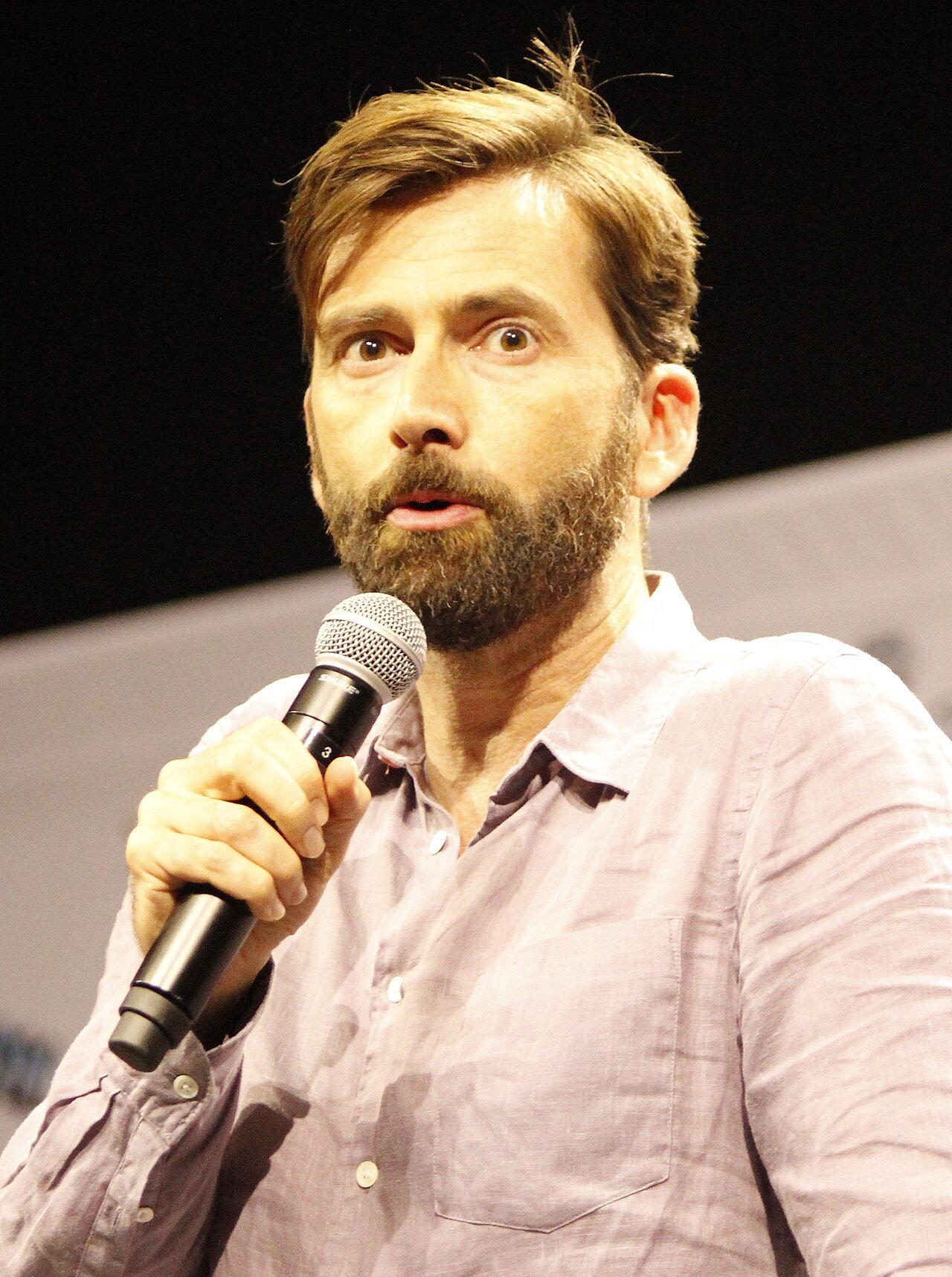
Few handovers in British television carry as much weight as the one between David Tennant and Matt Smith. Tennant was the Tenth Doctor, the fast-talking Time Lord in the pinstripe suit who turned a revived science-fiction series into a national institution. Smith was the Eleventh, the bow-tied newcomer who had to follow him and somehow made the role entirely his own. Together, they defined Doctor Who for a generation, and their story is the modern show’s story.
David Tennant was born David John McDonald on 18 April 1971 in Bathgate, West Lothian, Scotland, and grew up in Ralston, near Paisley. A childhood fan of Doctor Who, he trained at the Royal Scottish Academy of Music and Drama in Glasgow, joining at sixteen, then built his stage career with the Royal Shakespeare Company. Matt Smith, born Matthew Robert Smith on 28 October 1982 in Northampton, came to acting by a stranger route. He had dreamed of becoming a professional footballer and played in the youth ranks at Northampton Town and Nottingham Forest, but a back condition, spondylolysis, ended that ambition, and the stage became his second chance.
The Tenth Doctor Who Made the Show His Own
Tennant took over the TARDIS in 2005, succeeding Christopher Eccleston after a single series of the revived show. His first full episode, The Christmas Invasion, aired on Christmas Day 2005, and his final regular appearance, The End of Time, closed on 1 January 2010. In between, he led three full series and a year of specials, and his Doctor became the public face of the revival. He could be funny one moment and furious the next, and that range made the Doctor feel human. In fan polls he has often been voted the best Doctor of all: for millions who grew up in the 2000s, his voice, his coat and his catchphrases are simply what Doctor Who sounds like.
What made Tennant unusual was that he never treated the role as a break from serious acting. While he was playing the Doctor, he returned to the stage to play Hamlet for the Royal Shakespeare Company in 2008, opposite Patrick Stewart as Claudius, in a production later adapted for television. He had joined the RSC in 1996, and it showed: the Tenth Doctor’s speeches had a rhythm and a weight that came straight from Shakespeare. He stepped down in 2010, passing the baton to Matt Smith, but he kept coming back. He returned for the fiftieth anniversary special in 2013, and in 2023 he came back for the sixtieth anniversary specials as the Fourteenth Doctor, the first actor to play two different numbered incarnations.
Matt Smith: The Youngest Doctor
When Smith was announced as the Eleventh Doctor in January 2009, the reaction was disbelief. He was twenty-six, largely unknown, and about to follow the most popular Doctor the revival had ever had. He was the youngest actor ever cast in the role, and plenty of people assumed he was too young for it. His first full episode, The Eleventh Hour, proved them wrong within an hour. Smith played the Doctor as an old soul in a young body: clumsy, curious, endlessly enthusiastic, and suddenly ancient when it mattered. He led the show from 2010 to 2013, and his era brought in a new generation of younger viewers. He left in the Christmas special The Time of the Doctor, his run given its emotional centre by Amy Pond and Rory Williams.
The Day of the Doctor: Two Doctors, One Screen
The moment fans had waited for arrived on 23 November 2013, exactly fifty years after Doctor Who first aired. The Day of the Doctor, written by Steven Moffat and directed by Nick Hurran, brought Tennant and Smith together on screen as the Tenth and Eleventh Doctors, alongside John Hurt as the War Doctor, a previously unseen incarnation. It was the first full-length multi-Doctor story of the modern era, shown in cinemas as well as on television, and broadcast simultaneously around the world, setting a record at the time for the largest ever simulcast of a television drama.
What made the episode work was not the spectacle but the contrast between the two men. Tennant’s Doctor was the romantic, the one who carried his losses openly and wore his hearts on his sleeve. Smith’s Doctor was the younger face hiding an older mind, deflecting pain with jokes and bow ties. Put them in the same room, and the show could argue with itself, the Doctor meeting his own past and future. Their scenes crackled because both actors understood the same thing: the Doctor is one character played many ways, and the differences are the point. For viewers, it was a passing of the torch made literal: the old Doctor beside the new one, both better for it.
David Tennant After the TARDIS
If anyone expected Tennant to struggle after leaving Doctor Who, they were wrong. In 2013 he found his next great television role as DI Alec Hardy in Broadchurch, starring alongside Olivia Colman as two detectives investigating the murder of an eleven-year-old boy in a Dorset seaside town. The series ran for three seasons, from 2013 to 2017, and became a genuine cultural phenomenon in Britain. Hardy was the opposite of the Doctor: closed off, weary, haunted by a past failure, played with a stillness that surprised viewers who only knew the man in the pinstripe suit.
He kept moving. He played the mind-controlling villain Kilgrave in the Netflix Marvel series Jessica Jones from 2015 to 2019, one of the most unsettling villains in any superhero show. Since 2019 he has played the demon Crowley opposite Michael Sheen’s angel Aziraphale in Good Omens, the Amazon adaptation of the Gaiman and Pratchett novel, a role that lets him be funny, sly and oddly tender all at once. In 2020 he played the serial killer Dennis Nilsen in Des, winning an International Emmy Award for best actor. On stage he has since played Richard II for the RSC. He married actress Georgia Moffett in 2011, the daughter of Peter Davison, who played the Fifth Doctor, making his family story part of the show’s history in a way no other Doctor can claim.
Matt Smith After the TARDIS
Smith’s post-Doctor Who career took him in a very different direction. In 2016 he was cast as the young Prince Philip in the first two seasons of The Crown, Netflix’s lavish drama about the reign of Elizabeth II, opposite Claire Foy as the Queen. It was a demanding role: a real, living person, famously private, played across the early years of a marriage under impossible pressure. Smith earned a Primetime Emmy Award nomination, and the role proved he could carry a prestige drama as easily as a family adventure series. He left after two seasons, as the show recast its leads for the next stage of the Queen’s life.
Since 2022 he has played Daemon Targaryen in House of the Dragon, HBO’s Game of Thrones prequel, a role that has made him one of the most talked-about actors on television again. Daemon is dangerous, charming, unpredictable and often cruel, about as far from the Eleventh Doctor as it is possible to get, and Smith plays him with a stillness that makes his sudden violence genuinely shocking. In 2024 he made his West End debut in An Enemy of the People at the Duke of York’s Theatre, returning to the stage where his career began. Few actors have reinvented themselves so completely after leaving the same role, and Smith has done it twice over.
Two Doctors, One Legacy
There is a reason Tennant and Smith are so often mentioned in the same breath. They were the two Doctors who carried the revived series through its first great decade, from its uncertain relaunch to its fiftieth anniversary, and they did it back to back, with no gap between them. Tennant proved the revival could last beyond a single Doctor. Smith proved it could survive losing its biggest star and find a new audience. Between them, they took Doctor Who from a successful comeback to a permanent part of British culture, a show of anniversary specials, cinema screenings and global simulcasts.
Their careers since have only sharpened the comparison. Tennant has become one of Britain’s most versatile actors, equally at home in Shakespeare, crime drama, fantasy and comedy. Smith has become a prestige television star, moving from the TARDIS to the Palace to the dragonpit. Both men are still defined by the Doctor, and neither minds: the role made them, and they made it bigger. Like the great British screen pairings, from Simon Pegg and Nick Frost onwards, their partnership works because they are different enough to be interesting together, and alike enough to belong in the same story. The TARDIS has had many pilots, but for a whole generation of viewers, it will always have two faces: the Tenth Doctor and the Eleventh, standing side by side on the show’s fiftieth birthday.