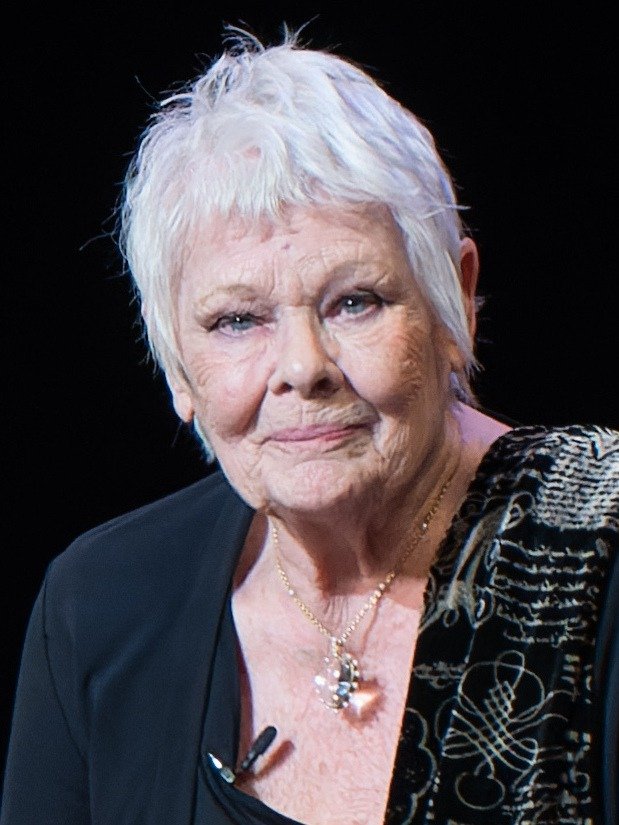
For almost seventy years, two names stood side by side whenever anyone talked about the finest acting in Britain. Judi Dench and Maggie Smith were born nineteen days apart in December 1934, came of age in the same theatres, and grew into the two great dames of their generation. They were rivals only in the sense that the very best always invite comparison. In truth, they were friends and colleagues, two of the great names of a golden age of British stage acting.
That friendship has now taken on a sadder meaning. Maggie Smith died on 27 September 2024, aged 89, passing away peacefully in hospital in London. Her sons, Toby Stephens and Chris Larkin, announced the news in a statement to the BBC, thanking the staff at the Chelsea and Westminster Hospital for their care in her final days. For Judi Dench, still sharp at ninety-one, it meant the loss of a friend she had known since they were both young actresses at the Old Vic in the late 1950s.
Born Nineteen Days Apart
Dench was born Judith Olivia Dench on 9 December 1934 in York, the daughter of a doctor who also acted in amateur theatre. Smith was born Margaret Natalie Smith on 28 December 1934 in Ilford, Essex, and grew up in Oxford, where her father worked at the university. Neither came from a famous acting family, and neither was handed a career. Both found the stage young and never really left it, learning their craft in repertory and classical theatre rather than in front of a camera.
Judi Dench: From Ophelia to M
Dench trained at the Central School of Speech and Drama in London and made her professional debut with the Old Vic Company in 1957, winning early praise as Ophelia in Hamlet. She became a mainstay of the Royal Shakespeare Company and the National Theatre, and her Lady Macbeth for the Royal Shakespeare Company in 1977 won her the first of eight Laurence Olivier Awards. On television she became a household name in A Fine Romance, made with her husband, the actor Michael Williams, whom she married in 1971 and who died in 2001, and in As Time Goes By, which ran from 1992 to 2005.
Film fame came later, and then it came all at once. She played M, the head of MI6, in GoldenEye in 1995, the first woman to play the role, and played M in eight Bond films, until her character was killed off in Skyfall in 2012. She played Queen Victoria in Mrs Brown in 1997 and Queen Elizabeth I in Shakespeare in Love in 1998, winning the Academy Award for Best Supporting Actress for the second role, in a performance lasting only a few minutes on screen. She has been nominated for eight Academy Awards in all, and in 2012 she announced that she was living with macular degeneration, which affects her sight. She was appointed OBE in 1970 and made a Dame in 1988.
Maggie Smith: Wit, Steel and Two Oscars
Smith began her stage career as a student at the Oxford Playhouse in 1952 and made her Broadway debut in New Faces of 1956. Like Dench, she built her reputation in classical theatre, working for the National Theatre and the Royal Shakespeare Company, with a sharp comic timing that no other actress of her generation could match. She was nominated for an Academy Award for Othello in 1965, then won Best Actress for The Prime of Miss Jean Brodie in 1969, and a second Oscar, for Best Supporting Actress, for California Suite in 1978.
What set Smith apart was how many different audiences she reached without ever changing what she was. Older filmgoers knew her from Travels with My Aunt and Death on the Nile. A new generation met her as Professor Minerva McGonagall in the Harry Potter films, which ran from 2001 to 2011, and as Violet Crawley, the Dowager Countess, in Downton Abbey from 2010 to 2015, a role that made her sharp one-liners famous around the world. She won two Academy Awards, five BAFTA Awards, four Emmy Awards and a Tony Award. She was made a Dame in 1990 and a Companion of Honour in 2014.
A Room with a View
The two women had known each other for decades before film audiences saw them together, and their first great shared screen success was A Room with a View in 1985. In the Merchant Ivory adaptation of E. M. Forster’s novel, Smith played Charlotte Bartlett, the fussy, watchful cousin and chaperone to Helena Bonham Carter’s Lucy Honeychurch, and was nominated for an Academy Award for the role. Dench played Eleanor Lavish, the eccentric novelist of the party, in a smaller but vivid part, and the film was a hit on both sides of the Atlantic.
Tea with Mussolini and Ladies in Lavender
Their next celebrated film together was Tea with Mussolini in 1999, directed by Franco Zeffirelli. Set among a group of English and American women living in Florence before the Second World War, it cast Smith as Lady Hester Random, a grand and unbending widow, alongside Cher, Joan Plowright and Dench. Smith won a BAFTA for Best Supporting Actress for the performance, and the film’s pleasure lay in watching four formidable women trade lines as equals, with nobody giving an inch.
Five years later came Ladies in Lavender in 2004, a quieter film in which Dench and Smith played ageing sisters, Ursula and Janet, living on the Cornish coast in the 1930s. They take in a young Polish violinist washed up on the beach, and the film turns on the sisters’ different responses to him. It was a small film, but it suited them. There were no villains and no grand speeches, only two sisters who had spent a lifetime together and knew each other’s silences.
The Breath of Life on Stage
If their films together were fondly remembered, their one great stage pairing was the event of the London theatre season. In October 2002 they starred together in David Hare’s The Breath of Life at the Theatre Royal, Haymarket, directed by Howard Davies. It was the first time the two of them had appeared together on a West End stage, and the play was written for them: a two-hander about two women whose lives are linked by the same absent man, one his wife and the other his lover, meeting after his death. The run sold out before it opened and was extended into February 2003.
The Best Exotic Marigold Hotel
Their best-loved late collaboration came in The Best Exotic Marigold Hotel in 2011, directed by John Madden, who had also directed Dench in Shakespeare in Love. Dench played Evelyn Greenslade, a widowed housewife starting a new life in Jaipur, while Smith played Muriel Donnelly, a former housekeeper who arrives in India for a hip operation and expects to hate every minute of it. The film followed a group of British retirees who move to a hotel in India that is far grander in its brochure than in reality, and it became a surprise box-office hit.
Two Dames, Two Temperaments
Part of the fascination of Dench and Smith was that they were so different in temperament. Dench is famously sociable, noisy company, quick to laugh and happiest in a crowded room. Smith was famously private, guarded with strangers and happiest with a book and a small circle of friends. In a memoir published in November 2026, Dench addressed the long-running rumour that the two of them had fallen out over dressing rooms, calling the idea ridiculous and saying that no such quarrel had ever happened. She also admitted that they would not have chosen to share a dressing room anyway: Smith preferred to sit quietly in a corner reading, while Dench wanted the bustle of people coming and going.
Why Their Partnership Endures
Dench and Smith will be remembered for different things, and that is as it should be. Dench will be remembered as M, as Queen Victoria and Queen Elizabeth I, and as an actress who found her greatest film fame in her sixties. Smith will be remembered as Jean Brodie and Professor McGonagall, as the Dowager Countess of Downton Abbey, and as the sharpest comic actress of her time, a performer who could silence a room with a single line and then break its heart with the next.
What they shared was larger than any single role. They were born in the same month, trained in the same tradition, and spent seven decades proving that great acting does not fade with age but deepens with it. Smith’s death in September 2024 closed that partnership, but it did not end what it meant. Like the great stage friendships before them, from Ian McKellen and Patrick Stewart to the theatre partnerships of earlier generations, theirs was built on trust, talent and time, and it will be remembered long after the final curtain has fallen.