
A quiet cultural shift is underway across Britain and beyond, as rising housing costs and evolving views on relationships prompt thousands to rethink the traditional marriage contract. The term lavender marriage—once a secret survival strategy of the early 20th century—is spiking in global search trends as a new generation repurposes the concept for modern economic realities.
What was once a desperate shield against persecution has transformed into a high-stakes conversation about platonic cohabitation, identity, and practical survival in 2026.
What Is a Lavender Marriage? (Clear Definition for 2026)
A lavender marriage was historically defined as a union between a man and a woman entered into to conceal the LGBTQ+ identity of one or both partners. These arrangements allowed individuals to protect their public standing, safeguard their professional careers, and avoid social or legal persecution in deeply hostile environments.
What separates a true lavender marriage from other unconventional unions is mutual awareness. Both parties entered the contract knowing the relationship served as a social cover or strategic partnership rather than a traditional romantic romance.
By 2026, the definition has broadened significantly. While the term retains its historical roots of concealment, it is increasingly used to describe modern, consensual partnerships where platonic connection, shared financial goals, and legal security take priority over sexual or romantic intimacy.
Why Is It Called a “Lavender” Marriage?
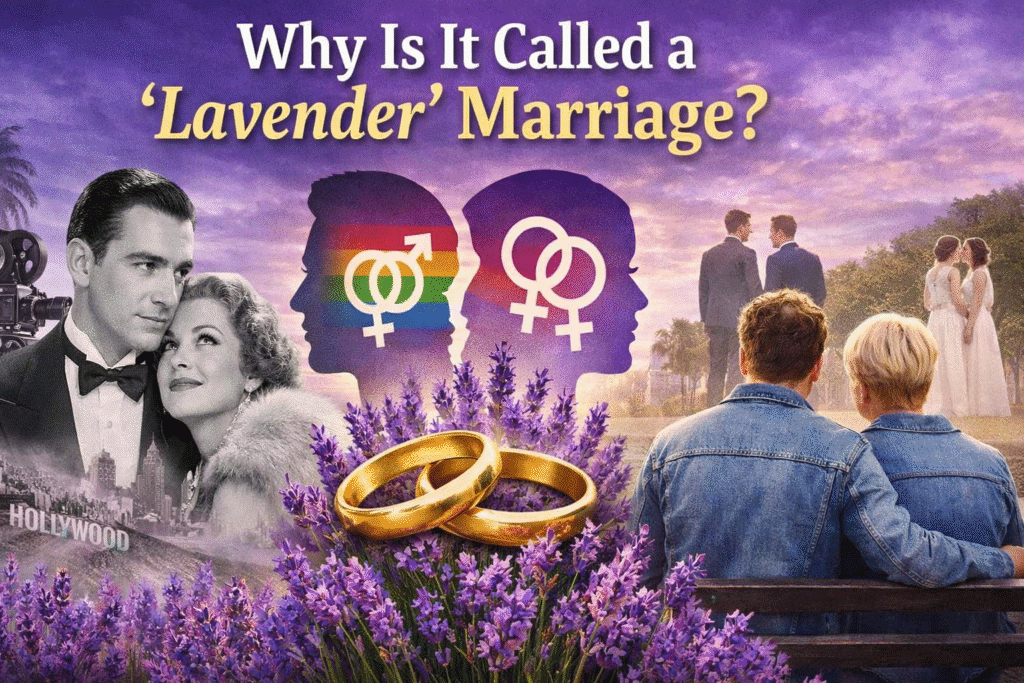
The color lavender became tied to LGBTQ+ identity during the early 20th century. In eras when homosexuality was criminalized and socially condemned, lavender operated as a subtle code—a quiet signal recognized within queer communities while remaining ambiguous to the wider public.
The term gained traction in the 1920s and 1930s, particularly within public-facing industries like Hollywood, politics, and elite social circles where personal reputation directly dictated professional survival. Using a shared cultural symbol allowed insiders to reference these protective unions without exposing those involved.
Today, cultural commentators debate whether the term still fits. Some argue that continuing to use “lavender marriage” risks romanticizing an era of forced secrecy, while others view it as an important historical term that honours past resilience.
Historical Origins: Survival, Secrecy, and Social Pressure
Throughout the early-to-mid 20th century, living openly as a gay, lesbian, or bisexual person in the UK or US carried devastating consequences, including criminal prosecution, medical institutionalization, and job loss. In that climate, entering a opposite-sex marriage was a calculated mechanism for physical safety.
High-profile individuals faced intense public scrutiny. Studio morality clauses, tabloid gossip columns, and state surveillance created a culture where one rumor could instantly end a career. Lavender marriages offered a sanctuary, allowing people to preserve their public livelihoods while quietly living their true lives behind closed doors.
Many of these historical unions were far from loveless. Numerous couples built deep, lifelong bonds of affection, loyalty, and mutual trust. The emotional toll of living a double life remained heavy, leaving a legacy of hidden stress and compromised authenticity.
Famous Lavender Marriages and Cultural Reference Points
History and pop culture offer numerous examples of high-profile unions that historians and biographers later recognized as protective arrangements:
- Hollywood’s Golden Age: Studio executives frequently arranged marriages for leading men and women to protect box-office revenue and suppress rumors regarding their private lives.
- Literary and Political Figures: Prominent 20th-century writers and diplomats entered mutual partnerships that satisfied societal expectations while allowing both partners space to pursue same-sex relationships discreetly.
- Modern Screen Portrayals: Contemporary television dramas and cinema periodically revisit these mid-century dynamics, shifting the focus from sensationalism to the heavy emotional sacrifices required to maintain a public front.
These portrayals resonate with modern audiences because they highlight a universal dilemma: the conflict between personal safety and total authenticity.
Lavender Marriage vs. Similar Relationship Structures
Understanding relationship terminology is essential for navigating modern conversations around identity:
- Lavender Marriage: A union historically formed to conceal an LGBTQ+ identity from the public, built on mutual awareness and strategic protection.
- Mixed-Orientation Marriage: A marriage where partners have differing sexual orientations (such as a bisexual partner married to a straight partner) without any intention of public deception or cover.
- Marriage of Convenience: A contract formed purely for practical legal, financial, or immigration benefits, completely independent of sexual orientation.
- “Beard” Relationship: A dynamic where one person acts as cover for another’s sexuality, sometimes without full transparency or equal agency.
In 2026, many non-traditional couples intentionally reject the lavender label, choosing terms like platonic life partners or intentional co-parents to avoid any implication of secrecy.
The Modern Evolution: Financial Reality Meets Relationship Design
The resurgence of interest in lavender marriages is closely tied to the global cost-of-living crisis and shifting social values. Soaring property prices, rent inflation, and economic volatility have led young adults to rethink traditional dating trajectories.
Rather than waiting for a romantic partner to achieve milestone goals like homeownership, many individuals are choosing to buy property, pool resources, and build households with trusted platonic friends. For some queer individuals living in conservative regions or navigating traditional family expectations, these partnerships offer financial stability alongside social peace of mind.
Modern arrangements often feature clear personal agreements, separate romantic dating lives, or joint parenting plans, all negotiated with complete transparency.
Emotional and Psychological Realities
Living in a non-traditional partnership brings distinct emotional dynamics that require ongoing management:
- Internal Tension: Maintaining a public image that differs from one’s internal identity can trigger feelings of isolation or emotional burnout over time.
- Boundary Fatigue: Without open communication, partners may clash over dating outside the marriage, financial split changes, or shifting future priorities.
- Deep Companionship: On the positive side, couples who establish complete honesty often report high satisfaction, citing steady support, reliability, and shared purpose free from romantic volatility.
The long-term health of any platonic or protective marriage depends entirely on transparency, ongoing consent, and clear boundaries.
Legal and Practical Considerations in the UK and Beyond
Under UK law, a marriage is legally binding regardless of the personal motivations behind it. Entering a civil marriage grants both parties automatic access to significant legal frameworks, including:
- Spousal tax allowances and exemption from Inheritance Tax on assets passed to one another
- Automatic next-of-kin status in healthcare settings and emergency decisions
- Streamlined joint property ownership and parental rights recognition
Legal challenges usually emerge if the partnership ends. Divorces involving non-traditional arrangements can become complex regarding financial settlements and asset distribution if clear documentation was never established. Legal advisors increasingly recommend detailed prenuptial agreements to outline property ownership and financial boundaries before entering platonic unions.
On a global scale, lavender marriages remain a critical survival tool in countries where homosexuality remains criminalized or violently targeted. In those jurisdictions, these arrangements provide necessary physical safety, social protection, and legal cover.
Ethical Debates and Contemporary Criticism
The modern discussion around lavender marriages features strong viewpoints from both cultural observers and LGBTQ+ advocates:
- The Critique: Critics argue that normalizing protective marriages can reinforce societal homophobia, subtly encouraging individuals to stay in the closet rather than pushing for full social acceptance.
- The Defense: Advocates counter that judging these choices from a position of legal security ignores severe real-world pressures. For millions navigating hostile environments or extreme economic hardship, strategic partnerships remain a valid form of personal agency and resilience.
In 2026, ethical consensus centers heavily on personal agency. When an arrangement is fully consensual, transparent, and mutually beneficial, it is increasingly respected as a valid lifestyle choice.
Why Lavender Marriage Still Matters Today
The continued discussion around lavender marriages exposes the enduring gap between legal equality and social reality. Despite progress in civil rights, family expectations, economic pressures, and cultural friction still compel many to seek alternative relationship structures.
Examining these partnerships challenges long-held assumptions about the purpose of marriage itself. It prompts a broader question: Must a legal union be rooted in traditional romance to be valuable, or can shared loyalty, financial cooperation, and deep friendship be reason enough?
Ultimately, lavender marriage illustrates human adaptability. Whether examining historical survival strategies or modern platonic cohabitation, these unions reveal how people navigate complex social landscapes to build safety, stability, and home on their own terms.
Frequently Asked Questions
Do lavender marriages still happen in 2026?
Yes. While less common in nations with strong legal protections, modern variations exist globally—both as protective measures in conservative regions and as intentional platonic partnerships designed for economic stability.
Is a lavender marriage identical to a mixed-orientation marriage?
No. A mixed-orientation marriage involves partners with different sexualities who may be fully open and romantically committed, without any element of social cover or public concealment.
Can a platonic or lavender marriage remain healthy over time?
Yes, provided both partners maintain absolute honesty, establish clear boundaries regarding outside dating and finances, and review their agreement regularly as personal circumstances evolve.
Why do some people dislike using the term lavender marriage today?
Many individuals avoid the term because it historically implies secrecy, deception, or shame. Modern couples pursuing platonic partnerships often prefer labels like “co-buyers,” “platonic life partners,” or “intentional families.”
You may also read:
Attitude Seed Bank UK: Trusted Cannabis Seeds, Reviews & Fast Discreet Shipping
Japanese Shoe Size to UK Conversion Charts You Can Trust