Rugby is one of the most celebrated sports in the United Kingdom, with a rich history across England, Wales, Scotland, and Ireland. Understanding rugby positions is essential for anyone who wants to follow the game closely or improve as a player. Each rugby position has a distinct role, from powerful forwards controlling the scrums to agile backs orchestrating attacking moves. By knowing these positions, fans and players alike can fully appreciate rugby union gameplay and the tactics behind every match.
Rugby positions also help viewers interpret the flow of the game, whether they are following fixtures like Bath Rugby versus Gloucester Rugby, tuning into BBC rugby coverage, or watching the Rugby World Cup final. The strategic complexity of rugby becomes clearer when you understand the roles each player fills. Knowledge of rugby positions not only enriches watching experiences but also helps beginners and aspiring players identify the position best suited to their skills, body type, and playing style.
Understanding How Rugby Positions Are Organised
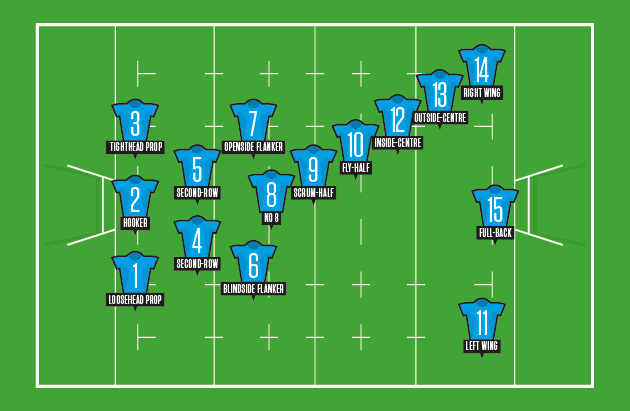
Rugby union teams consist of fifteen players, divided into forwards and backs. The forwards, usually wearing jerseys 1–8, are generally stronger and focus on set pieces like scrums and line-outs. The backs, wearing numbers 9–15, are typically faster and more agile, responsible for creating scoring opportunities and breaking defensive lines. Rugby positions are structured to balance physicality with skill, ensuring a team can dominate both territory and possession throughout a match.
The organisation of rugby positions also makes it easier for fans to follow the game. Jersey numbers correlate with specific roles, allowing commentators, referees, and viewers to identify responsibilities during dynamic gameplay. Unlike rugby league, which features fewer players and different positional requirements, rugby union positions remain consistent across domestic competitions and international tournaments, such as the Rugby World Cup. This consistency allows players and fans to develop a deeper understanding of tactics and strategies unique to rugby union.
Forwards and Their Role in the Game
Forwards in rugby union form the backbone of the team and are crucial to maintaining possession. Rugby positions among the forwards require significant strength and endurance, as they engage in scrums, rucks, and line-outs to secure the ball. Their work often sets the platform for attacking moves, allowing the backs to exploit space and create scoring chances. Without strong forwards, a team may struggle to control the pace and territory of a match.
Modern forwards are also expected to possess a high level of skill with ball handling and mobility. Flankers, number eights, and locks contribute not only through physicality but also by supporting backline players and maintaining continuity in open play. The evolution of rugby positions for forwards shows how tactical demands have changed, with elite clubs like Bath Rugby, Gloucester Rugby, and Ulster Rugby expecting forwards to be versatile, fit, and technically proficient while still performing their traditional roles.
The Importance of the Backline

Backs in rugby union are the creative engine of the team, responsible for turning possession into attacking opportunities. Rugby positions in the backline, such as scrum-half, fly-half, centres, wings, and full-back, require speed, vision, and tactical awareness. These players exploit gaps, deliver precise passes, and execute kicks strategically to advance the ball, making them vital to scoring tries and controlling the tempo of the game.
Effective use of rugby positions in the backline can change the outcome of matches, particularly in high-stakes fixtures like the Rugby World Cup. Fly-halves orchestrate attacks, scrum-halves link forwards and backs, and wingers finish moves with explosive speed. Fans watching BBC rugby union or following rugby today through live scores and commentary gain a deeper understanding of the game by observing how backs interact, communicate, and execute their roles in modern rugby union gameplay.
Rugby Positions in International Competition
Rugby positions play a critical role at the international level, where the stakes are higher and tactical nuances are more pronounced. England rugby, Scotland rugby, Wales rugby, and Ireland rugby all deploy players strategically according to their strengths in specific rugby positions. Selection often depends on a player’s ability to execute complex strategies while performing under intense pressure during international tests or tournaments like the Rugby World Cup final.
At this level, rugby positions are not just about individual roles but also about coordination across the team. A slight misalignment in forwards or backs can result in lost possession or defensive lapses. Analysts and commentators, particularly on BBC rugby and rugby world cup broadcasts, frequently highlight how international teams exploit these positional dynamics, showcasing the importance of understanding every rugby position to fully appreciate the skill, strategy, and athleticism involved in top-tier rugby union matches.
Rugby Union Compared to Rugby League
Although rugby union and rugby league share common origins, the rugby positions in each code differ significantly. Rugby union focuses on contests for possession through scrums and line-outs, making forward positions critical for controlling the ball. In contrast, rugby league has fewer players, faster gameplay, and distinct positional requirements, placing less emphasis on set pieces and more on continuous attack.
Understanding rugby positions in union helps fans appreciate the tactical depth of the sport and avoid confusion when comparing scores or fixtures between the two codes. Rugby league scores and rugby union scores reflect different styles of play, and recognising how positions function in each game highlights the unique challenges and skills required by players. Whether following BBC rugby league or BBC rugby union, knowledge of these distinctions enriches the overall viewing experience.
How Rugby Positions Have Evolved
The evolution of rugby positions reflects the professionalisation of the sport. Players in every position are now expected to be fitter, faster, and more versatile than ever before. Forwards are often involved in open play and ball handling, while backs are increasingly expected to tackle and contribute defensively. This evolution has reshaped the demands of rugby positions, requiring players to be more well-rounded and adaptable.
Clubs such as Gloucester Rugby and Bath Rugby have led the way in developing players capable of excelling in multiple rugby positions. Modern coaching techniques, analytics, and conditioning programmes have transformed traditional roles, demonstrating that rugby positions are no longer static. This evolution enhances gameplay and makes understanding positions essential for fans, coaches, and players who wish to appreciate the strategic depth of rugby union.
Choosing the Right Role on the Pitch
Selecting the most suitable rugby position depends on a player’s physical attributes, skillset, and personal preference. Rugby positions offer options for players of various body types and abilities, from agile wingers to powerful locks. Beginners often rotate through multiple positions before specialising, gaining insight into the demands of different roles and how each contributes to the team’s success.
Clubs and academies across the UK guide players in finding positions that match their strengths. Understanding rugby positions helps young players develop a well-rounded approach to the game, preparing them for competitive matches and high-profile fixtures. By choosing the right rugby position, individuals can maximise their potential, enhance team performance, and enjoy the game to its fullest.
Watching Rugby with Greater Insight
Fans who understand rugby positions enjoy a richer and more informed viewing experience. By recognising the responsibilities of forwards and backs, spectators can follow key moments in play, appreciate tactical decisions, and understand commentary on BBC Sport Rugby. Observing how rugby positions interact on the field enhances enjoyment and deepens comprehension of rugby union gameplay.
Knowledge of rugby positions also allows fans to follow live rugby scores, fixtures, and tournament coverage with greater clarity. Recognising which players are fulfilling which roles during complex phases of play makes matches more engaging and helps fans appreciate the teamwork, skill, and strategy that define rugby union, whether at club level or during international contests like the Rugby World Cup.
Conclusion
Rugby positions are fundamental to understanding rugby union, shaping gameplay, strategy, and team dynamics. From grassroots clubs to elite international tournaments, each role plays a vital part in how the sport unfolds. Appreciating the nuances of rugby positions enriches both playing and spectating experiences, allowing fans to connect more deeply with rugby, follow fixtures closely, and enjoy commentary from outlets like BBC rugby and Rugby World Cup coverage.
You may also read: Setting Up Your Basketball Hoop