Things to Do in Edinburgh: Best Attractions and Day Trips
The best things to do in Edinburgh fit into a surprisingly compact city, because Scotland’s capital packs a medieval Old Town, a Georgian New Town, a royal palace, a castle on a volcanic rock and a wild hill walk into an area you can cross on foot in under an hour. A first-time visitor can stand on the ramparts of Edinburgh Castle in the morning, walk the Royal Mile to the Palace of Holyroodhouse by lunchtime, and climb Arthur’s Seat for a panoramic sunset in the evening, all without getting into a car or a bus. This guide covers the essential sights, the museums and viewpoints that reward a slower pace, the festivals and food that give the city its character, and the practical tips that turn a good trip into a great one.
Edinburgh is a UNESCO World Heritage Site, with the Old Town and the New Town listed together for their contrasting but complementary character, and that split is the key to understanding the city. The Old Town is a maze of closes, wynds and towering tenements built along a ridge that runs from the castle down to Holyrood, while the New Town, built in the eighteenth century across the valley, is all grand squares, crescents and classical facades. The facts and prices in this guide were checked against travel guides updated in October and November 2026, and prices are date-stamped to that period, because ticket prices change with the seasons and should always be confirmed before you book.
Start at Edinburgh Castle and the Royal Mile
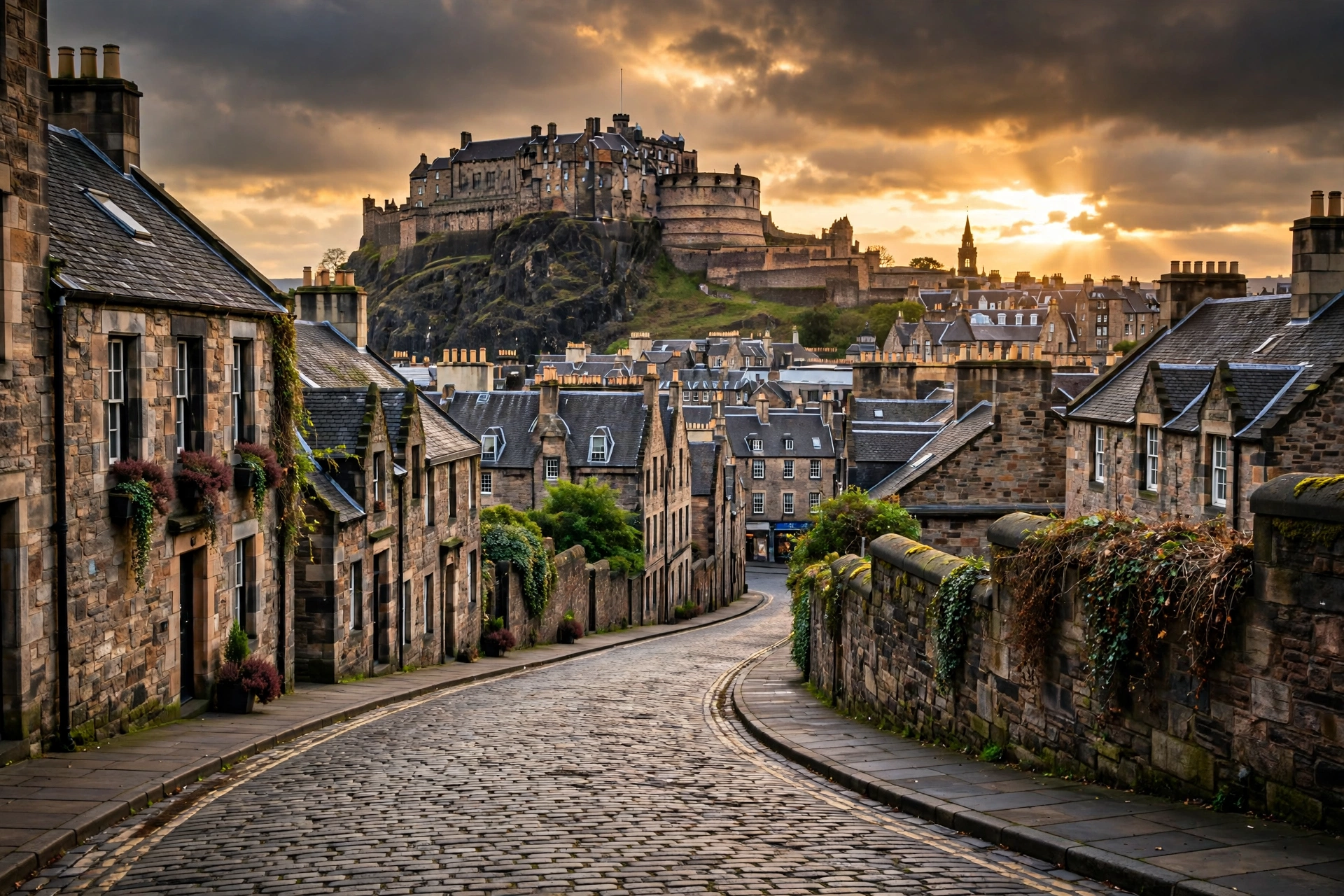
Edinburgh Castle is the natural place to begin any visit, because it dominates the skyline from its perch on Castle Rock, an extinct volcanic plug, and it holds the most important treasures in Scottish history. Inside the walls you will find the Honours of Scotland, the oldest crown jewels in Britain, alongside the Stone of Destiny, St Margaret’s Chapel, which dates from around 1130 and is the oldest surviving building in the city, and the One O’Clock Gun, which is fired every day except Sunday. Allow two to three hours for a proper visit, and book a timed ticket online in advance, because the castle sells out in summer and tickets for the day can be gone a week or more ahead. Guides updated in October 2026 reported adult tickets at £23.50 online or £26 at the gate, with children aged seven to fifteen at £11.50 online, so check the official castle website for the current price before you travel.
From the castle, the Royal Mile runs downhill for about a mile to the Palace of Holyroodhouse, and walking its full length is one of the great urban walks in Europe. The street is lined with historic tenements, churches, museums, shops and pubs, and the narrow closes that branch off it lead to hidden courtyards and centuries of history, including the Real Mary King’s Close, a preserved seventeenth-century street buried beneath the modern city. St Giles’ Cathedral sits about halfway down, its crown spire one of the most recognisable landmarks in Scotland, and the whole walk takes one to two hours at a leisurely pace, longer if you stop to explore the closes. Walk it early in the morning or after six in the evening if you can, because the crowds thin dramatically then.
Climb Arthur’s Seat and Walk Holyrood Park
Arthur’s Seat is the highest point in Holyrood Park and one of the most rewarding things to do in Edinburgh, because it is an extinct volcano rising 251 metres above the city, and the climb from the palace gates to the summit and back takes most people about two hours. The reward is a panoramic view over the whole city, the Firth of Forth, and the Pentland Hills beyond, and on a clear day you can see for miles in every direction, which makes the effort worthwhile even for visitors who do not normally enjoy hill walking. The climb is free, although the ground is uneven and can be slippery after rain, so wear proper walking shoes and take a waterproof layer.
At the foot of Arthur’s Seat sits the Palace of Holyroodhouse, the King’s official residence in Scotland, which stands at the lower end of the Royal Mile and is open to visitors for most of the year. The palace is an elegant royal residence with links to monarchs across the centuries, from Mary, Queen of Scots to the present day, and the State Apartments, the Great Gallery and the ruins of Holyrood Abbey are all worth seeing. Guides updated in October 2026 reported adult tickets at £22 when booked in advance, with children at £11 and under-fives visiting free, although the palace closes to visitors when the King is in residence, so check the dates before you plan your day. Beside the palace stands the Scottish Parliament building, a striking modern structure that is free to visit and offers a fascinating contrast to the historic buildings around it.
Museums and Galleries Worth Your Time
The National Museum of Scotland is the best free attraction in the city and one of the finest museums in Britain, holding everything from Dolly the sheep, the first cloned mammal, to the Lewis chessmen, Pictish stones and a rooftop terrace with a superb view over the castle. Entry to the permanent collections is free, and you can easily spend two or three hours inside, with weekday mornings the quietest time to visit, so it is the perfect choice for a rainy afternoon, which Edinburgh provides often enough to make a free indoor option worth knowing about.
Beyond the National Museum, the Scottish National Gallery on the Mound is free and holds one of the finest collections of European art in the country, while the Scottish National Portrait Gallery, a short walk away, tells the story of Scotland through the faces of its most famous people. The Royal Botanic Garden Edinburgh, a little further out, is a beautiful place to escape the bustle of the city, particularly in summer, with twenty-eight hectares of gardens, glasshouses and woodland walks that change with every season. Camera Obscura and World of Illusions, near the top of the Royal Mile, is one of the city’s oldest and most popular attractions, while the Scotch Whisky Experience, also on the Royal Mile, offers a guided introduction to Scotland’s most famous export.
Calton Hill, Dean Village and the New Town
Calton Hill is the easiest viewpoint in Edinburgh and one of the best, because a short climb from Princes Street brings you to a hilltop of unfinished monuments, including the National Monument, which looks like a Greek temple, and the Nelson Monument, shaped like a telescope. The classic view from Calton Hill looks across to the castle and the Old Town, and it is at its best at dusk, when the lights come on and the whole skyline turns golden, so arrive about an hour before sunset and stay until the sky darkens. The climb is free and far less demanding than Arthur’s Seat, which makes it a good choice for visitors who want a panorama without a proper hike.
From Calton Hill, cross into the New Town, where George Street, Charlotte Square and the elegant crescents of the Georgian city offer a completely different Edinburgh from the medieval Old Town. The New Town is the place for shopping, with independent boutiques alongside familiar high street names, and for some of the city’s best restaurants and bars, and a walk from Charlotte Square to St Andrew Square gives you a perfect sense of eighteenth-century town planning. For a quieter escape, follow the Water of Leith down to Dean Village, a picturesque cluster of old mill buildings and stone cottages hidden in a wooded valley just a few minutes from Princes Street, where the river runs beneath old stone bridges and the city feels a world away. Dean Village is free, photogenic and peaceful, and it is the kind of place that locals love and many visitors never find.
Festivals, Food and Evenings in Edinburgh
Edinburgh’s festival calendar is the biggest in the world, and the city changes character completely in August, when the Edinburgh Festival Fringe, the International Festival and the Royal Edinburgh Military Tattoo all run at the same time. At the other end of the year, Hogmanay, the city’s New Year celebration, is one of the biggest parties in the world, with a street party, concerts and fireworks over the castle, and it is worth booking accommodation months in advance if you plan to be there.
Food is a quieter pleasure in Edinburgh, but the city does it well, from a proper Scottish breakfast in a café on the Royal Mile to haggis, neeps and tatties in a traditional pub, and from fresh seafood in Leith to the modern Scottish cooking of the New Town’s restaurants. Leith, the old port district, is worth an evening in its own right, with its waterfront restaurants, historic pubs and the Royal Yacht Britannia, the former royal yacht, which is now a museum moored at Ocean Terminal and one of the most popular paid attractions in the city. Finish the day in a pub, because Edinburgh’s pubs are among the best in Britain, with open fires and live folk music, and the best ones are often the smallest, tucked away in a close or on a side street.
Day Trips and Free Things to Do in Edinburgh
Three days is enough to see the main sights of Edinburgh, with one day for the castle and the Royal Mile, one for Arthur’s Seat and Calton Hill, and one for the museums and Leith, but the city also makes an excellent base for day trips if you have longer. Linlithgow Palace, the birthplace of Mary, Queen of Scots, and the historic town of Stirling, with its castle and battlefield, are both within an hour by train, and both are worth a full day if you have the time. The official tourist board, VisitScotland, publishes itineraries and practical advice for trips across the whole country, and it is a reliable starting point for planning a day beyond the city.
Edinburgh is also a generous city for travellers on a budget, because many of its best experiences cost nothing at all. Walking the Royal Mile, climbing Arthur’s Seat and Calton Hill, exploring Dean Village, wandering the New Town’s squares, and visiting the National Museum of Scotland, the Scottish National Gallery and the Scottish Parliament are all free, and even the castle can be admired for nothing from Princes Street Gardens or from the Vennel viewpoint, one of the most photographed spots in the city.
How Many Days Do You Need in Edinburgh?
Three days is the ideal length for a first visit to Edinburgh, because it gives you one day for the castle and the Royal Mile, one day for Arthur’s Seat, Calton Hill and the museums, and one day for Leith, the New Town or a day trip out of the city. Two days is enough to see the headline sights if you plan carefully and start early, although you will need to choose between the museums and the hills rather than doing both properly. A single day can cover the castle, the Royal Mile and a walk up Calton Hill, but it will feel rushed, and you will miss the slower pleasures of the city, such as Dean Village, the Botanic Garden and an evening in Leith.
Is Edinburgh Castle Worth Visiting?
Yes, Edinburgh Castle is worth visiting, and it is the single most popular attraction in the city for good reason. The castle holds the Honours of Scotland, the Stone of Destiny, St Margaret’s Chapel and the One O’Clock Gun, and the views from the ramparts over the city are spectacular on a clear day. Allow two to three hours, book a timed ticket online in advance, and go at opening time if you can, because the crowds build quickly and the castle is much more enjoyable when it is quiet. Guides updated in October 2026 reported adult tickets at £23.50 online, so check the official castle website for the current price before you book, and remember that the castle is a working historic site with uneven ground and steep slopes, so wear comfortable shoes.
What Are the Best Free Things to Do in Edinburgh?
The best free things to do in Edinburgh start with the city’s great walks: the Royal Mile from the castle to Holyrood, the climb up Arthur’s Seat, the viewpoint on Calton Hill, and the wander down the Water of Leith to Dean Village. The National Museum of Scotland and the Scottish National Gallery are both free, as is a visit to the Scottish Parliament building, and Princes Street Gardens offers one of the best free views in Britain, looking up at the castle from below. St Giles’ Cathedral is free to enter, the Vennel viewpoint gives you the classic photograph of the castle for nothing, and the Royal Botanic Garden is free to enter, with a charge only for the glasshouses. Together, these free attractions could fill two full days without spending a penny on entry.
When Is the Best Time to Visit Edinburgh?
The best time to visit Edinburgh depends on what you want from the trip, because the city changes dramatically with the seasons. Spring, between April and June, is widely considered the best time for a first visit, with long days, mild weather and fewer crowds than summer, while May to September offers the warmest weather and the longest evenings. August is festival season, when the Fringe, the International Festival and the Tattoo fill the city, and it is the most exciting time to be there, although it is also the busiest and the most expensive, so book accommodation well in advance. December brings the Christmas markets and Hogmanay, the city’s famous New Year celebration, while winter is quieter and cheaper, with a real chance of seeing the castle in snow, although the days are short and the weather is at its most unpredictable.
Is Edinburgh Walkable?
Yes, Edinburgh is one of the most walkable cities in Europe, and walking is the best way to see it, because the Old Town and the New Town are compact and most of the main attractions are within half an hour of each other on foot. The city centre is built on hills, however, so the walking is not always easy: the climb from Princes Street up to the castle is steep, the Royal Mile runs downhill from the castle to Holyrood, and Arthur’s Seat is a proper hill walk rather than a stroll. Wear comfortable shoes, allow extra time for the hills, and use the bus or tram for longer journeys, such as the trip out to Leith or the Botanic Garden. A good pair of walking shoes and a willingness to climb will take you further in Edinburgh than any bus pass.
What Should I Pack for a Trip to Edinburgh?
Pack layers and a waterproof jacket whatever the season, because Edinburgh’s weather is famously changeable and it is common to experience four seasons in a single day. Comfortable walking shoes are essential, because the city is built on hills and its streets are cobbled, and a pair of trainers with good grip will serve you far better than smart shoes. Bring a small day bag for water, snacks and a camera, a portable charger for your phone, because you will take more photographs than you expect, and a warm layer even in summer, because the wind off the Firth of Forth can be cold. If you are climbing Arthur’s Seat, add proper walking shoes, a hat and sunscreen, and if you are visiting in August or December, book your accommodation and your castle tickets well in advance, because both sell out.
Conclusion
The best things to do in Edinburgh are not hidden or hard to find, and that is part of the city’s charm: the castle, the Royal Mile, Arthur’s Seat and the great museums are all within a short walk of each other, and the city rewards the visitor who takes the time to explore them properly rather than rushing from one photograph to the next. Give yourself three days, walk everywhere, climb at least one hill, spend a rainy afternoon in the National Museum, and finish each day in a pub or a restaurant in Leith or the New Town, and you will leave with a genuine sense of what makes Edinburgh special. It is a city that wears its history openly, from the medieval closes of the Old Town to the Georgian squares of the New Town, and it is a city that keeps revealing new corners the longer you stay.
The prices quoted in this guide were checked in guides updated in October and November 2026, so confirm them before you book, and plan around the seasons, because a summer festival visit and a quiet winter break are two very different trips to the same city. Whatever season you choose, pack layers, wear comfortable shoes, and leave room in your plans for the discoveries you did not expect, because the best things to do in Edinburgh are often the ones you stumble across on a walk you had not planned.
If you enjoyed this guide, you may also like our explainer on rugby positions, which breaks down all fifteen roles on a rugby pitch, from the front row to the fullback, so you can follow the next match with a much clearer idea of who is supposed to be doing what.