Things to Do in York: Minster, Shambles and City Walls
The best things to do in York are packed into one of the most walkable historic cities in England, where a Gothic cathedral, medieval streets, ancient walls and Viking history all sit within a few minutes of each other. York is a city that rewards walking: you can start the morning at York Minster, wander the crooked lanes of The Shambles before the crowds arrive, walk a stretch of the city walls for views across the rooftops, and still have time for a museum, a river cruise and a proper Yorkshire tea room before dinner. This guide covers the essential things to do in York for first-time visitors, with the practical detail that helps you plan a day or a weekend in this remarkable northern city.
York Minster: The City’s Great Cathedral
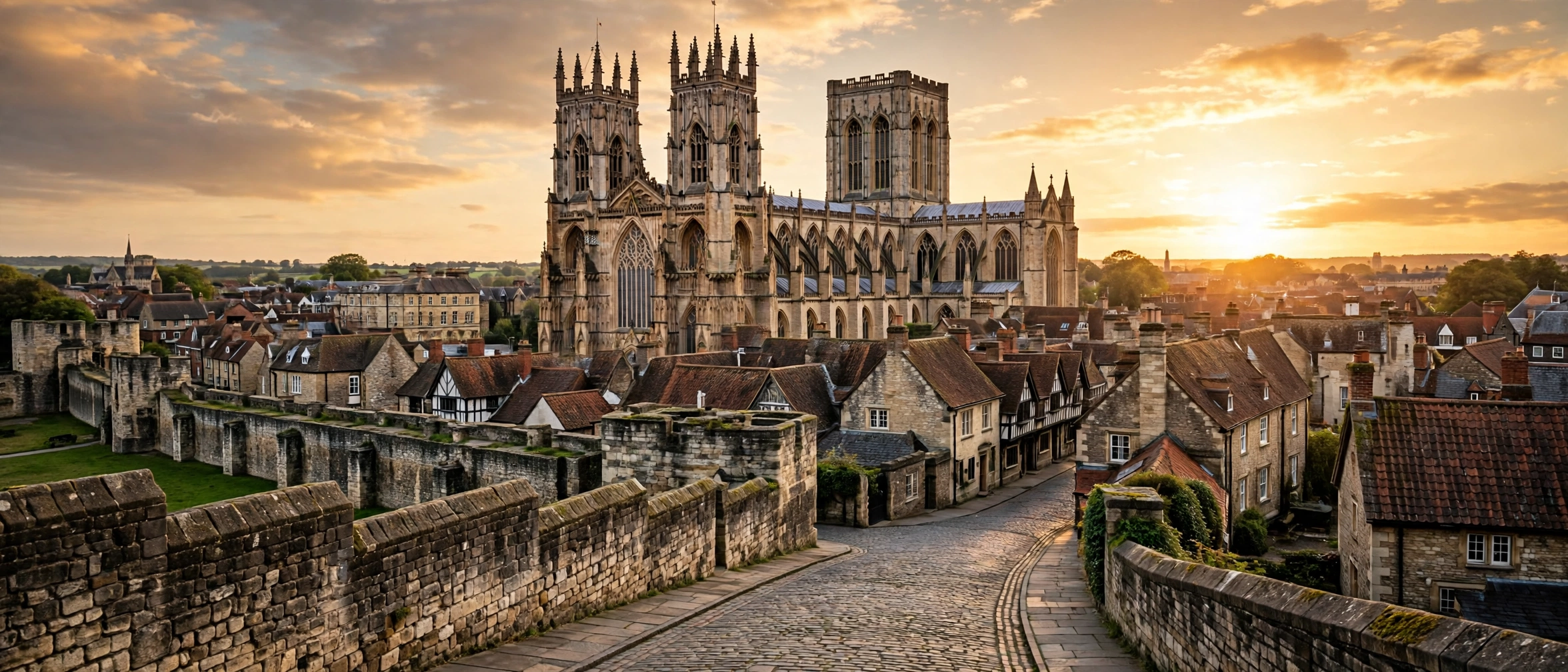
No list of things to do in York can start anywhere other than York Minster, the vast Gothic cathedral that dominates the skyline and has done so for centuries. York Minster is one of the largest cathedrals in Northern Europe and the largest Gothic building in England, built over more than 250 years from the thirteenth century and completed in 1472. Inside you will find an extraordinary collection of medieval stained glass, including the Great East Window, which is one of the largest expanses of medieval glass in the world, along with the Chapter House, the Five Sisters window, and the Undercroft Museum, which tells the story of the 2,000 years of history beneath the cathedral. Visitors are often surprised by the sheer scale of the nave, and by how much time the building deserves: allow at least an hour, and longer if you want to climb the central tower for sweeping views across the city.
Visiting York Minster takes a little planning, because it is a working church as well as a tourist attraction, and services can affect visiting hours, particularly on Sunday afternoons. Tickets are sold for sightseeing visits, and 2026 visitor guides report prices in the region of £13 to £28 depending on the ticket type, with the ticket remaining valid for a full year, although readers should always check the current price on the Minster’s own website before travelling, as prices can change. York residents and students are reported to enter free with identification. The practical advice is simple: book ahead if you can, arrive early in the day, and check the Minster’s website for service times so that your visit is not cut short.
Walk the York City Walls
Walking the York City Walls is one of the best free things to do in York, and it is the easiest way to get your bearings in a city that can feel like a maze at street level. At 3.4 kilometres long, the walls are the longest town walls in England, and the circuit is punctuated by four great medieval gatehouses known as Bars: Bootham Bar, Monk Bar, Walmgate Bar and Micklegate Bar. Walking the full loop takes roughly two hours, and the route is free of charge, with steps up to the wall-walk at the various Bars and other access points around the circuit. The views from the walls are superb, taking in the Minster, the rooftops of the old city, the River Ouse and the green spaces beyond the walls, and the walk gives you a real sense of how York was defended and how its streets were laid out.
If you only have time for one section of the walls, most guides recommend the stretch from Bootham Bar to Monk Bar on the north side of the city, because it gives the classic postcard view of the Minster rising over the battlements. Short sections are occasionally closed for conservation work, so it is worth checking the City of York Council’s information before a special trip. The walls are also a reminder of York’s extraordinary age: the city has been walled since Roman times, and the surviving walls are largely thirteenth and fourteenth century work, built on much older foundations. For many visitors, a walk on the walls becomes the single most memorable part of their trip.
The Shambles and the Medieval Streets
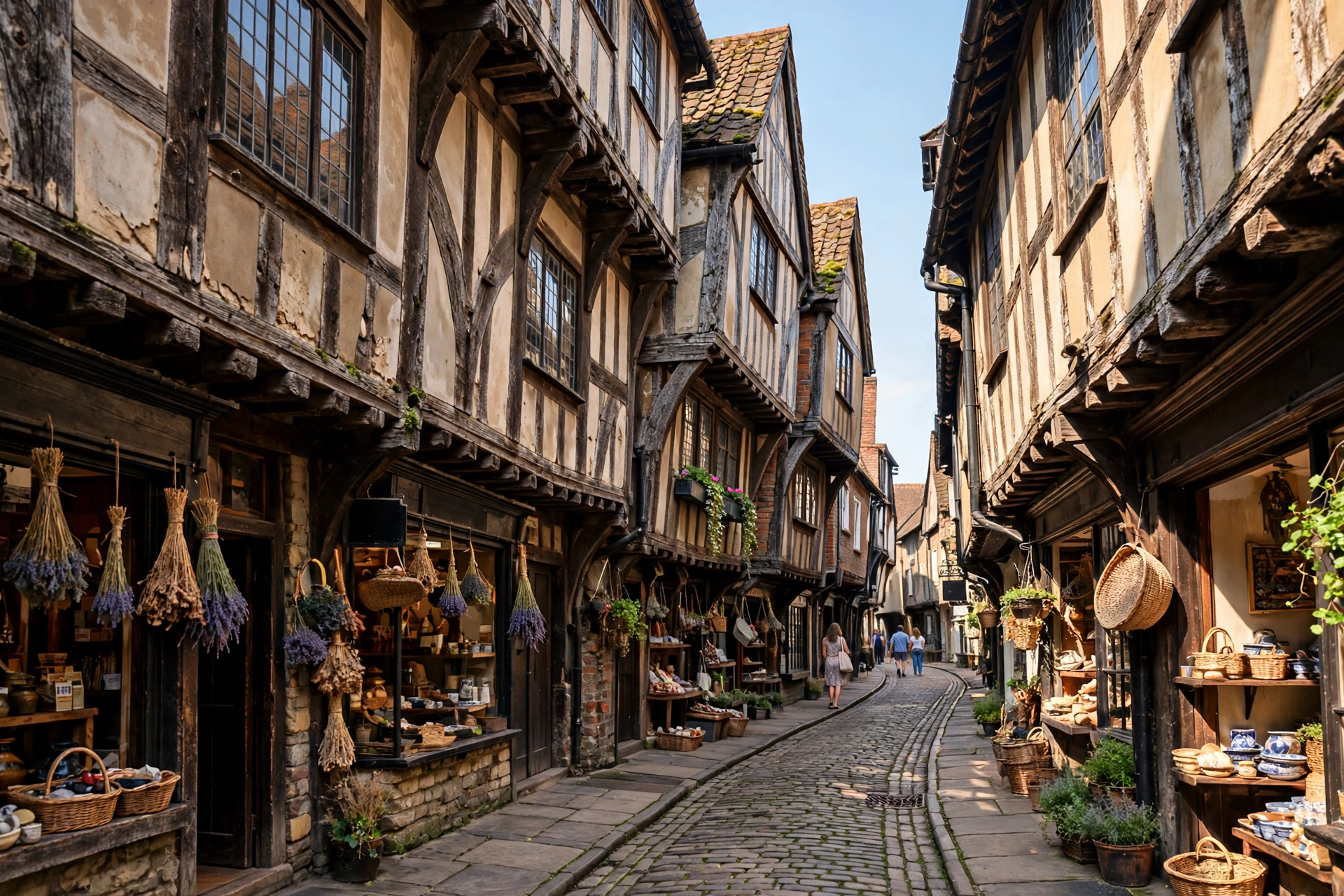
The Shambles is the most famous street in York, and quite possibly the most photographed medieval street in England, and it is an essential stop among the things to do in York. This narrow cobbled lane was once the city’s butchers’ row, and its overhanging timber-framed buildings were designed so that the upper floors leaned in over the street, shading the meat below from the sun. Today the butchers are long gone, replaced by independent shops, tearooms, and wizard-themed boutiques that draw on the street’s obvious resemblance to the fictional Diagon Alley, and the Shambles is at its best early in the morning or in the evening, when the crowds thin out and you can actually see the timber framing and the cobbles. By late morning the street becomes a slow shuffle of visitors, so timing matters.
Beyond the Shambles itself, York rewards anyone who explores its maze of medieval lanes and snickelways, the narrow passages that cut between the main streets and hide some of the city’s quietest corners. Stonegate is one of the prettiest streets in the city, lined with historic buildings and independent shops, and it leads towards the Minster through streets that have barely changed in centuries. Shambles Market, just behind the Shambles, is a lively open-air market selling local food, crafts and gifts, and it is a good place for coffee, a snack or a souvenir. The real pleasure of this part of York is simply wandering without a strict plan.
Jorvik Viking Centre and York’s Viking Past
York’s Viking past is one of the things that makes the city different from every other historic town in England, and the Jorvik Viking Centre is the place where that past comes alive. The centre is built on the site of a genuine Viking-age settlement, excavated in the 1970s and 1980s, and its ride takes visitors through a reconstruction of Viking streets, workshops and houses, complete with the sounds and smells of a tenth-century town. The artefacts on display, from everyday tools and jewellery to the remains of Viking buildings, show a York that was a busy trading port called Jorvik, one of the most important Viking towns in Britain. For families, the Jorvik Viking Centre is often the highlight of a trip, because it turns history into something children can see, hear and almost touch.
The Viking story does not end at the museum door, and visitors who want to understand York properly should remember that the city’s history runs in layers: Roman, Anglo-Saxon, Viking, Norman and medieval, all stacked on top of each other in the same small area. The Yorkshire Museum in Museum Gardens tells the broader story of the city and the county, with Roman and Viking collections alongside natural history and geology, while Clifford’s Tower, the surviving keep of York Castle, stands on its mound at the southern end of the city and offers views across the rooftops and the river. Together these sites give a sense of a city that has been continuously important for nearly 2,000 years, and that is a rare thing in England.
The National Railway Museum and York’s Chocolate Story
The National Railway Museum is one of the finest free museums in Britain, and it belongs on any list of York highlights, even for visitors who think they have no interest in trains. The museum holds more than 100 locomotives and around a million historic objects, telling the story of 300 years of railway history, and its star exhibits include the Mallard, the world’s fastest steam locomotive, the futuristic Japanese Bullet Train, and the opulent royal trains that once carried monarchs across the country. Admission is free, which makes it an easy addition to any itinerary, and it sits just a short walk from the station and the city centre.
York’s other great industrial story is chocolate, and York’s Chocolate Story on King’s Square tells it with tastings, demonstrations and hands-on activities that explain how the city became the home of famous chocolate makers. York was once home to Rowntree’s and Terry’s, and the city’s connection with chocolate runs deep, from the cocoa bean to the finished bar, and the attraction is a good choice for families and for anyone with a sweet tooth. A chocolate-making masterclass is also offered for visitors who want a more immersive experience, although prices for special experiences are higher and should be checked in advance. Between the railway museum and the chocolate story, York offers two very different but equally engaging museums, and both of them show how the city’s history is about industry and everyday life as much as it is about kings and cathedrals.
Museums, Gardens and the River Ouse
Beyond the headline attractions, some of the most enjoyable things to do in York are the quieter ones, and the city has plenty of green space and riverside walks for visitors who want to slow down. Museum Gardens, beside the River Ouse and close to the Yorkshire Museum, is a beautiful botanical garden with the ruins of St Mary’s Abbey, Roman remains and lawns that are perfect for a picnic on a fine day. The gardens are free to enter and are a peaceful contrast to the busy shopping streets, and they are at their best in late spring and summer when the planting is at its fullest. York Castle Museum, near Clifford’s Tower, is another favourite, with its recreated Victorian street, Kirkgate, and its displays on everyday life in York through the centuries, and it is particularly good for families.
The River Ouse itself is central to York’s character, and a river cruise is one of the most relaxing ways to see the city, with boats sailing daily from the city centre and offering commentary on the history of the riverside buildings, bridges and quays. Evening cruises are also available in the season, and they give a different view of the city as the light fades over the water. York is a city that was built around its river, and seeing it from the water helps you understand why the Romans, the Vikings and the Normans all chose this spot.
How to Plan Your Day in York
Planning a day in York is mostly a matter of choosing what to leave out, because the city centre is compact enough to cross on foot in about fifteen minutes, yet dense enough to fill three days. A sensible first day might start early at the Shambles, move on to York Minster in the mid-morning, walk a section of the city walls after lunch, and finish with a museum and a river cruise in the afternoon, while a second day could cover the Jorvik Viking Centre, the National Railway Museum, the Castle Museum and the quieter streets around Goodramgate and Stonegate. The city’s official visitor website, Visit York, is the best place to check opening times, events and seasonal information before you travel, because York’s calendar is full of festivals, markets and special events throughout the year.
Getting to York is easy, because the city sits on the East Coast Main Line with fast trains from London, Edinburgh and Leeds, and York station is only a short walk from the city centre and the walls. Once you arrive, the centre is best explored on foot, and the Park and Ride sites around the city are a simple and affordable way to leave the car outside the centre. The best times to visit are generally May, June and September for pleasant weather and longer days, while December brings the famous Christmas market, which transforms Parliament Street and the Shambles into a festive shopping destination. Whatever time of year you choose, York rewards the visitor who takes time to look up at the timber framing, to duck down a snickelway, and to linger in the places where the city’s long history is still visible in every street.
How Many Days Do You Need in York?
Two days is generally enough to enjoy the main things to do in York at a comfortable pace, covering York Minster, the Shambles, the city walls, the Jorvik Viking Centre and one or two museums, with time for a river cruise and a good meal. A single day is possible if you arrive early and focus on the headline sights, but it will feel rushed, and you will have to choose between the museums. Three days allows a slower pace, with time for the quieter streets, the gardens, and perhaps a day trip into the surrounding countryside. As of 10 November 2026, York remains one of the most popular city-break destinations in England, so booking accommodation and the most popular attractions ahead is always a good idea.
Is York Minster Free to Enter?
York Minster charges for sightseeing visits, and 2026 visitor guides report ticket prices in the region of £13 to £28 depending on the ticket type, with the ticket valid for a full year. York residents and students are reported to enter free with identification, and entry for worship is separate from sightseeing. Because prices and arrangements can change, visitors should always check the Minster’s own website before travelling rather than relying on a single guide, and they should also check service times, because the Minster is a working cathedral and visiting hours are shorter on Sundays around services.
What Is the Best Free Thing to Do in York?
The best free things to do in York are walking the city walls and visiting the National Railway Museum, both of which cost nothing and are among the city’s finest experiences. The walls offer 3.4 kilometres of medieval walkway with superb views across the city, while the railway museum holds more than 100 locomotives and a million historic objects in vast, dramatic halls. Museum Gardens is also free, and wandering the Shambles, Stonegate and the snickelways costs nothing at all, which means that a visitor on a tight budget can still enjoy a great deal of what makes York special.
Is the Shambles Worth Visiting?
The Shambles is absolutely worth visiting, because it is one of the most atmospheric medieval streets in England, with overhanging timber-framed buildings, cobbles and independent shops that cannot be found anywhere else. The key is timing: visit before 9am or after 6pm if you can, when the street is quiet and you can see the architecture properly, because by late morning it becomes very crowded. The street is a public thoroughfare and always open, so there is no ticket or opening time to worry about, and the shops, tearooms and market nearby make it easy to spend an enjoyable hour in the area.
What Is York Best Known For?
York is best known for York Minster, its medieval city walls, the Shambles, its Viking history and its long connection with chocolate, and these are the themes that run through almost every visit to the city. The Minster is the symbol of York, the walls are the longest town walls in England, the Shambles is its most famous street, the Jorvik Viking Centre tells the story of Viking Jorvik, and the city’s chocolate heritage is celebrated at York’s Chocolate Story. Together they explain why York attracts millions of visitors every year and why it remains one of England’s most loved historic cities.
Can You Walk the York City Walls for Free?
Yes, walking the York City Walls is free, and the full circuit is about 3.4 kilometres long, taking roughly two hours to complete. The walkway is reached by steps at the four Bars and other access points, and the most popular section runs from Bootham Bar to Monk Bar, which gives the classic view of York Minster over the battlements. Short sections are occasionally closed for conservation work, so check the City of York Council’s information before a special trip, and wear sensible shoes because the stone surface is uneven in places.
Conclusion
The things to do in York add up to one of the richest city breaks in England, because so much history, beauty and character is packed into such a small and walkable centre. From the soaring stone of York Minster to the leaning timber frames of the Shambles, from the long sweep of the city walls to the Viking streets beneath the Jorvik Viking Centre, York offers a different pleasure at every turn, and it does so with museums, gardens, markets and riverside walks that suit every age and every budget. It is a city that has been important for nearly 2,000 years, and a single visit is usually enough to understand why people keep coming back.
The best advice for anyone planning a trip is to book the essentials ahead, arrive early for the busiest streets, and leave room in the day for the unplanned discoveries that York does so well. Wander down a snickelway, stop for tea in a centuries-old building, and take the time to look up at the rooftops from the city walls, because those are the moments that turn a good visit into a memorable one. As of 10 November 2026, York is as welcoming as ever, and its mix of history, culture and everyday charm makes it a destination that rewards every kind of traveller.
If you enjoy guides that explain the things people search for every day, you may also like our guide to rugby positions, which explains all fifteen roles on the pitch, what each player does, and how the team fits together.