The Tom Cairney DVLA fine has become one of the most widely discussed motoring cases in the UK, not because of reckless behaviour or deliberate wrongdoing, but because of how severely a small administrative lapse was punished. Fulham FC captain Tom Cairney was ordered to pay £7,692 after failing to renew vehicle tax worth just £2.92—a figure that shocked football fans and motorists alike.
At first glance, the numbers appear absurd. Yet when examined closely, this case reveals how UK vehicle taxation law, automated DVLA enforcement, and income-based court fines operate together. More importantly, it highlights how easily ordinary drivers can face escalating penalties when deadlines are missed.
This article explains what actually happened, why the fine reached such a high level, and what UK drivers should learn to avoid similar consequences.
Who Is Tom Cairney and Why the Case Matters
Tom Cairney is widely regarded as one of Fulham’s most dependable and composed figures. Since joining the club in 2015, he has served as captain, led the team through promotions and relegations, and built a reputation for professionalism both on and off the pitch.
That background is precisely why the Tom Cairney DVLA fine attracted so much attention. This was not a case involving reckless driving, unpaid insurance, or intentional avoidance. It was a simple failure to renew vehicle tax—something many drivers rely on reminders for and occasionally overlook.
The public reaction was not driven by celebrity gossip but by a shared sense of unease: if this can happen to someone organised and well-advised, it can happen to anyone.
How the DVLA Fine Began
The issue started when Cairney’s Audi vehicle tax expired in September 2024. For just over one month, the vehicle remained unlicensed. During that period, the outstanding tax amounted to £2.92.
The Driver and Vehicle Licensing Agency (DVLA) identified the vehicle as untaxed through its routine monitoring systems. Because the issue was not resolved within the required timeframe, the case progressed beyond a standard late payment penalty and entered the criminal justice system.
Cairney submitted a guilty plea, explaining that he had forgotten to renew the tax and confirming that the vehicle was now fully compliant. While the explanation was accepted as honest, UK vehicle tax law operates on strict liability, meaning intent is largely irrelevant once an offence is established.
Why the Fine Reached £7,692
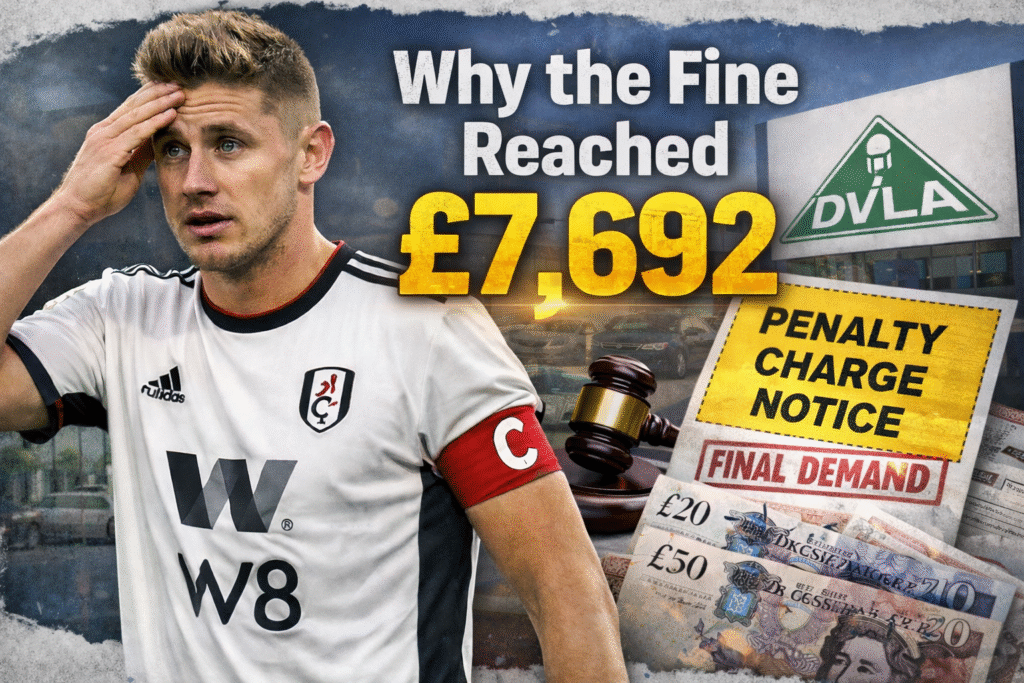
The most common question surrounding the Tom Cairney DVLA fine is why the amount was so high when the unpaid tax was negligible.
The answer lies in income-based sentencing. When DVLA cases are dealt with in court, magistrates may calculate fines as a percentage of the defendant’s weekly earnings. This approach is designed to ensure that penalties act as a deterrent regardless of income level.
For high earners, this can result in fines that appear disproportionate to the offence itself. In Cairney’s case, the court applied standard sentencing guidelines, added court costs and a victim surcharge, and reached a total of £7,692.
Crucially, the fine was not imposed because Cairney is a footballer or public figure. The same calculation would apply to any individual with a comparable income.
The Role of the Single Justice Procedure
The case was handled under the Single Justice Procedure (SJP), a system used in England and Wales to process minor criminal offences efficiently.
Under the SJP:
- Cases are decided based on written evidence
- Defendants do not attend a public hearing
- Magistrates make decisions privately
This system allows courts to deal with large volumes of cases quickly, particularly DVLA and motoring offences. However, it also means defendants may not fully appreciate the financial consequences of a guilty plea—especially when income-based fines are involved.
Once processed under the SJP, the outcome is legally binding unless successfully challenged.
How DVLA Enforcement Works in Practice

Many drivers assume DVLA action only occurs if they are stopped by police. In reality, enforcement is largely automated.
The DVLA uses:
- Automatic Number Plate Recognition (ANPR)
- Cross-referencing of tax, MOT, and insurance databases
- Continuous digital monitoring of registered vehicles
If a vehicle is untaxed and not declared off the road through a Statutory Off Road Notification (SORN), it can be flagged without ever being physically stopped. This is why short lapses can still lead to prosecution.
Once a vehicle is identified, the process escalates quickly if no corrective action is taken.
Can This Happen to Ordinary Drivers?
Yes—the process applies to everyone.
While most drivers would not face a four-figure fine for a short lapse, the enforcement pathway is identical. Typically, DVLA action begins with:
- A late licensing penalty
- Fixed penalties if ignored
- Court proceedings for continued non-compliance
For drivers on average incomes, fines are lower, but criminal convictions, court costs, and vehicle enforcement actions can still apply.
The key difference is scale, not principle.
Why Forgetting Is Not a Legal Defence
UK vehicle tax law is based on strict responsibility. The registered keeper is legally required to ensure a vehicle is taxed or declared off the road at all times.
This means:
- Missing reminders does not excuse non-payment
- Administrative errors still count as offences
- Good faith does not prevent prosecution
In the Tom Cairney DVLA fine case, the court accepted the explanation but still applied the law as written.
Lessons UK Drivers Should Take From This Case
This case offers several important takeaways for motorists:
First, never rely solely on reminder letters or emails. Postal delays, address changes, and email filtering can all cause reminders to be missed.
Second, use direct debit for vehicle tax whenever possible. This significantly reduces the risk of forgetting renewal dates.
Third, check your vehicle’s tax status online, especially if you own multiple vehicles or change personal details.
Finally, if you stop using a vehicle, submit a SORN immediately. Leaving a vehicle untaxed without declaration is one of the fastest ways to trigger DVLA enforcement.
Public Reaction and Broader Implications
The public response to the Tom Cairney DVLA fine was divided. Many sympathised with the human error involved, while others viewed the fine as evidence that the law applies equally, regardless of income or status.
Beyond debate, the case highlighted how modern enforcement systems prioritise efficiency over discretion. Automation leaves little room for explanation once deadlines pass.
For professionals and high-profile individuals, this also underscores how administrative oversights can quickly become public matters.
Conclusion: A Small Error With Serious Consequences
The Tom Cairney DVLA fine is not a story about privilege or punishment—it is a case study in how modern regulation works. A £2.92 oversight became a £7,692 penalty because of strict liability law, automated detection, and income-based sentencing.
For UK drivers, the message is clear: vehicle tax compliance is not optional, and small delays can escalate rapidly. Staying organised, setting reminders, and acting quickly are the only reliable safeguards.
Frequently Asked Questions
Why was Tom Cairney fined so much for a small amount of tax?
Because the fine was calculated based on income once the case reached court, not on the unpaid tax itself.
Was the fine imposed by the DVLA or the court?
The DVLA prosecuted the case, but the fine was imposed by a magistrate under sentencing guidelines.
Could an average driver face a criminal conviction for unpaid car tax?
Yes, if the matter escalates to court after penalties are ignored.
What vehicle was involved in the case?
Court records identified the vehicle as an Audi.
How can drivers avoid DVLA fines?
Renew tax on time, use direct debit, set reminders, and declare SORN for unused vehicles.
You may also read: Why Riverbank Collapses Happen in This Area