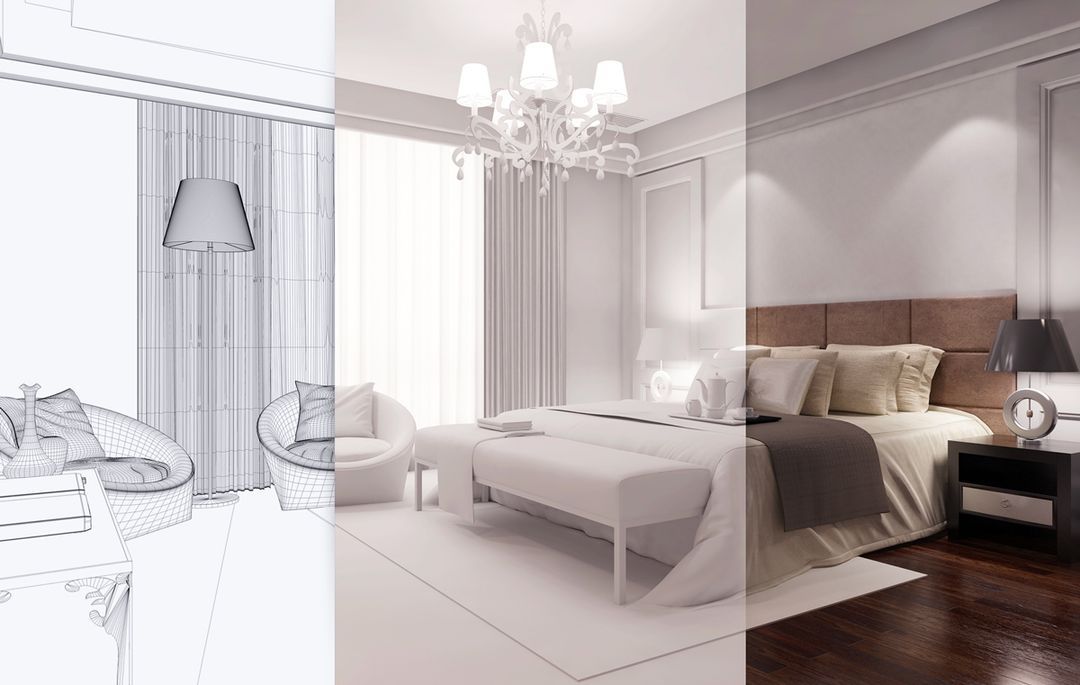
Most furniture companies still shoot everything. They book studios, hire photographers, coordinate logistics for pieces that weigh 400 pounds. Then someone decides the fabric should be different, or the angle’s wrong, or marketing wants to test three colorways before launch. Back to the studio, back to the invoice.
A 3d rendering company builds everything digitally. Same sofa, same lighting, same room – but you change the upholstery in twenty minutes instead of scheduling another shoot. The shift isn’t just about convenience. It’s about what becomes possible when you can iterate without a crew.
How rendering changes product development timelines
Traditional photography happens late. You need the physical product, which means manufacturing’s already committed to materials, dimensions, construction methods. If something looks wrong in photos, you’re fixing it for the next production run.
3D flips this. Furniture brands now create marketing assets six months before manufacturing. They test consumer response, run A/B tests on retail sites, get buyer feedback – all with products that don’t exist yet. According to McKinsey’s 2023 manufacturing report, 58% of furniture manufacturers now produce marketing content before finalizing product specifications.
One brand tested five chair designs across their email list. The winner got 34% more clicks than second place. They killed the other four before cutting a single piece of wood. That’s a different business model than “make it, shoot it, hope it sells.”
In traditional workflows, we’d spend $8,000 on a photoshoot and discover in post-production that the angle didn’t work. With 3D, we test ten angles before committing to anything.
The technical workflow matters here. A rendering company builds a 3D model once – usually takes 6-12 hours for a complex piece. After that, every variation is cheap. Different wood finish? Fifteen minutes. New cushion fabric? Ten minutes. Move the camera? Instant. The marginal cost drops to almost nothing, which changes how brands think about testing.
Some companies now create 50-60 product images before manufacturing begins. Interior designers get early access to specification sheets with full visualization. Retail buyers see the complete line in context – styled rooms, lifestyle shots, detail close-ups. Photography can’t match that speed because photography needs the thing to exist.
Why technical accuracy matters more than you’d think
Cheap rendering looks like cheap rendering. The lighting’s flat, materials look plastic, proportions feel wrong. Professional work requires someone who understands how light behaves in physical space.
Subsurface scattering – light penetrates the surface, bounces around inside the material, exits somewhere else. You see it in wax, marble, human skin, certain types of wood. Get it wrong and oak looks like painted MDF. A good rendering company spends hours on material properties alone. Not because clients specifically request accurate subsurface scattering, but because the final image feels wrong without it.
Furniture designer spent six hours adjusting one camera angle – moved it 2.3 degrees, everyone signed off. $1,200 for two point three degrees. But that angle made the sectional look properly scaled instead of like a toy.
Here’s the thing – human eyes are ridiculously good at detecting fake materials. We’ve spent our entire lives looking at wood, fabric, metal, leather. Show someone a rendering where the velvet doesn’t catch light correctly, they won’t consciously know what’s wrong, but they’ll feel it. The product looks cheaper than it should.
We did blind testing with consumers – mixed professional renders with product photography. The high-end renders scored higher for perceived quality than actual photos of the same furniture.
Reflection matters too. Chrome reflects sharp, brushed metal diffuses the reflection, powder-coated steel sits somewhere between. A bathroom faucet has maybe twelve different metal surfaces, each reflecting light differently based on the finish. Rendering companies maintain material libraries with hundreds of pre-built surfaces, each calibrated to match real-world behavior.
The software matters less than people think. Corona, V-Ray, Octane – they’re all capable of photorealistic output. The difference is in who’s setting up the materials and lighting. A Deloitte study from 2024 found that 73% of furniture retailers couldn’t distinguish professional 3D renders from photography in product page contexts.
Cost breakdown and when rendering makes sense
Photography: $3,500 per day on average for furniture shoots in major markets. That gets you maybe 20 product shots if the photographer’s having a good day. Add studio rental, equipment, assistants, styling, post-production. Then add reshoot costs when something needs changes.
3D rendering: $200-800 per image for furniture, depending on complexity. Sectional sofas cost more than side tables. Intricate carved details cost more than clean modern lines. But revisions are cheap – usually $50-150 to change materials, colors, or minor positioning.
But cost isn’t why companies switch. It’s timelines.
Real scenario: Furniture brand launching spring collection in February. Photography requires finished samples by November for holiday marketing prep. That’s a 15-month product development cycle. Same brand using 3D rendering can work from CAD files or prototypes, start creating images in August, launch in February. Nine months instead of fifteen.
Some use cases make more sense than others:
- High variation products: Sofas with 40 fabric options and six leg finishes need 240 combinations. Photographing that costs $84,000. Rendering costs $12,000-18,000 depending on the company.
- Large or heavy items: Moving a 300-pound sectional costs more than building it digitally. Outdoor furniture collections especially – no one wants to coordinate weather and lighting conditions.
- Pre-production marketing: If you need imagery before manufacturing, rendering is the only option that doesn’t involve expensive prototypes.
- Rapid iteration: Testing design variations, color options, or styling approaches becomes economically viable.
The economics shift when you need lifestyle imagery. A rendering company can place your furniture in any interior space imaginable – mid-century modern loft, coastal cottage, minimalist apartment. Photography requires location scouting, rental fees, transportation, setup time. One rendering company quoted $4,500 for a luxury sectional in five different styled rooms. Equivalent photography would run $25,000-35,000.
Traditional photography still wins for certain applications. When you need that imperfect, lived-in quality – rumpled cushions, natural wear, the slight sag of real weight on springs. Some brands shoot hero images with photography and handle variations with rendering. Makes sense when brand identity depends on that tangible, authentic feel.
We ran the numbers – between reshoots, variation shots, and rush fees, we were spending $180,000 annually on product photography. Moved 70% to rendering, now spend $95,000 total with better coverage.
The technical infrastructure matters. Professional rendering companies run render farms – clusters of computers processing images simultaneously. A complex furniture scene might take 8 hours on a single machine, 45 minutes on a farm. That speed difference determines whether two-day turnarounds are possible.
Client review cycles get faster too. Instead of “we’ll schedule another shoot in three weeks,” it’s “we’ll have revised images tomorrow morning.” Marketing teams test concepts in real time. Designers iterate based on immediate feedback. The whole product development cycle compresses.
Some furniture brands now maintain hybrid workflows. Photography for flagship pieces and brand storytelling. Rendering for SKU expansion, color variations, and e-commerce. The combination lets them move fast on commercial needs while preserving the authentic quality where it matters most for brand positioning.