Introduction
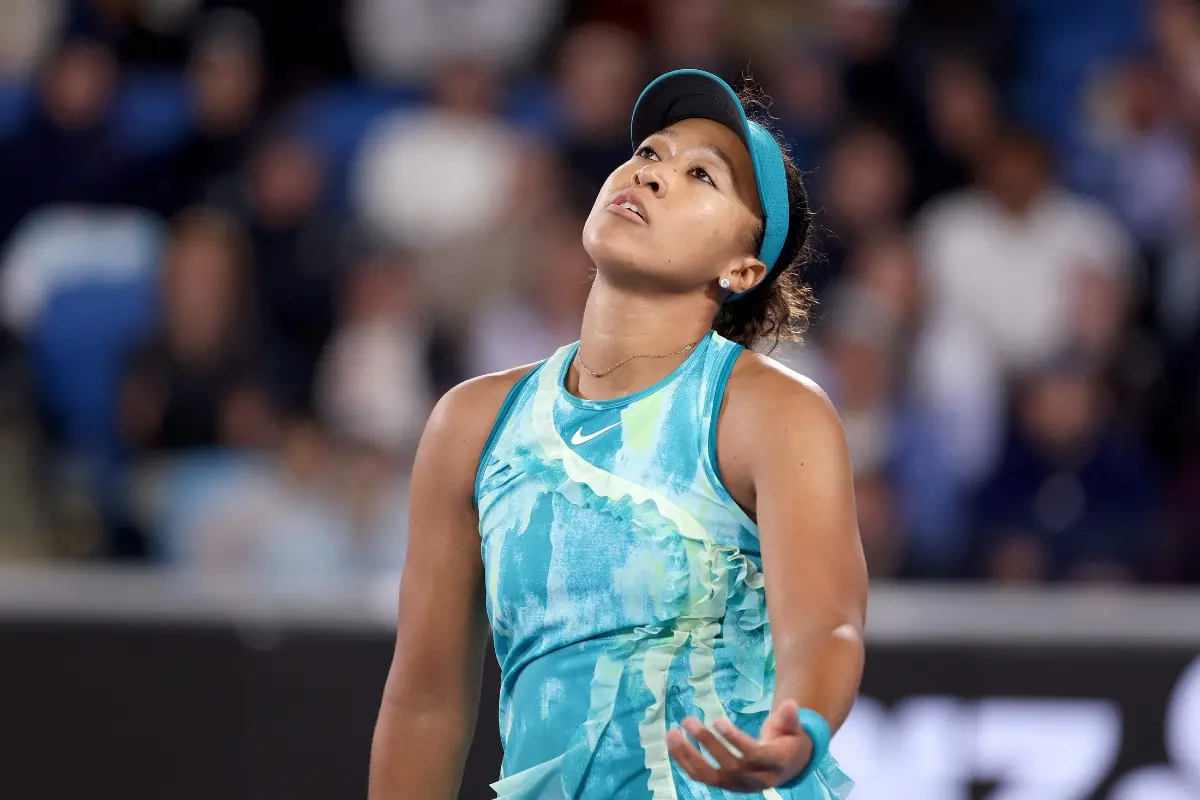
Naomi Osaka remains one of the most compelling figures in women’s tennis because her story carries more than rankings, scorelines, and tournament brackets. She is a four-time Grand Slam singles champion, a former world No. 1, and one of the most recognisable athletes of her generation. As of April 20, 2026, the WTA rankings list her at No. 15, while her official player page shows a 2026 singles record of 5 wins and 3 losses.
That is exactly why this article matters to both tennis fans and casual readers. On April 23, 2026, she is scheduled to face Camila Osorio at the Madrid Open, with the official order of play listing their match not before 5:00 p.m. local time on Arantxa Sanchez Stadium. For readers searching for timely information, current form, career context, and what might happen next, this moment offers a strong snapshot of where her season stands and why the interest around her remains intense.
Why Naomi Osaka’s Next Match Has Drawn So Much Attention
The upcoming Madrid meeting with Camila Osorio has attracted attention because it brings together immediate relevance and unfinished tension. Their latest official WTA-level meeting came at Indian Wells in March 2026, where Osaka defeated Osorio 6-1, 3-6, 6-1 to set up a clash with Aryna Sabalenka. That result gave the Japanese star a timely win against a player who had already proven she could trouble her, and it added extra intrigue to this new encounter on a completely different surface.
The match also matters because it comes at a delicate point in her season. After a disappointing first-round loss in Miami to Talia Gibson, she openly questioned how long she wanted to continue competing if early exits became the norm, while also noting the challenge of balancing elite tennis with motherhood. Madrid, therefore, is not just another tournament stop. It feels like an opportunity to reset the narrative, reassert competitive purpose, and remind the tour that one difficult stretch does not erase elite pedigree.
Madrid Open 2026 Schedule and What the Draw Means
The Madrid Open sits at a crucial point in the spring calendar because it is one of the biggest clay-court events before Roland-Garros. The official WTA calendar places Madrid in late April, followed by Rome in early May and then Roland-Garros later in May. That sequence matters because strong performances during this stretch can reshape confidence, seeding, and expectations before the next Grand Slam. For any player trying to build rhythm on clay, Madrid is not a side note. It is a major checkpoint.
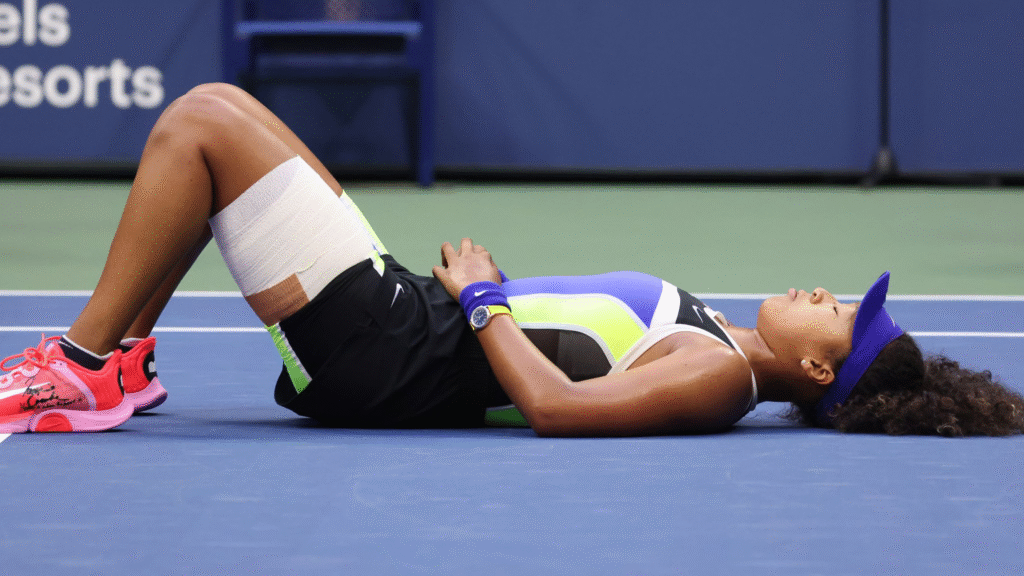
For Osaka specifically, the official order of play shows a featured court slot against Osorio, with the match scheduled not before 5:00 p.m. in Madrid. She is listed as the No. 14 seed in the event, even though the April 20 WTA singles rankings place her at No. 15. That difference reflects how tournament seeding and weekly ranking publication can sometimes sit slightly apart in presentation, but the message is still the same: she enters Madrid as a notable name expected to matter in the draw.
Recent Form Before Madrid
The official WTA player page shows a 5-3 win-loss record for the 2026 season entering this stage, which suggests a year that has featured both promise and interruption. At the Australian Open, she beat Sorana Cirstea in three sets, and WTA coverage of that match noted that she struck 38 winners while staying composed through a tense finish. Those are not the numbers of a player lacking quality. They are the numbers of someone whose ceiling still looks dangerous when timing and confidence align.
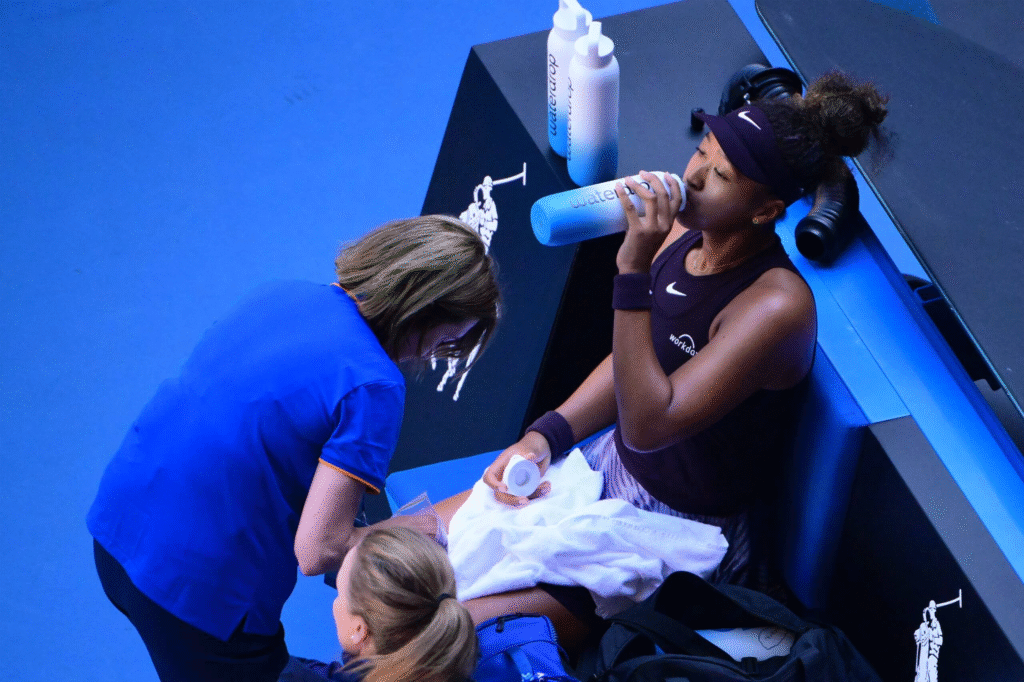
At the same time, the season has not unfolded smoothly. WTA reporting confirmed that she withdrew from the 2026 Australian Open because of a left abdominal injury, and the Miami loss that followed came with unusually blunt comments about doubt and motivation. Taken together, those moments explain why her current form feels more layered than a simple win-loss record. The level can still flash brilliantly, but physical continuity and emotional steadiness remain central to how far this season can go.
Career Achievements That Continue to Shape Expectations
Any current discussion of Osaka starts with what she has already achieved. Her official WTA Grand Slam record lists four major singles titles, with championships at the US Open in 2018 and 2020 and the Australian Open in 2019 and 2021. Her WTA profile also records seven career singles titles overall, while Olympics coverage highlights her 2018 US Open breakthrough as the first Grand Slam singles title won by a Japanese player. That kind of résumé permanently changes how the tennis world judges future results.
Those achievements also explain why even a moderate run by her can feel larger than a similar run by many other players. Champions who have won the sport’s biggest titles are rarely viewed as ordinary top-20 competitors, especially when their best tennis has been good enough to dominate hard-court majors. Readers searching for updates are not merely tracking a popular player. They are tracking a former standard-setter whose past has been powerful enough to keep the future open, even when the present looks uneven.
Playing Style and Why It Still Wins Big Matches
The core of her game remains built around first-strike tennis. When Osaka is operating cleanly, she serves with authority, takes the ball early, and drives opponents backward with flat, heavy baseline hitting. That pattern was visible again at the Australian Open against Cirstea, where WTA coverage highlighted 38 winners and a forehand that repeatedly restored order after tense patches. Her best tennis is not cautious. It is assertive, direct, and designed to seize control before rallies become comfortable for the opponent.
This style explains both the appeal and the volatility of her matches. On quicker hard courts, those patterns have delivered Grand Slam titles. On slower clay, the same aggression can still be damaging, but it usually requires better point construction, more patience, and improved movement through longer exchanges. That is why her progress on clay remains so interesting. The weapons are obvious, yet the surface asks deeper tactical questions, making every strong performance feel like evidence of a broader evolution rather than just a single good day.
What Naomi Osaka’s Ranking Says Right Now
The current rankings tell an important story about recovery, relevance, and opportunity. The WTA singles list published for April 20, 2026 places her at No. 15 with 2,324 points, and the official rankings page also shows her in that position. This matters because a player ranked inside the top 16 enters major events with better protection in the draw than someone rebuilding outside the top 30 or 40. It means the comeback is no longer theoretical. It is visible in the mathematics of the sport.
At the same time, the ranking does not yet suggest full restoration to the level she once held. A No. 15 ranking confirms that she is dangerous, seeded, and increasingly relevant, but it also signals that sustained week-to-week dominance has not fully returned. The gap between a top-15 player and a title-favourite at the biggest events is often defined by consistency, health, and confidence under repeated pressure. Her current position is therefore encouraging, but it still feels like the middle chapter of the comeback rather than the final proof.
The Comeback Story After Motherhood and Injury Disruption
Part of what keeps public interest so high is the human scale of the comeback. WTA and Olympics coverage note that she gave birth to her daughter, Shai, in July 2023 and returned to competition in 2024. WTA reporting in 2025 described the Saint-Malo WTA 125 title as her first title as a mother, and in early 2026 she spoke about how parenthood had changed her mindset, making her less likely to define her entire identity through wins and losses.
That shift matters because it changes the emotional frame around results. Earlier in her career, defeats sometimes seemed to carry an unusually heavy psychological weight. The newer version of Osaka appears to be trying to balance ambition with perspective, even if the process is still messy in public. The result is a comeback that feels more mature but also more complex. She is not simply trying to recover ranking points. She is learning how to compete at the highest level while carrying a different life, a different body, and a different set of priorities.
The Clay-Court Puzzle
Clay has always been the surface that most invites debate about her long-term ceiling. Her WTA Grand Slam record shows that Roland-Garros has never produced a run beyond the third round, which contrasts sharply with the title-winning record she owns on hard courts. That fact does not mean she cannot succeed on clay, but it does show why every spring becomes a fresh conversation about adaptation, patience, and whether the surface can ever become a true stage for her best tennis.
Yet the more encouraging part of the story is that there are now real signs of progress. WTA coverage from 2025 reported that she won the Saint-Malo 125 title, the first clay title of her career, and later described her as extending an eight-match winning streak on clay in Rome. Those results do not automatically turn her into a clay specialist, but they do prove that improvement on the surface is more than a talking point. Madrid therefore feels like a genuine test of growth, not just a holding pattern before the next hard-court swing.
Life Beyond the Baseline
Her importance cannot be explained by tennis alone. Olympics coverage describes her as a social justice activist as well as a Slam winner and mother, while the National Women’s History Museum notes that her openness about mental health inspired many others to speak publicly about their own struggles. In a sports culture that often celebrates control and silence, her willingness to show vulnerability changed the terms of the conversation. That legacy extends far beyond any single tournament result.
She has also developed a public identity that blends sport, culture, and style in a way few athletes manage naturally. The Guardian reported that her jellyfish-inspired outfit at the 2026 Australian Open drew attention far beyond tennis, while earlier WTA coverage documented charitable work with UNICEF through a face-mask project created with her sister. These details matter because they help explain why audience interest stays high even when she is not in a final. She is followed not just as a player, but as a modern public figure.
Why Naomi Osaka Still Matters Beyond Tennis Headlines
There are champions with richer statistical résumés and there are younger players with more week-to-week momentum, yet Osaka continues to command a different kind of attention. Part of that comes from history: she has been world No. 1, has won four majors, and still carries the aura of a player whose best level can distort a tournament. Part of it comes from narrative: every match feels connected to broader questions about return, identity, confidence, and whether the next great chapter is still ahead.
For UK readers, that mix is especially useful from an editorial point of view. A strong tennis story often performs well when it combines live relevance with evergreen interest, and Osaka offers both. Readers may arrive because they want the latest on Madrid, but they stay because the subject expands into achievement, resilience, style, motherhood, and the unfinished argument about her future ceiling. That is why articles about her tend to work beyond the result itself. She is news when she wins, news when she loses, and news when she simply reappears in a meaningful draw.
What Could Define the Rest of 2026
The rest of the season will likely be defined by three connected factors: health, surface adaptation, and emotional momentum. The official WTA calendar shows that Madrid leads into Rome and then Roland-Garros, before the tour shifts to grass and later to the North American hard-court season. If she stays fit through that sequence, she will have multiple chances to build both ranking points and narrative force. A stable run through the calendar could matter as much as one isolated deep tournament finish.
There is also a strong reason to believe the most natural opportunities may still come later in the year. Her major success has historically been concentrated on hard courts, and even her 2025 resurgence included a run to the US Open semi-finals, according to The Guardian. That does not diminish the value of the clay season. Instead, it suggests that spring can serve as a foundation for a potentially more explosive summer and autumn. If she leaves Madrid with confidence rather than frustration, the rest of 2026 could look much more open than her uneven early months might imply.
Conclusion
Naomi Osaka enters this stage of the season with a profile that is as fascinating as ever: ranked No. 15 in the world, seeded in Madrid, scheduled to face Camila Osorio on April 23, 2026, and still carrying the championship history that makes every run feel meaningful. The official facts tell us that she remains relevant. The broader context tells us that relevance alone is not the real story. What matters is the possibility that one strong week can still shift the entire tone of her year.
For SEO readers, fans, and writers alike, that is what makes this topic so durable. This is a player with proven greatness, public complexity, and a season that still feels open to reinvention. Madrid will not answer every question, but it can offer a fresh clue. If the serve lands cleanly, the forehand finds its depth, and the body holds up through the clay grind, then the conversation around her may quickly move from cautious update to serious threat.
FAQs
Who is Naomi Osaka playing next in Madrid Open 2026?
She is scheduled to play Camila Osorio at the Madrid Open on April 23, 2026. The official order of play lists the match on Arantxa Sanchez Stadium and says it will begin not before 5:00 p.m. local time in Madrid. That timing makes it one of the day’s notable WTA matches and gives the contest extra attention because it is a rematch of their Indian Wells meeting earlier in 2026.
What is her current WTA ranking?
The official WTA singles rankings dated April 20, 2026 place her at world No. 15 with 2,324 points. That ranking is important because it shows that her return is not just symbolic. She is back inside the group of players who receive meaningful seeding benefits at major events, which gives her a stronger platform to build momentum over the next stretch of the season.
How has she performed so far in 2026?
Her official WTA player page lists a 5-3 singles record for the year at this stage, showing a season that has included quality wins but also interruptions. She beat Sorana Cirstea at the Australian Open, later faced physical issues, and then suffered an early loss in Miami. That combination suggests a campaign with flashes of strong level, though not yet the consistency needed to call it a fully settled return.
How many Grand Slam titles has she won?
She has won four Grand Slam singles titles. According to the official WTA record page, those titles came at the US Open in 2018 and 2020 and the Australian Open in 2019 and 2021. Those results remain the foundation of her legacy and explain why she is still discussed as a major threat whenever form, health, and confidence begin to align.
Why is the Madrid Open important for her season?
Madrid is a major clay-court event that sits directly before Rome and Roland-Garros on the official WTA calendar, so it serves as a powerful checkpoint in the European spring. For her, the event matters even more because clay has historically been the surface that raises the most questions about adaptation. A strong run there would improve both ranking prospects and belief heading into the rest of the clay season.
Is she a strong clay-court player?
Historically, clay has not been her most successful major surface, with the WTA record page listing the third round as her best finish at Roland-Garros. However, the picture has improved recently. She won the Saint-Malo WTA 125 title in 2025, which was her first title on clay, and WTA coverage later highlighted an eight-match clay winning streak during that spring. So the short answer is that she is improving on clay, even if it is not yet her signature surface.
What makes her such a big global name beyond tennis?
Her influence reaches beyond the court because she combines elite success with cultural and social impact. Olympics coverage describes her as a social justice activist, and the National Women’s History Museum points to her mental health advocacy as a source of inspiration for many athletes and fans. That combination has made her important not only as a champion, but also as a public figure whose voice carries weight well outside match play.
What should fans watch for in the rest of 2026?
Fans should watch for whether she can stay healthy through the clay season, protect or improve her seeding, and then carry confidence into the surfaces that have historically suited her best. The official WTA calendar shows a clear path from Madrid to Rome, Roland-Garros, the grass swing, and eventually the North American hard-court run. If she builds continuity during that stretch, the second half of the year could become much more significant than the stop-start beginning suggested.
You may also read: Arenaer og vertsbyer