Introduction
If your garden regularly turns into a football pitch, cricket practice area, or family play zone, you already know how quickly fun can become frustrating. Balls fly over fences, bounce into flower beds, strike sheds, or land in a neighbour’s garden. That is why many UK homeowners are now investing in smarter outdoor safety solutions that protect both property and peace of mind.
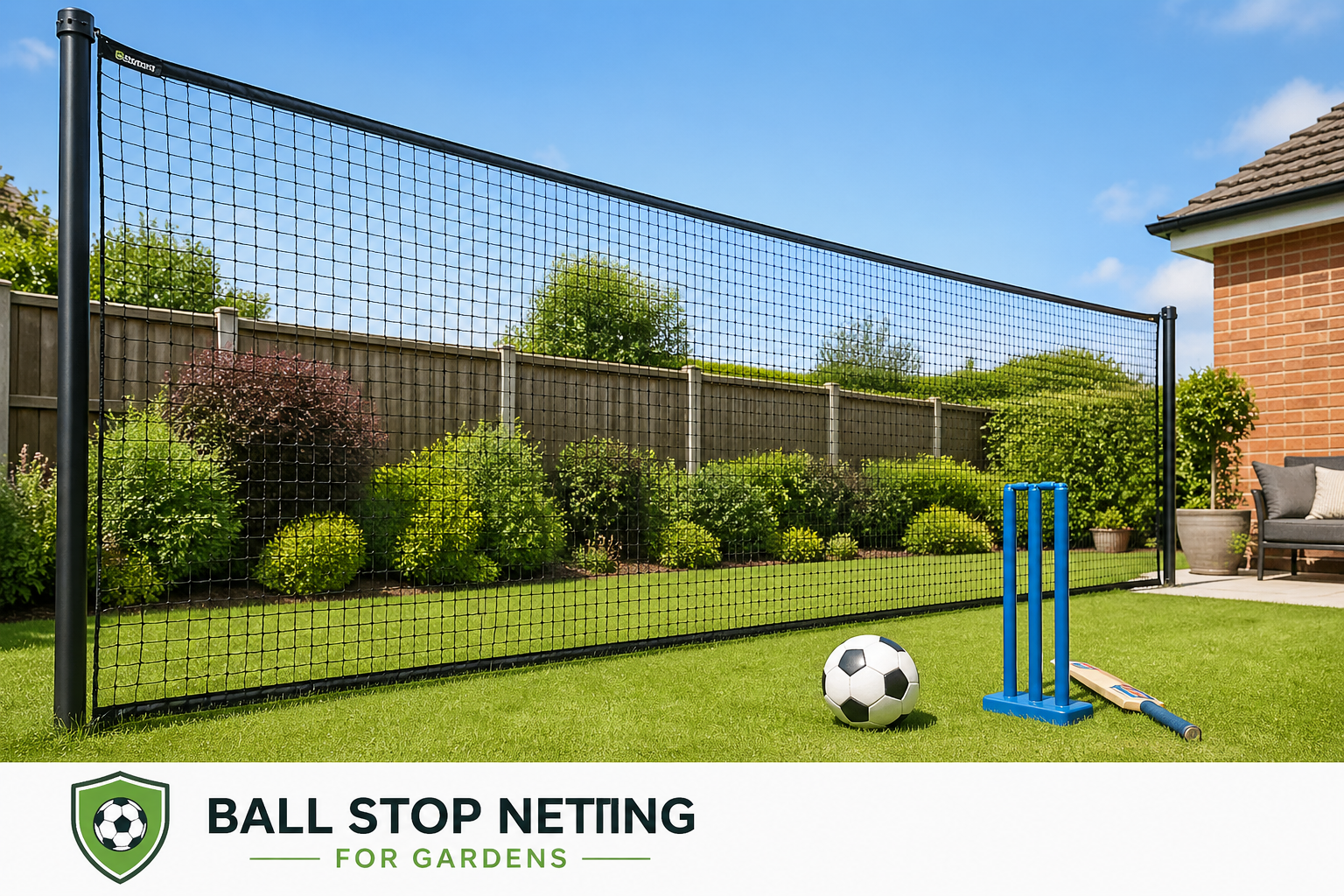
Ball stop netting for gardens is one of the most effective ways to control play without removing the fun. It creates a reliable barrier that catches or slows the ball before it causes damage or disappears over the hedge. Whether you have a compact city garden or a larger family lawn, the right setup can transform the space into a safer and more useful area all year round.
Why Ball Stop Netting for Gardens Is Worth Buying
The main reason people choose ball stop netting for gardens is simple: protection. A single misplaced shot can crack glass, damage fences, flatten plants, or dent outdoor furniture. Repeated impacts can also wear down wooden panels and paintwork over time. Installing a quality net helps reduce those risks and can save money on repairs that would otherwise be completely avoidable.
There is also the everyday convenience factor. Instead of stopping every few minutes to retrieve a ball from next door or from behind the shed, play continues smoothly. Children gain confidence when practising, adults can join in without worry, and neighbours are less likely to be disturbed. It is one of those purchases that improves family life more than expected.
Types of Ball Stop Netting for Gardens
Freestanding systems are a popular option for many households because they are flexible and easy to move. They usually come with posts or frames that can be repositioned depending on where you want to play. This makes them ideal for renters, seasonal use, or families who want to store the net away when guests visit or during winter months.
Permanent systems are better suited to regular use and larger gardens. These can be attached to fences, walls, or fixed posts for a stronger and tidier finish. If children play football every week or you need reliable coverage in one area, a permanent setup often offers better durability. Some homeowners also choose retractable styles that combine strength with a cleaner appearance when not in use.
Choosing the Right Size and Height
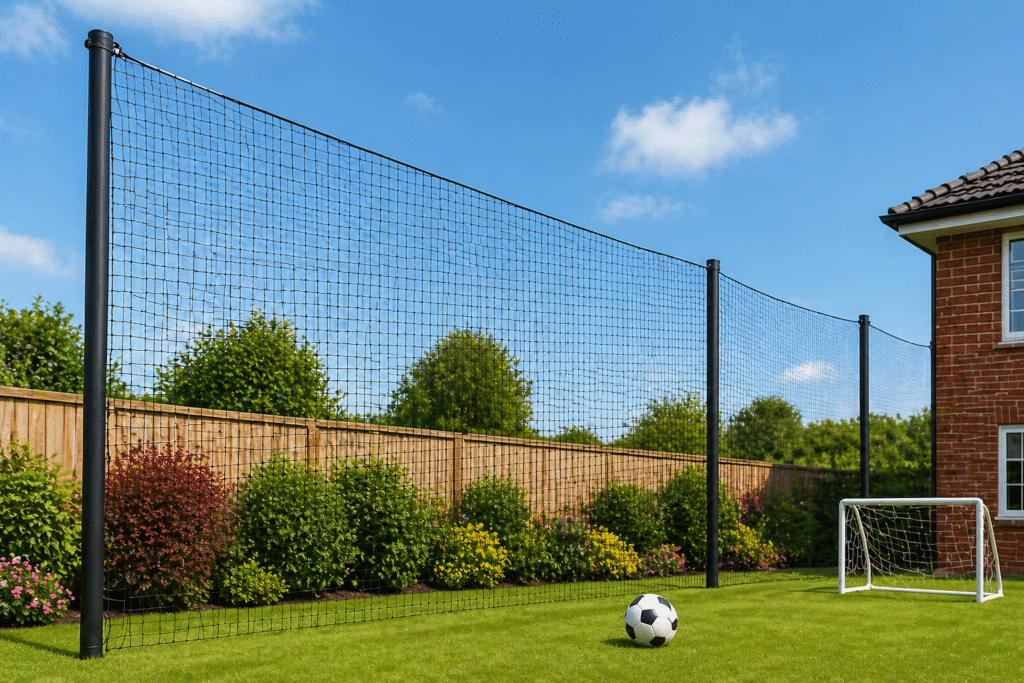
Choosing the correct dimensions is one of the most important steps. A net that is too narrow leaves open spaces where balls can escape, while one that is too low may be useless for high shots. Start by measuring the area where the ball usually travels, not just the area where children stand. This gives a more realistic idea of the coverage required.
For light family games, a moderate-height barrier may be enough. If the garden is used for football shooting practice or cricket training, extra height becomes essential. Wider gardens may also benefit from side protection rather than only one backstop panel. Ball stop netting for gardens performs best when it is chosen for real habits and not guessed from product photos alone.
Best Materials for Outdoor Use in the UK
British weather can be unpredictable, so outdoor netting must handle rain, damp air, wind, and changing temperatures. HDPE is one of the best materials because it is lightweight, durable, and resistant to moisture. Unlike cheaper options, it does not easily absorb water or weaken after repeated wet conditions, making it a sensible long-term choice for UK gardens.
You should also look for UV-resistant treatment and strong edging. Even in Britain, sunlight can gradually weaken poor-quality mesh during summer months. Reinforced borders help prevent fraying, while rust-resistant fixings improve the lifespan of the entire system. Spending a little more on better materials often means fewer replacements and less maintenance in the future.
How to Install Ball Stop Netting for Gardens
Many homeowners can install ball stop netting for gardens with standard DIY tools. A tape measure, drill, screws, hooks, cable ties, and a spirit level are often enough for basic systems. The key is to mark positions carefully before drilling or fixing posts. Taking time at the start usually prevents uneven tension, sagging corners, and poor coverage later on.
Do not pull the net too tightly. A small amount of movement allows the mesh to absorb the force of the ball rather than transferring stress directly to the fixings. If your garden has awkward corners, sloped ground, or weak fencing, professional installation may be worth considering. A secure setup is safer, stronger, and more visually appealing.
How to Maintain and Extend Net Life
Regular maintenance keeps the system working properly and helps it last longer. Leaves, dirt, moss, and general garden debris can collect in the mesh over time, especially during autumn and winter. A simple clean with water and a soft brush can remove build-up and keep the net looking tidy without causing damage to the fibres.
It is also wise to inspect the net every few weeks during active use. Check for loose hooks, worn ties, small tears, or rusting metal parts. Tiny issues are quick and cheap to fix when spotted early. If you use a removable system, storing it during storms or harsh winter weather can add extra years to its lifespan.
How to Choose the Best Option for Your Budget
Budget-friendly products are often suitable for younger children, occasional use, or smaller gardens where shots are softer and less frequent. They can offer good value if expectations are realistic. However, lower-priced models may use thinner mesh, lighter poles, or weaker connectors, so it is important to compare specifications rather than price tags alone.
Mid-range and premium systems usually provide stronger frames, thicker netting, better weather resistance, and easier installation. If the net will be used every week, paying more upfront can reduce replacements and frustration later. The best purchase is not always the cheapest one. It is the product that performs well for years and suits your household properly.
Common Mistakes Buyers Make
One common mistake is choosing size based only on appearance. A net may look large in product images but still be too narrow or too low for your garden. Another error is ignoring the type of ball being used. Soft foam balls need less protection than full-size footballs or hard cricket balls, which place greater stress on the mesh.
Buyers also sometimes overlook the support structure. Strong netting attached to weak posts or poor fixings will fail sooner or later. Rushing installation is another frequent problem that leads to sagging or gaps. Taking a little extra time to measure, compare materials, and install correctly usually delivers far better results and fewer regrets.
Conclusion
A well-designed garden barrier can make outdoor play more enjoyable, safer, and less stressful for everyone at home. It helps prevent damage, keeps balls within reach, and creates a better environment for children to practise skills confidently. For many families, it is a practical improvement that gets used far more than expected.
When buying ball stop netting for gardens, focus on the details that matter most: size, height, material quality, installation strength, and long-term value. The right choice depends on your garden space and how often it will be used. Choose carefully, and your garden can become the perfect place for fun without the usual problems.
FAQs
What is the best height for ball stop netting for gardens?
For gentle family play, a lower net may be enough. For football shooting practice or lofted passes, a taller net usually gives much better protection and fewer escapes.
Can I attach ball stop netting to an existing fence?
Yes, many systems are designed to connect to fences, walls, or timber posts. Always check that the structure is strong enough before installation.
Is ball stop netting suitable for football and cricket?
Yes, but harder balls need stronger mesh and secure fixings. Choose a heavy-duty product if the net will take frequent impact.
How long does garden netting last outdoors?
A quality system made from UV-resistant HDPE can last several years with proper care, cleaning, and occasional inspections.
Can I install ball stop netting myself?
Many homeowners can fit it themselves using basic tools. Larger, taller, or custom systems may be easier with professional help.
You may also read: Where can I download SQA Higher PE past papers?