
Ryan Lochte is a name that continues to resonate in global sport long after his final Olympic appearance. Renowned for his dominance in the swimming pool, Lochte built a career defined by versatility, power, and consistency at the highest level of competition. His achievements place him among the most successful swimmers of his generation, while his personal journey reflects the realities of fame, pressure, and reinvention in modern sport.
What makes Ryan Lochte’s story compelling is not only the scale of his success, but the depth of his experience beyond medals. His life combines extraordinary athletic accomplishment with public scrutiny, personal challenges, and a gradual reshaping of identity after elite competition. This article presents a complete, original, and up-to-date account of his life, career, and cultural impact.
Early Life and Introduction to Swimming

Ryan Lochte was born on 3 August 1984 in Rochester, New York, into a family where swimming played a central role. His father worked as a swim coach, meaning structured training and time in the pool were part of everyday life from an early age. This environment introduced discipline and routine long before competitive success became a realistic goal.
During childhood, Lochte experienced several family relocations, eventually settling in Florida. Exposure to different training programmes and coaching styles helped shape his adaptability as an athlete. Rather than specialising in a single stroke, he developed competence across multiple disciplines, an approach that later defined his competitive advantage in individual medley events.
Development as a Competitive Athlete
As a teenager, Ryan Lochte began to stand out within American swimming circles. His physical strength, combined with technical proficiency, allowed him to compete effectively in both backstroke and medley races. This versatility was uncommon and marked him as a long-term prospect rather than a short-term specialist.
Lochte continued his development through the collegiate system at the University of Florida. Competing in the NCAA exposed him to intense internal competition and high expectations, reinforcing consistency and mental resilience. These years refined his race execution and prepared him for the demands of international competition, where margins between success and failure are extremely small.
Breakthrough on the International Stage
Ryan Lochte’s transition from national prospect to global contender occurred gradually through World Championships and international meets. Early podium finishes confirmed his ability to perform against elite opposition, while repeated exposure to major finals strengthened his composure under pressure.
This period also coincided with the rise of an era of American swimming dominance. Lochte’s rivalry and partnership with Michael Phelps captured global attention, not only because of medal counts, but because of contrasting personalities and racing styles. Together, they pushed performance standards higher and contributed to record-breaking success for the United States.
Olympic Career and Medal Success
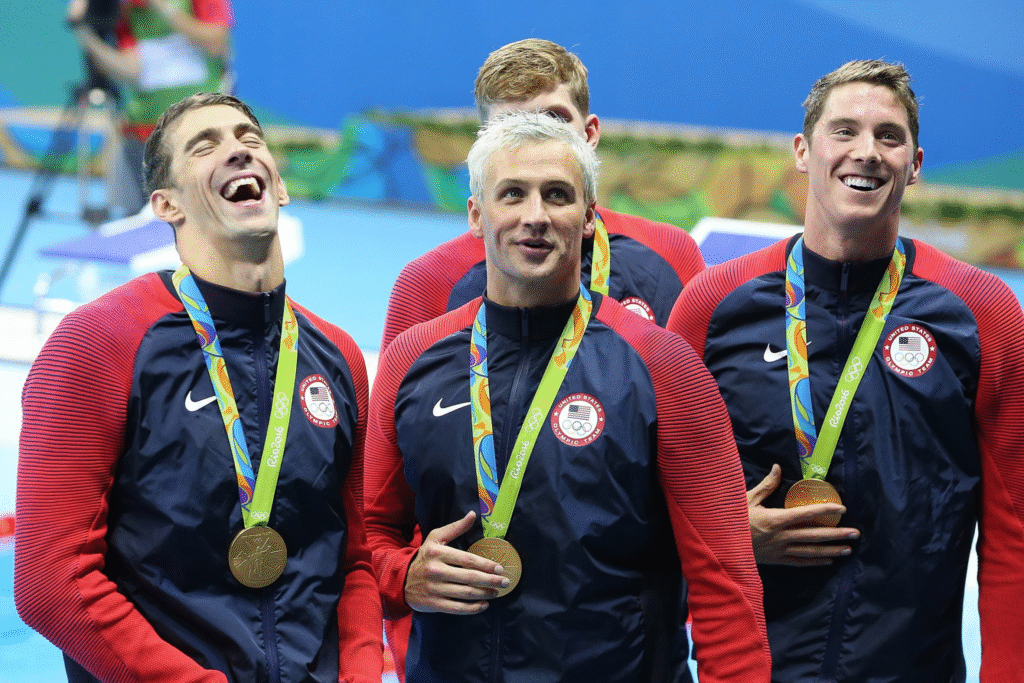
Ryan Lochte made his Olympic debut at the Athens Games in 2004, immediately establishing himself as a reliable performer on the world’s biggest stage. Over four Olympic cycles, he demonstrated exceptional longevity, competing at Athens 2004, Beijing 2008, London 2012, and Rio 2016.
Across these Games, Lochte won a total of 12 Olympic medals, including six golds. His success in individual medley events was particularly significant, as these races demand mastery of all four swimming strokes, along with strategic pacing and endurance. His medal record reflects not only talent, but sustained commitment to training and performance over more than a decade.
Relay events also formed an important part of his Olympic contribution. By combining individual excellence with team success, Lochte reinforced the importance of collective effort in elite swimming and helped define one of the most successful periods in American Olympic history.
Technical Strengths and Racing Style
Ryan Lochte’s competitive edge was built on a distinctive blend of power and efficiency. His underwater phases, turns, and transitions between strokes consistently ranked among the strongest in the field. These technical details often created decisive advantages, particularly in medley races where small gains accumulate across multiple legs.
Physically, Lochte challenged traditional perceptions of swimmer build. His strength-focused training approach influenced broader discussions within the sport about conditioning and race preparation. Coaches frequently highlighted his ability to maintain speed late in races, a quality essential for success in longer medley events.
Mentally, Lochte was known for his ability to deliver in finals, even when qualification rounds were demanding. This competitive resilience played a crucial role in his sustained presence at the top level of international swimming.
Fame, Media Exposure and Public Image
With Olympic success came global recognition. Ryan Lochte became a prominent public figure through endorsements, interviews, and television appearances. This visibility expanded his influence beyond sport but also increased scrutiny of his personal choices and behaviour.
Managing public expectations proved challenging, particularly in an era dominated by social media and instant news cycles. Lochte’s openness and distinctive personality attracted both admiration and criticism, highlighting the complexities faced by athletes navigating fame outside competition venues.
The contrast between sporting discipline and public perception became a recurring theme in his career, illustrating how elite athletes are judged not only by performance, but by conduct away from the pool.
The Rio 2016 Controversy
A defining moment in Ryan Lochte’s public life occurred during the 2016 Rio Olympics. An incident involving inaccurate claims about a robbery led to global criticism and significant reputational damage. The situation quickly escalated, dominating headlines and shifting the focus away from sporting achievement.
The consequences were substantial. Lochte faced disciplinary action, lost sponsorship agreements, and experienced a sharp change in public perception. The episode underscored the expectations placed on high-profile athletes to act responsibly, particularly when representing their country on the Olympic stage.
In the years that followed, Lochte acknowledged his mistakes and expressed regret. This period marked a turning point, forcing reflection on accountability, maturity, and the long-term impact of public actions.
Mental Health and Personal Reflection
Following the events surrounding Rio, Ryan Lochte spoke openly about struggles with mental health, including periods of depression and unhealthy coping mechanisms. These admissions provided insight into the psychological pressures faced by athletes dealing with sudden public backlash.
By addressing these issues publicly, Lochte contributed to wider conversations about mental wellbeing in elite sport. His experiences highlighted the importance of support systems and the need to recognise athletes as individuals beyond their competitive roles.
This phase of reflection reshaped his public narrative, shifting emphasis from controversy toward learning, responsibility, and personal growth.
Family Life and Changing Priorities
Ryan Lochte’s personal life has undergone significant change since his peak competitive years. Marriage and fatherhood introduced new responsibilities and altered his perspective on success and ambition. He has spoken about how family life encouraged greater stability and long-term thinking.
Balancing private relationships with public attention has not always been straightforward. Periods of personal difficulty have been accompanied by media scrutiny, reinforcing the challenges faced by public figures attempting to protect family life while remaining in the spotlight.
Through these experiences, Lochte’s public image evolved from that of a single-minded athlete to a more complex figure navigating adulthood, responsibility, and change.
Life After Elite Competition
As his competitive career concluded, Ryan Lochte began exploring opportunities beyond professional swimming. Media projects, public speaking, and business interests allowed him to remain engaged with audiences while redefining his professional identity.
He has also focused on advocacy, particularly in relation to mental health awareness within sport. By sharing lessons drawn from both success and failure, Lochte has positioned himself as an example of resilience and openness rather than flawless achievement.
This post-competitive chapter reflects an effort to build a meaningful life beyond medals, emphasising long-term impact over short-term recognition.
Legacy and Cultural Impact
Ryan Lochte’s legacy is layered and complex. From a sporting perspective, his achievements place him among the most accomplished swimmers in Olympic history. His medal record, versatility, and longevity continue to influence training philosophies and competitive expectations.
Culturally, Lochte represents the evolving narrative of modern athletes, where transparency, accountability, and personal development matter alongside performance. His journey illustrates how public figures are defined not only by victories, but by how they respond to adversity.
As discussions around athlete wellbeing and identity continue to grow, Lochte’s story remains relevant, offering insight into both the rewards and responsibilities of life at the highest level of sport.
Conclusion
Ryan Lochte’s life and career reflect the full spectrum of elite athletics: extraordinary success, intense scrutiny, personal challenge, and gradual reinvention. His journey demonstrates that sporting greatness exists within a broader human context shaped by choices, consequences, and growth.
Today, Ryan Lochte stands as a significant figure in modern sports culture. His story continues to resonate because it combines Olympic excellence with honest reflection, reminding audiences that true legacy is built not only on medals, but on resilience and the ability to evolve beyond the pool.
You may also read: Fructul oprit Overview